
Ever wonder if a home espresso machine can truly match café crema? You’re tired of half‑hearted shots and frothing fiascos, and you want a reliable, barista‑grade brew without the guesswork. Let’s cut through the hype and see which of these seven Italian‑styled machines actually fits your kitchen, budget, and coffee‑making style.



More Details on Our Top Picks
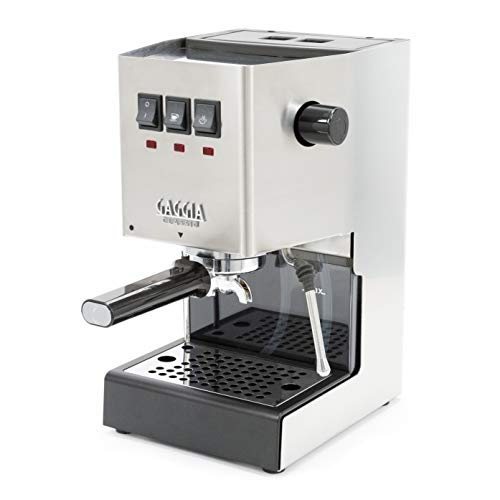
Gaggia RI9380/46 E24 Espresso Machine Brushed Stainless Steel
All right, you’re hunting a machine that feels like a café staple without the noisy, bulky footprint, and the Gaggia RI9380/46 E24 delivers that classic pro vibe in a sleek brushed stainless shell. You’ve probably been annoyed by clunky brewers that scream at you every time you pull a shot. This one fits on a modest countertop, weighs ****20 lb, and stays quiet thanks to the updated pump mounting, so you won’t need a separate sound‑proof room.
Now, you want barista‑level pressure without a commercial‑grade budget. The 9 bar pump, 58 mm portafilter, and three‑way solenoid valve give you consistent extraction, while the commercial steam wand lets you texture milk for latte art. If you love ESE pods or pre‑ground coffee, the pressurized basket saves you from grinder hassle; switch to the non‑pressurized basket for full control over grind size and dose.
Here’s the thing: you’ll appreciate the self‑serviceable steel housing and the reusable filter, but you’ll also need to clean the boiler regularly because,’s not a “set‑and‑forget” machine. The 2.1 L water tank handles a few drinks before refilling, and the brass boiler resists scale and corrosion better than cheaper aluminum models. If you’re okay with manual button controls and don’t need Wi‑Fi, this one fits perfectly.
Obviously, the Gaggia isn’t a tiny travel espresso maker, but it’s a solid, Italian‑made workhorse for a kitchen that values style and substance. You’ll get the professional feel, quiet operation, and versatile brewing options without breaking the bank. Choose it, and you’ll finally have a reliable espresso companion that matches your coffee cravings.
- Pressure (Bar):9 bar
- Power (Watt):1200 W
- Water Tank Capacity:2.1 L
- Portafilter Size:58 mm
- Steam Wand (Milk Frothing):Commercial steam wand (micro‑foam)
- Material Finish:Brushed stainless steel
- Additional Feature:Dual pressurized baskets
- Additional Feature:Quiet pump mounting
- Additional Feature:Self‑serviceable steel housing
CHULUX Slim Espresso Machine with Milk Frother 20 Bar Professional Italian Pump Espresso Coffee Machine for Home Cappuccino & Latte Maker Stainless Steel Black
If your kitchen feels cramped and you still crave café‑grade espresso, the CHULUX Slim is a compact power solution. You’ll love its 5.5‑inch width and 7.8‑lb weight—easy to tuck onto a countertop or pack for a weekend office. The 20‑bar Italian pump and pressure gauge give you balanced extraction, while the 30‑second pre‑heat means you’re sipping within minutes.
Now, the 1350‑W boiler and steam wand create micro‑foam for latte, cappuccino, or mocha without a bulky frother. You press a button, add ground coffee, and the semi‑automatic system does the rest—no fuss. The removable drip tray and cup warmer keep things tidy, and auto shut‑off after 25 minutes protects energy usage.
Here’s the thing: this machine shines if you value space‑saving design and quick brewing, but it isn’t a full‑automatic barista. You’ll need to grind and tamp manually, which some might find extra work. The stainless‑steel exterior looks sleek, and the food‑grade components give peace of mind. If you want a compact, reliable espresso maker that fits a small kitchen and still delivers café‑quality shots, the CHULUX Slim fits your needs.
- Pressure (Bar):20 bar
- Power (Watt):1400 W
- Water Tank Capacity:40 oz (≈1.2 L)
- Portafilter Size:58 mm (standard)
- Steam Wand (Milk Frothing):Steam wand (micro‑foam)
- Material Finish:Stainless steel, black
- Additional Feature:20‑bar Italian pump
- Additional Feature:Pre‑infusion balanced extraction
- Additional Feature:Auto shut‑off 25 min
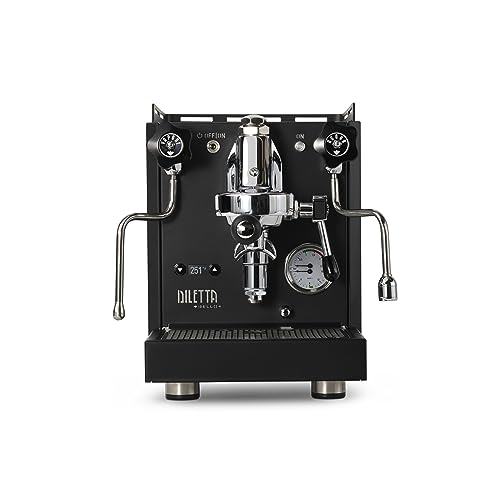
Diletta Bello+ Espresso Machine with PID Control (Black)
Ever struggle to keep espresso temperature steady while you juggle grinding and tamping? This Diletta Bello+ gives you a PID‑controlled boiler that locks steam temperature, so you stop guessing and start sipping. The 1500 W heat‑exchanger lets you brew a shot and steam milk at the same time, and the programmable pre‑infusion up to ten seconds smooths extraction for consistent flavor.
All right, you’ll love the stainless‑steel case and black finish—classic Italian looks that hide a 3 L water tank and a generous drip tray for mess‑free mornings. The manual brew and steam levers keep you in the barista’s seat, while the low‑power eco mode cuts boiler heat when you’re idle, shortening recovery after a break.
Now, this machine fits you if you enjoy hands‑on control and don’t need smart‑home integration. It’s semi‑automatic, so you’ll still grind, dose, and tamp yourself, but the PID screen and shot timer make each step repeatable. The only trade‑off is the lack of a built‑in grinder—so you’ll need a separate grinder for the best results.
Here’s the thing: if you want a reliable, Italian‑styled espresso rig that balances performance and price without overcomplicating the process, the Diletta Bello+ is a solid, confidence‑boosting choice. Go ahead and add it to your kitchen; you’ll feel the difference from the first pull.
- Pressure (Bar):9 bar (E61 group)
- Power (Watt):1500 W
- Water Tank Capacity:3 L
- Portafilter Size:58 mm (E61)
- Steam Wand (Milk Frothing):Steam wand (micro‑foam)
- Material Finish:Stainless steel, black
- Additional Feature:PID temperature screen
- Additional Feature:Eco low‑power mode
- Additional Feature:Programmable pre‑infusion
Atatix 20‑Bar Espresso Machine with Milk Frother
You’re tired of waiting forever for a decent espresso, and the Atatix 20‑Bar with its 20‑bar pump delivers café‑grade pressure without breaking the bank. The 20‑bar system hits the sweet spot of 9‑10 bar during extraction, so you get rich crema in under half a minute. The brushed‑silver ABS body looks sleek, and the silicone suction cups keep it steady on any countertop.
All right, the built‑in steam wand creates dense micro‑foam for latte art, and the 44 oz water tank lets you pull several drinks before refilling. You’ll love the single‑shot timer (28 s) and the manual mode that stretches up to 102 s if you enjoy tweaking grind size or dose.
Now, this machine suits home kitchens and small offices where you don’t need smart‑home integration. It’s lightweight (7.5 lb) and easy to clean—just detach the tank and drip tray. If you want a budget‑friendly, semi‑automatic espresso rig that still feels professional, the Atatix 20‑Bar is a solid pick.
- Pressure (Bar):20 bar (optimal 9‑10 bar)
- Power (Watt):1350 W
- Water Tank Capacity:44 oz (≈1.3 L)
- Portafilter Size:58 mm (standard)
- Steam Wand (Milk Frothing):Powerful steam wand (micro‑foam)
- Material Finish:Brushed silver stainless steel
- Additional Feature:NTC temperature control
- Additional Feature:Auto extraction timing
- Additional Feature:Silicone suction cup base
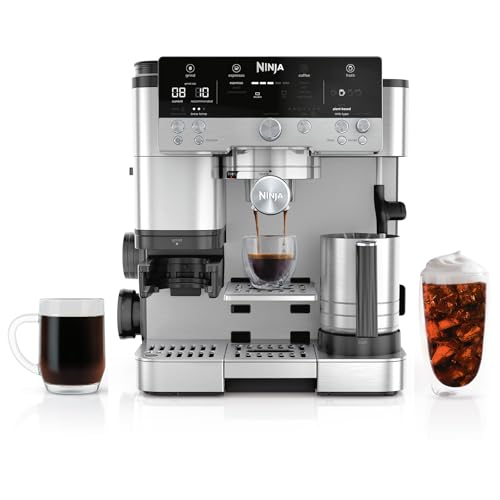
Ninja Luxe Café Premier 3‑in‑1 Espresso Machine (ES601)
Looking for a single machine that handles espresso, drip coffee, and cold brew without cluttering your countertop? You’ve probably felt the frustration of juggling three appliances, each taking up precious space and demanding separate maintenance. This Ninja Luxe Café Premier 3‑in‑1 solves that by packing a conical burr grinder, dual froth system, and Barista Assist into a sleek stainless‑steel frame that fits neatly on your kitchen bar.
All right, if you crave a double‑shot espresso and want a quick cold‑pressed brew for summer, the ES601 delivers both with weight‑based dosing and temperature tweaks that keep flavor consistent. You’ll appreciate the 25 grind settings and assisted tamper, which make puck preparation feel like a pro’s routine. The downside? The 1650 W draw means you’ll need a dedicated outlet, and the 4.4 lb unit isn’t the lightest to move around.
Now, the drip side offers classic, rich, and over‑ice options from 6‑18 oz, so you can replace your separate coffee maker without sacrificing variety. The built‑in storage compartment holds the portafilter, milk jug, and cleaning tools, keeping the countertop tidy. Obviously, you’ll need to clean the froth system regularly, but the dishwasher‑safe parts and descaling kit make that painless.
Here’s the thing: this one’s for you if you value versatility over single‑purpose perfection and don’t mind a slightly larger footprint. The Ninja’s market‑leading sales and solid warranty back up its reliability, so you can trust it to handle daily coffee rituals without breaking the bank. Go ahead—press the button, enjoy a barista‑grade cup, and feel confident you made the smart, space‑saving choice.
- Pressure (Bar):15 bar (standard for 3‑in‑1)
- Power (Watt):1650 W
- Water Tank Capacity:47 fl oz (≈1.4 L)
- Portafilter Size:58 mm (double basket)
- Steam Wand (Milk Frothing):Dual Froth System (steam + whisk)
- Material Finish:Stainless steel “Luxe Cafe”
- Additional Feature:Built‑in conical burr grinder
- Additional Feature:Dual Froth System
- Additional Feature:Barista Assist technology
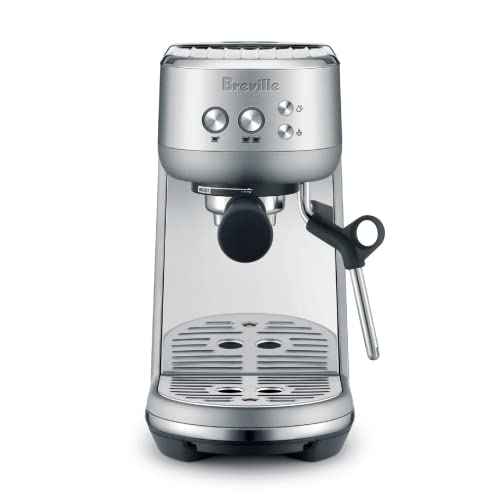
Breville Bambino Espresso Machine BES450BSS Brushed Stainless Steel
All right, you’re fed up with waiting for your espresso to warm up, and the Breville Bambino BES450BSS solves that with its Thermojet system that hits brewing temperature in three seconds. You’ll love the 54 mm portafilter that cradles a 19 g dose, extracting full flavor without guesswork. The PID digital temperature control keeps each shot consistent, while low‑pressure pre‑infusion smooths the grind’s bite.
Now, the automatic steam wand lets you dial milk temperature and create microfoam hands‑free—perfect for latte art without a barista’s arm. The brushed stainless steel looks sleek, and the 47 fl oz tank gives you enough water for several cups before refilling. It’s compact, 13.7 × 6.3 × 12 in, and weighs only 10.9 lb, so you can tuck it on a kitchen counter without a power struggle.
Here’s the thing: this machine isn’t smart‑home enabled, so you won’t control it with voice assistants. If you crave that connectivity, you’ll need a different model. But if you want fast, reliable espresso and a steam wand that works on its own, the Bambino fits your kitchen and your schedule. Go ahead—make it yours and start pulling barista‑quality shots at home.
- Pressure (Bar):15 bar (ThermoJet)
- Power (Watt):1560 W
- Water Tank Capacity:47 fl oz (≈1.4 L)
- Portafilter Size:54 mm
- Steam Wand (Milk Frothing):Automatic steam wand (micro‑foam)
- Material Finish:Brushed stainless steel
- Additional Feature:Thermojet rapid heating
- Additional Feature:Automatic steam wand
- Additional Feature:Low‑pressure pre‑infusion
CASABREWS CM5418 20 Bar Espresso Machine with Milk Frother
Ever feel cramped in your kitchen but still crave café‑grade espresso? You need a machine that fits on a tiny counter yet still delivers that 20‑bar Italian pump punch. The CASABREWS CM5418 does just that: brushed stainless‑steel, 12.28 × 5.47 × 11.97 in, 8.59 lb, and a removable 34‑oz water tank that you can refill without a dance.
All right, performance-wise you get a 1350 W boiler, semi‑automatic controls, and a pressure gauge so you can watch the extraction. It handles one‑cup or two‑cup shots, and the hot‑water function pre‑heats your cup or makes tea. If you grind finer or tamp harder, you’ll fix low‑pressure hiccups; if the pump stalls, reinstall the tank and run hot water for twenty seconds.
Here’s the thing: the integrated steam wand creates micro‑foam for cappuccinos, lattes, and even milk‑foam art. You’ll love the creamy texture, but remember not to brew right after frothing—let the machine cool or the protection lights flash. The wand isn’t a separate frother, so you can’t multitask, but it’s perfect for a single‑serve routine.
Now, who is this for you? If you live in a small apartment, work a home office, or want a gift for a coffee nerd, this compact, 1‑year‑warranty machine fits the bill. It’s not dishwasher‑safe and lacks smart‑home features, so you’ll stay analog. But you’ll get reliable espresso without a bulky footprint. Take the plunge; you’ll feel confident pulling barista‑quality shots on your own terms.
- Pressure (Bar):20 bar
- Power (Watt):1350 W
- Water Tank Capacity:34 oz (≈1 L)
- Portafilter Size:58 mm
- Steam Wand (Milk Frothing):Integrated steam wand (micro‑foam)
- Material Finish:Brushed stainless steel, silver finish
- Additional Feature:Removable 34 oz tank
- Additional Feature:Hot‑water function
- Additional Feature:Compact brushed stainless design
Factors to Consider When Choosing an Italian Espresso Machine
You’re probably frustrated by machines that claim 20 bar pressure but can’t keep a steady extraction, so you need a pump that delivers consistent force. The boiler material matters too—copper gives quick heat recovery while stainless steel stays stable longer, and the portafilter size must match your basket for even tamping. And if you love milk drinks, a robust steam wand is a must; otherwise you’ll be left with froth that’s more foam than flavor.
Pressure Pressure and Extraction
If you’re watching the gauge wobble and the crema turn flat, you know the pressure problem is ruining your shots. Obviously, you need steady 9 bar during the 25‑30‑second brew. Anything swinging more than ±0.5 bar spoils extraction and leaves you with uneven flavor.
All right, look for a machine that shows real‑time pressure, a digital readout or a clear gauge. This lets you spot when the pump spikes above 10 bar, which can over‑extract and make the coffee bitter.
Now, pre‑infusion matters too. Low‑pressure (2‑4 bar) bursts for a few seconds saturate the puck, cut channeling, and give a richer crema. If you like tweaking grind size or tamp pressure, a machine with adjustable pre‑infusion will keep you in control.
Here’s the thing: a barista‑grade unit with a stable pump and pressure readout is for you if you demand consistency and want to experiment without guessing. Otherwise, a basic model may suffice, but expect more guesswork.
Choose the one that matches your willingness to fine‑tune; then you’ll pull shots that taste like they came from a café.
Pump Type and Consistency
All right, you’ve probably noticed how a wobbly pump makes every shot feel like a gamble, and that inconsistency is what turns a morning ritual into a frustration. The pump must hold a steady 9 bar; anything less and you’ll taste under‑extracted bitterness. Rotary pumps deliver that stability, humming quietly while keeping pressure within ±0.2 bar during pre‑infusion, so you avoid channeling and get even saturation.
Now, consider flow rate. Home machines typically run 0.2–0.3 LPM, which is enough for a smooth pull without wasting water. If you brew multiple shots back‑to‑back, a higher‑flow rotary pump will keep the line full and prevent the dip in pressure that vibration pumps suffer.
Vibration pumps are cheaper and lighter, but they can wobble when you crank up volume, leading to pressure spikes and louder operation. They usually last 3,000–5,000 hours, so expect more frequent service. If you’re a casual weekend barista, the cost savings might outweigh the noise; if you crave café‑grade consistency, the rotary’s longer lifespan and quieter performance win.
Here’s the thing: choose a pump that matches your routine. If you value quiet mornings and long‑term reliability, go rotary. If budget and occasional use dominate, a vibration pump will still make a decent cup. Either way, you’ll know exactly why your espresso tastes the way it does.
Boiler Material and Stability
All right, after you’ve nailed the pump, the next thing that trips you up is the boiler—your machine’s heart that decides whether every shot stays hot or goes cold. Stainless‑steel boilers resist corrosion and scale, so they last longer and keep temperature steady. Copper‑lined boilers heat up fast and bounce back quickly after steaming, but you’ll need to descale often to avoid oxidation.
Now, decide if you need simultaneous brew and steam. Heat‑exchanger (HX) boilers give you both at once, keeping brew water stable while you froth milk. Single‑boiler units switch modes, which can cause temperature dips unless you add a PID controller.
Here’s the thing: larger boilers, say 3 L, hold heat better during marathon sessions, while a 2 L model cools quicker between shots. If you often pull back‑to‑back drinks, go bigger; if space is tight, a smaller boiler works fine with a PID. Choose the material and size that match your routine, and you’ll avoid cold‑shot disappointment.
Portafilter Size and Compatibility
All right, you’ve probably felt that frustrating “wrong‑size” shot when your coffee grounds don’t spread evenly. The most common portafilter size is 58 mm, giving you a larger surface for even extraction and fitting commercial‑style baskets. If you pick a 53 mm home‑grade model, you’ll limit grounds, shot volume, and flavor consistency, so expect weaker, less balanced drinks.
Now, make sure the portafilter diameter matches the group head’s lock‑up; a mismatch leads to leaks, uneven pressure, or even damage. Double‑shot ports hold 18–20 g, single‑shot 9–10 g, so choose based on the dose flexibility you crave. Non‑pressurized baskets need that precise 58 mm fit for proper tamping and control; pressurized baskets are more forgiving but give you less nuance.
Here’s the thing: if you want barista‑level tweaking, go for a 58 mm non‑pressurized setup. If you prefer simplicity and don’t mind a bit less control, a smaller, pressurized portafilter works fine. Either way, you’ll avoid the “wrong‑size” frustration and brew confidently.
Steam Wand Capability
All right, you’ve already sorted the portafilter size, so now the next frustration is getting milk that looks and tastes like it came from a café. You need a steam wand that hits 120‑130 °C and holds above 0.5 bar; otherwise the foam collapses before you even start latte art. The thing is, a wand with a 15‑20 mm tip gives enough surface for quick aeration while keeping temperature steady, so you won’t end up with scalded milk.
Now, look for adjustable pressure or a variable‑flow valve. That lets you dial in silky latte foam or airy cappuccino froth on demand. Machines with PID‑controlled boilers or built‑in temperature sensors stay in the sweet 140‑150 °C range, preventing the burnt taste we all hate.
Here’s the thing: cleaning matters. A built‑in steam‑clean cycle or a removable tip saves you from milk residue buildup and endless scrubbing. If you love low‑maintenance gear, this one’s for you. If you’re a perfectionist who enjoys tweaking, go for a model with a manual valve. Either way, you’ll feel confident pulling a café‑grade milk texture at home.
Control Interface and Programmability
Ever wonder why you still end up guessing if the shot’s right? You need a display that tells you pressure, temperature, and timer in real time, so you stop relying on gut feeling. A digital screen or clear analog gauge gives you that instant feedback, and a PID‑controlled boiler lets you lock the temperature steady—no more “hot‑and‑cold” swings.
All right, now think about programmability. Pre‑infusion and shot‑timer settings you can dial in let you fine‑tune each bean, roast, or mood. Memory presets are a lifesaver; you press one button and the machine recalls the exact profile you saved. If you love tweaking, choose rotary‑dial controls that feel natural and stay labeled.
Here’s the thing: button‑based panels are quick for beginners, but they can feel cramped when you want granular control. A machine with both button shortcuts and a dial gives you flexibility without sacrificing speed. Obviously, you’ll appreciate ergonomic placement—no stretching mid‑brew. Pick the interface that matches your confidence level, and you’ll stop guessing and start mastering each shot.
Footprint and Portability
If your kitchen feels tighter than a espresso shot, you’ll need a machine that actually fits. Measure width, depth, and height—home models range from 5.5 in to 12 in wide—so you can slot it on the countertop or tuck it into a cabinet without a wrestling match. Obviously, weight matters; under 8 lb units glide around easily, while 20 lb steel‑bodied beasts stay put and demand a sturdy surface.
All right, look for a removable water tank, usually 40 oz to 2.1 L; you’ll pull it out to refill and shrink the footprint when you’re not brewing. A compact, integrated drip tray and a fold‑away steam wand cut surface area further, letting you keep the worktop clear.
Now, consider the total footprint with the portafilter attached—some designs need extra clearance for the wand or brew head, so plan a little breathing room. This one’s for you if you love a sleek, portable setup that still delivers barista‑quality shots without hogging space. Choose the size that matches your kitchen’s real‑estate, and you’ll feel confident that the machine belongs there, not the other way around.
Warranty and Service Support
When you finally pick a machine, the last thing you want is a surprise repair bill, so start by checking how long the warranty lasts. Most Italian espresso machines give you a one‑year safety net, but premium models stretch that to two or three years. Obviously you’ll want both parts and labor covered, and you should verify whether labor means a trip to the service center or if a can call a technician to your kitchen.
All right, look for a clear claims process—ideally a dedicated hotline or an online portal that lets you log issues and track replacements without endless email chains. The manufacturer should also host a downloadable PDF that spells out exclusions, required documentation, and any transferability rules if you ever sell the machine.
Now, weigh the trade‑offs: a longer warranty often signals higher build quality, yet it can add to the price tag. If you’re a casual brewer, a one‑year plan may be enough; if you plan to crank out daily shots, the extra peace of mind from a two‑year, on‑site service warranty could be worth the extra cost.
Here’s the thing: choose the warranty that matches your usage and resale plans, and you’ll avoid hidden headaches while enjoying barista‑grade espresso at home.