
You’re frustrated because your foam breaks down fast or won’t get that glossy microfoam texture you see in cafés. Here’s what actually works: use cold, fresh whole milk in a halfway-filled pitcher. Heat your steam wand fully, purge it, then position the tip just below the surface for 3–8 seconds while you hear that “psst” sound. Lower it deeper to create a smooth vortex, stop when the pitcher’s too hot to hold, then tap and swirl to break large bubbles. Serve immediately.
Master the Basic Frothing Technique
If you’ve ever wondered why your foam turns into a bubble bath instead of silky microfoam, you’re probably missing one key step: the setup.
Why Your Equipment Matters
You need cold milk and a cold pitcher to slow heating and give yourself working time. Fill the pitcher only halfway—this gives you room to work. Make sure your steam system’s fully heated before you start.
Getting Your Frothing Consistency Right
Here’s the thing: purge the steam wand first to clear condensed water. Position the tip just below the milk surface, shallow enough to introduce air without splashing. Your milk’s origin matters less than your technique, but consistent frothing requires steady, controlled movements. The ideal frothing temperature range of 135–150 °F ensures you achieve a sweet, creamy texture without scorching the milk. Using a whisking motion can help incorporate even finer bubbles for a silkier foam. Selecting a bar‑strength almond milk enhances foam stability due to its higher protein content.
The air injection process creates tiny bubbles that give foam its velvety mouthfeel.
The First Critical Move
Angle the wand to create a smooth vortex. Adjust your pitcher position, not just wand depth, to stabilize the motion. You’re building the foundation for everything that comes next.

Perfect Combination Of Milk Frothing Pitcher And Latte Art Pen: The milk frother jug can be used in different ways: froth or steam milk for lattes; measure liquids; serve milk or cream. Featured with a latte art pen which can shape kinds of beautiful coffee pattern. Perfect for making frothing or steaming milk for espresso, cappuccino or hot chocolate. Be your own barista in home and office.

【Food Grade Material】This milk frothing pitcher is made of high-quality 304 stainless steel, which is rust proof, stain proof, and heat resistant. It has a stylish appearance and is very easy to clean after use.

【Food Grade Material】This milk frothing pitcher is made of high-quality 304 stainless steel, which is rust proof, stain proof, and heat resistant. It has a stylish appearance and is very easy to clean after use.
Get the Milk Temperature Right
Temperature is where most people’s foam dreams fall apart, even when their technique is solid. You’re hitting the steam wand correctly, but your milk tastes burnt or your foam looks thin—temperature’s likely the culprit.
What’s the Sweet Spot?
You’ll want to target 140–155°F (60–68°C) for dairy milk. This temperature range nails both flavor and foam stability. Above 160°F, you risk scalding. Beyond 170°F, milk tastes cooked and loses sweetness entirely.
Why This Matters
At the right temperature, milk fats liquefy perfectly without destroying foam structure. You get velvety microfoam instead of dry bubbles. Moderate heat preserves natural sweetness too. Many coffee shops struggle with this range, frequently overheating milk past the optimal sweetness threshold and leaving customers disappointed.
Pro Move
Stop steaming slightly before your thermometer hits your target—milk temperature rises 10°F after you cut steam. Your milk keeps improving after heating ends, so plan accordingly. Using a sealed jar to shake warm milk can also create a quick foam without a frother.
Choosing the correct milk type, such as whole milk for richer foam, can further enhance texture and flavor.
Choose the Right Frother for Your Needs
Now that you’ve nailed the temperature game, you’ve probably realized your technique matters just as much as your equipment—and that’s where frother choice comes in.
What’s Your Real Priority?
Budget friendly doesn’t mean settling. The Zulay Kitchen Milk Boss runs about $13 and handles cappuccinos beautifully. But here’s the thing: handheld wands sacrifice consistency for portability and speed. This model produces voluminous, stable foam ideal for cappuccino-style drinks.
Countertop electric frothers like the Instant Pot MagicFroth automate the whole process. You get repeatability without technique stress. They heat and froth simultaneously, which saves you a step.
The Practical Stuff That Matters
Cleaning-ease matters more than you think, especially with heating elements involved. Check capacity limits—overfilling tanks destroys foam quality. Consider your counter space and how often you’ll actually use it.
Your drink type should drive your choice, not price alone. Regular descaling prevents mineral buildup that can impair frothing performance. Understanding the micro‑foam formation process helps you select the right tool for espresso‑based drinks. Proper water hardness monitoring can also extend the life of your frother.

NO MORE BATTERIES -- USB Rechargeable. Forget buying batteries! Just plug in the included USB cable to charge. One charge lasts for months, making it eco-friendly and always ready to use.

Make Creamy Froth Quickly: If you love your morning coffee filled with froth and foam, the portable Handheld Milk Frother can create a creamy cup within 15 to 30 seconds

Effortless USB-C Power: Enjoy convenient charging with the included Type-C cable - no bulky adapters needed. Simply plug into any USB port to power up your frother at home, work, or on the go
Create Your Ideal Milk Foam Texture
You’ve probably noticed that some milk froths into silky microfoam while other attempts just create a watery mess—and you’re wondering what separates the two.
Start Cold and Fill Smart
Cold milk gives you more time before overheating ruins your texture control. Fill your pitcher one-third to one-half full, just below the spout. A cold pitcher itself maintains that lower starting temperature you need for better foam formation.
The Two-Phase Technique
First, keep your frother tip just below the surface for 3 to 8 seconds. You’ll hear a gentle “psst” sound—that’s air incorporating correctly. Then lower deeper into the milk and angle your pitcher to create a vortex. This spinning motion blends air evenly into microfoam.
Temperature Stability Matters
Stop when the pitcher becomes too hot to hold comfortably. Your target’s around 60°C to 68°C. Exceeding 70°C scalds the milk and destroys that silky texture you’re after.
A simple French press can also produce a velvety foam when you pump the plunger vigorously for 15–20 seconds.
nitro infusion can be used to enhance the creaminess of milk foam, mimicking the smooth texture of nitro cold brew.
Regular descaling helps keep the frother’s heating element clean, ensuring consistent temperature control for optimal foam.
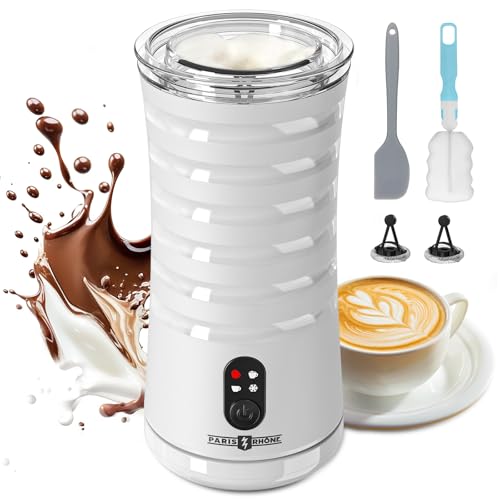
Elegant Eiffel Tower Silhouette: Inspired by the iconic architecture of the Paris Eiffel Tower, this electric milk frother from Paris Rhône is a visual delight that will add a classic appeal to any kitchen worktop. The ergonomic shape ensures that the device is non-slip and easy to grip and operate.

6-in-1 Ultimate Milk Frother: upgrade from basic 4-in-1 frothers! This 6-in-1 electric milk frother offers 3 hot foam (dense, airy, light), latte art, cold foam, hot milk, plus yogurt & hot chocolate functions, producing denser, richer, and more stable foam. From creamy cappuccinos to homemade yogurt, it’s the most versatile electric milk frother and steamer for any home coffee bar. Tip: Works best with milk over 3% fat for rich & stable foam

CREAMY FROTH IN SECONDS: Featuring a powerful high-speed motor and an upgraded double-spring whisk head, this milk frother handheld creates thicker, creamier foam in as little as 20 seconds. Perfect for lattes, cappuccinos, matcha, hot chocolate, and all your favorite drinks
Serve and Clean Up Properly
So you’ve nailed the frothing technique—but when’s the right moment to actually pour that milk into your espresso? Pour immediately while your foam still has that glossy, paint-like sheen. Swirl your pitcher to redistribute microfoam evenly, then tap it gently to break surface bubbles. Your foam presentation matters here—cappuccinos need thicker foam layers, while lattes require smoother microfoam blended throughout.
Now here’s your hygiene routine: wipe the steam wand with a damp cloth right after use, then purge it to clear residual milk. Rinse your pitcher soon after steaming to prevent dried residue. Wash detachable frother parts thoroughly. Immediate cleaning prevents buildup, maintains steam performance, and keeps everything sanitary for your next drink.
When disassembling a Nespresso machine, ensure it is unplugged and the water tank is removed to avoid electric shock and water spillage. Safety lock should be released before removing the top cover to prevent damage to internal components. Regular descaling helps preserve water temperature consistency and prevents mineral buildup that can affect foam quality.
Regular descaling also protects the steam wand from mineral deposits that can reduce foam quality.
Troubleshoot Common Frothing Problems
Even when you nail the technique, your foam still disappoints sometimes—and that’s usually because one of a few common culprits is working against you.
Is Your Milk Actually Fresh?
Stale milk kills foam composition issues faster than anything else. Old milk’s weakened proteins can’t stabilize bubbles, so your foam collapses within seconds. Always start with fresh, cold milk from the refrigerator—this gives you maximum control and reliability.
What About Frothing Hygiene?
A blocked steam wand destroys performance instantly. Purge your wand before and after each use to prevent milk residue buildup. Clean it thoroughly daily; blocked holes reduce steam pressure and wreck texture.
Large Bubbles Ruining Your Texture?
Tap your pitcher firmly on the counter, then swirl gently. This breaks up rough bubbles and creates silky microfoam instead. You’re eliminating surface imperfections so every sip tastes smooth.
Regular descaling prevents mineral buildup that can clog the steam wand and affect foam quality.
A clean drip tray and water tank ensure optimal performance for the frother’s steam system.
Regular maintenance also extends the life of the frother.