
You’re probably wondering if the speed, consistency and convenience of a Nespresso machine justify its cost and upkeep. You’ll get a shot in under a minute, often under 30 seconds after the machine blinks green, and a larger Vertuo cup tops out around 90 seconds—much faster than a drip brewer. Pods run $0.40‑$1.20 each, so two a day costs $300‑$1,100 a year, which can still save you $2,300‑$3,800 if you’d otherwise buy café drinks. Cleaning is simple: rinse the tray, wipe the exterior, and descale every three months. If you value instant, consistent espresso‑style coffee and don’t mind the per‑cup price, it’s worth it; otherwise, a traditional brew may suit you better. Keep reading to see which user profile matches you.
How Fast Can You Brew a Cup With a Nespresso Machine?
How fast can you brew a cup with a Nespresso machine? You’re probably wondering if the hype matches reality. Here’s the thing: the machine blinks while heating, then steadies after about 30 seconds, signaling you can brew up speed instantly. Once the light steadies, a single button starts the extraction. Espresso‑size drinks finish in under a minute, while larger Vertuo cups need a bit more water, pushing total time toward 90 seconds. The cup size timing matters—smaller volumes flow faster, larger ones extend the brew cycle. Overall, from cold start to sip, expect roughly 45 to 90 seconds for an espresso and up to two minutes for a big cup. Obviously, this speed beats most drip brewers. Takeaway: you get a hot cup in under two minutes, perfect for busy mornings. Next, consider how the flavor profile compares to other methods. The machine’s green light indicates when it’s ready to brew. Proper water reservoir maintenance ensures consistent temperature and pressure for optimal extraction. Regular descaling prevents mineral buildup that can slow down the heating process. Keeping the drip tray clean also helps maintain brewing efficiency.

More than 30 coffees With different aromas, intensities & flavors

Signature Coffees and Espressos: Vertuo Pop+ coffee maker offers a variety of coffee formats in 5 sizes, including 5, 8, 12oz coffees, as well as single and double espressos brewed hot or over ice.

SIGNATURE COFFEES AND ESPRESSOS: Vertuo Pop+ coffee maker offers a variety of coffee formats in 5 sizes, including 5, 8, 12oz coffees, as well as single and double espressos brewed hot or over ice.
Nespresso Espresso‑Style Flavor & Crema vs. Drip Coffee
You’re probably wondering why a Nespresso shot tastes so different from your regular drip coffee. The answer lies in espresso vs. drip mechanics: Nespresso forces hot water through pre‑ground pods at about 9 bars, while drip relies on gravity and a longer brew time. That pressure creates a denser, syrupy body and a thin foam that looks like crema but isn’t as stable as true espresso crema.
Now, think about crema quality. Fresh espresso pulls emulsified oils into a rich, aromatic crown; Nespresso’s “crema‑like” foam often appears synthetic and fades quickly. Drip coffee doesn’t produce crema at all, because it never experiences that pressure extraction.
All right, what does that mean for you? If you crave bold, concentrated flavor and a fleeting foam, Nespresso mimics espresso more closely than drip. If you prefer a lighter, smoother cup without foam, drip stays ahead.
Takeaway: Nespresso delivers espresso‑style intensity and a modest crema, but it won’t match the depth and foam stability of true espresso. Ready to compare costs next? The Vertuo system uses a centrifugal spin to extract coffee, allowing larger cup sizes and varied brew styles. Regular descaling prevents mineral buildup and keeps the machine’s performance consistent. Nespresso’s pressure is lower than the industry standard for true espresso. Proper bean grinding is essential for achieving the right extraction balance.

SUPER CREMA: 10 single-serve capsules ideal for espresso preparation.

SUPER CREMA: 60 single-serve capsules ideal for espresso preparation.
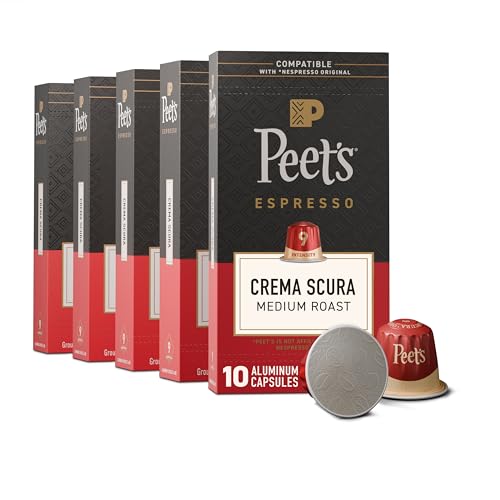
Contains five (5) Boxes of 10 Peet's Crema Scura Espresso - Intensity 9 Medium Roast Coffee Single Cup Espresso Capsules (50 Espresso Capsules Total)
How Much Do Nespresso Pods Really Cost?
If you’re wondering why the price tag on a Nespresso pod feels like a mystery, you’re not alone. The price pricing varies: OriginalLine pods sit around $0.70‑$0.80, with third‑party options dropping to $0.40‑$0.60. VertuoLine pods cost more—standard ones $0.90‑$1.20, mug‑size $1.10‑$1.50, and carafe‑size $2.00‑$3.00.
Now, think about daily use. Two cups a day with OriginalLine means $292‑$584 a year; VertuoLine jumps to $730‑$1,095. If you sip four pods daily at $0.75 each, you spend roughly $90 a month.
Here’s the thing: reusable capsules can bring the cost down to about $0.10 per use, but they still generate capsule waste. The takeaway: you can control price pricing by choosing third‑party or reusable pods, yet every cup still adds to waste. Regular descaling prevents mineral buildup and helps maintain optimal pressure for consistent coffee quality. The built‑in pump system ensures each extraction delivers the correct pressure for a rich crema. Proper descaling schedule extends the machine’s lifespan and preserves flavor.

Complete Kit: The Nessus reusable vertuo capsule kit includes a holder, 100 PCS food-grade aluminum Nespresso foil seals, lid opener and a cleaning brush.(Empty pod not included) With this kit, you can easily refill and reuse your vertuo pods, saving money and reducing waste.

Eco-Friendly Upgraded Kit: Each kit includes a precision holder, 100 high-quality lids, a removal tool, and a cleaning brush. Made from durable, food-grade materials, it helps reduce plastic waste while ensuring top brew quality.(🧡Note: CAPSULE NOT INCLUDED)

Complete Starter Kit – Beginner-Friendly & Ready to Use: Everything you need in one box—refined sealing holder, 100 premium foil seals, lid removal tool, and cleaning brush(NO EMPTY POD). Perfect for home brewing, office coffee breaks, or as a thoughtful gift for coffee lovers. No learning curve required—start refilling your Vertuo pods in minutes
Can You Save Money Compared to the Café Using Nespresso?
When you compare a daily café habit to brewing with Nespresso, the math quickly shows where the savings hide. You spend $4‑$6 per drink, which adds up to $2,920‑$4,380 a year if you sip twice daily. Nespresso OriginalLine pods cost $0.40‑$0.80 each, so your annual cost drops to $292‑$584. That’s a $2,300‑$3,800 difference, enough to boost budget sustainability.
Now, the break‑even point hinges on how often you replace café trips. If you drink two cups a day, you’ll see clear savings; occasional visits won’t offset the machine’s upfront price. Third‑party pods shave the cost further, and subscription options can lower the per‑cup price even more.
All right, the takeaway: frequent coffee‑shopers can save hundreds of dollars yearly with Nespresso, especially when they choose cheaper pods and leverage subscriptions. Ready to crunch your own numbers? Convenient capsule design also reduces the need for extensive maintenance compared to traditional espresso machines. Regular descaling prevents mineral buildup and keeps the machine running efficiently.
A proper lever operation ensures consistent pressure for optimal extraction.

6 ITALIAN BLENDS IN EVERY BOX: FORTE (intensity 12, bold dark roast), DECISO (10, strong and smoky), INTENSO (9, rich full body), CREMOSO (8, balanced daily espresso), VELLUTATO (7, smooth with fine crema), and LUNGO (6, bright medium for the long brew). 100 single-serve coffee capsules total, hermetically sealed to lock in freshness.

NESPRESSO VERTUO PODS: Enjoy Nespresso's Intenso Vertuo coffee that’s dense and dark with golden brown sugar notes with this 30-count capsule pack.

Contains 5 boxes of 10 Nespresso compatible coffee capsules to make 50 cups total
Is Cleaning a Nespresso Machine Easy?
You’re probably wondering if the money‑saving promise of Nespresso still holds up when the machine needs care.
How often do you need to clean it?
You’ll do routine upkeep daily: rinse removable parts, wipe the exterior, empty the drip tray, capsule container, and cup support. A quick water‑tank rinse and a rinse cycle between uses keep coffee residue at bay.
What about deeper maintenance?
Descaling schedule calls for a full descale roughly every three months, using the manufacturer’s solution and a final flush with fresh water. The machine usually prompts you, so timing stays simple.
Do milk‑system models add work?
If you have a milk system, clean its components after each frothing session. Most parts fit on the top rack of a dishwasher or soak in hot, soapy water; avoid harsh solvents. Milk system components should be rinsed in hot water for at least 30 minutes if a dishwasher isn’t available. Following the step‑by‑step guide ensures you can safely open and maintain the machine without damage.
Takeaway: Regular, small tasks keep the machine humming; occasional descaling and milk‑system care are the only extra steps. Ready to see how these steps fit into your daily coffee ritual? The drip tray should be emptied and cleaned weekly to prevent buildup. Always verify that the power button is fully released before unplugging power button..

Includes: 2 portioned pouches of descaling solution specially designed for your Nespresso machine

RESTORE COFFEE FLAVOR & AROMA: Our universal descaling solution removes bitter mineral buildup and calcium deposits from heating elements. This ensures your Keurig cleaner process restores the original "day one" taste of your favorite pods and espresso capsules

2-Pack Coffee Descaler and Cleaner - Clean and rinse away residue and oil buildup in your coffee maker with Impresa's Coffee Descaler Solution. Our highly effective solution comes with two 8-ounce bottles - enough for 4 descaling sessions (2 uses per bottle)
Who Should Buy a Nespresso Machine and Who Shouldn’t?
Who actually benefits from a Nespresso machine? You’re probably wondering if the hype matches your routine. If you crave speed, you’ll love the single‑button brew and the pod‑based system that removes grind, dose, and tamp decisions—this is the ultimate convenience trade‑offs for a busy kitchen.
Who should buy one? Convenience‑first drinkers, small households, and anyone who values flavor consistency‑ across cups fit best. Vertuo models serve both espresso shots and larger mugs, letting mixed‑preference families share a single machine without barista skills.
Who shouldn’t? Large‑volume coffee fans and espresso purists will feel the limits. Pods cost more per cup, and you can’t tweak grind or pressure. If you need a pot of coffee or true espresso control, look elsewhere.
Takeaway: Match the machine to your pace and palate, not to a desire for endless coffee. Next step: compare your daily cup count and budget to see if the trade‑offs fit. The machine’s high‑pressure pump forces water through the capsule at 19 bars, creating the signature crema. Also, pre‑heating the machine briefly before brewing can reduce wait times and improve flavor extraction. Regular descaling helps maintain optimal performance and prevents error codes.