
You’re right to wonder if Nespresso truly makes espresso, because its Original line pumps water at 19 bars—about double the classic 9‑bar benchmark—through a 5‑7 g coffee puck, giving you an espresso‑style shot that feels rich but isn’t a certified espresso. The Vertuo line uses a 7,000 rpm Centrifusion and barcode‑controlled pods, so you can get a true espresso or a larger coffee, but the grind and dose stay fixed. In short, Nespresso delivers a close replica, not a barista‑grade pull; the next sections will show which machine and capsule choice best matches your taste.
Does Nespresso Actually Make Espresso?
You’re probably wondering if that little capsule machine really delivers a true espresso shot, and you’re not alone. You see the word “espresso” on the box and wonder if the pressure, temperature, and grind meet the certified Italian standards. The truth is, Nespresso uses pre‑portioned capsules and forces hot water through them at about 19 bars, which is higher than the classic 9‑bar café benchmark, but the grind is coarser and the dose fixed, so it doesn’t fully match the technical definition. The machine’s high‑pressure pump pushes water through the capsule at precisely controlled pressure, ensuring consistent extraction. Here’s the thing: the crema you notice on top looks like authentic espresso foam, yet it often comes from the capsule’s design rather than a true pressure‑extraction process. Marketing language loves the term “espresso” because it signals richness, but the beverage is technically an espresso‑style shot—consistent, convenient, and sometimes less nuanced than a barista’s pull.
Nespresso’s compact design allows the machine to fit comfortably on any kitchen counter without sacrificing performance.
Now, consider sustainability. Nespresso’s aluminum capsules are recyclable, and the company has programs to reduce waste, which adds a green angle to the convenience factor. Still, the environmental impact depends on how diligently you recycle and whether you choose reusable pods.
All right, takeaway: Nespresso delivers a crema‑topped, espresso‑like coffee, but it isn’t a strict espresso by industry standards. If you value convenience and sustainability over perfect barista fidelity, it fits the bill. Next, you might compare Original versus Vertuo models to see which aligns better with your taste and pressure preferences. Espresso standards vary across institutions.
espresso makers provide a compact, user‑friendly alternative that relies on pre‑ground pods and simpler pressure systems, making them ideal for casual drinkers seeking convenience.
Original vs. Vertuo: Which Nespresso Espresso Machine Wins?
Which machine actually fits your coffee routine?
If you crave classic espresso, the Original line’s 19‑bar pump gives a concentrated shot with a light body. You’ll enjoy a richer crema from Vertuo’s Centrifusion, but it spins at 7 000 rpm and tailors each brew to a barcode‑read capsule.
Which one saves you money?
Obviously, Original capsules cost less and come in many third‑party options, so capsule cost stays low. Vertuo pods are pricier and limited to Nespresso’s dome‑shaped formats, but they let you brew espresso, lungo, or a mug‑size coffee without swapping machines.
Why choose versatility?
All right, if you want a single device for both espresso shots and larger coffee drinks, Vertuo wins on size variety. The Original shines for purists who prioritize espresso‑focused machine brewing and affordable pods.
Takeaway: pick Original for cost‑effective, espresso‑only brewing; choose Vertuo for flexible drink sizes and richer crema. Next, decide which drink style matters most to you.
Choosing the right system also depends on how often you clean the machine.
A thorough rinse after each use helps prevent scale buildup and extends the machine’s life.
Regularly cleaning the group head and portafilter, as described in the De’Longhi Espresso Machine Care guide, ensures optimal performance and flavor consistency.

Extra Small Machine: At just 3.3" wide, barely wider than a typical 3" phone; This espresso maker takes up next to no counter space; The internal structure is expertly engineered for maximum space efficiency, with a solid 5-lb build that feels premium

ESPRESSO MACHINE: Enjoy a full range of espresso coffee with Nespresso.; Includes 25 second heat up and energy saving automatic shut off.

ONLY Compatible with Nespresso Original Pods: This espresso machine is designed exclusively for Nespresso Original Capusles. Features a 20-bar professional pump for rich flavor extraction. Compact design ideal for homes, offices, or as a thoughtful gift (weddings, holidays, birthdays)
How Does the Original Line Replicate Traditional Espresso?
It looks like you’re wondering why the Original line feels so espresso‑like even though it’s a capsule system. The secret lies in pressure dynamics. A pump pushes water at roughly 19 bars through a finely ground 5‑7 g coffee puck, just like a traditional portafilter. The sealed capsule keeps that pressure steady, forcing water through the grounds in a controlled flow that extracts a concentrated shot and a crema layer. How does capsule engineering make this happen? The machine pierces the capsule, then injects water directly into the coffee chamber. Internal channels guide the stream, mimicking the pressurized flow of a manual espresso machine while preserving the capsule’s airtight seal. The silicone gasket on the Nespresso capsule ensures a tight seal, preventing leakage and allowing proper pressure buildup. What does this mean for you? You get a short, bold, espresso‑style drink without tamping or grind adjustments. The result isn’t a certified espresso, but it’s a close replica that satisfies most cravings. Takeaway: The Original line uses high pressure and smart capsule design to emulate espresso’s core characteristics. Next, you might wonder how Vertuo’s system differs. Pre‑heat the machine for optimal performance. The VertuoLine utilizes centrifugal brewing to create larger cup sizes with a different flavor profile. Proper water temperature is essential for extracting balanced flavors.
Why Does Vertuo Offer Espresso Plus Larger Coffee Drinks?
If you’re wondering why Vertuo can brew both espresso and a mug‑sized coffee, the answer lies in its design philosophy. Vertuo’s core logic uses Centrifusion, spinning the capsule at roughly 7,000 rpm while hot water floods the grounds. That spin creates a thicker crema and lets the machine read a barcode to set the exact brew capacity for each pod.
Here’s the thing: the system supports multiple capsule sizes—5 oz, 8 oz, and the classic 1‑oz espresso—so you get convenience versatility without swapping machines. The larger pods simply hold more coffee, giving you a bigger cup when you need it. Caffeine content varies by pod size, with espresso‑type pods delivering about 60 mg and larger Gran Lungo pods up to 140 mg.
Obviously, you get a single‑button experience that delivers espresso and a regular coffee in one device. Takeaway: Vertuo’s design lets you choose espresso or a larger drink, delivering true convenience versatility and adjustable brew capacity. Next, you might wonder how pressure and Centrifusion shape the flavor. The machine’s adjustable cup rack allows users to fit various mug sizes comfortably. Regular maintenance, such as a factory reset, can help keep the machine operating smoothly.
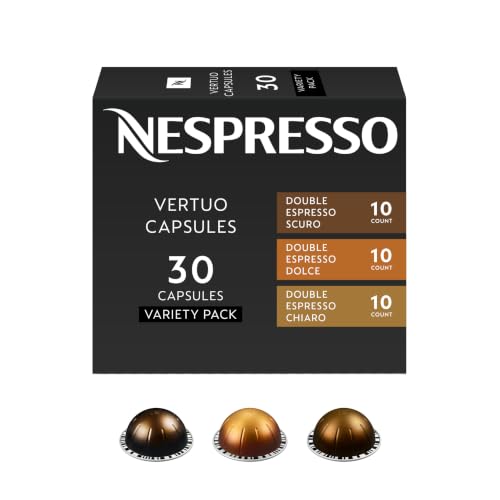
NESPRESSO VERTUO DOUBLE ESPRESSO VARIETY PACK: This Nespresso double espresso assortment offers 30 Nespresso Pods for the Nespresso Vertuo System. 10 Double Espresso Scuro, 10 Double Espresso Chiaro, and 10 Double Espresso Dolce.

Includes 20 Diavolitto Intensity 11 and 20 Altissio Intensity 9 Nespresso VertuoLine coffee pods

Double Espresso Dolce brews 2.7 FL. OZ.: These Nespresso Vertuo pods are part of the Espresso range that will provide you with a 2.7 fl. oz. serving of a double espresso coffee beverage.
How Do Pressure and Centrifusion Affect Nespresso Espresso?
You’re probably wondering how pressure and that Centrifusion spin actually shape the espresso you get from Nespresso.
How does pressure dynamics shape the shot?
Nespresso pumps push water at 15‑19 bars, far above the 9‑bar espresso benchmark. The high pump pressure bursts through the capsule’s tight puck, forcing oil and gas into a fine foam. That creates a thick crema texture, but the capsule’s sealed design prevents channeling, so you get consistent intensity without over‑extraction.
What does Centrifusion add?
In Vertuo, the machine adds a 15‑bar water flow to a rapid spin. The centrifugal force mixes water and grounds, altering flow patterns and extracting different cup sizes. The motion boosts crema formation while keeping the shot smooth, because the spin replaces traditional tamping.
Takeaway
Pressure dynamics give you body and crema; Centrifusion refines texture and consistency. Now you can decide which system matches your taste.
Using a burr grinder ensures uniform particle size for optimal extraction across brewing methods. Cost considerations also play a role in choosing between convenience and traditional espresso preparation. Regular descaling with a proper solution helps maintain consistent pressure and prolongs machine life.
Which Capsules Fit Which Nespresso Espresso Machine?
Because the two Nespresso families use completely different designs, you can’t mix them up without risking a bad shot or a jammed machine. You’re probably wondering which capsules belong to which machine, and that’s a smart question.
Which capsules fit OriginalLine?
All OriginalLine pods—official Nespresso, Lavazza, illy, Caffè Borbone—share the same small, cylindrical shape. They work in every OriginalLine machine, and many third‑party aluminum capsules also fit. You’ll get 1.35 oz espresso or 2.7 oz lungo, with rich crema. Regular descaling helps keep the pressure optimal for these small pods. Proper water temperature ensures consistent extraction across all capsules. A proper reset procedure can resolve brewing inconsistencies caused by firmware glitches.
Which capsules fit VertuoLine?
Vertuo capsules are larger, barcode‑driven, and only slot into Vertuo machines. They brew from espresso up to 17 oz cups. Third‑party options are scarce because the barcode controls pressure and cup size.
Takeaway
Match capsule shape and barcode to your machine; otherwise you risk poor extraction or jams. Knowing market trends—OriginalLine’s broad third‑party ecosystem versus Vertuo’s limited options—helps you choose the right pod before you buy.

INDULGENT FLAVORS: This assortment of Nespresso Original coffee pods contains a variety of Nespresso capsules: 10 Caramello, 10 Cioccolato , 10 Vaniglia

Contains four (4) boxes of Café Bustelo espresso capsules (10 capsules per box)

50 CT Coffee capsules compatible with Nespresso OriginalLine machines. Not affiliated with Nespresso
What Flavor and Size Differences Exist Between Espresso Shots and Coffee Cups?
You’re probably wondering why a single‑shot espresso feels so different from a 200‑ml coffee cup. The main reason is crema texture and dose variance. A true espresso pulls a thick, oily crema from a fine puck packed with 18 g of coffee, while a Nespresso capsule uses 5–7 g, producing a lighter, foam‑like layer that doesn’t carry the same flavor depth. Nespresso pods contain pre‑ground coffee sealed for freshness. How does size change taste? A 25‑30 mL shot concentrates oils and acids, delivering bold, layered notes. A 200‑ml cup dilutes those compounds, yielding a smoother, milder profile that spreads across the palate. The larger volume also lowers perceived intensity, even if caffeine numbers overlap. Takeaway: Espresso’s rich crema and higher dose give a concentrated punch; larger coffee cups trade intensity for gentler, more uniform flavor. Next, explore how to mimic espresso texture at home. A standard espresso shot typically contains 63–75 mg of caffeine, which is comparable to the lower end of an 8‑ounce brewed coffee. Consistent grind size is essential for achieving the proper extraction time and flavor balance. Extraction pressure plays a crucial role in developing the crema and the intensity of the shot.
Top Tips for a Perfect Nespresso Espresso‑Style Brew
If you’re wondering why your Nespresso shot sometimes feels flat, the answer usually starts with the machine’s temperature. Warm‑up the unit for at least 30 seconds, run a water cycle, and let it reach a stable heat level; this locks in the right brewing temperature and boosts crema consistency.
Which capsule gives true espresso feel?
Pick a short‑extraction pod labeled “espresso” or “ristretto.” Those blends are roasted for intensity, so you’ll get a thick crema and a balanced body. Avoid “lungo” or milk‑drink capsules if you want a classic shot.
How do you control volume and strength?
Program your machine to stop at 40 ml, or hold the brew button for a custom amount. Consistent volume prevents over‑dilution and keeps flavor sharp.
What about water and maintenance?
Use filtered water and rinse the brew head after each cup. Descale every 2–3 months to preserve machine temperature stability.
*Takeaway:* Warm‑up, right capsule, precise volume, and clean water give you a reliable espresso‑style brew every time. Ready to try a new capsule?

Developed with Nespresso to work perfectly with original line Nespresso machines: Essenza Mini, Pixie, CitiZ, Expert, Lattissima, KitchenAid, Creatista

DARK ; BOLD:;Double Espresso Scuro is a double long espresso that is both intense and full-bodied. It has a dark smoky character that’s balanced out by cocoa and vanilla notes.

Contains 5 boxes of 10 Nespresso compatible coffee capsules to make 50 cups total