
You’re probably wondering why cold‑brew feels smoother, and the answer’s simple: use a 1:8 coffee‑to‑water ratio, coarse grounds, and a 12‑24‑hour chill. First, weigh 1 g coffee per 8 g water, grind to kosher‑salt size, and pour cold water slowly over the grounds in a jar. Cover, refrigerate, then strain through a mesh sieve and a paper filter for clarity. Store the concentrate in airtight jars, dilute when you serve, and you’ll have a ready‑to‑drink brew—next, you can explore flavor tweaks and serving ideas.
Pick the Perfect Cold‑Brew Coffee‑to‑Water Ratio
How do you pick the right coffee‑to‑water ratio for cold brew? You’re probably wondering which numbers give you a smooth, not‑over‑extracted cup. Here’s the thing: start with a ratio profile that matches your serving plan. For a concentrate that you’ll dilute later, most experts—Counter Culture, Methodical Coffee—suggest 1:8 (coffee:water). If you prefer a ready‑to‑drink brew, try 1:12; it often tastes fine without dilution. Stronger batches can go as low as 1:4.5, but they’ll need more water before you sip.
Now, measure coffee and water by weight using a kitchen scale, not volume, for consistency. Your brewing equipment—like a French press or a dedicated cold‑brew tower—should hold the total volume comfortably; overflow ruins the ratio.
All right, pick a starting point, weigh it out, and brew. The takeaway: 1:8 gives a balanced concentrate, 1:12 a milder drink, and weight wins. Next, decide whether you’ll grind coarse or fine for the brew. Using coarsely ground beans helps prevent over‑extraction and yields a smoother flavor.
Adding a splash of cold brew concentrate to iced tea can create a refreshing hybrid beverage.
A proper steep time of 12‑24 hours ensures optimal extraction without bitterness.
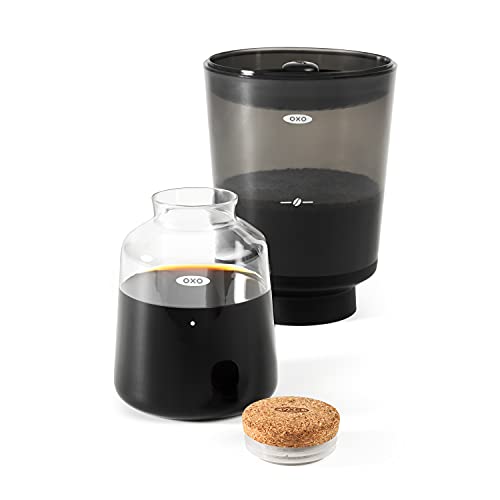
Brew low-acid coffee concentrate for hot or iced coffee

Grasp Cold Brew Ratio Easily: Experience the art of precision brewing with our cold brew pitcher! When using 120g, 100g, 80g, and 60g of coffee grounds with the same time and water quantity, each ratio creates a distinct coffee concentration. Unlock the potential for customized cold brew strength, allowing you to savor the nuanced flavors according to your preference. Elevate your cold brew experience with our versatile pitcher.

Grind Coffee for Cold Brew and Prepare the Grounds
What grind size should I use for cold brew? You’ll want a coarse texture—think kosher salt or coarse sand. Use a burr grinder, set it to a medium‑coarse level (around 7/10 on a coarse scale) and weigh your beans for consistency. A uniform grind keeps extraction even and reduces sediment, so aim for 800‑1440 µm particles.
Now, about grind consistency and filter choice. Coarse grounds pair best with simple filters—paper or cheesecloth capture fewer fines, while mesh baskets may let grit through. If you use a blade grinder, expect more fines and a murkier cup.
All right, your takeaway: grind coarse, weigh for repeatability, and match your grind to a filter that removes the remaining fines. Next, you’ll combine water and coffee—ready to steep? Burr grinder uniformity ensures consistent particle size across batches. Extraction balance is crucial for achieving a smooth, low‑acid cold brew. Heat buildup can degrade flavor if grinding runs too long.
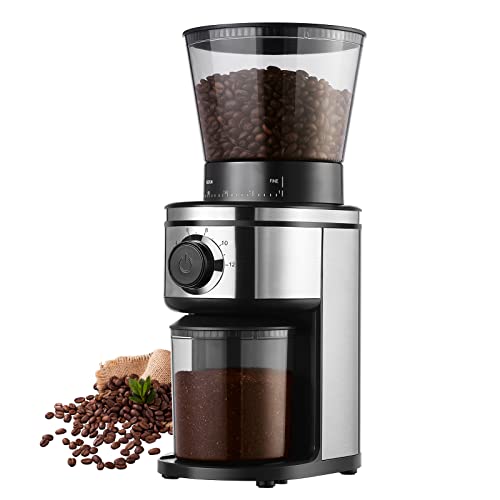
【Durable Conical Burr】With 40-millimeter stainless steel conical burrs, OLLYGRIN burr coffee grinder ensure optimal flavor extraction and create uniform grounds.
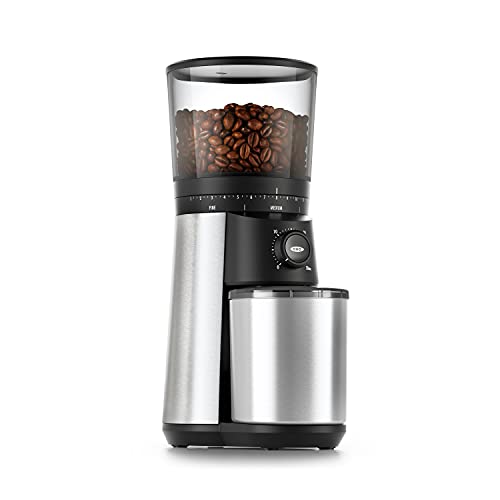
40mm stainless steel conical burrs: Precision grinding system produces uniform coffee grounds to ensure even extraction for rich, balanced flavor in every cup.
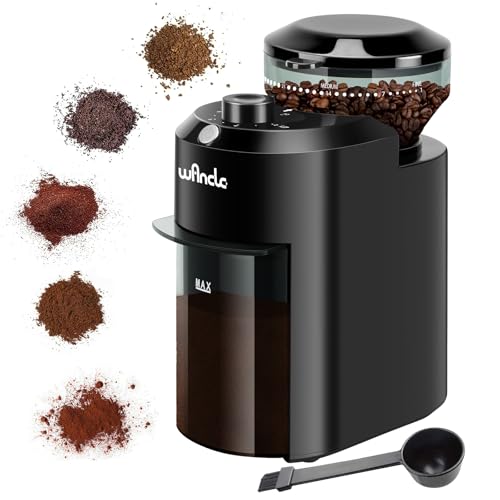
✅ [Consistent Flavor Extraction]: Our electric burr coffee grinder offers 28 precise grinding settings, allowing you to adjust it freely according to your taste, from coarse to fine grinding. This ensures that every cup of coffee has a good, even grind and flavor extraction while retaining the oils without generating excessive heat.
Combine Water and Coffee, Then Steep for 12‑24 Hours
How do I combine water and coffee for cold brew? You start with a temperature ratio that feels right—most people use 1 g coffee to 8 g water, about one cup of grounds to four cups of water. Pour the cold water slowly, letting it cascade over the grounds, then give a gentle swirl so every particle gets wet. That even saturation sets up a balanced flavor profile and prevents weak spots.
Now, cover the jar and place it in the refrigerator. Keep the brewing temperature low, around 4 °C, and let it sit for 12‑24 hours; 14 hours works for most. Longer extraction time deepens intensity, but too much can push bitterness.
All right, remember: a steady, cold environment and a consistent extraction time give you a smooth, controllable concentrate. Next, you’ll want to strain it without losing that clarity. Use a fine mesh filter to remove fine particles and achieve a crystal‑clear brew.
A proper coarse grind ensures optimal extraction without over‑extraction.
A gentle plunger press can help settle the grounds before straining, reducing sediment in the final brew.

Fit 64 oz Wide Mouth Mason Jar for convenient brewing.! Enjoy smooth, rich coffee with our fine mesh stainless steel filter.

Smooth Cold Brew Bags, No Mess – Fine mesh design keeps grounds contained, ensuring a clean, rich cold brew coffee every time. Enjoy hassle-free brewing without gritty residue

【⚠️ Important Usage Warning】: Do not pour boiling water directly into the container; the maximum safe operating temperature is 60°C (140°F). Avoid drastic sudden temperature shifts to stop cracking damage.
Strain the Concentrate Without Losing Flavor or Clarity
If you’re worried that straining will strip flavor or leave cloudiness, you’re not alone—most home brewers hit that snag.
How do I keep flavor while filtering out sediment?
Start with a fine‑mesh sieve to catch the bulk of grounds, then stack a paper coffee filter in a V60 or Chemex for clarity enhancement. Pre‑wet the paper to seal it and reduce paper‑taste transfer. Let the concentrate settle for a few minutes; this natural pause cuts down on suspended particles, making sediment control easier.
What equipment gives the best balance?
Use a funnel‑cone setup with a large bowl underneath, so gravity filtration can flow slowly without pressure. Avoid pressing the slurry—gentle pouring preserves flavor preservation and prevents bitter compounds from slipping through.
Takeaway: A two‑stage filter equipment routine—coarse sieve followed by a pre‑wet paper filter—delivers a clear, vibrant concentrate. Ready for the next step?
To achieve the signature creamy head, you’ll need to infuse the brew with nitrogen using a nitrogen charger and a stout‑style glass.
Bar‑strength almond milk can create a richer, more stable foam, which is especially useful when you want a velvety texture in coffee‑based drinks.Paper towels are porous but may contain chemicals that affect flavor.

A MUST-HAVE KITCHEN ACCESSORY: Keep the pulp and herbs out of your cocktails with this stainless steel strainer. You can also use it to filter coffee grounds, strain tea leaves or juice, sift flour, or for dusting baked goods. The rim is polished with a classic mirror finish to make this wire mesh strainer a perfect way to add that professional, edgy look to your home bar.
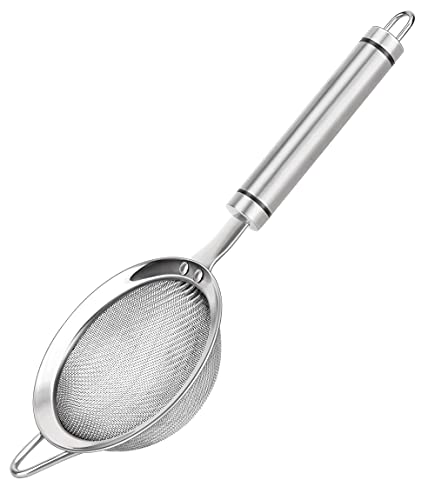
Made from high-quality, food-grade 304 stainless steel. This strainer features a sturdy outer framework and handle. Easy cleaning. Dishwasher safe. Mirrored, burr-free wire mesh screen won't scratch your hand while you clean it.

Two Handy Sizes for All Your Kitchen Needs: This 2-piece fine mesh strainer includes two different sizes—3.25 inches and 2.6 inches—perfect for a wide range of tasks. Whether you're steeping loose leaf tea, straining cocktails and juices, or sifting flour, cocoa, and powdered sugar, these stainless steel strainers offer the ideal size and precision for both small and medium-sized portions. A must-have tool for any home cook, baker, or mixologist.
Store, Dilute, and Serve Cold Brew Like a Pro
You’re probably wondering how to keep that freshly strained concentrate tasting as bright as the moment you pulled it through the filter. Store it right away in airtight containers, preferably glass jars with tight‑fitting lids, and place them at the back of a 34‑40 °F fridge. Fill the jar close to the top, minimize air, and keep the temperature steady—this slows oxidation and guarantees flavor preservation.
Now, keep the brew undiluted until you’re ready to serve. Add water, milk, or cream only in the glass; this prevents premature dilution and lets you tweak strength later. Use clean ice or coffee‑ice cubes to avoid watering down the flavor.
All right, label each jar with the brew date and use the oldest first. Serve over fresh ice, keep add‑ins separate, and enjoy a crisp, bright cup every time. The takeaway: airtight storage, cold temperature, and delayed dilution keep your cold brew at its best. Ready to pour? Concentrates allow you to customize strength easily, giving you a versatile coffee base for any serving style. Remember to rinse the mesh after each use to prevent residue buildup.

High-Grade Glass: Made with premium BPA-free and lead-free food-grade glass, ensures long-lasting durability and offers a clear view of contents, preserving the freshness and integrity of stored food.

The 4lb Sugar & 5lb Rice Solution: Finally, a worthy home for your bulk buys. Each extra-large 78oz (0.6 Gal / 2.3L) jar is engineered to perfectly store common warehouse-sized staples, including a full 4lb bag of sugar or a 5lb bag of long-grain rice. Say goodbye to messy paper sacks and hello to a beautifully organized pantry.

Versatile Food Storage: These glass mason jars are perfect for overnight oats, yogurt, chia, jams, pickles, sauces, puddings, smoothies, and snacks. The compact 16 fl oz volume capacity (not weight) is ideal for meal prep, portion control, and on-the-go use.