
You’re probably wondering why your French press sometimes comes out weak or gritty, and you’re right to focus on ratio, grind, and timing. Use a 1:15 coffee‑to‑water weight ratio (e.g., 20 g coffee to 300 g water), grind coarsely like sea‑salt, pre‑heat the press, bloom the grounds for 30‑45 seconds, then pour, stir, and steep exactly four minutes before plunging slowly and decanting immediately. Adjust grind size or steep time by a few seconds to fine‑tune strength, and you’ll get a consistently rich cup.
Set the Ideal French Press Coffee Ratio
You’re probably wondering why everyone talks about “1:15” for French press. The bean ratio of one gram coffee to fifteen grams water hits a sweet spot where brew strength feels balanced and the taste profile isn’t too weak or overly bitter. That’s why ESPRO, Dancing Goats, and Roasty Buds all start there— it gives a reliable extraction balance you can tweak later.
All right, if you want a stronger cup, drop the ratio to 1:13 or 1:14; you’ll notice fuller body and richer flavor. For a lighter brew, try 1:17 or 1:18, which eases bitterness and softens intensity. Obviously, measuring by weight, not scoops, keeps the ratio consistent every time.
Here’s the thing: start with the classic 1:15, taste the result, then adjust coffee weight up or down by a gram or two per 15 mL water until the brew strength matches your preference. Your next step is to experiment with these tweaks and see how the taste profile evolves. You can also use 1–2 tablespoons per 8 oz of water as a quick‑reference guide when a scale isn’t handy.
A proper grind is essential for even extraction, and a coarse uniform grind ensures the grounds don’t slip through the filter. The mesh filter in a French press separates the brewed coffee from the grounds, allowing a clean pour.

【Ultra Small, Yet Professional】The Espresso Scale is small enough to fit in your palm. It measures 4.13*4.13*0.78 inches and weighs just 0.75 pounds. The coffee scale can work on most espresso machines and small pour-over coffee stands. It's easy to store and carry around, making it perfect for coffee lovers who like outdoor coffee.

【3 Smart Modes, 0.1g Pro Precision】Unlock precise control with 0.1g accuracy and 3 smart modes: Auto Timer for Pour-Over, Auto Timer for Espresso, and Standard Weighing. Whether brewing espresso or pour-over, this coffee scale adapts to your style for consistent, accurate results. The larger, easy-to-read display and quick response time help you focus on pouring technique and flow rates without distractions
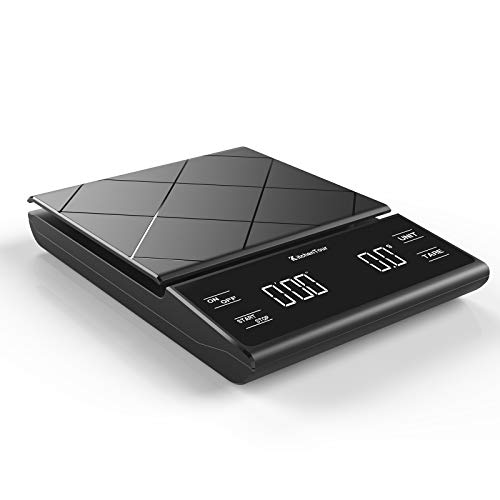
#Make Coffee Better every time# - KitchenTour EK6012 defines the latest in precision weighing technology with a weight capacity from 0.3g - 3000g to help you measure and get an exceptional cup of coffee with refined accuracy. The electronic coffee scale has a built-in timer to cook and time your coffee to ensure the consistency of each cup of coffee.
Grind and Measure French Press Coffee
Why does grind size matter for a French press? Because a coarse, uniform grind lets water flow evenly and keeps sediment down. You’ll want grind consistency like sea‑salt crumbs, about 690–1300 µm. A burr grinder gives you that evenness; uneven particles cause over‑extraction and a gritty cup.
Now, let’s talk measurement precision. Weighing coffee on a kitchen scale beats scooping every time. Aim for a 1:15 ratio—30 g coffee to 350 g water is a solid start. If you lack a scale, use a marked scoop: roughly 8 g per 4 oz (118 ml) water, but expect slight variations.
Here’s the thing: tweak grind size in small steps to dial flavor without breaking the balance. A finer grind boosts extraction, a coarser one eases it. Takeaway: keep grind consistency, measure precisely, and you’ll brew a smooth French press every time. Next, ask yourself how to pre‑heat the press and bloom the grounds. A proper steep time of about four minutes balances body and acidity.
A balanced coffee‑to‑water ratio ensures consistent strength across different batch sizes. Using a paper filter before adding water can further reduce fine sediment and improve clarity.
Pre‑heat the Press and Bloom the Grounds
Why should you pre‑heat the press before blooming? The hot vessel keeps water near 195‑205 °F, so you lose less heat while the grounds release gases. Fill the carafe with about 8 oz of hot water, swirl for 30 seconds, then discard. This simple step stabilizes temperature retention timing and protects glass or steel from thermal shock.
Now, bloom the grounds. Pour just enough water to saturate them, creating a dome of slurry and bubbles. That first minute lets carbon dioxide escape, sharpening the bloom aroma and ensuring even extraction later. Gently break the crust if needed, but avoid vigorous stirring.
Takeaway: a warm press and a proper bloom give you a richer flavor foundation. Next, you’ll add the remaining water and set the steep timer. Regular cleaning with a mild dish‑soap solution prevents residue buildup and keeps each brew tasting fresh. Using the correct coffee‑to‑water ratio further enhances consistency. Understanding the extraction dynamics helps you fine‑tune timing for optimal balance.

Iconic French press coffee maker that brings out the full flavor and aroma of your brew.
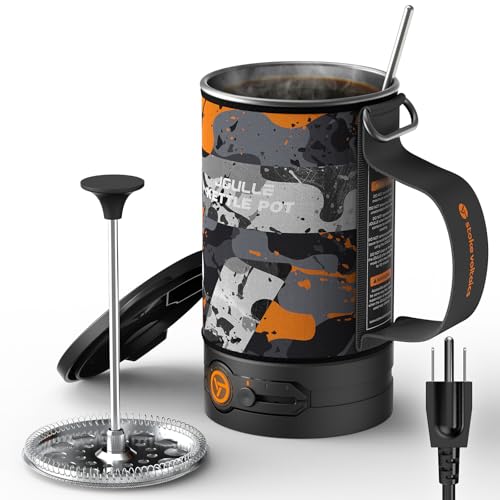
Innovative 2-in-1 Design: A portable coffee maker and electric kettle in one. Boil, steep, and press in the same vessel—no extra tools required. Perfect electric french press coffee maker for home, travel, camping, or office use.

Innovative 2-in-1 Design: A portable coffee maker and electric kettle in one. Boil, steep, and press in the same vessel—no extra tools required. Perfect electric french press coffee maker for home, travel, camping, or office use.
Add Water, Stir and Time the Steep
How much water should I add and why does it matter? You need about 1 part coffee to 15‑17 parts water by weight. For a 12 oz cup, that means 21 g coffee and 300 g water; a 34 oz press calls for 56 g coffee and 900 g water. The right amount keeps extraction balanced and prevents a weak or overly bitter brew.
Now, pour hot water—around 195‑205 °F—slowly in a circular motion to fully wet the grounds. A quick, even pour starts the extraction right away, and you avoid overfilling the press.
Here’s the thing: after the initial pour, stir gently with a spoon or chopstick for a few seconds. Light agitation guarantees every particle meets water without creating excess sediment.
All right, let the coffee bloom for 30‑45 seconds. Bloom timing releases trapped CO₂, improving flavor balance. Then add the remaining water, give a final stir, and set a timer for 4 minutes. The steep time extracts the sweet spot of flavor; too short under‑extracts, too long adds bitterness.
Takeaway: Measure, pour at the right temperature, stir lightly, respect bloom timing, and steep exactly four minutes. Next, you’ll learn how to plunge and serve without over‑extraction. Using a coarse grind ensures even extraction and prevents over‑extraction. Adding a cold‑brew [ can give your coffee a smoother, lower‑acid profile.
A proper brew ratio is essential for consistent flavor.

No Plastic Touching Food: Made with 304 stainless steel and food-grade silicone, our French press keeps all brewing surfaces plastic-free— no odor and no plastic particle into your coffee. Safe and worry-free

Barista-Level Precision: A 0.1g high-precision sensor with a rapid refresh rate responds instantly to changes in weight, helping you achieve consistent results across espresso, pour over, drip coffee, Chemex, V60, and filter coffee brewing.
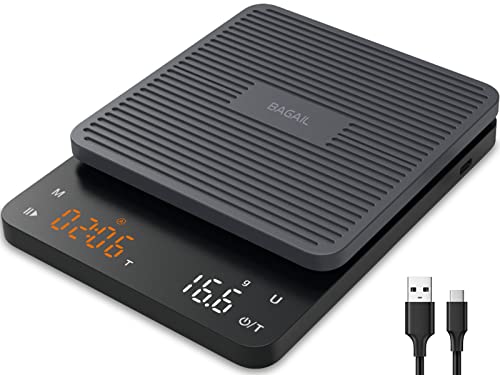
Important: Please remove the 4 plugs from under the weighing platform before use
Plunge Slowly, Transfer Immediately, and Avoid Over‑Extraction
Because the plunger’s job is just to separate grounds from liquid, a gentle, steady descent prevents you from stirring the settled coffee back into the brew, which would create extra sediment and bitterness. You’re probably wondering why the plunge timing matters. Here’s the thing: a slow, straight‑down press lets the mesh filter the brew cleanly, while a harsh push agitates fines and clouds the cup. A well‑aligned filter fold ensures the press operates smoothly without unwanted turbulence. All right, now that the plunger hits the bottom, you must practice immediate decanting. Pour the coffee into a carafe or mug right away; leaving it in the press lets extraction continue, pushing flavor toward bitterness. Takeaway: control the plunge, then decant instantly to lock in balance and avoid over‑extraction. Ready to fine‑tune your steep next? The French press’s full‑immersion method extracts more oils than drip brewing, contributing to its richer body. The same full‑immersion principle also works for tea, delivering consistent flavor across steeping times.
Fix Common Problems and Fine‑Tune Your Brew
You’re probably wondering why your French press sometimes turns out gritty, weak, or bitter even after you’ve nailed the plunge and decant. The first thing to check is filter strength and filter cleanliness; a fine mesh catches more particles, but if it’s clogged the pressure pushes sediment through, making the cup gritty.
Now, grind size is your biggest lever. Coarse, sea‑salt‑like grounds stay out of the mesh; if they’re too fine, you’ll get grit, and if they’re too coarse, the brew will be thin. Adjust in small steps and weigh your coffee—1 : 12 coffee‑to‑water is a solid baseline.
All right, temperature matters too. Aim for ~202 °F, about 30‑60 seconds after a boil. Too cool under‑extracts, too hot over‑extracts, leading to sour or burnt notes.
Here’s the thing: steep time. A four‑minute brew works for most, but dropping to three‑and‑a‑half minutes can clean up bitterness if you’ve already fixed grind and ratio.
Filter cleanliness can’t be ignored. Disassemble, wash with hot, soap‑free soap, and rinse well; oil residue dulls pressure and lets fine grounds slip through.
Takeaway: fine‑tune grind, ratio, temperature, and filter health one at a time, and you’ll turn those off‑flavor cups into consistent, delicious coffee. Ready to test a new grind size? Even with an extra‑fine grind and higher coffee‑to‑water ratio, a French press can’t reach the 9 bar pressure needed for true espresso. For a smoother, more balanced cup, consider using a paper filter as an extra barrier against sediment. The extraction pressure of espresso creates a crema that French presses simply cannot replicate.