
You’re probably wondering why cold brew is sold as a concentrate, and you’re right to ask—it’s just a super‑strong, low‑acid coffee extraction you dilute to taste. Think of it as espresso’s chilled cousin: you steep coarse coffee (1 part coffee to 5‑8 parts cold water) for 12‑18 hours at 4‑15 °C, then filter twice for a silky, gritty‑free liquid. The result packs a punch in a small volume, so a 1:1 water mix gives a regular brew, while more water tones it down; keep it sealed in the fridge for up to two weeks, or freeze cubes for later. If you keep going, you’ll uncover exact ratios, storage tricks, and creative ways to enjoy it.
How to Brew a Strong, Smooth Cold Brew Concentrate at Home
How do you get a strong yet smooth cold‑brew concentrate without ending up with gritty sludge? You’re probably wondering which brew methods keep the texture clean while the flavor stays bright. The trick starts with coarsely ground coffee—think French‑press size—so you avoid over‑extraction and bitterness. A burr grinder gives uniform particles, but a good coarse pre‑ground works too if you stir the grounds until every speck is fully saturated with cold, filtered water.
Now, cover your jar and refrigerate for 12‑24 hours; the low temperature steadies flavor profiling and prevents harsh notes. Gentle agitation at the start eliminates dry pockets and keeps the slurry from compacting.
A consistent cold water temperature helps preserve the coffee’s nuanced flavors during steeping.
All right, strain through a fine‑mesh filter, then repeat with a paper or cheesecloth layer for crystal‑clear liquid. Slow pouring prevents clogging, and a second straining yields a silky finish.
Takeaway: coarse grind, full saturation, cool steep, double‑filter = smooth, strong concentrate. Next, ask yourself how you’ll dilute and serve it for the perfect cup. Using a coarse grind helps prevent over‑extraction and ensures a cleaner brew.
A proper 1:4 coffee‑to‑water ratio ensures the concentrate is both potent and balanced.
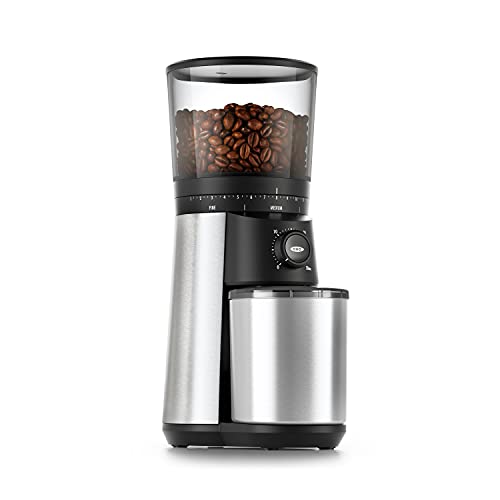
40mm stainless steel conical burrs: Precision grinding system produces uniform coffee grounds to ensure even extraction for rich, balanced flavor in every cup.
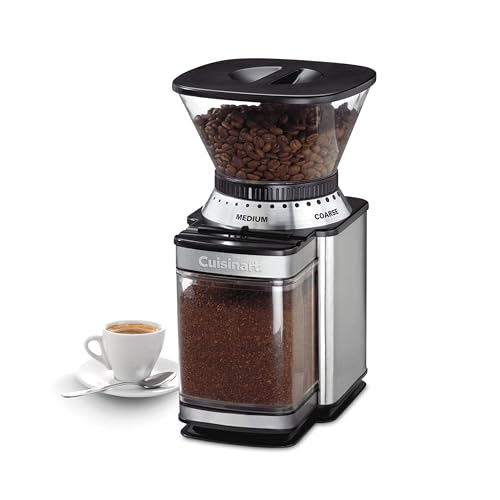
ENJOY OPTIMUM FLAVOR: The Cuisinart Coffee Grinder with 18-position slide-dial grind selector provides a uniform grind from ultra-fine to extra-coarse to ensure your fresh coffee beans are ground exactly the way you prefer.

12 CUSTOM SETTINGS: The adjustable coffee grinder allows you to choose from coarse to fine for brewing styles like drip coffee, French press, and cold brew. For best results with espresso, use the two finest settings and freshly roasted beans
Exact Coffee‑to‑Water Ratios & Steeping Times for a Powerful Concentrate
You’re probably wondering exactly how much coffee to use and how long to let it sit to get a truly powerful concentrate without turning it into a bitter mess.
What brew ratio gives the strongest base?
A classic brew ratio for concentrate is 1:5—one gram of coffee per five grams of water. That’s about 200 g coffee per liter of water. If you prefer a slightly lighter but still bold cup, try 1:8, roughly 125 g per liter. Both ratios keep the coffee loading high enough to deliver a dense, flavorful extract.
How long should the steep be?
Most recipes recommend 12‑18 hours at fridge temperature, with 16 hours as a solid starting point. If you brew at room temperature, extend to 14‑20 hours, but watch for bitterness after 20 hours.
What brew temperature works best?
Cold water slows extraction, so you’ll need the longer end of the time range. Chill the water to 4‑8 °C for a smoother profile; a slight temperature rise (up to 15 °C) can speed up extraction without sacrificing clarity.
Takeaway: Use a 1:5 or 1:8 brew ratio, steep 12‑20 hours, and keep the brew temperature cold. Ready to scale up your batch? Adding a splash of non‑dairy milk can enhance texture while keeping the coffee’s bold character. Proper grind size ensures consistent extraction across the steep. For a balanced flavor, consider the coffee‑to‑water ratio used in French press brewing.

PREMIUM COLD BREW COFFEE: Enjoy the Starbucks cold brew coffee you love at home with this 32-fluid ounce bottle of Starbucks Cold Brew Concentrate Signature Black

PREMIUM COLD BREW COFFEE: Enjoy the Starbucks cold brew coffee you love at home with this 32-fluid ounce bottle of Starbucks Cold Brew Concentrate Madagascar Vanilla

Coarse ground coffee optimized for cold brew
How to Dilute, Serve, and Get Creative With Your Cold Brew Concentrate
If you’re wondering how to turn that potent brew into a drink you’ll actually enjoy, you’ve hit the right spot. You’ll start with a 1:1 water ratio for a balanced cup, then tweak to 1:2 or 1:3 if you prefer a lighter sip. Pouring concentrate over ice instantly chills and dilutes—use Ice cube tricks like coffee‑infused cubes to keep flavor while cooling.
How do I choose a dilution method?
Now, decide if you want a classic iced coffee, a creamy latte, or a mocktail. Water gives a clean profile; milk or plant‑based milk adds smoothness and lessens bitterness. Sweeteners and a splash of cream round out acidity after you taste.
What creative twists can I add?
All right, think flavor pairing: a dash of cinnamon, a splash of vanilla, or a swirl of caramel can transform the base. Blend concentrate with ice and milk for a café‑style drink, or use it as a boost in desserts like coffee milkshakes.
Takeaway: Adjust dilution, experiment with flavor pairing, and try Ice cube tricks for a perfect, personalized brew. Ready to craft your first iced latte?
Shaking milk in a tightly sealed jar can create a frothy texture that complements the smoothness of your cold brew. Adding a splash of oat milk can enhance the mouthfeel and add a subtle nutty note. Understanding air injection helps you achieve a richer foam when you froth milk for a latte.
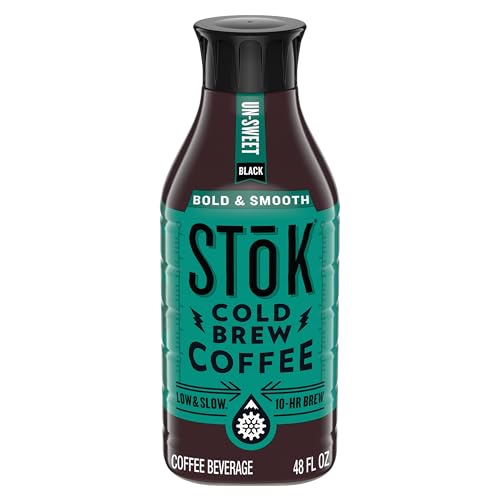
Bold & Smooth Cold Brew: 48 fl oz bottle of black and unsweetened SToK Cold Brew; 125 mg of caffeine per 12 oz pour

PREMIUM COLD BREW COFFEE: Enjoy the Starbucks cold brew coffee you love at home with this 32-fluid ounce bottle of Starbucks Cold Brew Concentrate Caramel Dolce

Each serving contains 15 calories
How Long Cold Brew Concentrate Stays Fresh & How to Store It
You’ve just mastered the art of diluting and flavoring, so now you’re probably wondering how long that tasty concentrate will stay fresh. Here’s the thing: a properly sealed bottle in the fridge typically enjoys a shelf life of 7 to 14 days, while unopened commercial jars can stretch to 180 days. Homemade batches taste best within 5 to 10 days because oxidation flattens flavor after about a week.
All right, what are the best storage methods? Use an airtight glass jar with a tight, dark‑colored seal, and keep it at 40 °F (4 °C) or lower. Avoid temperature swings and open‑and‑close cycles; smaller, pre‑portion containers help. If you need longer, freeze extra in ice‑cube trays.
Takeaway: refrigerate in a sealed, opaque container, and you’ll keep peak taste for up to two weeks. Next, decide whether to freeze leftovers for a month‑plus stash. The coffee‑to‑water ratio in a French press is typically 1:15 by weight for optimal extraction.
A consistent coarse grind is essential for preventing over‑extraction when brewing French press coffee.

PRODUCT SIZE: 10.5inch high and 6.5inch wide, our air tight pantry is suit for tea, honey, coffee beans,Spice,Cereal,Egg,Flour.

The 4lb Sugar & 5lb Rice Solution: Finally, a worthy home for your bulk buys. Each extra-large 78oz (0.6 Gal / 2.3L) jar is engineered to perfectly store common warehouse-sized staples, including a full 4lb bag of sugar or a 5lb bag of long-grain rice. Say goodbye to messy paper sacks and hello to a beautifully organized pantry.

PRODUCT SIZE: 7.5inch high and 5.2inch wide, our air tight pantry is suit for tea, honey, coffee beans,Spice,Cereal,Egg,Flour.
What Makes Cold Brew Concentrate Different From Regular Cold Brew
How does cold brew concentrate differ from regular cold brew? You’re probably wondering why the same method yields two distinct drinks. The key is brew extraction: concentrate uses a 1:4–1:8 coffee‑to‑water ratio, while regular cold brew stays near 1:12–1:16. That higher coffee load creates a denser liquid that packs more caffeine and a bolder, more intense flavor per ounce.
Now, here’s the thing about dilution. Regular cold brew you can sip straight; concentrate is too strong for most palates, so you mix it with water, milk, or other ingredients, often starting with equal parts. Adjusting the ratio lets you control strength and taste.
All right, storage matters too. Because concentrate is thicker, it stays fresh longer in the fridge, giving you a versatile base for iced coffees, milk drinks, or flavored creations.
[Takeaway: Concentrate offers higher caffeine, stronger brew extraction, and flexible dilution, while regular cold brew is a ready‑to‑drink, smoother cup. Ready to experiment with your own dilution ratios? Using a nitrogen charger** can further enhance the texture and mouthfeel of your cold brew creations.
Choosing the right coffee scoop ensures consistent measurement for both brew styles.