
You’re right to wonder—yes, you can froth cold milk, and it actually stays airy longer when it stays chilled. Use skim or a high‑protein plant milk, keep it at about 4 °C, and froth only a quarter cup at a time with a handheld frother or French press; start the wand just below the surface, tilt the pitcher, and stop adding air once the volume rises 20‑50 %. Tap the cup, swirl, and let the foam settle 5‑10 seconds for a silky micro‑foam—next, you’ll uncover how flavor tricks and storage hacks keep it perfect for iced drinks.
What Is Cold Milk Foam and When to Use It?
What exactly is cold milk foam and when should you use it? You’re probably wondering because the term sounds like a fancy coffee trick. Cold milk foam is simply aerated milk that stays cold, not steamed, and it floats like a light cloud on iced drinks. It adds a fluffy, creamy layer that softens flavor without melting quickly, making it perfect for cold brew, iced lattes, nitro coffee, or even non‑coffee beverages that need texture and visual appeal.
All right, why does foam health matter? The foam contains the same nutrients as the milk you start with—protein, calcium, and vitamin D—so foam nutrition isn’t a mystery; it’s just a lighter delivery of those basics. Using skim or nonfat milk keeps calories low while still giving you that airy mouthfeel. The takeaway: cold foam boosts creaminess and visual flair while preserving the milk’s nutritional profile. Next, ask yourself which milk type will give you the texture you crave. For a richer, more stable foam, consider using high‑protein oat milk, which benefits from its increased protein content to create a velvety texture. The protein content in plant‑based milks like oat or almond is a key factor in achieving a stable foam.

Make Creamy Froth Quickly: If you love your morning coffee filled with froth and foam, the portable Handheld Milk Frother can create a creamy cup within 15 to 30 seconds

Free From: Dairy, Lactose, Gluten, Soy, Peanuts, & Tree Nuts
Which Milk Is Best for Cold Foam – Skim or Whole?
You’re probably wondering whether skim or whole milk will give you the best cold foam, and that’s a smart question. In the skim vs whole debate, skim milk wins because its protein vs fat ratio is higher, so the proteins latch onto air and hold the bubbles together. The result is a light, cloud‑like cap that stays on iced drinks longer.
All right, whole milk can still foam, but the extra fat weighs the structure down, making the foam denser and prone to collapse quickly. You’ll notice a creamier texture, but it won’t last as long as skim’s sturdy microfoam.
Takeaway: Choose skim for a stable, airy foam; use whole only if you prefer a richer, shorter‑lived topping. Next, consider how to keep that foam ice‑cold for maximum stability. For optimal results, aim for a temperature of 140–150 °F when frothing. Understanding the micro‑foam structure helps you fine‑tune your technique. Using the proper wand depth ensures a smooth whirlpool that incorporates air efficiently.

LACTOSE FREE & SKIMMED MILK: Experience the light, refreshing taste of skimmed milk without the lactose! Our lactose-free skimmed milk powder is perfect for those with lactose intolerance or anyone seeking a low-fat and easy to digest option.

LOW-FAT & HIGH-PROTEIN – Our fat-free skim milk powder offers all the benefits of milk without the fat, providing a high-protein, nutrient-rich option for any lifestyle.
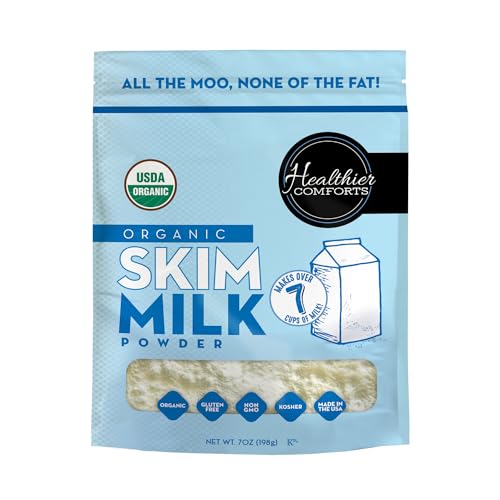
100% ORGANIC & NON-GMO – Made from premium organic milk with no added hormones, antibiotics, or artificial ingredients. Just clean, wholesome dairy you can trust.
How to Keep Milk Ice‑Cold for Maximum Foam Stability
If you’re wondering why your cold foam collapses the minute it leaves the pitcher, it’s all about temperature control from the start.
How cold should the milk be?
You want fridge‑temperature storage, not room‑temp. Keep milk in the coldest safe spot of the fridge—usually the back shelf—so it starts at 35‑38 °F. A colder start slows bubble collapse, giving you denser foam.
What can you do right before frothing?
Chill the pitcher or glass. Even a 5‑minute freezer boost, like wrapping the container in a wet paper towel and placing it in the freezer, drops the milk by a few degrees fast. Rapid‑chill methods such as a 10‑minute mug freeze work for small batches.
How to keep it cold while you work?
Transfer milk to a pre‑cooled, narrow glass to increase surface contact and reduce warming. Froth only ¼‑½ cup at a time, then serve immediately. Low‑fat milk with 3–3.5 g protein per serving yields the best foam stability. Shaking in a tightly sealed jar can also create a quick foam when the milk is already cold. Regular descaling of your frothing equipment prevents mineral buildup that can affect temperature regulation.
Takeaway
Store milk cold, pre‑chill your tools, and use rapid‑chill tricks for ultra‑cold milk. The result? Foam that stays airy longer. Foam density improves when the milk is chilled before frothing.

Perfect Combination Of Milk Frothing Pitcher And Latte Art Pen: The milk frother jug can be used in different ways: froth or steam milk for lattes; measure liquids; serve milk or cream. Featured with a latte art pen which can shape kinds of beautiful coffee pattern. Perfect for making frothing or steaming milk for espresso, cappuccino or hot chocolate. Be your own barista in home and office.

【Food Grade Material】This milk frothing pitcher is made of high-quality 304 stainless steel, which is rust proof, stain proof, and heat resistant. It has a stylish appearance and is very easy to clean after use.

TOP QUALITY - The frother pitcher is made of #304 stainless steel with non-stick teflon coating, ust-proof, stain-proof and crash-proof, unbreakable for daily use. Dishwasher-safe & easy to clean with soapy water.
Which Tool Should I Use to Make Cold Foam? (Handheld, French Press, Mason Jar)
Takeaway: Choose handheld for speed, French press for balance, mason jar for convenience. Next, decide which batch size fits your routine. A quick whisk can also produce stable foam, especially when using a high‑fat milk for richer texture. For optimal results, gently warm water rinse the French press after each use to prevent residue buildup. The foam’s stability improves when the air is injected at a consistent pressure, which helps create a uniform micro‑bubble structure.

NO MORE BATTERIES -- USB Rechargeable. Forget buying batteries! Just plug in the included USB cable to charge. One charge lasts for months, making it eco-friendly and always ready to use.

Effortless USB-C Power: Enjoy convenient charging with the included Type-C cable - no bulky adapters needed. Simply plug into any USB port to power up your frother at home, work, or on the go
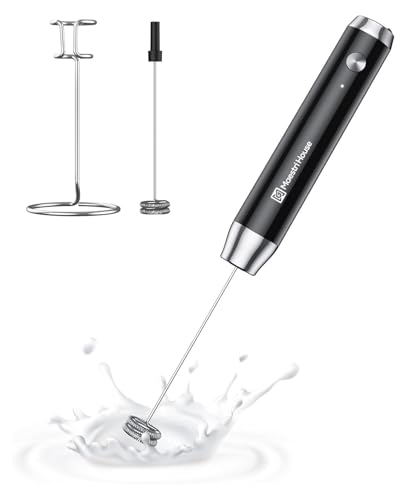
One-button Operated Design: One press to start the whisking and another press to stop frothing. Just place the LunaFro handheld milk frother’s whisk into the container with milk or other liquid food, then press the button to make milk foam, and press the button again to stop working. It’s effortless to clean. Only put the mixing head into water or soapy water, and then press the button to let eddy water current clean it completely.
Step‑by‑Step: Creating Dense Cold Foam Micro‑Foam in 30 Seconds
Choosing the right tool is only half the battle; now you need to know how to turn that milk into a dense, micro‑foam cap in just 30 seconds. You’re probably wondering why cold milk works better, and the answer lies in foam temperature and foam density. Keeping milk at about 4 °C lets bubbles stay tiny, so the foam stays silky instead of airy.
What amount should you start with?
Fill a narrow frother or French press to no more than a third of its volume—about ¼ cup. This gives room for expansion without spilling.
How do you froth it?
Turn the motor on high, watch the milk swirl, and stop when you see a velvety, paint‑like surface. It should feel soft and pourable, not dry. Correct positioning of the wand helps create a stable vortex for even texturing.
Takeaway
A small, cold batch yields fine bubbles and high foam density in 30 seconds. Next, try layering it on an iced latte and see how long it holds its shape.
Cold brew coffee’s low‑acid profile makes it an ideal base for cold foam, as the reduced bitterness complements the milk’s smooth texture. Nitro infusion can further enhance the creamy mouthfeel when combined with cold foam.
Regular descaling of your coffee equipment, such as mineral buildup prevention, ensures that the temperature and pressure remain optimal for consistent foam quality.

CREAMY FROTH IN SECONDS: Featuring a powerful high-speed motor and an upgraded double-spring whisk head, this milk frother handheld creates thicker, creamier foam in as little as 20 seconds. Perfect for lattes, cappuccinos, matcha, hot chocolate, and all your favorite drinks

MAKE RICH, CREAMY FROTH IN SECONDS: We coffee lovers are serious when it comes to our coffee. The Zulay Kitchen frother gives that professional finishing touch to your latte, cappuccino, macchiato or hot chocolate. Make delicious foamy cream for your drinks at home without a trip to the coffee shop with your own milk frother. The benefits of having your own electric drink whisk mixer are endless: you can make your own best latte, you know your tastes best. Note: Packaging may vary.

Whisks Up Velvety Foam in Seconds – Equipped with a powerful motor and dual-coil whisk, this rechargeable milk frother creates luxuriously thick, smooth, and silky foam in just 15-20 seconds. Simply press and hold the button to work, release to stop. Perfect for hot lattes, cappuccinos, matcha, or trendy cold foam for iced coffee—say goodbye to thin, watery froth and enjoy a barista-level upgrade every time
Advanced Positioning & Motion for Perfect Micro‑Foam
You’re probably wondering why the wand’s exact position makes all difference, and that’s a great question. Position the tip just below the milk surface at the start; you’ll hear a light hiss, not a squeal. Keep only a sliver of the wand exposed to avoid splashing and large bubbles.
Now, tilt the pitcher to about 45°. Aim the wand toward the “3 o’clock” wall so a smooth vortex forms. This rolling motion folds milk onto itself, keeping foam density uniform and preventing patchy foam.
Here’s the thing: after the early air phase—roughly a 20‑50 % volume rise—lower the wand deeper to stop adding air and let heat circulate. The vortex should stay stable, not chaotic, to preserve glossy micro‑foam.
All right, finish with a gentle swirl to integrate any remaining foam. Takeaway: precise depth, angle, and timing control vessel temperature and foam density for perfect micro‑foam. Next, ask yourself how to smooth out any large bubbles that appear. Temperature control is essential to avoid splitting the milk. Using a bottomless portafilter can help you see channeling and adjust your technique accordingly. Understanding the micro‑foam structure helps you achieve consistent texture across drinks. A well‑heated espresso machine maintains optimal extraction temperature for both coffee and milk.
Tapping & Settling: How to Smooth Out Large Bubbles
If you’re staring at a frothy pitcher and see a few rogue bubbles, you’re not alone—those large bubbles are the most common source of uneven latte art.
Why does tapping help?
You tap gently on the countertop right after frothing, not after pouring. A light tap pops surface bubbles, then a quick swirl redistributes the foam. This combo gives you bubble control and restores texture consistency without flattening the whole foam.
What about settling?
Let the milk rest for 5–10 seconds. During that pause, big bubbles rise and burst naturally, while the micro‑foam stays intact. Too long, and you lose volume, so keep it brief.
When to repeat?
If foam stays stiff, tap and swirl again. A second gentle cycle usually smooths out any remaining lumps.
Takeaway: Tap, swirl, and give a short settle to achieve smooth, consistent milk. Next, consider how to flavor that perfect cold foam.
A proper grind size is essential for optimal extraction, and using a medium‑fine grind helps ensure the coffee’s flavors are fully released.
Consistent scooping can be achieved by weighing coffee, as a standard scoop holds roughly 7–8 grams of ground coffee.
The centrifuge extraction used by Vertuo machines creates a richer crema, which can affect how milk integrates with the coffee.
Flavoring Cold Foam: Add Syrups or Extracts Before Frothing
You’ve just got rid of those big bubbles, but now you’re wondering how to get flavor into the foam itself.
How do I add flavor without ruining the texture?
Add a teaspoon of seasonal syrups or a dash of herbal extracts to your milk before you start frothing. The syrup dissolves instantly in cold milk, letting the sweet note spread through every bubble. Herbal extracts work the same way; a few drops of vanilla or a pinch of cinnamon blend in and stay evenly distributed.
What amount should I use?
Start with about 1 tsp syrup per ¼ cup milk, or ½ tsp extract for a subtle punch. Too much makes the foam watery; too little leaves the flavor on the surface.
What tool works best?
A handheld frother or French press aerates the milk while the flavor mixes in, giving you a smooth, consistent foam.
Takeaway: Add syrups or extracts before frothing, keep the ratio modest, and use a frother for even distribution. Next, you’ll want to avoid over‑foamed or dry foam—how?
Fixing Over‑Foamed or Dry Cold Foam: 3 Common Mistakes
Three common mistakes keep your cold foam stiff, airy, or dry, and you’re probably wondering why the perfect cloud of bubbles turns into a brittle mound.
Are you using the right temperature?
If milk‑temperature exceeds the ideal 35‑40 °F, the proteins denature fast, and foam‑stability collapses. Cool, fresh milk lets air disperse evenly, giving you a glossy, pourable texture‑control.
Do you over‑aerate?
Too much air early on creates giant bubbles that dry the foam. Aim for a brief burst before the milk hits 100 °F; then let the frother mix gently.
Is your batch too big?
Overfilling leaves no room for expansion, forcing the foam to compress and become dry. Fill only two‑thirds of the pitcher and you’ll keep the foam light and stable.
Takeaway: adjust temperature, limit air, and respect volume limits for consistent, silky cold foam. Ready to test a smaller batch? Proper volume expansion is essential to avoid excessive compression.
Serving & Storing Cold Foam for Iced Coffee and Other Drinks
Why does cold foam taste best right after you make it? You’re probably wondering why the texture changes so fast. The answer is simple: the cold temperature locks in air bubbles, and any warm drink will collapse the foam instantly.
How should you store it? Use a foam storage container that leaves headspace—think a mason jar at least double the foam’s volume. Seal it tightly, keep it refrigerated, and you’ll preserve the airy texture for up to 24 hours. A quick shake before serving recombines the separated milky layer.
What’s the best serving tip? Pour the foam over ice after the base drink is in the cup; this slow pour keeps the visual layering intact.
Takeaway: Keep foam cold, use a roomy sealed container, and shake briefly before topping. Ready to try it on your next iced latte?