
You’re probably confused about the steps, but it’s simple: fill the tank just to the MAX line, lock the empty portafilter, wait for the steady “READY” light, then do a quick 10‑second water flush to heat the group. Dose 7 g (single) or 14 g (double) coffee, level, tamp 30 lb, lock the filterafilter, and aim for a 15‑25‑second extraction that yields 36‑40 g for a double. Finally, purge the steam wand, froth cold whole milk to 60‑65 °C, and wipe everything clean. Now you’ve got a solid espresso base, and the next steps will deepen your skill.
Set Up the Water Tank for Espresso
How do I correctly set up the water tank? You’re probably wondering why the tank placement matters. First, pull the empty tank out, fill it with fresh water up to the MAX line—no more, no less. Overfilling causes overflow and machine errors, so stop at the line. Rinse the softener filter, submerge it to burst bubbles, then set the calendar disc for the next two months. Insert the activated filter into its seat, close the lid, and slide the tank back into the machine, making sure it clicks securely.
Now, check the back‑panel switch is on “I” and verify the tank sits level. If the machine shows “FILL TANK!” you’ve missed a step.
Takeaway: Proper tank placement and filter activation get you brewing fast. Next, you’ll want to prep the espresso group.
Make sure the water level stays below the maximum line.
A regular descaling routine helps prevent mineral buildup that can affect water flow and taste.
period mineral buildup is essential for maintaining optimal pressure.
Nespresso’s proprietary capsule system ensures each brew locks in flavor and freshness.
Preheat the Espresso Group
Now that your water tank’s set and the filter’s active, you’re probably wondering why the group head needs its own warm‑up. The answer is simple: thermal stability matters. Cold metal pulls heat from the shot, leaving you with a flat, sour espresso.
Why preheat the group?
You turn the machine on, lock an empty portafilter in, and wait for the steady “READY” light. Then you run a 10‑15‑second blank water flush. This heats the group, the basket, and even the cup if you place it under the spouts.
What the flush does
Hot water displaces any lingering cool water, so the first seconds of extraction stay hot. The result is better cup preheat and more even extraction.
When to start brewing
Only brew after the indicator stays steady, not while it flashes. A fully warmed group gives you consistent temperature and flavor.
Takeaway: Preheating the espresso group guarantees thermal stability and a proper cup preheat, setting the stage for a great shot. Next, you’ll want to load, dose, and tamp the portafilter. Consistent heat improves flavor stability throughout the shot. Regular descaling prevents mineral buildup that can otherwise degrade heat transfer. Monthly descaling helps maintain optimal performance and extend the machine’s lifespan. Proper cleaning tablets remove coffee oil residue and keep the group head functioning smoothly.
Load, Dose, and Tamp the Portafilter
Which basket should you use for the shot you want? The answer hinges on portafilter selection. If you crave a single‑shot, grab the 7 g basket; for a double, use the 14 g one. Pressurized baskets forgive a rough grind, but non‑pressurized ones demand grind consistency and careful dose control.
Now, dose the coffee evenly. Freshly ground beans give the best aroma, so grind directly into the basket if your De’Longhi has a built‑in grinder. Fill to the proper level without overflow; a level, uniform bed prevents channeling. Maintaining the proper puck density is essential for balanced extraction. Using a precision scale can help you achieve the exact dose each time.
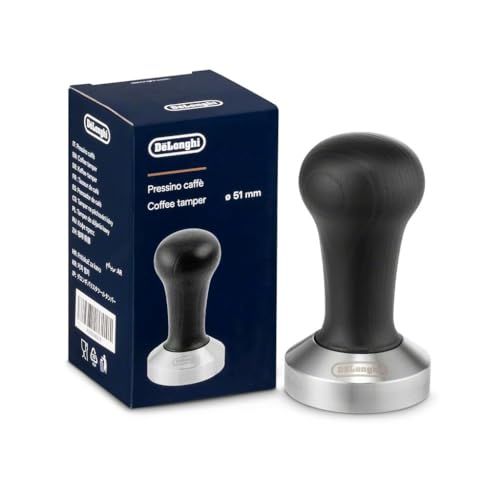
All right, distribute and tamp. Spread grounds gently, level the surface, then press about 30 lb straight down. A firm, even tamp creates a flat puck, seals the rim, and sets you up for a clean extraction. Avoid knocking the portafilter when inserting it to prevent puck displacement and channeling.
Takeaway: Choose the right basket, grind consistently, dose evenly, distribute, and tamp firmly. Next, set brew time and volume.
A well‑controlled water temperature ensures optimal solubility of coffee compounds.

EVEN 0.3mm HOLE PATTERN — Precisely sized, evenly distributed 0.3mm holes give balanced, controlled flow across the whole puck for clean, sweet, repeatable extraction with no channeling.

Ensure the delicate taste of coffee with an ultra-fine filter for a smooth and intense espresso or coffee experience.

CHECK YOUR PORTAFILTER FIRST — 28mm DEEP — This is our deepest 58mm basket and the tightest fit in the range, made for bottomless and deep-well portafilters. It fits Rancilio Silvia, but it is too deep for the Gaggia Classic / Classic Pro and some shallow spouted portafilters: it bottoms out and the handle won't lock. If your current double basket is noticeably shallower, or you are not sure, choose our 18g (24mm) instead.
Set Brew Time, Volume, and Extract a Consistent Espresso Shot
If you’re wondering why your espresso sometimes drips too fast or drags on, the answer lies in how you set brew time and volume.
How do I dial in the right brew time?
You’ll aim for 15‑25 seconds from pump start to stop. If the shot runs quick, grind calibration or a dose adjustment will slow it. If it drags, coarser grind or lower dose speeds things up.
What volume should I target?
Program the machine to stop at about 36‑40 g for a double, half that for a single. Hold the brew button until the scale reads the desired weight, then release to lock it in.
How do I keep it consistent?
Use the same cup, button, and basket each time. Pre‑heat your mug, keep beans fresh, and clean the group head regularly. Replace the filter every six months to maintain water flow and pressure consistency. Proper water temperature is essential for extracting balanced flavors. Maintaining a stable extraction time helps achieve a rich, balanced espresso with a velvety crema. The grind size must be fine enough to create enough resistance for proper extraction.
Takeaway: Fine‑tune grind calibration and dose adjustment while watching brew time and volume, and you’ll get steady, balanced shots every pull. Next, explore how to steam milk for lattes.

#1 Worldwide Espresso Machine Maker* *Independent Research Institute, Sales Leader, Full Year 2025
FROM DE'LONGHI. The No.1 world-leader in espresso and coffee machines.

Produces a uniform ground texture for the most consistent results with the burr grinding wheel
Steam and Froth Milk for Lattes and Cappuccinos
You’re probably wondering why your milk sometimes ends up watery or too bubbly when you try to make a latte. First, use fresh, cold whole milk and fill the pitcher halfway. Purge the wand, then place the tip just under the surface; you’ll hear a soft tearing sound as air enters, creating the right foam texture.
Now, tilt the pitcher so a vortex forms, submerge the wand a bit deeper, and keep it steady. The whirlpool breaks larger bubbles into silky microfoam while you watch the milk temperature rise. Stop when the pitcher feels warm but not hot—about 60–65 °C is ideal; exceeding 70 °C scorches the milk and ruins the foam.
All right, tap the pitcher, swirl gently, and pour straight into the espresso. The result is a glossy, velvety cup ready for latte art. The takeaway: control temperature, maintain a steady vortex, and listen for that paper‑rip sound. Next, ask yourself: how will you clean the wand after this perfect pour? Use a stainless‑steel twist‑on nozzle for consistent micro‑foam. Understanding air injection helps you achieve the perfect micro‑foam consistency.
Choosing the right tool can dramatically affect texture; a milk frother typically creates lighter foam, while a steamer yields richer micro‑foam. For optimal results, consider the milk temperature range recommended by Nespresso to preserve sweetness and prevent scorching.

304 STAINLESS STEEL: Amrules 12oz creamer pitcher are crafted of 18/8 food grade stainless steel. The pitcher features external mirror finish and internal hairline finish. It is sturdy, durability, rust-resistant and resistant to deformation

【Food Grade Material】This milk frothing pitcher is made of high-quality 304 stainless steel, which is rust proof, stain proof, and heat resistant. It has a stylish appearance and is very easy to clean after use.

Measure Capacity for Your Routine: This milk frothing pitcher has internal oz/ml marks; choose 12 oz for single drinks, 20 oz for larger lattes, 32 oz and 50 oz for multiple servings
Clean Up the Espresso Machine After Each Use
When you finish a shot, the first thing you should do is knock out the spent puck and rinse the portafilter with hot water. You’ll then wipe the basket dry with a clean cloth, preventing coffee‑oil buildup and keeping Portafilter maintenance simple.
All right, the group head: run a short hot‑water burst without the portafilter, scrub the screen with a nylon brush, and backflush with a blind basket if your model allows. Clear runoff should be spotless.
Descaling removes mineral deposits that can clog the group head over time.
All right, turn to Steam wand hygiene. Purge the wand before and after frothing, wipe it immediately with a wet cloth, and, if the design permits, flush it with hot water. Clean the milk spout and connectors right away, because dried milk hardens fast.
Takeaway: A quick, consistent rinse and wipe after every use stops residue from forming, preserving flavor and extending your machine’s life. Ready for the next step? Try a weekly deep clean and descaling routine. Use filtered water to further reduce mineral buildup.
Regular deep cleaning helps maintain optimal performance and extends the machine’s lifespan.
Rinsing the water reservoir with fresh lukewarm water before each brew helps maintain the a flavor and prevents mineral buildup in the system.