
You’re probably wondering why your Keurig’s slower, weak‑tasting, or flashing the descale light; it’s a sign mineral buildup is choking the heat exchange. Fill the reservoir with a Keurig descaling solution (or white vinegar), hold the 8‑oz and 12‑oz buttons three seconds until the K flashes, then brew the largest size repeatedly until the “Add Water” light appears, letting the solution sit 15‑30 minutes. Rinse by running twelve fresh‑water cycles, reset the light by unplugging 30 seconds and holding the same buttons, and you’ll have full pressure and flavor back—next, you’ll see how to keep scaling at bay.
How to Tell When It’s Time to Descale Your Keurig
How do you know your Keurig needs a descaling? You’ll notice the brew taking longer than usual—often a few extra seconds, then a full minute—because mineral scale is choking the water flow. If your coffee tastes weak, lukewarm, or just “off,” the scale is likely sapping heat and messing with extraction. And when the machine flashes a “DESCALE” light or message, treat that as the primary cue to act now.
Now, watch brew speed during your morning routine. A sudden, noticeable slowdown—say a 20‑second increase on a typical 30‑second cycle—means the needle or tubing is partially blocked.
Flavor shift follows. When the water can’t reach the proper temperature, the coffee’s acidity dulls and the body feels thin, a clear sign the heat exchange is compromised.
All right, you’ve got two reliable markers: a slower brew speed and a distinct flavor shift. When both appear, descaling is overdue.
Takeaway: notice the lag, taste the change, then descale before the machine warns you. Ready to gather the supplies? Recommended interval is every 3‑6 months or after ~250 brews. Regular descaling also helps maintain optimal brew temperature and prolongs the life of the machine. Mineral buildup can also cause clogs that reduce water pressure. The citric acid in many descaling solutions works by chelating calcium and magnesium ions, effectively dissolving the scale.
Collect Descaling Supplies and Prepare Your Keurig
What do you need before you start descaling? You’ll want a Supply checklist: Keurig Descaling Solution (or distilled white vinegar), fresh water, a mug, a clean sink area, and a microfiber cloth. Add safety‑first items: a plug‑out reminder and a towel for any spills.
All right, remove any K‑Cup pod and unplug the machine—Safety precautions keep you from electric shocks. Take off the reservoir lid, drip tray, and K‑Cup holder; set the water filter aside. Wash these parts in hot, soapy water, rinse, and dry them before you begin.
Here’s the thing: fill the reservoir only as the descaling guide directs, not to the max line. Place a mug on the tray to catch each brew cycle.
Regular descaling prevents mineral buildup that can impair pressure and flavor. Descaling should be performed every 3–6 months to prevent mineral buildup. Takeaway: You’re now equipped with the right tools and a safely prepped Keurig, ready for the next step. What’s the exact descaling mixture you’ll use? Regular descaling removes mineral deposits that can clog the heating element. Using optimal water temperature helps dissolve scale more efficiently.
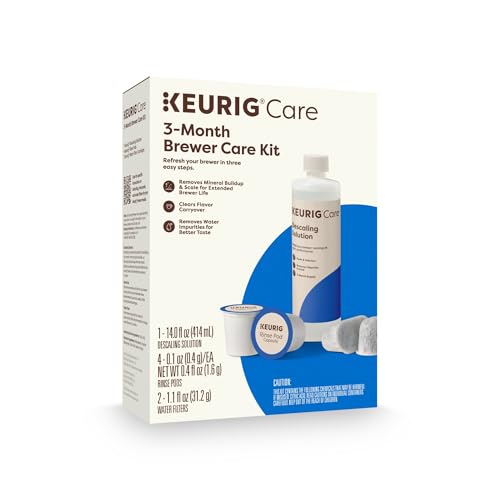
INCLUDES: 4 Keurig Rinse Pods, 1 Descale Solution, and 2 Water Filter Cartridge Refills
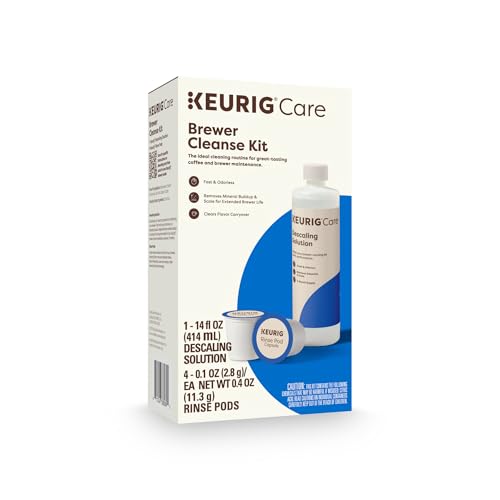
Better tasting beverages: Reduces flavor carry over between brews

RESTORE COFFEE FLAVOR & AROMA: Our universal descaling solution removes bitter mineral buildup and calcium deposits from heating elements. This ensures your Keurig cleaner process restores the original "day one" taste of your favorite pods and espresso capsules
Run the Keurig Descaling Cycle Step‑by‑Step
If you’re wondering why the descaling cycle feels like a mini‑ritual, it’s because each step actually dissolves the stubborn limescale that builds up inside your Keurig. You’ll start by turning the brewer off, removing any K‑Cup, and placing a heat‑resistant mug on the drip tray. Fill the reservoir with the proper solution concentration, then activate descaling mode—often holding the 8 oz and 12 oz buttons for three seconds until the K button flashes.
Now press the brew button for the largest size, empty the mug after each run, and repeat until the “Add Water” light appears. Let the machine sit for a 15‑to‑30‑minute dwell time; this lets the solution break down internal deposits. When the indicator turns off, you’ve finished the descaling timing. Takeaway: Follow the button‑hold, brew‑repeat, and dwell steps precisely, then you’ll be ready for the next rinse phase. Use a citric‑acid based descaling solution for best results. Regularly cleaning the water tank and drip tray helps prevent mineral buildup that can accelerate limescale formation. Descaling also protects the heating element from scale-induced wear and maintains optimal brewing temperature. Proper rinsing after descaling ensures no residue remains that could affect flavor.

2-Pack Coffee Descaler and Cleaner - Clean and rinse away residue and oil buildup in your coffee maker with Impresa's Coffee Descaler Solution. Our highly effective solution comes with two 8-ounce bottles - enough for 4 descaling sessions (2 uses per bottle)

RESTORE COFFEE FLAVOR & AROMA: Our universal descaling solution removes bitter mineral buildup and calcium deposits from heating elements. This ensures your Keurig cleaner process restores the original "day one" taste of your favorite pods and espresso capsules

Powerful Descaling Solution: The liquid coffee machine descaler and cleaner compatible with any Keurig machine is formulated to deeply penetrate oil and limescale to keep your machine running smoothly and produce the delicious coffee you love.
Rinse the Keurig With Fresh Water
Because the descaling solution (or vinegar) can leave a sour aftertaste and residue, you must flush it out before your next cup. You’ll start by discarding any leftover solution from the filter reservoir, then rinse the reservoir thoroughly and fill it with fresh water up to the max line. Remove the filter if you have one, set it aside, and reinstall the clean reservoir for the rinse phase.
Now, place a large mug on the drip tray and brew the largest size without a K‑Cup. Run at least twelve fresh‑water cycles, emptying the mug each time, until the reservoir empties or you reach the count. A quick taste test after a few cycles will tell you if any acidic or chemical flavor remains. If it does, keep brewing until the water runs clear and neutral.
All right, the takeaway: a proper fresh‑water rinse eliminates lingering taste and protects your next brew. Next, you’ll want to reset the descaling light and verify success. Regular descaling is recommended every three months to maintain optimal performance. Cleaning the drip tray helps prevent mold buildup and ensures consistent brewing pressure. Using a consistent grind size across brewing methods can also improve overall flavor stability. The coarse grind used in cold brew can reduce sediment when filtering the descaling solution.
Reset the Keurig Descale Light and Verify Success
Ever wonder why the descale light stays on after you’ve finished the rinse?
Here’s the thing: the light won’t clear until you finish the full descaling routine and then perform the proper reset.
How do you reset the indicator?
First, unplug the machine for at least 30 seconds. Plug it back in, then hold the 8 oz and 12 oz (or 10 oz) buttons together for three seconds – that’s the button timing most Keurig models expect. Some models, like the K‑Supreme, need you to press the K/Start button right after the hold. If your model uses a “strong + cups” combo, hold those for three to five seconds instead.
What proves the reset worked?
The descale light should stop flashing and the brew light returns to normal. Power on and brew a cup; you shouldn’t see any descaling prompts. If the light stays on, repeat the cycle, making sure the machine is fully powered off before you start the button timing again.
Takeaway
A quick unplug‑wait‑press sequence clears the indicator, confirming a successful descaling. Next, check that your water reservoir is refilled and you’re ready for regular brewing.
Make sure you use only filtered water throughout the process to prevent future scaling.
A reset can also resolve error codes that appear after a failed descaling attempt, such as a persistent error that requires a full power cycle.
Regular descaling helps preserve coffee flavor and machine longevity, as explained in the Nespresso Vertuo Plus guide.
Descaling also removes mineral buildup that can impair heating efficiency.
Troubleshoot Common Keurig Descaling Issues and Hard‑Water Tips
You’re probably wondering why your Keurig still sputters or smells odd after a descaling cycle. The most common culprit is an airlock, which blocks water flow. Fill the reservoir to the brim, give the machine a gentle shake, and unplug it for a few seconds before restarting — this simple airlock prevention trick often restores pressure.
Why does water stop mid‑brew?
Mineral buildup detection is key. If limescale clogs the needle or internal tubing, run three to five water‑only cycles after descale. Use a paper clip to clear the entrance needle, and rinse the K‑Cup holder thoroughly.
Hard‑water habits
Switch to filtered or bottled water and desale every three to six months. Empty and rinse the tank after each maintenance session to keep future mineral accumulation low.
Takeaway
Clear airlocks, flush mineral debris, and use cleaner water. Next, check the reservoir seal and run a final rinse cycle before your next cup. When opening a Nespresso machine, always unplug the unit to avoid electrical hazards. For a thorough clean, also rinse the drip tray regularly.

Complete 6-Month Maintenance Bundle: Everything you need for half a year of brewer care. The kit includes: 2 bottles of descaling solution (8.5 fl oz each), 4 water filter cartridges, and 8 cleaning pods

INCLUDES: (2) descale solution, (10) Rinse pods, and (3) water filter cartridge refills

KEURIG DEEP CLEAN: Keep your coffee pure & flavorful with Caffenu's descaling solution for Keurig machines. Our simple 2-part system maintenance kit includes our eco descaler & 4 cleaning capsules to revive your Keurig coffee maker with a thorough, powerful clean. We feel strongly about the importance of regular machine maintenance. We are proud of the environmentally kind nature of our kit: the cleaning powder & plant-based liquid are made of sustainable materials, & has recycled packaging.