
You’re right to wonder how to turn beans into the perfect grind, so let’s sort it out. First, pick a burr grinder—its uniform particles keep extraction steady, and you can dial the size from extra‑fine (≈200 µm for espresso) to coarse (≈1 mm for French press). Next, weigh about 10.6 g of beans per 6‑oz cup, load them, and grind in short bursts to avoid heat; give the grounds a quick rub between your fingers to check uniformity. Finally, transfer the coffee to an airtight, opaque jar, clean the burrs with a dry brush, and you’re set for a great brew—next, you’ll see how grind size tweaks affect flavor.
Pick the Right Coffee Grinder for Your Brew
Which grinder fits your brewing style? You’re probably wondering whether a burr or blade will give you the flavor you crave. Burr grinders deliver uniform particles, so extraction stays consistent, while blade grinders toss in fines and boulders that can ruin balance. For espresso, you’ll want a stepless or highly adjustable burr to nail repeatable grind selection. For pour‑over or drip, a burr geared toward filter coffee works best, and even French press benefits from the smoother texture burr provides.
Now, think about manual versus electric. Manual units suit low‑volume, travel, or tight budget alignment, delivering strong grind quality at entry‑level price. Electric models cut effort and speed up daily batches, especially single‑dose electric that limit retention when you switch beans.
All right, decide single‑dose or hopper. Single‑dose grinders let you weigh and grind one portion instantly, perfect for precision and quick coffee swaps. Hopper‑based machines hold beans for convenience and speed, ideal if you brew multiple cups a day.
Obviously, your budget should align with brew method and usage frequency. Around $200, the Baratza Encore or DF54 offer solid entry‑level performance. At $300, you gain stronger single‑dose options and on‑demand flexibility.
Takeaway: match grinder type, power source, and design to your brewing ritual and wallet, then you’ll enjoy consistent, great‑tasting coffee every time. Ready to choose your grind size next? Set a clear spending limit before researching options. Burr grinders provide uniform particle size which is essential for optimal flavor extraction. Consistent grind size enhances extraction stability across brewing methods. Proper grind coarseness adjustment can prevent under‑extraction and over‑extraction in espresso shots.

THE DO-IT-ALL GRINDER:The electric coffee grinder is a powerful all-purpose coffee grinder featuring 5-blade of 48 mm conical burr that adapt to different coffee flavors and provide consistent results for all brewing methods, including espresso, pour-over, French press, and more. And the burr coffee grinder as a whole is made of high-quality aluminum, which greatly extends the service life of the coffee grinder.

Portable Burr Coffee Grinder: Enjoy freshly ground coffee anywhere with this compact, user-friendly, and rechargeable grinder. Featuring a durable stainless steel conical burr grinder, it delivers consistent, uniform grounds for enhanced flavor extraction. Designed for home, office, or travel, it provides convenience without sacrificing performance, making it suitable for both novice and experienced coffee enthusiasts.

Slim, powerful grinder with precise settings from fine to coarse, with 15 settings and 29 micro-adjustments
Choose the Perfect Grind Size for Your Coffee Method
You’re probably wondering how the grind you choose changes the coffee you taste, and that’s the right question to ask. The size you set controls extraction speed: tiny particles give more surface area, so water pulls flavor faster, while big pieces slow it down. Match the grind to your brew timing—espresso needs an extra‑fine dust‑like grind (180‑400 µm) for a 25‑30‑second shot; a French press wants coarse, 690‑1500 µm, for a long immersion.
Here’s the thing: grind consistency matters. Even particles prevent channeling and keep the flow steady, which lets your brew timing stay predictable. If your coffee tastes sour or weak, tighten the grind a notch; if it’s bitter or harsh, loosen it a bit. Small tweaks, not big jumps, keep the balance.
All right, now you know which grind fits each method and how to fine‑tune it. The takeaway: pick a size that aligns with your brew timing and keep the particles uniform. Next, measure your beans and load them into the grinder. To achieve optimal extraction you may need to adjust the dose based on grind size.
Choosing the right grind also helps protect your equipment from excess wear, as overly fine particles can cause excessive wear on burrs and filters. Consistent tamping pressure of 30–40 lb further stabilizes extraction by ensuring uniform puck density.
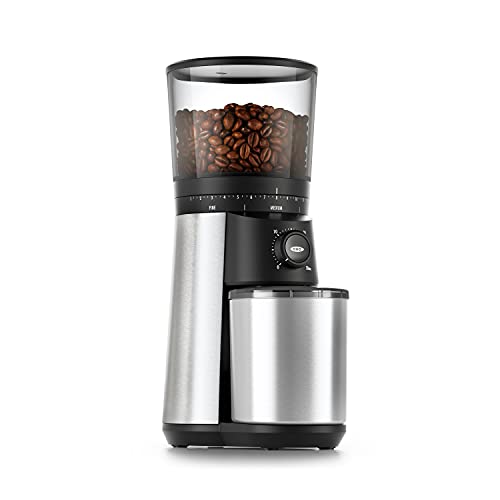
40mm stainless steel conical burrs: Precision grinding system produces uniform coffee grounds to ensure even extraction for rich, balanced flavor in every cup.

40mm stainless steel conical burrs: Precision grinding system produces uniform coffee grounds to ensure even extraction for rich, balanced flavor in every cup.
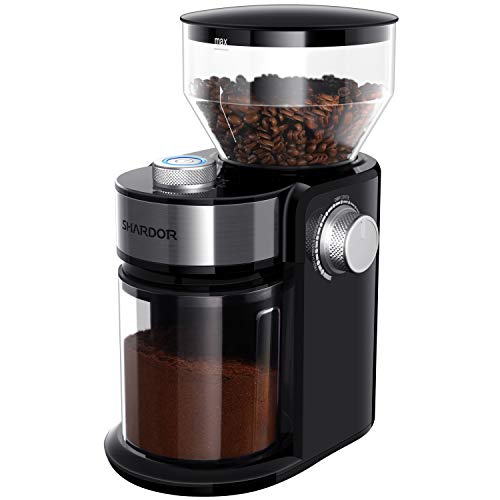
[ UNIFORM BURR GRINDING ] Premium metallic flat burr mill ensures consistent, uniform grounds without burning beans. Perfectly preserves rich coffee aroma for pour-over, drip, and cold brew.
Measure Beans and Load Them Into Your Grinder
If you’re wondering why weighing beans beats scooping, you’re on the right track. A kitchen scale gives you the exact dose—about 10.6 g for a 6‑ounce cup—so you hit the 1:15‑1:17 coffee‑to‑water ratio every time.
Now, grab the beans from airtight bean storage, place them on the scale, and weigh the needed amount. A single‑dose approach keeps the hopper clean and cuts waste, while also easing grinder maintenance because you avoid excess grounds spilling into the burrs.
All right, pour the measured beans into the hopper or grinding chamber, making sure they sit flat and don’t tumble. This stable loading lets you grind just what you need, preserving freshness and ensuring repeatable results.
Takeaway: Weigh beans, load them cleanly, and protect your grinder—next, you’ll learn the proper grind technique.
Grinding beans right before brewing minimizes oxidation and locks in aroma.
A standard coffee scoop holds roughly 1 tablespoon of ground coffee, which can help you visualize the amount you’re weighing.
brew strength can be fine‑tuned by adjusting the scoop size to match the desired flavor profile.
Grind Coffee Using the Proper Technique for Your Grinder
Now that you’ve got the beans measured and loaded, you’re probably wondering how to actually grind them without ruining flavor.
How do I match my grind to the grinder?
Treat a burr grinder like a ruler—short, controlled bursts give you burr consistency. Run it for a few seconds, pause, then check texture. If you’re using a blade grinder, think of a chef’s mincer: Blade pulsing and a quick shake keep beans moving, preventing big chunks.
What rhythm keeps heat down?
Use short pulses, especially on electric units, to avoid warming the beans. For manual grinders, crank steadily for 30‑60 seconds; a smooth, sweeping motion maintains even feed.
How can I verify the grind?
Rub a pinch between your fingers; uniform particles mean you’re on target. Adjust the setting if you feel dust or clumps.
Takeaway: Short, controlled bursts for burrs, pulsing and shaking for blades, and a quick tactile check keep your grind consistent. Ready to move on to storing and cleaning?
Remember to unplug the grinder before you begin any disassembly.
Using a food processor for coffee beans can create uneven particle sizes and generate heat that may affect flavor.
Regularly cleaning the group head and portafilter, as described in the De’Longhi espresso machine care guide, helps prevent residue buildup that can alter grind quality.

Fits for Cuisinart Burr Coffee Grinder Parts- Part Number DBM-8GC, this grind chamber with lid is compatible with Cuisinart coffee grinder models DBM-8P1. ensuring a perfect match for your coffee burr grinder.
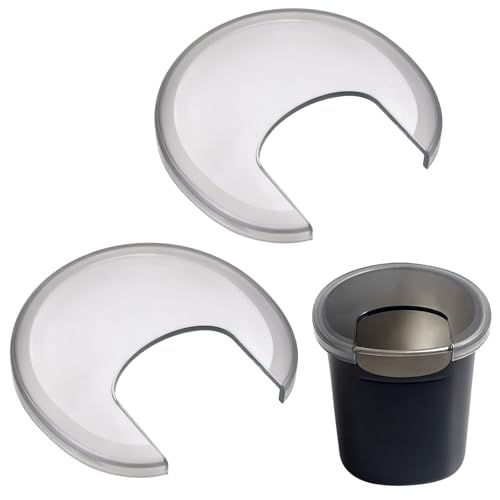
[ Stylish Style] this stylish accessory not only offers a stylish design but also helps reduce your ecological footprint, making your daily coffee preparation a sustainable lifestyle.

Made for Mason Jars: Our coffee grinder lids are specifically designed to fit wide mouth mason jars (3.1” internal diameter). Transform your mason jar into a manual coffee grinder within seconds. Mason jars are sold separately.
Transfer, Store, and Clean Your Grounded Coffee
Even though you’re not sure how to keep your freshly ground coffee from losing its punch, you’re on the right track. Transfer the grounds straight into an airtight container with a clean scoop or funnel, and keep the container in a cool, dark pantry. Small batches in separate jars limit exposure, and for espresso you can invert the cup over the portafilter to avoid spills. Pre‑ground coffee stales faster than whole bean, so minimizing the time it spends exposed to air is crucial. How do you store it right? Use an opaque, airtight storage vessel away from sunlight, ovens, and spices; avoid refrigeration unless you freeze in vacuum‑sealed bags for long‑term storage. Aim to use the coffee within three weeks for peak flavor. What about cleaning? Unplug the grinder, brush out loose grounds, and wipe the burrs with a dry cloth. Periodic deep cleaning removes rancid oils that can taint future brews. Regular descaling maintains optimal pressure and prevents mineral buildup in coffee equipment. Paper towel porosity can affect the filtration of coffee grounds when improvising a filter. Full‑immersion extraction yields a richer body and more nuanced flavor. Takeaway: Prompt transfer, proper airtight storage, and regular grinder maintenance preserve aroma and taste. Ready to brew your next cup?
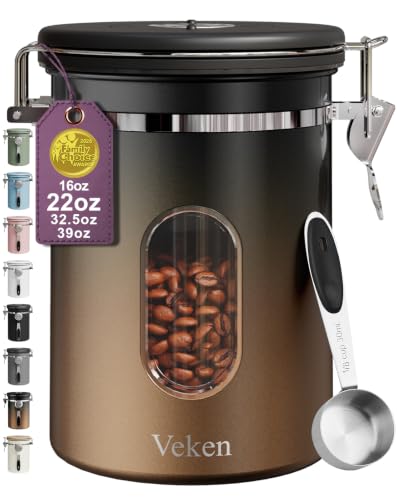
Freshness is Everything:Our coffee canister helps maintain the freshness of your coffee beans by keeping air out and free of harmful oxidation with a one-way CO2 valve and silicone rubber seal

【Perfect for 2.2 lb Coffee Bag Storage】This 39 oz coffee canister is designed to hold up to 2.2 lb of whole coffee beans, helping avoid separate clip-sealed storage for leftovers. It holds up to 35.2 oz | 1 kg | 2.2 lb of whole beans or 42 oz | 1.19 kg | 2.63 lb of ground coffee

𝐀𝐮𝐭𝐨 𝐕𝐚𝐜𝐮𝐮𝐦 𝐄𝐥𝐞𝐜𝐭𝐫𝐢𝐜 𝐂𝐨𝐟𝐟𝐞𝐞 𝐂𝐚𝐧𝐢𝐬𝐭𝐞𝐫: The Vacuum Coffee Container is designed to perfectly keep coffee fresh. Long press the vacuum button to automatically vacuum and seal within 60 seconds; Long press the release button to open the lid in 3 seconds. Its convenient and efficient operation makes it the ideal sealed container for coffee lovers who want to easily enjoy fresh, flavorful coffee.