
You’re probably wondering if the French press’s 3‑5‑minute immersion, which pulls oils and fine particles for a silkier, richer cup, beats the Keurig’s sub‑minute pressure pull that gives a lighter, more consistent brew with virtually no fuss. Here’s the thing: the press delivers depth, roundness, and a heavier mouthfeel, while the Keurig offers speed, uniformity, and a cleaner cup—think of it as a slow‑cooked stew versus a quick‑cook stir‑fry. Obviously, if you value flavor complexity and don’t mind a few extra minutes, the French press wins; if convenience and consistency dominate your routine, the Keurig takes the lead. Keep reading to see which brew fits your lifestyle best.
French Press vs Keurig: Extraction Method Differences
How exactly do the two brews extract flavor? You’re probably wondering why the French press feels richer than a Keurig cup. Here’s the thing: the French press uses immersion, letting grounds sit in water for three to five minutes, so the brew ratio stays high and every soluble compound has time to dissolve. You control temperature, steep time, and agitation, so you can tweak extraction to taste. All right, Keurig relies on pressure extraction. A needle forces hot water through a sealed pod in under a minute, limiting contact time and flattening the brew ratio. The pod’s paper filter channels flow, so you get a consistent, but shallower, pull of flavor. Obviously, immersion gives you depth; pressure extraction gives you speed and uniformity. The takeaway: choose immersion for a fuller body, pressure for convenience. Next, compare how those methods affect mouthfeel. The French press’s coarse grind allows more oils to remain in the cup, enhancing body and texture. This difference in extraction also impacts flavor clarity, with pour‑over methods typically delivering a cleaner cup. Using a proper coffee‑to‑water ratio ensures balanced strength and avoids over‑extraction.

No Plastic Touching Food: Made with 304 stainless steel and food-grade silicone, our French press keeps all brewing surfaces plastic-free— no odor and no plastic particle into your coffee. Safe and worry-free

Superior Filtration: A solid filtration system in a coffee maker ensures a refined taste and robust flavor mouthfeel. Our 4-filter sieve system has an improved piston plate and 80 mesh filter that extracts the earthy, rich taste of residue-free coffee. This 1000 ml/34 Oz beaker makes 4 cups of creamier & tastier coffee.

LARGE CAPACITY: 34 oz. French press coffee maker for making full-bodied, hand-brewed coffee; serves up to 5–6 cups, perfect for sharing
French Press vs Keurig: Flavor & Mouthfeel – Why One Brew Is Richer
You’re probably wondering why a French press feels richer than a Keurig cup. The secret lies in oil richness and texture consistency. French press lets fine particles and natural oils stay in the brew, giving you a heavier, silkier mouthfeel that mimics the bean’s original character.
Now, the Keurig’s paper‑like filter strips most of those oils, so the cup tastes cleaner, lighter, and thinner. You’ll notice a smoother finish but lose the roundness and depth that come from retained oils.
Here’s the thing: the French press trades clarity for a bold, textured profile, while the Keurig offers predictability and less bitterness.
Takeaway: If you crave a full‑bodied, oil‑rich sip, the French press wins; for a quick, clean cup, the Keurig serves you well.
Next, consider how speed versus control shapes your daily routine. The French press uses higher water temperature than the Keurig, which enhances extraction of flavors and oils. This difference also affects brew time, with French press typically requiring a longer steep for optimal extraction. Choosing the right almond milk frothing technique can further enhance the texture of your coffee, especially when using barista‑style almond milk for a richer foam. The thick paper filter of a Chemex similarly removes sediment, delivering a clean cup that contrasts with the French press’s fuller body.
French Press vs Keurig: Speed vs. Control – How They Shape Your Daily Routine
If you’re wondering why speed and control feel at odds in your morning, you’re not alone. Keurig delivers a cup in under two minutes, so a full routine—heat‑up, pod insertion, brew—wraps up in about three minutes. That rapid routine optimization fits a tight schedule, and you barely think about it. French press, by contrast, takes five to six minutes, with a three‑to‑four‑minute steep you can adjust. You stir, time, and press, shaping strength and temperature to your taste. The B70’s water tank keeps water hot and ready for brewing, allowing instant starts. Here’s the thing: Keurig’s streamlined workflow integrates smoothly into a repeatable routine, demanding almost no attention. French press demands more steps, but each step lets you fine‑tune the brew, turning coffee time into a ritual. A proper grind ensures optimal extraction. Obviously, if you value speed over nuance, Keurig wins for routine integration. If you crave control and enjoy a slower, hands‑on process, the French press enriches your daily routine. You can also experiment with a cold brew concentrate to add a smooth, rich flavor to your French press coffee. Takeaway: Choose the method that matches the priority you set for your morning—speed or control. What will you prioritize tomorrow? The French press’s steep‑and‑press technique yields a full‑bodied cup, contrasting with espresso’s high‑pressure extraction.

RAPID BREWING: Our 6-cup coffee percolator is designed to brew exceptional coffee, hot and rich, as fast as a cup a minute. A signal light indicates when coffee is ready to serve and keeps coffee hot automatically
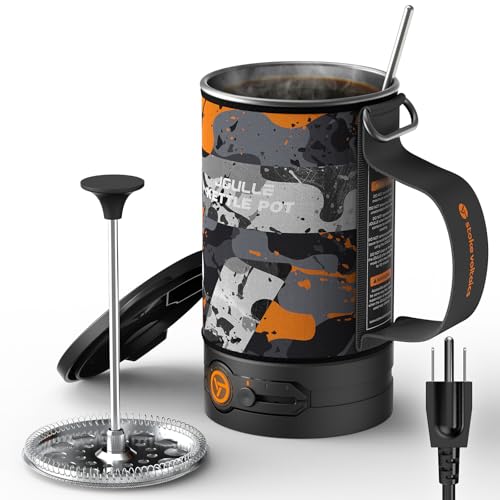
Innovative 2-in-1 Design: A portable coffee maker and electric kettle in one. Boil, steep, and press in the same vessel—no extra tools required. Perfect electric french press coffee maker for home, travel, camping, or office use.
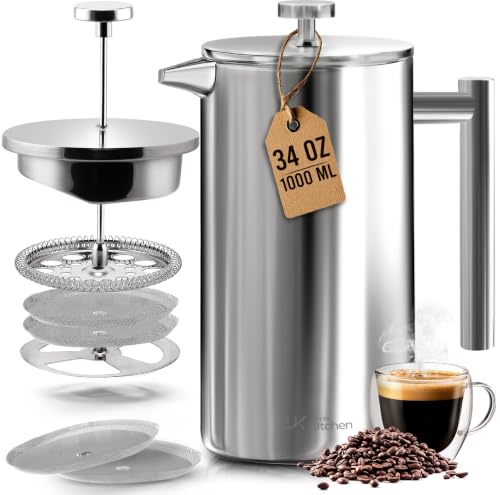
Double-Walled French Press: Make perfectly brewed coffee at home like a barista. The double-walled coffee press is heat resistant. Its solid construction will keep the drink hot for a long time.
French Press vs Keurig: Up‑Front Cost & Ongoing Expenses
When you wonder why the price tags differ, think of a French press as a simple kitchen tool versus a Keurig as a high‑tech gadget. You’ll notice the French press’s initial durability is high—just a glass or stainless body and a plunger—so you can buy a solid model for $20‑$30 and it lasts years. A Keurig, meanwhile, costs $60‑$80 for a basic unit and can climb to $300 for premium features, which hurts budget‑friendliness right out of the gate.
Here’s the thing: per‑cup cost shows the real gap. Bulk ground coffee runs about $0.10‑$0.25 per cup, while K‑cups sit at $0.50‑$1.00. If you drink two cups daily, you’ll spend roughly $12 a month with a French press versus $54 with a Keurig.
Now, consider durability‑maintenance. French press upkeep is minimal—just a rinse and occasional filter replacement. Keurig machines need descaling, water‑reservoir care, and occasional part swaps, all of which add hidden expenses. Regular descaling prevents mineral buildup that can impair heating efficiency and flavor. Proper daily cleaning of the portafilter and group head also extends machine life and ensures consistent taste. All right, the takeaway: the French press offers superior cost‑efficiency and long‑term savings, especially if you value simplicity and lower ongoing costs. Next, you might compare how each method impacts the environment. Nespresso machines use a proprietary capsule system that locks in flavor and freshness.

【Double-wall Insulated】: The french press coffee maker with double-wall insulated construction can keep your coffee nice and hot

QUALITY BREW WITH 4-LEVEL FILTRATION: This French press coffee maker is built for flavor, using a 4-level stainless steel filtration system that keeps grounds out while allowing natural oils to pass through. The result is a smooth, rich, and aromatic cup every time. Designed for consistent performance, it delivers café-quality results in the comfort of your home or even outdoors while you camp, brewing in just 4–5 minutes
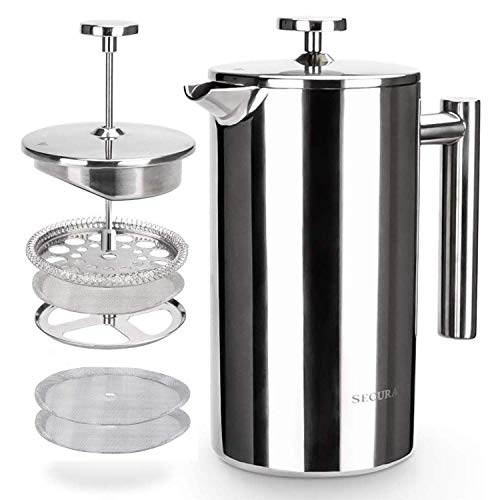
Secura stainless steel French Press coffee maker is made from top quality 18/8, 304 stainless steel, both the interior and exterior. It is made to outlast other coffee makers
French Press vs Keurig: Environmental Impact & Waste
You’re probably wondering why the cost differences matter for the planet, and that’s a great question.
How many pods end up in landfills?
You’ll see about 56 billion K‑Cup pods discarded each year, weighing roughly 576 000 metric tons. Those single‑use capsules combine plastic, foil, filters and wet grounds, making pod recycling challenges huge. Even though some pods use recyclable polypropylene, actual recovery rates stay low because sorting is a nightmare.
What’s the waste footprint of a French press?
Your reusable carafe produces no pod waste, so the material footprint drops dramatically. Only coffee grounds remain, and they’re biodegradable—easy to compost or toss in a garden.
Takeaway
If you prioritize waste reduction, the French press wins: fewer solid items, simpler disposal, and a lower carbon footprint. Next, consider where each brewer shines in everyday use. Regular descaling of coffee machines prevents mineral buildup and extends their lifespan. Proper maintenance also helps avoid overheating risks that can arise from clogged brewing chambers. Using a consistent grind enhances extraction efficiency and reduces waste.
French Press vs Keurig: Best Situations for Each Brewer
When you’re trying to decide which brewer fits your daily routine, the key is to match the machine to the situation, not the other way around. You’re probably wondering when each shines, and that’s a great question.
When do you need speed?
If mornings feel rushed, a Keurig delivers a single cup in under a minute with just a pod and a button. It’s perfect for offices, dorms, or guest rooms where you need consistent flavor without measuring grounds. Reusable K‑cup reduces plastic waste for eco‑conscious users.
When does the brew ritual matter?
A French press lets you control steep time, temperature, and grind size, giving you a richer, oil‑laden cup. It works best at home when you have a few minutes and enjoy a hands‑on process. You can even use a mortar and pestle to achieve a consistent grind size without a grinder.
What about travel?
The French press is travel‑friendly for off‑grid trips because you only need hot water and coarse grounds; no electricity is required. Its full‑bodied extraction highlights the nuanced flavors that slower brewing can produce.
Takeaway
Choose Keurig for speed and convenience, French press for depth and ritual. Next, compare your space and time constraints to see which fits best.
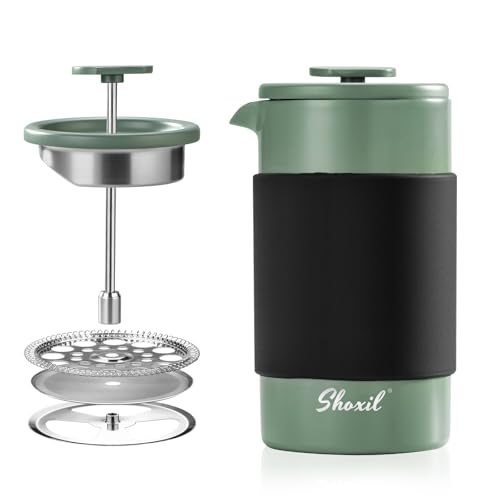
Premium Stainless Steel Construction: Made with double-layered stainless steel and a vacuum-insulated design, this French press keeps coffee hot longer while ensuring durability and rust resistance.

NO GRIT SMOOTHER COFFEE:Skip the sludge and bitterness of traditional french press coffee makers. PRESSPRO’s reusable ultra-fine stainless steel filter delivers smooth, full-bodied coffee with a cleaner finish and no paper filters to pack, replace or throw away.

Travel Coffee maker: brew Coffee or tea on the go and drink from same container when ready; enjoy your daily fix wherever you are
French Press vs Keurig: Decision Checklist
You’re probably wondering which factors matter most when you decide between a French press and a Keurig.
Which brew fits your lifestyle?
The portability factor matters. A French press fits in a backpack and works anywhere you can heat water, while a Keurig stays on a countertop and needs electricity. If you travel often, the press wins; if you stay put, the pod machine feels lighter.
How much time do you want to spend cleaning?
Cleaning frequency differs. A French press needs a quick rinse and occasional deep wash of the plunger, maybe once a week. A Keurig demands daily pod‑holder emptying and occasional descaling, which can feel like a chore.
What’s your budget over years?
A press costs $20‑$40 and avoids $0.50‑$1 pods, saving you dollars each month. A Keurig starts at $80‑$300 and adds pod costs.
Takeaway: Choose the press for portability, low cleaning, and long‑term savings; pick the Keurig for convenience and single‑serve speed.
Now, which checklist item feels most decisive for you?
A quick rinse after each brew helps prevent oil buildup and keeps flavor fresh. For optimal extraction, aim for a 1 g per 15 g coffee‑to‑water ratio. Consistent grind size further enhances the brewing experience.

1️⃣ EXPERIENCE THE FULL POTENTIAL OF COFFEE - Press the plunger to maximize the release of rich flavor. You’ll be in control of the brewing process with our PATENTED plunger system, powered by stainless steel springs. It directly brews in your mug to eliminate any mess.

☕ 0 Residue Double Mesh Filter:BPA-free 18/10 stainless steel dual mesh plunger blocks all coffee grounds. Enjoy smooth, sediment-free coffee every time—no bitter aftertaste.

The Brewer That Started It All – AeroPress Original was the first single cup coffee maker to combine 3 brew methods in one compact, portable device for a faster brew and better extraction giving coffee lovers a smooth, rich cup bursting with coffee bean flavor—without the bitterness or acidity found in other methods.