
You’re asking the right question—most people eyeball it and wonder why their brew tastes weak or muddy. Use a 1:16 ratio: one gram of coffee per 16 grams of water. For a standard 34-ounce French press, that’s roughly 55–80 grams of coffee. Weigh it on a scale instead of guessing with tablespoons, since grind size and bean density throw volume measurements off. Get the ratio right first, then tweak grind size and steep time to dial in your perfect cup.
The 1:16 Ratio: Your Dosing Starting Point
When you’re staring at your French press wondering exactly how much coffee to dump in, you’re asking the right question—because guessing leads to either weak disappointment or mouth‑puckering regret.
The 1:16 brew ratio is your reliable starting point. That means 1 gram of coffee for every 16 grams of water by weight. It’s balanced—strong enough to taste like actual coffee, but not so intense it overwhelms you.
Here’s why this works: you get consistent brew strength without immediately chasing bitterness or weakness. The ratio scales perfectly. If you’re brewing 25 grams of coffee, you’d add 400 grams of water. Thirty grams? That’s 480 grams of water.
Weight‑based dosing beats eyeballing it every time. You’ll nail repeatability across different beans and grinders.
Ready to adjust from here? Understanding grind size impact is essential for fine‑tuning extraction. Using a paper filter can also help achieve a cleaner cup by trapping more oils and fine particles. The optimal steep time of four minutes ensures proper extraction without over‑extraction.

【Ultra Small, Yet Professional】The Espresso Scale is small enough to fit in your palm. It measures 4.13*4.13*0.78 inches and weighs just 0.75 pounds. The coffee scale can work on most espresso machines and small pour-over coffee stands. It's easy to store and carry around, making it perfect for coffee lovers who like outdoor coffee.

【3 Smart Modes, 0.1g Pro Precision】Unlock precise control with 0.1g accuracy and 3 smart modes: Auto Timer for Pour-Over, Auto Timer for Espresso, and Standard Weighing. Whether brewing espresso or pour-over, this coffee scale adapts to your style for consistent, accurate results. The larger, easy-to-read display and quick response time help you focus on pouring technique and flow rates without distractions
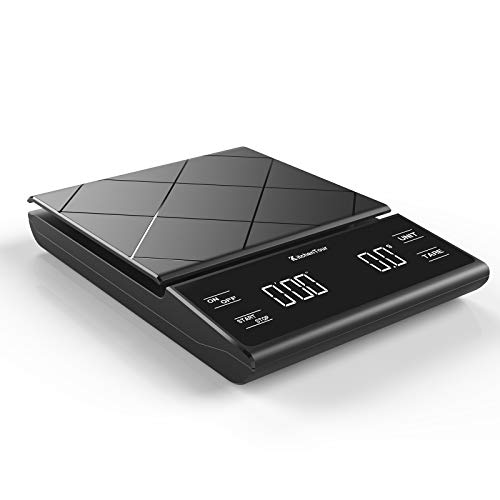
#Make Coffee Better every time# - KitchenTour EK6012 defines the latest in precision weighing technology with a weight capacity from 0.3g - 3000g to help you measure and get an exceptional cup of coffee with refined accuracy. The electronic coffee scale has a built-in timer to cook and time your coffee to ensure the consistency of each cup of coffee.
French Press Size: Quick Dosing Chart
That 1:16 ratio works beautifully on paper, but you’re probably staring at your actual French press right now wondering what that means in real tablespoons.
Let’s make this concrete. Small presses (12–17 oz) need roughly 20–28 g coffee. Medium presses (34–51 oz) jump to 55–80 g. Large presses (8‑cup) hit around 54 g as a baseline.
Here’s the thing: brew size and dosage ratios stay proportional across press types. A 12 oz press uses about 2 rounded tablespoons. A 34 oz press uses roughly 5.5 tablespoons. That pattern holds. For accuracy across all press sizes, use a digital scale to measure your coffee by weight rather than relying on tablespoon measurements, which can vary significantly.
Now, these numbers aren’t carved in stone—they’re your starting point. You’ll adjust based on grind size, water temperature, and how strong you prefer your coffee. Use this chart as your anchor, then tweak from there. Consistently applying a coarse, uniform grind helps ensure even extraction and prevents bitterness. Adding a precise 195‑205 °F water temperature can further improve flavor consistency. Understanding the extraction process can also help you fine‑tune your brew for optimal taste.

Barista Scale Tools, Ultimate Precision & Fast Response : Our precision kitchen scale features a 0.1g resolution and near real-time refresh rate, ensuring accurate measurements for Coffee Gator French press, Moka pot, Pour over and espresso , with a weight limit of up to 3 kg


【Weigh, Dose & Pour with One Cup】 This coffee bean measuring cup works as both a dosing cup and a digital coffee scale, helping simplify your brewing process. Use it to weigh coffee beans, dose espresso, and pour with better control for a cleaner countertop experience.
Weigh Your Coffee: Why Grams Beat Tablespoons
A kitchen scale transforms your French press game in ways a tablespoon simply can’t. You’ve probably noticed that one tablespoon of coffee sometimes tastes stronger than another—that’s not your imagination. Coarse grounds occupy way more space than fine grounds, so grind consistency directly affects what you’re actually measuring.
Now, here’s the thing: a tablespoon holding lighter roast beans weighs differently than one holding darker roast. You’re fighting density variations you can’t see. With measurement precision using grams, you eliminate all that guesswork. A 1:15 coffee-to-water ratio scales perfectly. You hit 30 grams of coffee for a mug, 56 grams for a full press—every time, identical results.
Your next brew? Weigh it. Regular cleaning helps maintain consistent flavor. The typical coffee scoop holds about 7–8 grams of ground coffee, making it a handy reference for quick volume‑to‑weight conversions. Adjusting the coffee‑to‑water ratio by press size ensures balanced extraction across different French press capacities.

Digital kitchen scale with food-safe, BPA-free plastic components

Contemporary Slim Design: Made of Stainless Steel Material; It is easy to use and clean; Provides accurate weight data with a user-friendly control panel and system; With high precision sensors to ensure correct performance and readouts
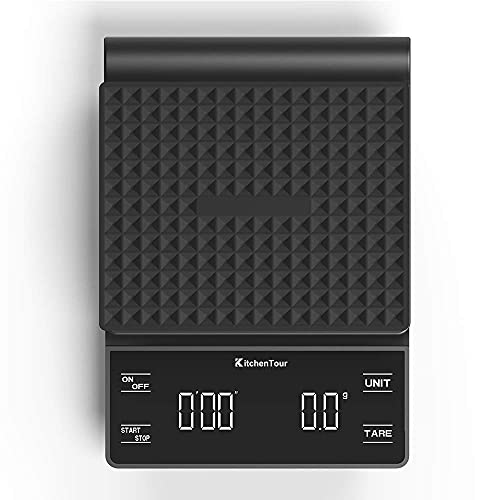
PRECISE MEASUREMENT & WIDE RANGE: KitchenTour EK6002 defines the latest in precision weighing technology with a weight capacity from 0.3g - 3000g to help you measure and get an exceptional cup of coffee with refined accuracy
Adjusting Your Dose for Stronger or Lighter Coffee
Now that you’ve nailed your baseline ratio, you’re probably wondering: what if you want your coffee stronger—or lighter?
Want a Bolder Cup?
You’ll bump up your coffee dose to increase flavor intensity. Move from 1:13 toward 1:11 or 1:10—that means more grounds relative to water. A stronger ratio like 30 grams of coffee to 300 milliliters of water delivers noticeably more body and boldness.
Prefer Something Milder?
Drop your dose instead. A 1:15 ratio gives you a gentler cup with less concentration. You’re simply using fewer grounds per volume of water.
The Real Strategy
Adjust gradually in small steps. This keeps your brew consistency reliable while you dial in your sweet spot. Track what ratio you used—you’ll want to repeat it. Using a coarse grind ensures proper extraction and helps prevent gritty residue. The bloom phase helps release trapped gases for a smoother cup. You can also experiment with a four‑minute steep to balance extraction and flavor.

One 10 oz bag of Gevalia Guatemalan Single Origin Special Reserve Coarse Ground Coffee

CRAFTED FOR FRENCH PRESS BREWING: Coarsely ground specifically for the slower immersion brewing process of French press coffee makers; larger grind size ensures balanced flavor extraction without bitterness, yielding a rich, full-bodied cup
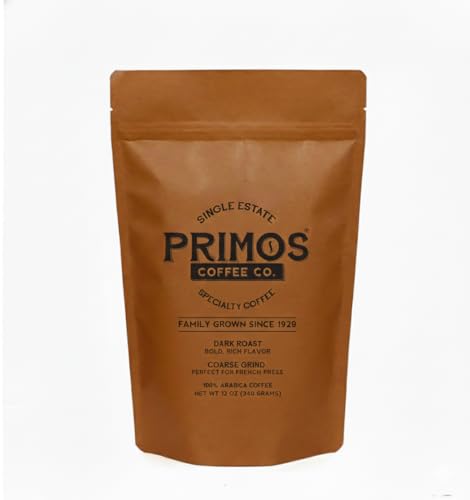
CRAFTED FOR FRENCH PRESS BREWING: Coarsely ground specifically for the slower immersion brewing process of French press coffee makers; larger grind size ensures balanced flavor extraction without bitterness, yielding a rich, full-bodied cup
French Press Grind, Steep Time, and Temperature
You’ve dialed in your coffee-to-water ratio, but here’s what most people miss: that perfect ratio won’t save you if your grind’s too fine or your water’s too cold.
Why Grind Texture Matters Most
Coarse grounds—think sea salt size—are your baseline. You’re targeting 690–1300 microns. Fine grounds trap water too long, brewing bitter sediment you can’t avoid. Stick coarse; it’s the safer default. A medium-coarse grind resembling sea-salt particles ensures the metallic filter retains most particles while reducing unwanted sediment in your cup. The extraction surface area expands with coarser particles, allowing more even flavor development.
Temperature Range Makes Real Difference
You want 195–205°F. Boil water, wait 30 seconds, then pour. Cold water under-extracts; too-hot water over-extracts. This temperature range is your sweet spot.
Steep Time Locks Everything In
Four minutes. Set a timer from your first pour. You’re giving grounds and water time to mingle properly without drowning your cup.
Nail these three, and your ratio finally matters. Regularly clean the press to prevent oil buildup that can mute the flavor profile of your brew. Adjusting the brew ratio by a small margin can fine‑tune the balance between acidity and body.
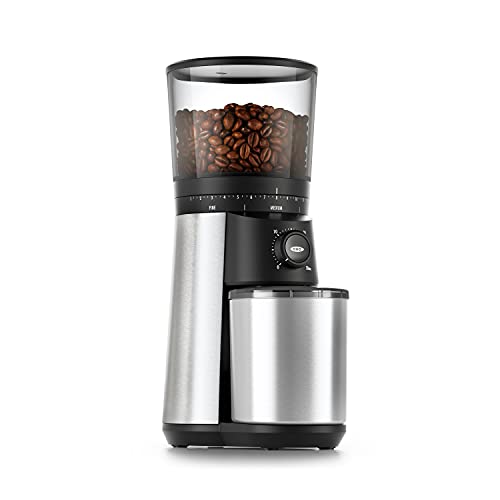
40mm stainless steel conical burrs: Precision grinding system produces uniform coffee grounds to ensure even extraction for rich, balanced flavor in every cup.

40 EXTERNAL ADJUSTABLE GRIND SETTINGS - Unlike traditional grinders with internal adjustments, our manual coffee grinder offers 40 precise external settings. The easy-to-use adjustment ring lets you select your perfect grind level, broadening your coffee flavor options without the mess of stray grounds. Perfect for espresso, pour-over, French press, and more.

EASILY SELECT GRIND SIZE AND CUPS OF BREWED COFFEE: Whether you need a fine grind size for espresso or a coarse grind for French press, we've got you covered. Just turn the grinder's adjustable selection ring. Grinds enough to brew 4-14 cups.
Before You Brew: Five Common Setup Mistakes
Even when you nail the ratio and temperature, small oversights during setup can sabotage your entire brew. You’re about to learn five mistakes that derail extraction before water ever touches grounds.
Why Cleanheating Matters More Than You Think
Old coffee oils turn rancid and lodge in your filter mesh. You’ll taste stale, bitter notes even with fresh beans. Rinse your plunger, carafe, and filter assembly thoroughly after each use. Mild detergent and warm water work best for regular cleaning.
Getting Your Water-Temperature Right****
Room-temperature glass pulls heat from your brew and weakens extraction. Boil water, then let it cool about 30 seconds before pouring. Aim for roughly 202°F—that 195–205°F range keeps extraction balanced and even.
Saturation Stops Weak Spots
Pour part of your water first, stir thoroughly, then add the rest. Complete wetting prevents dry pockets. Leave the brew undisturbed after mixing so grounds settle properly.
A well‑controlled brew benefits from consistent pressure during the steep. The percolator’s higher caffeine extraction can make a noticeably stronger cup compared to a French press.
Properly sealing the filter ensures an even flow and prevents channeling.