
You’re right to wonder if the full‑bodied French press can beat espresso’s punchy shot. Here’s the thing: a French press steeps coarse grounds for four minutes, pulling more oils and giving you a smooth, chocolate‑nutty cup with about 10‑15 mg caffeine per ounce, while espresso forces hot water through fine grounds in 25‑30 seconds, creating a concentrated brew with 47‑68 mg per ounce and a crema that hits fast. Obviously, the French press offers a richer mouthfeel and lower cost, but espresso delivers a quick caffeine spike and a more nuanced flavor profile—pick the one that matches your taste, budget, and routine, and you’ll see why each shines in its own arena.
French Press vs Espresso: Core Difference – Immersion vs Pressure
What’s the real difference between French press and espresso? You’re probably confused about why one uses immersion and the other relies on pressure extraction. Here’s the thing: a French press lets coarse grounds sit in hot water, letting flavors sustain vs a long steep, while an espresso machine forces water through fine grounds at about 9 bars, extracting quickly under pressure.
Now, think of immersion as a slow‑cooking stew versus pressure extraction as a flash‑fry. The press’s mesh filter separates the brew after steeping, so you get a full‑bodied cup with sediment. Espresso’s pump and boiler sustain high pressure, producing a concentrated shot with crema.
All right, the takeaway: immersion favors length and body, pressure extraction favors speed and intensity. Want to explore how brew time reshapes these profiles next? A higher extraction temperature can significantly alter the balance of acidity and bitterness. Using a medium‑fine grind in an Aeropress can also improve extraction consistency. For optimal flavor, consider using a coarse, uniform grind in the French press to avoid over‑extraction.

One 10 oz bag of Gevalia Guatemalan Single Origin Special Reserve Coarse Ground Coffee

CRAFTED FOR FRENCH PRESS BREWING: Coarsely ground specifically for the slower immersion brewing process of French press coffee makers; larger grind size ensures balanced flavor extraction without bitterness, yielding a rich, full-bodied cup
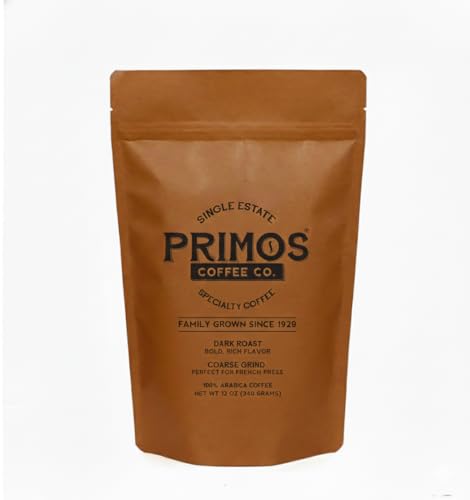
CRAFTED FOR FRENCH PRESS BREWING: Coarsely ground specifically for the slower immersion brewing process of French press coffee makers; larger grind size ensures balanced flavor extraction without bitterness, yielding a rich, full-bodied cup
French Press vs Espresso: How Brew Time Shapes Flavor & Body
You’re probably wondering how the same beans can taste so different when you change the brew time.
How does brew time affect flavor?
Short extraction in espresso—about 25–30 seconds—pulls sharp, vivid notes that hit you instantly. Longer steeping in a French press—roughly four minutes—creates a richer, more complex flavor, but the clarity blurs as oils and fine particles linger. Obviously, the extraction duration determines whether you taste a bright burst or a deep, mellow profile.
What about body and mouthfeel?
Because the French press retains natural oils, its mouthfeel feels heavier, cloudier, and more syrupy, while espresso’s rapid brew yields a compact, crema‑topped texture that feels intense in a small sip. The longer contact time builds a fuller body; the short brew gives a punchy, concentrated feel.
Takeaway: Brew time shapes both flavor and mouthfeel—long for depth, short for intensity. Next, consider how grind size and roast influence those results.
The coarse grind used in a French press allows for optimal extraction without over‑extraction.
A typical French press ratio is about 1 gram of coffee per 15 grams of water to ensure balanced extraction.
A proper cold brew steep time of 12–24 hours can also be used to compare how extended extraction impacts flavor and body.
French Press vs Espresso: Choosing Grind Size & Roast
Espresso loves dark or espresso roasts for bold, low‑acidity shots; medium roasts add sweetness and clarity. French press shines with medium or dark roasts that amplify body and mouthfeel, while light roasts can turn thin or sharp without careful control. Match fine grind with dark/espresso roast for intensity, and coarse grind with medium‑dark roast for a balanced French press. Your brew‑balance hinges on this roast compatibility. Next, ask yourself how much caffeine you want per ounce versus per cup. A French press can mimic espresso’s strength by using an extra‑fine grind and a higher coffee‑to‑water ratio. The particle size directly influences extraction rate, affecting both flavor clarity and equipment wear.
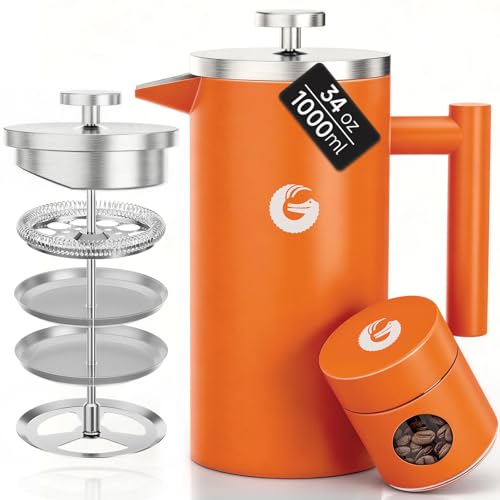
BREW LIKE A BARISTA AT HOME – Built-in measurement markings help you easily achieve the ideal coffee-to-water ratio for consistently rich, flavorful coffee. Makes up to 34 oz, perfect for daily brewing

One 10 oz bag of Gevalia Costa Rican Single Origin Special Reserve Coarse Ground Coffee
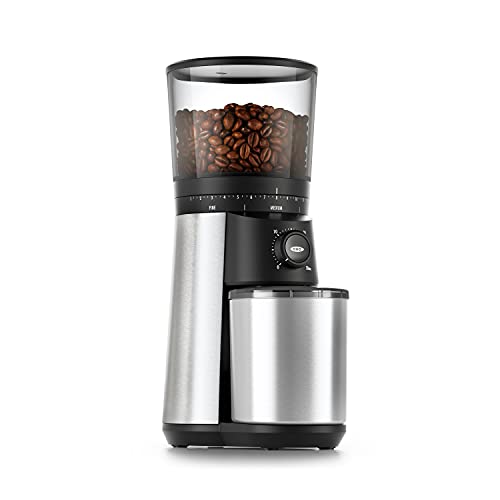
40mm stainless steel conical burrs: Precision grinding system produces uniform coffee grounds to ensure even extraction for rich, balanced flavor in every cup.
French Press vs Espresso: Caffeine per Ounce vs per Cup – Which Gives More Buzz?
If you’re wondering whether a French press or an espresso gives you more of a caffeine kick, you’ve hit the right spot.
Which method packs more caffeine per ounce?
Espresso’s caffeine density tops the chart—about 47‑68 mg in a single ounce, while French press delivers roughly 10‑15 mg per ounce. That’s a 4‑6‑fold difference, so a tiny shot feels intense instantly.
How does a full cup compare?
An 8‑ounce French press usually contains 80‑120 mg total caffeine, often matching or exceeding a single espresso shot (47‑68 mg). A double shot can reach 80‑136 mg, but you’d need extra shots to beat a standard French press cup.
What does this mean for buzz duration?
Higher caffeine density gives a quick lift, but the larger volume of a French press prolongs buzz duration, delivering a steadier, longer‑lasting effect.
Takeaway: Espresso wins on ounce‑by‑ounce concentration; French press wins on total caffeine per cup and sustained buzz.
Next step: Decide whether you prefer a rapid jolt or a prolonged lift, then choose your brew size accordingly.
Espresso can also trigger the gastrocolic reflex, which may cause a sudden urge to use the bathroom shortly after drinking.
A standard 1‑ounce espresso shot typically contains 63–75 mg of caffeine, reflecting the caffeine density of this concentrated brew.
Using a fine‑mesh filter and a pressure‑building technique can mimic espresso pressure, allowing a richer crema even without a machine.
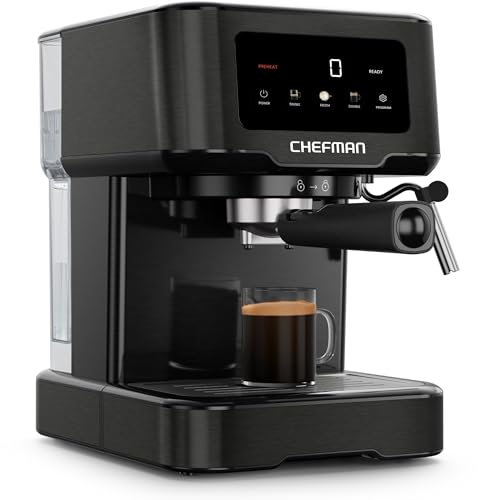
ENJOY CAFÉ-QUALITY ESPRESSO: Experience the bold, rich flavor of homemade espresso and skip long café lines with the CraftBrew Digital Espresso Maker! A strong 15-BAR pump and a built-in milk frother make it easy to brew cappuccinos and lattes right in your own kitchen.

☕ One-Touch Coffee Selection : Brew espresso, double espresso, Americano, over ice coffee, hot water, and steam with an intuitive touchscreen interface designed for effortless daily use.

Professional Pump: Come with 20 bar original Italian pump for easily extract strong flavored and rich crema espresso; Fast Heating: 1350 watts powerful boiler, preheating in just 30 secs, lets you make a delicious espresso in 1-3 mins
French Press vs Espresso: Mouthfeel – Oil Retention vs Crema
You’re probably wondering why the buzz feels different when you sip a French press versus an espresso. The French press lets oil richness stay in the cup because its metal mesh filter barely blocks fine particles or natural oils. Those suspended solids give a heavier, rounder mouthfeel, almost like a warm blanket around your tongue.
Now, espresso’s high‑pressure extraction creates a thin, caramel‑brown layer called crema texture. That foam is emulsified oil and trapped CO₂, delivering a tighter, syrupy sensation that feels more intense than a French press.
All right, the key takeaway: French press offers a body‑rich, oil‑laden experience, while espresso provides a pressure‑rich, crema‑driven texture. Next, you might compare how each mouthfeel matches your preferred coffee ritual. Using a coarse grind helps maintain the French press’s full‑bodied texture. Regularly cleaning the press prevents residue buildup and preserves those distinct flavors. The full‑immersion method also extracts more caffeine, contributing to a stronger kick.
French Press vs Espresso: Equipment Cost, Portability & Maintenance
Why does equipment cost matter for you? You’re weighing budgetability against flavor potential, and the numbers speak fast. A French press runs $20–$80, often $22–$30 for a solid model, because its simple, pump‑free design keeps price low and sustainability high. An entry‑level espresso machine starts near $100, but quality units climb to $400–$700, and premium models hit $5,000+, plus grinder, tamper, and accessories.
Now, portability. You can toss a French press in a backpack; it’s lightweight, needs no power, and fits tiny kitchens. Espresso machines stay on a stable countertop with electricity, limiting travel and office use.
Maintenance? You’ll rinse a French press, maybe deep‑clean occasionally—few parts, low upkeep. Espresso demands descaling, backflushing, and regular part swaps, raising long‑term effort and cost.
Takeaway: If you crave low upfront spend, easy ergonomics, and sustainable simplicity, the French press wins. If you prioritize precise flavor control and don’t mind higher expense and upkeep, espresso fits. Which factor feels most critical for your daily brew? Consistently smooth extraction also depends on the optimal brew time and precise temperature control. The pressure‑driven extraction of a Moka Pot can deliver a richer, more concentrated flavor compared to the immersion method of a French press. The mesh plunger separates grounds efficiently, ensuring a clean cup.

Superior Filtration: A solid filtration system in a coffee maker ensures a refined taste and robust flavor mouthfeel. Our 4-filter sieve system has an improved piston plate and 80 mesh filter that extracts the earthy, rich taste of residue-free coffee. This 1000 ml/34 Oz beaker makes 4 cups of creamier & tastier coffee.
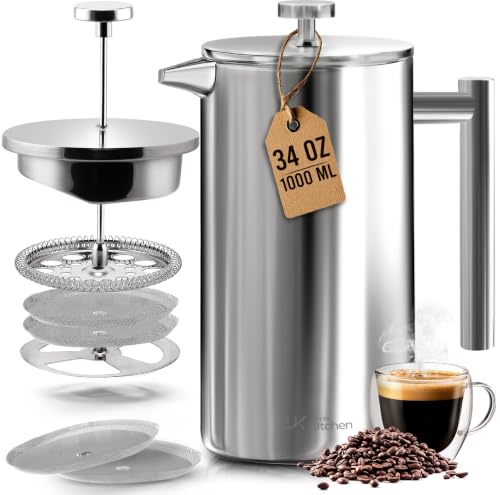
Double-Walled French Press: Make perfectly brewed coffee at home like a barista. The double-walled coffee press is heat resistant. Its solid construction will keep the drink hot for a long time.

No Plastic Touching Food: Made with 304 stainless steel and food-grade silicone, our French press keeps all brewing surfaces plastic-free— no odor and no plastic particle into your coffee. Safe and worry-free
French Press vs Espresso: Speed, Cleanup & Daily Convenience
How fast can you actually get a cup, and what does cleanup look like? You’ll see espresso pop out in 20‑30 seconds, plus a minute of prep, so about two minutes total. French press needs a four‑minute steep and a quick plunge, so you spend roughly five minutes before you can sip.
Which method wastes less time after the brew?
Espresso leaves coffee grounds, a portafilter, and a drip tray to scrub, often taking five to ten minutes. French press just requires discarding wet grounds and rinsing the carafe, usually two to three minutes.
How does daily convenience compare?
Espresso demands precise grind size, dose, and tamping—high skill, higher energy consumption from heating the machine. French press is low‑tech: add grounds, pour water, wait, then plunge; energy use stays low, and the brew ratio stays simple.
Takeaway: If you value speed per cup, espresso wins; if you prefer a hands‑off routine and quick cleanup, the French press is your friend. Next, decide which brew ratio best fits your taste. Nitrogen infusion can also be used to create a creamy texture similar to nitro cold brew. Proper water temperature is crucial for extracting balanced flavors in both methods. Using a coarse grind helps prevent over‑extraction during the French press steep.
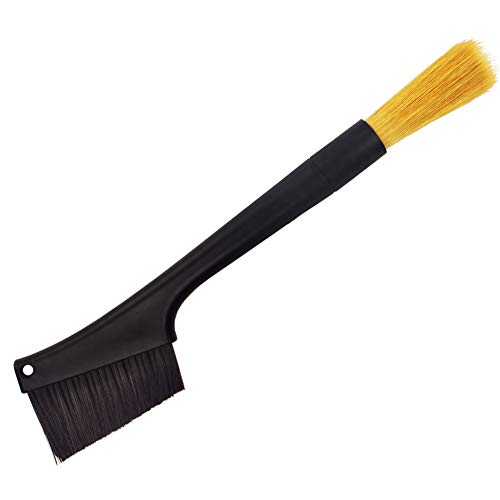
High Quality,Dual use brush,the bristle will never fell out , High Quality and Multifunction
![Quick & Clean [6-Pack] Keurig Cleaning Pods - K Cup Cleaner Pod For Keurig - 2.0 Coffee Machine Compatible, Removes Stains, Non-Toxic and Eco-Friendly](https://m.media-amazon.com/images/I/51lXaI5rgKL._SL500_.jpg)
Get That Fresh Coffee Taste Back - Over time, Keurig (TM) machines build up old grinds and residues, tainting the flavor of your coffee and espresso. Quick and Clean Keurig cleaning pods use a proprietary cleaning formula that cuts through and eliminates these residues, bringing taste back to normal

Highly Effective at an Excellent Value: Powerful and effective yet gentle on the machine, our descaler is safe for you and the environment and will restore the performance of your machine. We exceed the efficacy of all other similar descalers!
French Press vs Espresso: Quick Cheat Sheet – When to Choose Which
When you’re torn between a French press and an espresso, the real question is what you want out of each cup. You crave a rich, full‑bodied sip that drags you into a relaxed morning? Or you need a punchy, concentrated shot that jolts you awake in seconds?
What does each brew give you?
French press delivers smooth, heavy mouthfeel, about 13 mg caffeine per ounce, and a larger mug‑size serving that sustains you. Espresso packs roughly 64 mg caffeine per ounce, intense crema, and a tight, bold flavor that fits a quick break.
When to pick one?
Choose French press for a leisurely, culture‑rich experience that supports sustainability by using simple equipment and coarse grounds. Opt for espresso when you want a fast, high‑impact drink that fits a busy routine and still respects sustainability through precise, low‑waste extraction.
Takeaway
Match your mood and schedule: relaxed sipper vs. rapid jolt. Next, think about how taste, budget, and routine will shape your decision.
French Press vs Espresso: Decision Framework – Match Taste, Budget & Routine
You’re probably wondering which brew fits your taste, wallet, and daily rhythm.
Which flavor profile matches your palate?
French press gives a full‑bodied, chocolatey‑nutty cup that pairs well with pastries, while espresso offers a punchy, crema‑driven shot that shines alongside sweet desserts. If you love bold, round flavors, go press; if you crave intense, concentrated notes, espresso wins.
How does budget shape your choice?
A French press costs under $30 and needs only coffee and hot water. Espresso demands a machine, grinder, and accessories, often topping $500. Obviously, tighter budgets favor the press, especially for travel or batch brewing.
What routine fits your life?
Pressing takes four minutes plus simple cleanup, perfect for relaxed mornings. Espresso shoots in 30 seconds after a brief setup, ideal for quick, repeatable shots. Consistency comes easier with a press; espresso requires precise grind, dose, and pressure.
Takeaway: Align flavor pairing, cost, and routine. Your decision will match taste, budget, and daily rhythm.
Next step: Which factor feels most decisive for you?