
You’re right to wonder which method tops the other, because immersion in a French press and percolation in a pour‑over pull flavor very differently. The French press’s coarse grind, 4‑minute steep, and metal mesh keep oils and fine particles, giving you a rich, velvety body and a slightly gritty finish—great for dark, chocolatey beans. The pour‑over’s paper filter, 195‑205 °F water, and 2½‑3 minute contact strip most oils, delivering a clean, bright cup that showcases light, floral roasts. So if you crave bold, buttery texture, go French press; if you prefer a crisp, aromatic sip, choose pour‑over. Want to see how grind size, pour rate, and timing fine‑tune each brew?
French Press vs Pour‑Over: Brewing Basics
What’s the core difference between French press and pour‑over brewing? You’re probably wondering why the two methods feel so distinct, and the answer lies in how the water meets the coffee. The French press immerses grounds in water, while pour‑over lets water flow through a filter.
How do you set the brew ratio?
You’ll use about 60‑70 g of coffee per liter in a French press, roughly a 1:15–1:17 ratio, same as a pour‑over. The key is measuring both coffee and water to keep extraction consistent.
What grind size works best?
Coarse to medium‑coarse grounds prevent clogging in the press, whereas medium to medium‑fine grounds give a steady drip in the pour‑over.
Takeaway
Choose immersion or percolation, match the 1:15‑1:17 ratio, and adjust grind size accordingly. Next, explore how these choices affect flavor. A proper coarse grind ensures optimal extraction and reduces sediment. The Chemex’s thick paper filter yields a clean cup with minimal sediment, highlighting the impact of filter type on flavor clarity. Using the recommended 1:15 ratio helps achieve a balanced, rich cup every time.

48 Grind Settings and Large Capacity : The Aromaster electric coffee grinder offers 48 different settings, from fine espresso to coarse French press. The timer allows you to adjust the amount of coffee powder, and the large chamber can grind up to 3.9 ounces, perfect for families and offices

EASILY SELECT GRIND SIZE AND CUPS OF BREWED COFFEE: Whether you need a fine grind size for espresso or a coarse grind for French press, we've got you covered. Just turn the grinder's adjustable selection ring. Grinds enough to brew 4-14 cups.
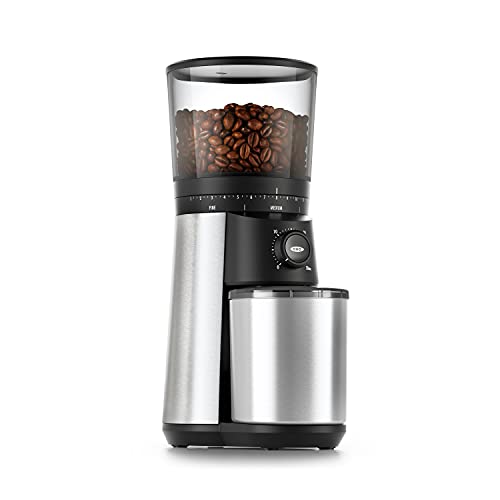
40mm stainless steel conical burrs: Precision grinding system produces uniform coffee grounds to ensure even extraction for rich, balanced flavor in every cup.
French Press vs Pour‑Over: Flavor Differences
You’re probably wondering why the same beans can taste so different when you switch from a French press to a pour‑over.
How does the brew change flavor intensity?
A French press pushes water through grounds longer and never filters out fines, so you get a denser, richer cup. That body boosts flavor intensity—think chocolate, nutty, caramel notes that feel heavy on the palate. A pour‑over, by contrast, filters through paper, stripping most oils and sediment, which yields a lighter, more delicate brew where each sip feels crisp rather than dense.
Why does aroma clarity shift?
The paper filter in a pour‑over lets volatile compounds escape, sharpening aroma clarity. You’ll notice bright, citrus, floral notes that a French press usually mutes. The press retains more oils, giving a rounder scent that leans toward spice and earth.
Takeaway: Choose French press for bold, full‑bodied intensity; choose pour‑over for bright, nuanced aroma clarity. Next, explore how sediment and oils affect the finish.
A nitro cold brew can be made at home using a nitrogen charger to create a creamy, cascading foam.
consistent brew temperature] is essential for extracting the optimal balance of flavors in both methods.

Superior Filtration: A solid filtration system in a coffee maker ensures a refined taste and robust flavor mouthfeel. Our 4-filter sieve system has an improved piston plate and 80 mesh filter that extracts the earthy, rich taste of residue-free coffee. This 1000 ml/34 Oz beaker makes 4 cups of creamier & tastier coffee.
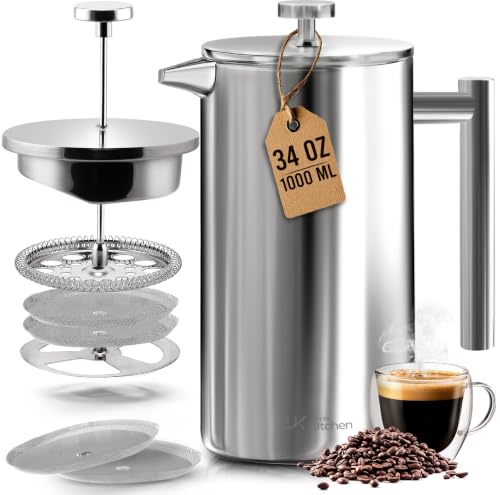
Double-Walled French Press: Make perfectly brewed coffee at home like a barista. The double-walled coffee press is heat resistant. Its solid construction will keep the drink hot for a long time.

No Plastic Touching Food: Made with 304 stainless steel and food-grade silicone, our French press keeps all brewing surfaces plastic-free— no odor and no plastic particle into your coffee. Safe and worry-free
Sediment, Oils, and Finish
Why does the cup feel gritty or slick?
You notice sediment texture when the French press lets fine particles slip past its metal mesh, especially with a blade‑ground, uneven grind. Coarser burr‑ground beans cut that grit, but a fine grind still leaves a muddy mouthfeel.
What about oil richness?
Paper filters in a pour‑over strip away most natural oils, giving you a clean, crisp finish. The French press, however, retains those oils, making the brew feel heavier and more opaque, like a velvety sauce coating the palate.
How does the finish differ?
A pour‑over ends bright and clean; a French press finishes bold, heavy, and sometimes gritty. If you let the press sit a few minutes, the settled sediment drops, and you can pour off the clearer top, reducing sludge.
Takeaway: Sediment texture and oil richness shape your sip’s body and clarity. Next, consider how grind size and timing affect those qualities.
The coarse grind enhances clarity by reducing sediment passage through the mesh.
The steeping time also plays a crucial role in balancing extraction and mouthfeel.
Regular cleaning with a mild dish‑soap solution prevents residue buildup, ensuring each brew tastes fresh.
How Pour Rate, Water Distribution, and Timing Shape the Brew
If you pour too fast, the water rushes through, forming channels that skip grounds and leave you with a thin, under‑extracted cup. You’re probably wondering how to avoid that. Here’s the thing: control your pour rate, aim for a steady 3‑4 ml per second stream, and watch the bloom timing. A 30‑45‑second bloom releases CO₂, steadies the bed, and sets up extraction uniformity. Hydraulic resistance must be balanced by grind size to maintain consistent flow. How should you move the water? Use a gentle concentric‑circle or center‑to‑edge spiral, especially with a V60. A smooth spiral spreads water evenly, preventing bypass and micro‑channels. For a Chemex, a softer spiral works better because the thick filter slows drainage. Now, what about overall timing? Target a total brew of 2:30‑3:30 for V60, 3:30‑4:30 for Chemex, and keep contact time around 3:00‑3:30. Longer pours increase extraction, but too long brings bitterness; shorter pours leave sourness. Adjust grind size, dose, and ratio together—if you speed up, coarser grind restores balance. Takeaway: steady pour, even spiral, and proper bloom timing give you extraction uniformity and a balanced cup. Ready to test a 30‑second bloom with a gentle spiral? Try it and see how the flavor changes. Versatile brewing also makes the Aeropress a strong alternative for those seeking speed and portability. The Aeropress’s pressure‑assisted immersion can reduce acidity compared to the French Press, delivering a smoother, brighter cup.

Buono Coffee Drip Kettle: Stunning stainless steel stovetop kettle that’s easy to use and offers a thin spout for easy pouring. A Hario staple, its iconic shape is recognized around the world

Perfect Pour-Over Coffee Kettle: Consistent pouring and exact temperature control ensure barista-level results. The built-in thermometer guarantees precise 195–205°F brewing. Large 1.2L capacity allows multiple cups (fill to 1L to avoid boil-over).

Beginner‑Friendly vs. Master‑Level: Skill Requirements
You’re probably wondering whether the French press or pour‑over fits your skill level. You want Beginner accessibility, so you gravitate toward the press’s low barrier: just coffee, hot water, and a plunger. The immersion method tolerates a few extra minutes, coarse grinds, and minor timing,, letting you brew multiple cups without fuss.
Now, if you crave Mastery depth, the pour‑over demands precise pouring, a medium‑fine, uniform grind, and a tight 2:30–3:30 minute window. Small variations in flow or bloom can swing flavor dramatically, so you’ll practice timing, pour height, and water distribution.
All right, the takeaway: Choose the press for quick, forgiving results; pick the pour‑over when you’re ready to refine technique and reap nuanced flavor. Want to test your comfort? Try a simple French press brew today and see how it feels. For optimal extraction, aim for a 1:15 coffee‑to‑water ratio.
The French press’s longer extraction time also means it extracts more soluble compounds from the grounds, contributing to its fuller body. Proper water temperature is critical for balanced extraction.
Steep‑and‑Press Speed vs. Slow Drip Precision
When you wonder whether speed or precision matters more, think of the French press as a sprint and the pour‑over as a marathon. You’re probably confused about why one method feels rushed while the other feels meticulous. Here’s the thing: French‑press brew timing hovers around a single 4‑minute steep, then you press. You get a bold, full‑bodied cup fast, but you sacrifice fine‑tune control.
Now, pour‑over spreads water in stages, letting you adjust pour rate, bloom, and temperature. This slower drip lets you chase flavor nuance, extracting bright, clean notes. Obviously, the extra seconds add precision, not speed.
Which matters more to you? If you need a quick, robust brew, the press wins. If you crave nuanced clarity, the drip wins.
Takeaway: choose based on your time budget and flavor goals. Next, consider how cleaning each method fits your routine. Using clean, soft, filtered water ensures the best flavor extraction.
A consistent grind size helps extraction and prevents over‑extraction. Using the recommended coffee‑to‑water ratio yields a balanced cup every time.
water the water to just off the boil helps maintain optimal extraction temperature.
Cleanup & Maintenance: Messy Grounds vs. Disposable Filters
Why does cleaning a French press feel messier than a pour‑over? You’re probably wondering why the grind ends up everywhere. The press forces you to tap, scrape, and rinse clumps that cling to the carafe and mesh‑filter, so you juggle several parts and risk odor if anything stays wet. In contrast, a pour‑over is filter‑free maintenance: you lift a paper filter, toss it, and give the cone a quick rinse. No disassembly, no stubborn grounds trapped in a spiral disk. The French press demands full‑filter‑cleanup after each brew, while the pour‑over leaves you with a single‑step, low‑odor routine. Takeaway: Expect more hands‑on work with a press, but you can keep it fresh with regular, thorough rinses. Daily cleaning helps prevent oil buildup and extends the life of the press. Next, consider how often you’ll need to repeat this routine. The immersion method also extracts more coffee oils, contributing to the richer body of a French press brew. Use the assembly guide to ensure all parts fit tightly and avoid leaks.

Made of non-scratch and odorless nylon bristles. Firm grey bristles on the tip are able to clean off the stubborn stains on the bottom and hard to reach areas, while the black bristles clean the body effectively.
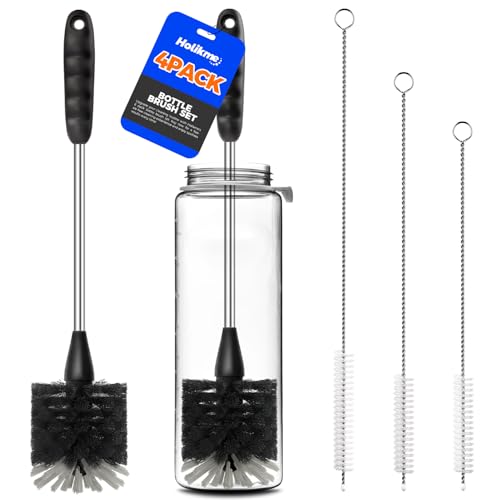
【4 PACK BOTTLE BRUSH SET】Includes 14" bottle brushes with stainless handle, 3×straw brushes. With this complete set of cleaning tools, you'll have everything you need to keep your drinkware sparkling clean and ready to use.

Specially Designed for Chemex: You will receive 1 coffee maker brush, engineered to perfectly clean pour-over coffeemakers by reaching all contours of the signature glass carafe for thorough stain removal. Please note that our product isn't sponsored or endorsed by the brand it fits, including Chemex.
Equipment Costs: Minimal Gear vs. Ongoing Filter Expenses
How much do you really need to spend before you can brew?
You’re probably wondering if a French press or a pour‑over will hurt your budget.
Which setup costs less up front?
A French press is basically a pot and a press, usually $20‑$40. No gooseneck kettle, no scale, no paper filters. A pour‑over needs a dripper, a kettle, often a scale, and a pack of paper filters, pushing the initial outlay toward $50‑$150.
What about ongoing expenses?
French press eliminates filter waste; you never buy disposables. Pour‑over adds a small, recurring cost for paper—maybe a few cents per brew. Over a year, that adds up, but the per‑cup price stays low.
Takeaway
If budget efficiency drives you, the French press wins on minimal gear and zero filter waste. If you love the control of a pour‑over, accept the modest recurring filter cost.
Next, consider which brew style matches your taste preferences.
The French press’s full‑immersion extraction yields a richer, heavier body compared to the cleaner, brighter profile of a pour‑over.
A Moka Pot’s pressure‑driven extraction can also achieve a strong, espresso‑like cup with a relatively low upfront cost.
Using an unbleached paper towel as an improvised filter can be a temporary solution, but it may introduce unwanted flavors and chemicals.

Flavor, Hate boring, cold coffee? We do too! Our huge capacity coffee press is vacuum-layered and double-filtered to bring you a flavor more full than your email inbox. Oh yeah, you even get a mini canister for storing your next caffeine hit

【EASY TO USE】Brew a cup of coffee in several minutes. The 51oz/1500ml french press makes the perfect cup of coffee. The french press coffee is the easiest to concentrate on the condition of the beans among the many devices. You can see the amount of foam (crema) after the coffee touches the water, and how the coffee floats on the water and slowly sinks

No Plastic Touching Food: Made with 304 stainless steel and food-grade silicone, our French press keeps all brewing surfaces plastic-free— no odor and no plastic particle into your coffee. Safe and worry-free
Roast Compatibility: Dark, Chocolatey vs. Light, Specialty
Which roast shines brighter in each brew? You’re probably wondering which coffee fits your brew, and you asked the right question.
Dark, chocolatey beans: French press vs. pour over****
Here’s the thing: immersion in a French press lets dark, chocolatey beans release bold, oily flavors quickly because they’re more soluble. Brew‑temperature impact matters—around 195°F works, but a shorter 3‑4‑minute steep avoids bitterness. Roast‑origin pairing favors the press for body and low‑acid notes; the mesh lets oils stay, enhancing richness.
Light, specialty beans: French press vs. pour over
Now, light roasts need higher Brew‑temperature impact (195‑205°F) and finer grind for extraction. Pour‑over’s precise control highlights floral, citrus notes, making Roast‑origin pairing shine. French press can work, but you’ll need longer steep or finer grind, which may mute clarity.
Takeaway
Dark chocolates love the press; light specialties thrive in pour‑over. Next, decide which flavor profile you crave.
Which Method Fits Your Taste?
Ever wondered which brew will match your palate? You’re torn between a silky, bright cup and a bold, buttery mug, and that’s normal. Your taste preference drives the choice: if you crave a full body and thick texture, the French press delivers with its metal mesh, higher brew temperature (around 200 °F), and longer extraction time (4 min). The grind size stays coarse, preserving oils and a rich aroma profile. Paper filter removes most sediment and oils, giving a cleaner cup. All right, if you favor clean, nuanced flavor, the pour‑over shines. Use a medium‑fine grind, 195 °F water, and a 2‑minute extraction; the paper filter strips oil, giving a lighter mouthfeel and bright citrus notes. Obviously, the brew temperature and grind size shape the final taste. Takeaway: match your desired body and aroma profile to the method. Next, try a side‑by‑side tasting to see which texture wins your heart.