
A burr grinder crushes beans uniformly between two abrasive surfaces instead of chopping them randomly like blade grinders do. You adjust the gap between burrs to control grind size—wider spacing for coarse, narrower for fine. This uniform particle size means even extraction, repeatable results, and less heat damaging your coffee’s flavor. Steel burrs stay sharp 3–7 years; ceramic lasts twice as long. The consistency you get transforms mediocre coffee into something genuinely exceptional, whether you’re brewing espresso or French press.
What Is a Burr Grinder and How Does It Work?
If you’ve wondered why some grinders produce wildly inconsistent coffee grounds while others nail it every time, you’re asking exactly the right question—and burr grinders are usually the answer.
Here’s the thing: instead of chopping beans randomly like blade grinders do, burr grinders use two abrasive surfaces called burrs to crush them uniformly. Beans drop from a hopper, gravity feeds them toward the burrs, and one rotates while the other stays still. You get grounds with consistent particle size—which actually matters for brewing.
Now, controlling grind size is straightforward. You adjust the gap between burrs: wider spacing gives coarser grinds, narrower spacing gives finer ones. This precision control separates burr grinders from everything else.
The result? Less heat damage to your coffee’s flavor and aroma, plus repeatable, even extraction every brew. Understanding grind size impact helps you match the grind to your brewing method for optimal extraction. Flat burrs provide a uniform particle distribution that enhances flavor consistency. Conical burrs generate less heat and operate more quietly, making them a popular choice for home users.
Why Burr Grinders Beat Blade Grinders for Coffee
Since you’re already grinding coffee, you’ve probably noticed that some batches taste noticeably better than others—and that’s almost always a grind consistency problem, not a bean quality issue.
Burr grinders produce uniform particle sizes that extract evenly, while blade grinders create chunks, medium bits, and dust all mixed together. Uneven particles mean larger pieces under-extract and fine particles over-extract, muddying your flavor.
You also get precise control with burrs. You can dial in coarse grounds for French press or fine grounds for espresso—blade grinders just can’t compete there. Manual timing isn’t reliable. Professional settings rarely use blade grinders due to their inherent inconsistency and the waste of grounds during sifting for usable particles.
Here’s the thing: burr grinders generate less heat during grinding, preserving aromatic oils and flavor preservation that blade grinders destroy. This grind sustainability matters for freshly roasted beans.
Consistent grounds mean repeatable results you can actually trust cup to cup.
Proper storage of beans further enhances the benefits of a burr grinder by keeping the beans fresh longer.Particle size directly influences extraction efficiency and flavor balance across different brewing methods.
Choosing the right grind size is essential for optimal extraction and balanced flavor.
Flat Burrs vs. Conical Burrs: Which Design Works Best?
Both designs force beans between grooved surfaces instead of chopping them, but their geometry changes everything.
How Each Design Grinds Differently
Flat burrs use two parallel discs with teeth facing each other, while conical burrs nest a cone inside a ring. This shapes your grind distribution dramatically. Flat burrs produce uniform, unimodal particle sizes with fewer fines. Conical burrs create a wider, bimodal distribution with more fines and larger particles mixed together. Proper grind size is crucial for consistent extraction during espresso brewing.
What This Means for Your Cup
Flat burrs highlight clarity and flavor detail through consistent extraction consistency. You’ll taste origin character distinctly. Conical burrs blend flavors into fuller body and rounder mouthfeel. Those extra fines increase extraction, thickening your brew.
The Practical Reality
Flat burrs demand more burr maintenance and cost more upfront. Conical burrs run quieter and cheaper. Choose based on whether you want precision or texture—both work beautifully across brew methods. Consistent grind size is essential for avoiding channeling and achieving balanced espresso shots.

64mm Flat Burr: Achieves uniform grinding with minimal heat generation, enhancing the flavor profile for a superior taste experience

【Upgraded 64mm Titanium Flat Burrs – Superior Consistency & Flavor】Equipped with newly upgraded 64mm titanium-coated flat burrs, delivering more uniform particle size, enhanced clarity, and improved flavor extraction. More durable and wear-resistant than standard steel burrs for long-lasting precision grinding.

[64mm Stainless Steel Flat Burrs] As a Professional of coffee grinders, this machine uses 64mm stainless steel flat burrs to ensure uniform grind size for rich, balanced flavor
Electric or Manual: Which Powers Your Workflow?
Your morning coffee routine depends entirely on this choice: you’re either cranking a handle or pressing a button. The difference shapes everything—speed, noise level, and how you actually brew.
Manual grinders demand physical effort but reward you with travel portability and near‑silence. You’re grinding maybe 30 decibels, barely louder than a whisper. Electric grinders? They’ll finish in seconds but run around 60–75 decibels—normal conversation volume.
Here’s the thing: electric wins if you’re brewing multiple cups or want convenience. Manual wins if you travel frequently or live with light sleepers. Both deliver consistent grounds through burr mechanics.
A well‑tuned grinder can improve extraction and bring out the coffee’s full flavor profile. Properly primed pump pressure ensures steady flow and optimal espresso crema. Regularly descaling the machine prevents mineral buildup that can affect grind consistency.
Dialing In Grind Settings: From Espresso to French Press
You’re dialed in when your espresso dose extracts in 25–30 seconds with steady flow and creamy crema. Your flavor profiling improves dramatically once you stop guessing and start listening to what the grind tells you.
Reading Your Extraction Speed
Fast shots mean your grind’s too coarse; slow or choked shots mean it’s too fine. You adjust in small steps while keeping dose, tamp, and temperature consistent. The machine needs to be fully warmed up first—skip this and you’ll chase ghosts. Remember that coarser grinds require longer extraction times, so if your shots are running too quickly, moving to a coarser setting will help slow down the flow and improve flavor balance. Consistent tamp pressure ensures the puck density stays uniform, preventing channeling that can distort extraction speed. Proper brew temperature control further stabilizes extraction consistency across different beans.
Tasting Your Way to Balance
Sourness signals under-extraction; harsh bitterness signals over-extraction. You’ll nail it when neither dominates. For French press, you’re looking for coarse grind around 4 minutes. Start with your method’s baseline, then refine by taste.
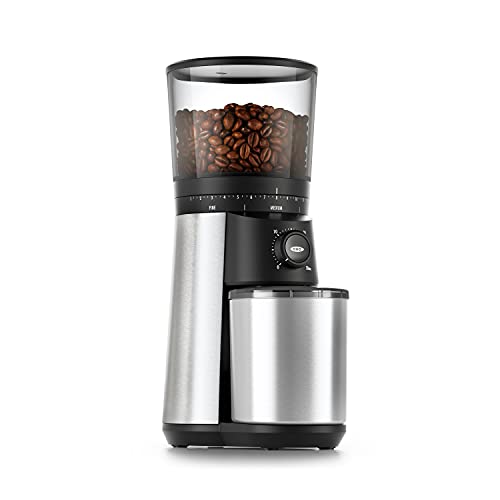
40mm stainless steel conical burrs: Precision grinding system produces uniform coffee grounds to ensure even extraction for rich, balanced flavor in every cup.

40 EXTERNAL ADJUSTABLE GRIND SETTINGS - Unlike traditional grinders with internal adjustments, our manual coffee grinder offers 40 precise external settings. The easy-to-use adjustment ring lets you select your perfect grind level, broadening your coffee flavor options without the mess of stray grounds. Perfect for espresso, pour-over, French press, and more.
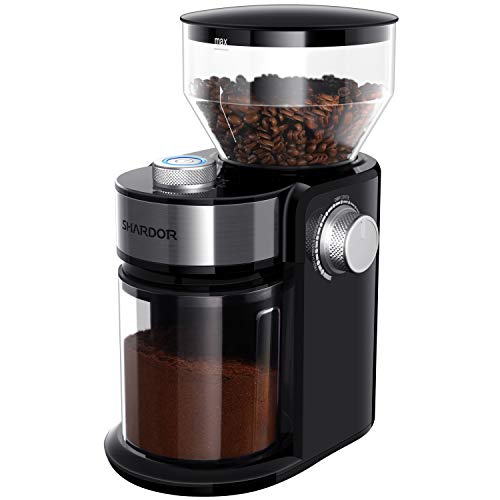
[ UNIFORM BURR GRINDING ] Premium metallic flat burr mill ensures consistent, uniform grounds without burning beans. Perfectly preserves rich coffee aroma for pour-over, drip, and cold brew.
Why Burr Grinders Prevent Bad Brews: Consistency and Extraction
uneven particles cause simultaneous over- and under-extraction in the same cup. Fine dust over-extracts into bitterness while large chunks under-extract into sourness. You end up with muddy, unpredictable coffee that tastes nothing like what you aimed for.
Burr grinders crush beans between abrasive surfaces, creating uniform particles that release extraction predictability. Even grounds let water contact each particle equally. This *grind uniformity* means you’ll taste balanced, repeatable results—not a guessing game.
Blade grinders chop randomly, producing chaos: dust, fines, and boulders mixed together. You can’t control extraction or replicate yesterday’s good brew.
Want better coffee tomorrow? Start matching your grind size to your brewing method with confidence. Grinding beans right before brewing maximizes aroma and minimizes oxidation. Using pre‑ground coffee in an espresso machine can cause channeling and inconsistent pressure, leading to poor shot quality. Using a food processor for grinding can generate heat that affects flavor if not done carefully.
Burr Materials That Last: Steel, Ceramic, or Cast Iron
Once you commit to a burr grinder, you’re really asking: which material actually stays sharp and lasts long enough to justify the cost?
Steel: Sharp Now, Replace Sooner
Steel burrs hit the ground running—they’re sharper out of the box than ceramic. You’ll get consistent particle sizes and reliable brews immediately. The tradeoff? Steel burrs typically last 3–7 years before noticeable wear kicks in. They generate slightly more heat, though quality steel rarely affects flavor.
Ceramic: Slower Start, Longer Haul
Ceramic burrs aren’t as sharp initially, but here’s the thing: they retain that edge roughly twice as long as steel. You’re looking at 5–10+ years of dependable performance. They’re also lower-maintenance and easier to clean.
The Material Lifespan Reality
Your cost tradeoffs depend on priorities. Want immediate performance? Steel wins. Prefer grinding fewer replacement sets? Ceramic justifies its higher price. Regularly descaling the grinder helps prevent mineral buildup that can dull burr edges. Using a paper towel as a temporary filter can illustrate how porous materials affect flow, but it’s not a recommended practice for coffee preparation. For consistent brewing, measuring coffee by weight rather than volume can reduce variability by up to 10 % compared to using a standard coffee scoop.

Slim, powerful grinder with precise settings from fine to coarse, with 15 settings and 29 micro-adjustments
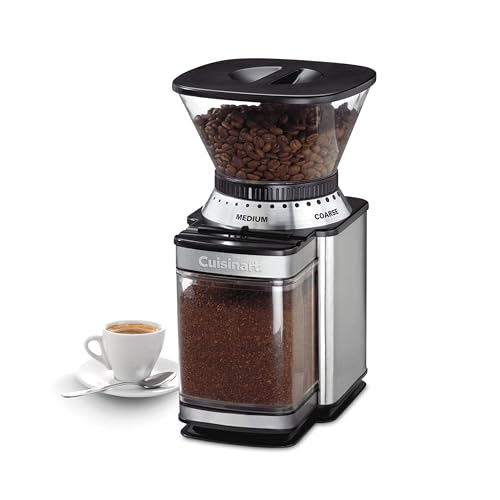
ENJOY OPTIMUM FLAVOR: The Cuisinart Coffee Grinder with 18-position slide-dial grind selector provides a uniform grind from ultra-fine to extra-coarse to ensure your fresh coffee beans are ground exactly the way you prefer.

Tired of small batches? Meet the world's first manual grinder with a massive 60g capacity—Hold twice the beans of the standard grinders. 2X the beans, 0 interruptions! Now you can grind exactly what you need in one grind session, instead of two. Grind less, brew more. Perfect for french press, cold brew, pour-over, camping, travel, big families, or mornings that can't wait.
Why Your Grinder Chirps, Clogs, or Overheats (And How to Fix It)
Most grinder problems—that annoying chirp, the jam-up mid-grind, the motor that sounds like it’s working too hard—actually point back to three fixable culprits: burr contact, buildup, and heat.
What’s causing that chirping noise?
Chirping usually means your burrs are touching at one point in the grind range. Before you panic, run a full cleaning—residual grounds can fake this sound. Now, grab a marker and test your burrs. If the marker wears unevenly, your burrs sit misaligned. One side sits higher than the other. You can shimmer with thin foil to level them out. Regularly remove coffee grounds to prevent residue buildup that can trigger false chirps.
Why’s your grinder clogging?
Coffee oils and fines collect around burr edges, especially with dark roasts. A stuck bean blocks everything. Clear your chute regularly—this prevents hardened residue from choking flow.
Overheating problems?
Finer settings create resistance. Dull burrs make your motor work harder. Rest between grinding batches.
Find Your Fit: Budget, Lifestyle, and Grinder Type
Now that you’ve got your grinder running smoothly, it’s time to pick the right one for how you actually brew. You’re probably wondering: which grinder matches my lifestyle and budget?
What’s Your Daily Routine?
Hand grinders nail travel portability and cost less upfront. Electric models reduce effort for daily home use. If you’ve got limited counter space, compact grinders work best. Espresso-capable machines demand finer adjustments and stronger commitment to dialing in.
Conical or Flat Burrs?
Conical burrs offer dependable performance at lower prices. Flat burrs deliver precision and clarity, especially for espresso. Here’s the thing: conical burrs produce more fines, while flat burrs create even particle distribution. Choose flat if consistency matters most. Pick conical if budget and noise reduction matter more.
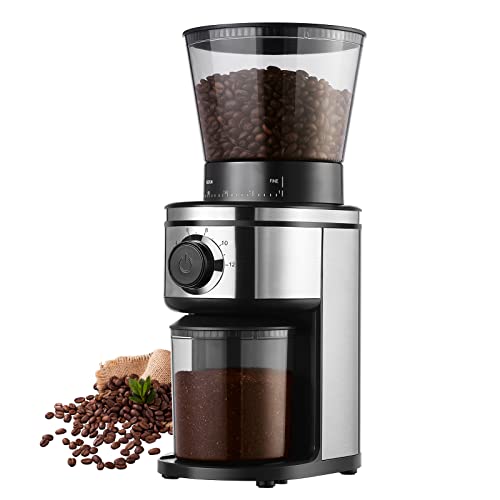
【Durable Conical Burr】With 40-millimeter stainless steel conical burrs, OLLYGRIN burr coffee grinder ensure optimal flavor extraction and create uniform grounds.
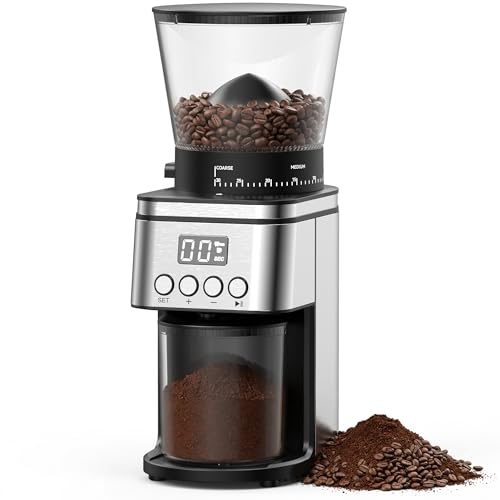
Professional Grinding Precision:Coffee grinder with 30 precise grind settings—from espresso-fine to French press-coarse—deliver consistent particle size for optimal extraction. Hardened stainless steel conical burrs ensure consistent and uniform grinding.

40mm stainless steel conical burrs: Precision grinding system produces uniform coffee grounds to ensure even extraction for rich, balanced flavor in every cup.