
You’re right to wonder why a flat puck matters—without it you’ll get channeling and a bitter cup. First, grind evenly, use a WDT tool or a quick finger swipe to break clumps, then level the surface with a distributor. Choose a tamper about 1 mm smaller than the basket diameter and align your forearm, wrist, and elbow in a straight line, pressing straight down with 25‑30 lb of steady force; a light twist smooths the top. Check the puck is level; if it’s not, adjust your grip and pressure. Keep practicing and you’ll feel the difference, and the next step will show you how sensors can fine‑tune this process.
Why a Flat Puck Matters: Overview of the Espresso Tamping Process
Why does a flat puck matter? You’re probably wondering why baristas obsess over that level surface. A puck uniform creates even resistance across the basket, so water flows consistently and extracts coffee evenly. When the puck is flat, the coffee bed stays parallel to the rim, preventing channeling and side‑to‑side flavor swings.
How does this affect your shot? A level tamp keeps the geometry stable, so the 30‑pound pressure you apply compresses uniformly rather than creating high‑density spots. The result is extraction consistency, which translates to balanced acidity, body, and sweetness in every cup.
Takeaway: Aim for a flat, uniform puck, and you’ll see steadier extraction. Next, ask yourself: how can you keep your tamp level every time? Even coffee bed is essential for uniform extraction. Consistent tamping pressure also helps maintain the optimal puck density for balanced flavor. Proper water temperature, typically around 90–96 °C, ensures the coffee extracts at the right rate. Using a bottomless portafilter can expose channeling early, allowing you to adjust your technique before it ruins the shot.

Your ESPRESSO Deserves Better - Are you tired of unbalanced coffee flavors due to uneven ground coffee? Now, for the perfectionist who wants a great espresso, you can simply use our IKAPE Retractable Tamperer to create the best-flavored espresso. It ensures that the ground coffee in your bottomless naked portafilter handle is thoroughly compacted for even and consistent pressure every time, so let your ESPRESSO coffee be better!

WHY NORMCORE SPRING-LOADED TAMPER? Coffee tamping is always one of the challenges. With Normcore's Coffee Tamper which features an ingenious leveling guide, it can solve this challenge well.
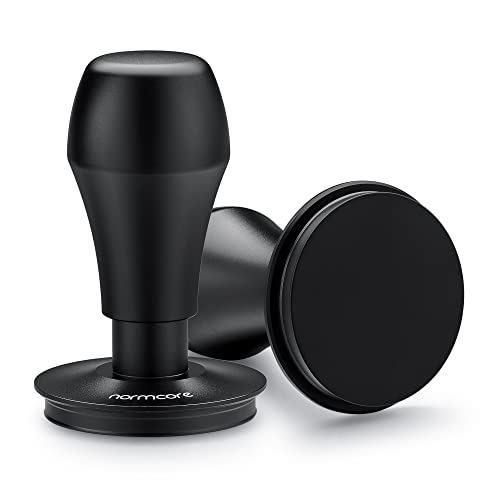
IMPROVED CONSISTENCY – With a design that achieves the same tamp every time. The amount of pressure you apply is simply controlled by a spring inside the tamper itself. Moreover, it comes with 3 interchangeable springs to suit your preference.
Grind & Distribute Evenly for a Flat Puck
You’re probably wondering why the grind can feel like a mess before you even tamp, and that’s a great question. You need grind uniformity so water flows evenly, and the right funnel selection keeps the dose from spilling.
What’s the best way to level the grounds?
First, grind straight into the basket or a dosing cup, then give the portafilter a gentle tap to settle the mound. Use a thin‑needle WDT tool to break up clumps—this redistributes fines and prevents dense spots. Follow with a quick finger swipe or a distributor to flatten the surface.
How do you finish the prep?
Tap lightly again, then you’ll have a flat, even puck ready for tamping. The takeaway: consistent grind uniformity and proper funnel selection set the stage for a perfect extraction. Next, ask yourself: which tamper size matches your basket? A finer grind increases extraction speed, so adjust accordingly. Using a burr grinder ensures grind consistency across shots. Using an inappropriate grind can cause channeling and lead to under‑extraction.

【Thinner 14 Needles】 Needles evenly distributed design. 7 food-grade stainless steel needles, 0.35mm diameter, the perfect size for breaking up coffee clumps, plus 7 replacement needles. Thoughtful needles storage tube. Say goodbye to the bent needles

【Thinner 10+10 Needles】This WDT Tool includes 10 needles installed are made of food safe stainless steel and 0.35mm in diameter, the perfect size to break up coffee clumps.At the same time, we will give you an additional 10 needles, which are convenient for you to disassemble and replace

【A Perfect Espresso Shot Companion】 Nessus espresso distributor includes 10 food-grade stainless steel needles with a 0.35mm diameter, which is the perfect size to break up coffee clumps. For added convenience, we provide an extra set of 10 needles in a storage tube. A good choice to add this espresso machine accessories to your coffee bar!
Pick the Right Tamper Size and Set Up Your Portafilter
A common snag is not knowing which tamper will truly fit your basket, and that confusion can ruin an otherwise perfect shot.
What tamper diameter should you pick?
Measure the basket’s inner diameter, not the rim. Subtract about 1 mm; a 58.7 mm basket works well with a 58 mm or 58.5 mm tamper. Breville/Sage 54 mm portafilters pair with 53.3 mm tampers, while E61‑style 58 mm ports often accept 58.5 mm units.
How does basket shape affect portafilter fit?
Walls taper inward, so a slightly smaller tamper avoids hitting the side before the puck compresses. Too large leaves uneven edges; too small leaves coffee around the rim.
What setup helps you tamp consistently?
Choose a matched set: tamper, distributor, and dosing ring all share the same diameter. A level, properly sized tamper gives even pressure and a flat puck.
Takeaway: Measure, subtract a millimeter, and match your accessories. Next, you’ll want to nail the hand‑wrist‑elbow positioning for a stable tamp. A well‑maintained portafilter with a pressurized basket ensures consistent extraction even if tamping varies slightly.
Regularly cleaning the group head and removing coffee oil buildup prevents flavor degradation and extends the machine’s lifespan.
Consistent pressure is key to a uniform extraction, and using a stable tamping technique can greatly improve shot quality.
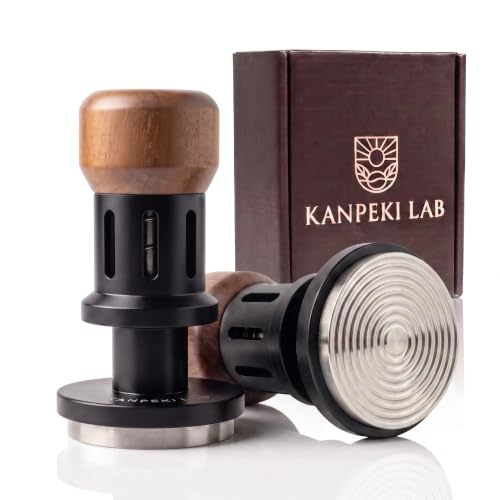
CLICKS AT EXACTLY 32LB, THE TAMP IS NO LONGER A VARIABLE: The spring loaded mechanism releases at precisely 32lb and gives one clear, audible click the moment you reach it, so every puck is pressed at the same force. Stop second-guessing your tamp: the pressure is precise, with no guesswork.

Tamper and Mat: The 51mm Coffee Tamper comes with a practical mat, a must - have for coffee lovers. This mat is crafted from durable rubber. It boosts friction, making sure the tamper doesn't slide around while in use. It also enables easy storage and cleaning, keeping your coffee station neat and your tamper safe.
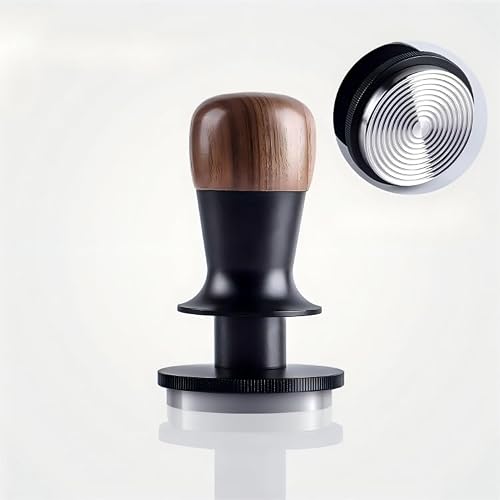
【30LBS CONSTANT PRESSURE】Features an advanced spring-loaded mechanism that delivers a calibrated 30lbs of constant pressure without manual adjustments. It eliminates guesswork, ensuring every puck is compacted with professional consistency for the perfect espresso extraction, shot after shot.
Hand, Wrist, and Elbow Positioning for Stable Espresso Tamping
If you’re wondering why your tamp feels wobbly, it’s usually the grip and arm alignment.
How should I hold the tamper for stability?
Use a traditional grip—thumb, forefinger, and middle finger cradle the handle like a doorknob. Let the thumb rest on top for a little extra leverage, but keep the palm and fingers doing the pressure transfer. Your forearm, wrist, and elbow should form one straight line; this wrist alignment prevents strain and keeps the tamp level.
Where belongs my elbow?
Place the elbow directly above the portafilter, or as close to vertical as possible. Standing perpendicular to the counter helps you keep that vertical line, turning body weight into controlled downward force.
Takeaway: A firm, levered grip, straight wrist alignment, and vertically stacked elbow give you a rock‑solid tamp every time. Next, you’ll want to learn how to apply consistent pressure.
Regular descaling prevents mineral buildup that can affect tamp pressure consistency.
Using freshly roasted beans can improve crema quality and overall flavor balance.
A consistent water temperature is essential for extracting the full flavor profile of the coffee.
Apply Consistent Pressure: From First Pound to Final Tamp
How do I keep the pressure steady from start to finish? You’re wondering why your shots vary even though you think you’re tamping “hard enough.” Here’s the thing: a smooth tamp rhythm, not a frantic series of pushes, creates pressure consistency. Start with a level press, feel the portafilter settle, then apply a single, steady force—about 25‑30 lb, or whatever you’ve calibrated on a scale. Keep your hand locked, avoid wobble, and stop when the tamper stalls; that signals maximum density. Repeating this exact motion each shot eliminates weak spots and channeling.
All right, remember: the goal is uniform compression, not chasing a magic number. Your takeaway: a single, deliberate press with the same feel every time guarantees repeatable extraction. Next, ask yourself how you’ll check the puck’s flatness after you master this pressure consistency. The boiler temperature must stay stable to ensure the water extracts the coffee evenly. Using a consistent grind size helps maintain even extraction across shots.
Regularly clean the machine’s components, such as the steam wand and drip tray, to prevent residue buildup that could affect pressure stability. Daily cleaning ensures optimal performance.

Selected Espresso Tamper Kit: A professional espresso tools barista set, including 1 x 51mm calibrated espresso tamper, 1 x espresso stirrer, 1 x coffee tamper silicone mat, these barista accessories allow you to enjoy a wonderful "Italian Moment"

CONSISTENT PRESSURE EVERY TIME:Achieve perfectly even tamping with a built-in spring-loaded mechanism. Delivers consistent pressure without guesswork, reducing channeling and improving espresso extraction quality
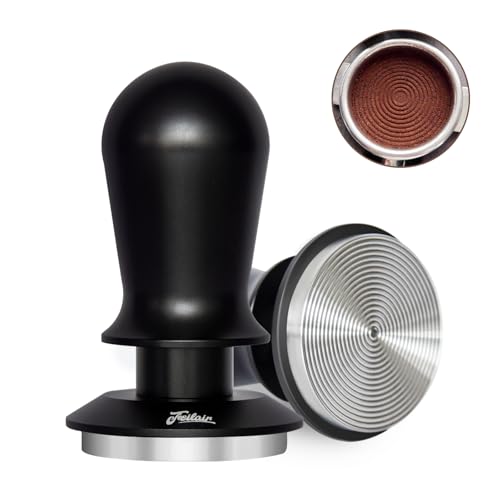
Calibrated Spring Tamper: This coffee tamper 51mm delivers a precise, consistent 30-lb spring pressure every time. Achieve perfectly even espresso extraction and professional results without the guesswork
Polish the Puck and Check Flatness
When your puck looks lumpy after tamping, you’re probably wondering why the water isn’t spreading evenly. The first thing you should do is smooth the surface—lightly twist the tamper, brush away loose grinds, or tap the portafilter to settle fines. This polishing step improves puck texture, removes tiny channels, and lets water permeate uniformly without adding extra pressure.
Now check flatness. Hold the portafilter level; the surface should be even across the basket. If you see ridges or gaps at the rim, your tamp rhythm likely missed a consistent finish. A level puck prevents one side from extracting faster, keeping the flow balanced.
All right, the takeaway: polish gently, then verify a flat, level surface before pulling the shot. Next, you’ll want to fine‑tune pressure with sensors—are you ready? Adding a air injection system can help achieve consistent foam texture in milk‑based drinks.
paper towels can contain trace chemicals that may affect flavor, so consider using unbleached, fragrance‑free varieties if you ever need to improvise a coffee filter.
The higher the brew pressure, the more likely the extraction will be uniform and the flavor balanced.
Fine‑Tune Espresso Tamping With Pressure Sensors
You’ve just polished that puck and confirmed it’s flat, but you’re probably wondering why the shot still varies.
How do pressure sensors improve my tamp?
Now, you place a sensor‑enabled mat or handle under the tamper and watch the readout as you press. The device records real‑time force, so you see whether you hit the 25–30 lb target consistently. Sensor calibration lets you set a baseline; after a few drills the numbers settle, and you develop muscle memory without guessing.
What should I watch for while tamping?
Here’s the thing: uneven spikes often mean off‑axis pressure or poor grip ergonomics. A steady, vertical push yields a flat curve, while a crooked motion creates a sharp rise then a drop. Adjust your hand position, keep the tamper centered, and the sensor will confirm uniform contact.
What’s the real benefit?
Obviously, repeatable force reduces puck density variation, which stabilizes flow more than cranking up pressure. Use the sensor as a feedback loop, not a crutch, and you’ll see tighter shot times across doses.
Takeaway: Sensor calibration plus good grip ergonomics give you a repeatable, level tamp. Next, test your grind and dose consistency to lock in the full extraction workflow.

High-quality Food-grade Silicone - Completely odorless with no yucky plastic smell.

High Quality Food Grade Silicone. Odorless and safe for your family's health. Ideal for commercial or domestic use, Professional barista essential item

COMFORTABLE TAMPING - The Normcore tamping mat is designed to hold your portafilter securely while you tamp to give you the perfect tamping angle for maximum efficiency and safety