
You’re forcing hot water through tightly packed coffee grounds at 9 bars of pressure—and your machine’s job is controlling exactly how that happens. A pump pushes water from your reservoir or water line into a boiler that heats it to 92–96°C. That pressurized hot water flows through a group head and shower screen into your coffee puck, extracting flavor over 25–30 seconds. Temperature, pressure, and grind size work together; shift any one and your shot transforms completely. Getting consistent results means understanding how each component influences the others.
Where Water Enters Your Espresso Machine: Reservoirs vs. Plumbed Systems
Where does your water actually come from when you’re pulling a shot? You’ve got two main options, and each shapes how you’ll use your machine daily.
Reservoir Systems: Control Your Water Source****
You fill a removable tank—simple as that. This setup gives you complete control over your water source, whether that’s filtered, bottled, or treated water. You’ll enjoy placement flexibility since you don’t need plumbing access. The tradeoff? You’re refilling periodically, which interrupts longer brewing sessions. Nespresso’s compact design further enhances portability for small kitchens.
Plumbed Machines: Set It and Forget It****
You connect directly to your water line and never refill manually. Plumbed systems eliminate routine tank maintenance. Installation logistics require cabinet modifications and nearby water access, but you gain uninterrupted use. Proper inline filtration keeps scale down.
Your Next Move
Consider your brewing frequency and available space first. Regular descaling with a citric‑acid solution helps prevent mineral buildup. Maintaining optimal pressure through regular descaling ensures consistent extraction quality.
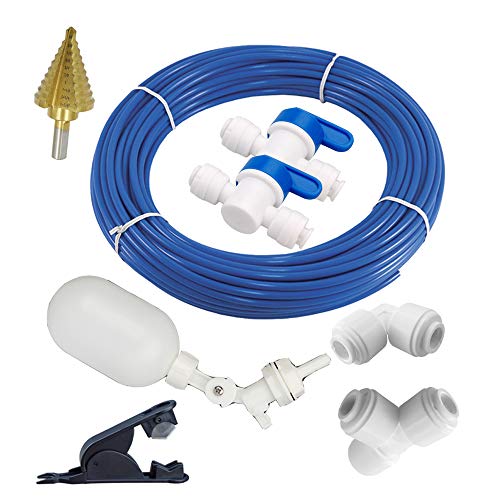
★WATER&FOOD USE: NSF Certified CCK 1/4 ro tubing , Food grade Plastic 1/4 Quick connect fittings and Valve , which are widely used in water purification,food/beverage system.

Versatile Applications: This 1/4" Tube Float Valve Kit is perfect for a wide range of uses, including RO systems, beverage dispensing, refrigerators, ice makers, and coffee machines. Its adaptability makes it an essential component for various household and commercial setups

ALL-IN-ONE KIT, ROCK-SOLID METALLIC FIT: This refrigerator water line kit comes fully equipped with stainless steel tubing, self‑piercing saddle needle valve and all essential fittings. Built with premium metal fittings, it delivers sturdy, leak‑proof and dependable connection for long‑term use.
How Espresso Machine Pumps Build Pressure for Extraction
You’ve probably wondered why espresso needs so much pressure when regular coffee makers get by without it—and that’s the key insight here. The pump forces water through a tightly packed coffee puck, and that restriction is everything. Without resistance, you’d just get hot water flowing freely with zero pressure buildup.
Here’s the thing: your pump creates pressure by pushing water into a confined space. The coffee bed acts as the main barrier, forcing pressure to accumulate upstream. Different pumps handle this differently—vibratory pumps oscillate rapidly and run quieter with lower energy consumption, while rotary pumps spin continuously and typically cost more to operate.
The system regulates this pressure down to around 9 bars, the sweet spot for balanced extraction. That stable pressure matters far more than chasing maximum numbers. Regularly cleaning the group head prevents mineral buildup that can disrupt pressure consistency.
Espresso makers often use pre‑ground pods that simplify the brewing process for casual drinkers. Understanding the role of the boiler temperature helps maintain optimal extraction quality.
Heating Water to the Right Temperature
Pressure gets water flowing through the coffee, but temperature determines what actually dissolves from the grounds—and that’s where most people struggle.
You need water between 92°C and 96°C (197°F to 205°F) for balanced extraction. Below 190°F, you’ll get sour, weak shots. Above 208°F, you’re pulling bitter, ashy flavors instead.
How machines keep temperature steady****
Most espresso machines use electric heating elements inside a boiler or thermoblock. Mechanical thermostats cycle the heater on and off roughly. Better machines use PID calibration—they adjust heating many times per minute for tighter control. On heat‑exchanger machines, a pressure stat maintains boiler temperature by controlling the heating element based on spring‑loaded pressure settings rather than direct temperature measurement.
Here’s the thing: thermal stability matters throughout your entire shot, not just at startup. Even small temperature swings throw off extraction consistency.
Your next move? Check what control system your machine actually has. That tells you how much temperature swing you’re really dealing with.
Your next move also influences consistency influences how the water extracts flavors, making consistent dosing and grind size crucial for stable temperature performance. Using a high‑quality burr grinder ensures grind consistency that supports optimal temperature extraction. Regular descaling can also protect the heating element and maintain accurate temperature control.
Grinding, Tamping, and Preparing Your Coffee Puck
How do you actually control what lands in your cup? You’ve got heated water ready to go—now comes the part that separates mediocre shots from great ones.
Why Grind Size Matters****
Finer grinds create more surface area, slowing water flow and deepening extraction. Coarser grinds speed things up but risk under-extraction. Grind uniformity is your foundation here. You’ll adjust grind size constantly to match your dose and basket, chasing that sweet spot where water takes 25-30 seconds to pull through. A consistent grind helps maintain extraction balance across shots.
Building Your Puck
Distribution consistency starts before you tamp. Spread grounds evenly to avoid dense spots and voids that cause channeling. Tamp level and firm—consistency matters more than exact pressure. A flat puck extracts evenly. You’re done when your rim sits clean and your puck feels solid. Proper tamp pressure of 30‑35 psi ensures a uniform extraction. Maintaining puck density is crucial for balancing resistance and flow rate.

[Electric Operation, One-Button Control, Jam-Free Grinding] Experience the ease and comfort of electric grinding, a perfect upgrade from traditional manual grinders. Simply double-click to start, and the grinder automatically shuts off 5 seconds after finishing, or you can single-click to stop at any time. The double-click feature prevents accidental starts in daily use, and the thoughtful jam-free design ensures a smooth and convenient grinding process, saving you time and energy, making it the ideal choice for fresh coffee lovers on the go.

[Electric Operation, One-Button Control, Jam-Free Grinding] Experience the ease and comfort of electric grinding, a perfect upgrade from traditional manual grinders. Simply double-click to start, and the grinder automatically shuts off 5 seconds after finishing, or you can single-click to stop at any time. The double-click feature prevents accidental starts in daily use, and the thoughtful jam-free design ensures a smooth and convenient grinding process, saving you time and energy, making it the ideal choice for fresh coffee lovers on the go.

Premium 5-Star Conical Burr Grinder - This hand coffee grinder is crafted with a full aluminium alloy body and CNC420 high-strength stainless steel conical burrs, it features zero plastic or glass components for safety, durability, and a premium finish
What Happens Inside the Group Head During Brewing
Once you’ve locked in your portafilter, the real magic happens in a part you can’t see—the group head, where pressurized water meets your carefully prepared puck.
How Does Water Actually Reach Your Coffee?
The group head channels hot water from your machine’s boiler directly onto the coffee. Before that water touches anything, though, your shower-screen design spreads it evenly across the puck’s surface. This matters because uneven water creates channels—weak spots where water rushes through, leaving dry coffee behind. Using a demitasse cup of the correct size helps ensure the espresso volume matches the brew ratio. The machine’s high‑pressure pump then pushes the water at the required force.
Why That Seal Matters
Group-head sealing is everything. When you lock the portafilter, a gasket creates an airtight seal that keeps pressure stable at around 9 bars. Without it, you’d lose pressure immediately, and extraction would fail. That seal’s your guarantee that water gets forced through grounds properly, not around them.
A well‑maintained gasket ensures consistent pressure and prevents leaks.
How Pressure and Temperature Shape Extraction and Flavor
While locked into that group head, two invisible forces are actually determining whether you’ll get a delicious shot or a disappointing one—and you’ve got more control over them than you might think.
Why 9 Bars Matters
You need roughly 9 bars of pressure—about 130 PSI—to force water through tightly packed grounds fast enough. This pressure profile pushes extraction into that sweet 25-to-30-second window. Too little pressure, and you’re basically drip brewing. Too much, and you’re choking the shot.
Temperature Ramp and Flavor Balance
Now, temperature ramp between 92°C and 96°C determines what actually dissolves. Lower temps pull brighter, acidic notes. Higher temps grab bitter compounds.
You control this with small adjustments—even 1°C shifts flavor noticeably. Underheated shots taste sour. Overheated ones turn harsh.
Your Adjustment Lever
Grind size is your primary dial-in tool, not pressure. Small tweaks reach that extraction sweet spot. The dose weight you use also directly influences extraction consistency. Using a consistent grind helps maintain even extraction across multiple shots.
Steaming and Frothing Milk for Espresso Drinks
Now that you’ve dialed in your shot, you’re facing the second half of espresso drinks—and it’s just as technical. Steaming and frothing milk aren’t the same thing, and that distinction matters for your final cup.
Steaming uses pressurized steam to heat milk while adding air, creating smooth microfoam. You’ll position your steam wand just below the surface, then gradually lower it as you build texture. This frothing technique produces that silky, integrated foam you see in lattes and flat whites.
The milk texture you’re after depends on your drink. Cappuccinos need drier, more voluminous foam. Lattes want velvety microfoam instead. Here’s what matters: whole milk froths creamier; skim milk gets stiffer bubbles that last longer.
Target 55–60°C before the pitcher burns your hand. Stop there—overheating damages proteins and kills sweetness. Choose the right device for your routine: a milk frother can create light, airy foam ideal for cappuccinos, while a steam wand yields richer micro‑foam suited for espresso‑based drinks. Using a proper temperature range ensures the milk proteins denature just enough to stabilize the foam without becoming grainy. Understanding air injection is key to achieving consistent foam quality.
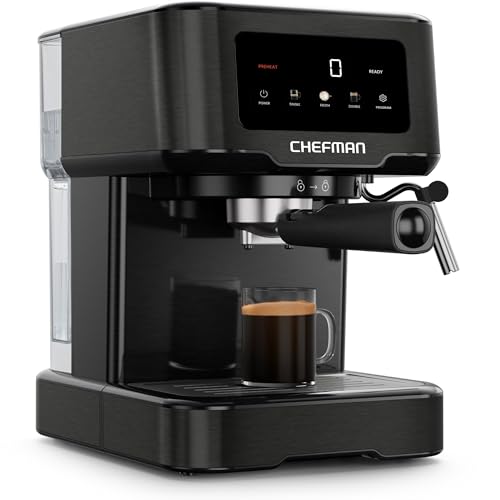
ENJOY CAFÉ-QUALITY ESPRESSO: Experience the bold, rich flavor of homemade espresso and skip long café lines with the CraftBrew Digital Espresso Maker! A strong 15-BAR pump and a built-in milk frother make it easy to brew cappuccinos and lattes right in your own kitchen.

This is an O.E.M. Authorized part

Make Your Favorite Espresso Coffee At Home: The CASABREWS coffee machine with milk frother allows you to prepare all your favorite espresso-based coffees. You can enjoy a barista-brewed latte, cappuccino or macchiato at home. Stainless steel appearance, stylish and durable, ideal for any size kitchen. This compact espresso coffee maker is perfect for home or office use
Single-Boiler vs. Dual-Boiler Machines: Choosing the Right Setup
What’s holding you back from pulling consistent shots and steaming milk at the same time?
The answer often comes down to your machine’s boiler setup. Single-boiler machines handle both brewing and steaming with one heating element, forcing you to wait 30–60 seconds between tasks. You’ll experience temperature variance as the system switches between 195–205°F for espresso and 250–270°F for steam.
Dual-boiler machines give you separate systems working simultaneously. Your brew boiler maintains stable extraction temperatures while steam’s ready instantly. You’ll see temperature control within ±1°F—dramatically more consistent than single-boiler swings.
Now, here’s the real tradeoff: cost comparison. Dual-boiler setups cost considerably more upfront. Maintenance frequency also increases with that extra hardware and complexity.
Choose single-boiler if you make occasional straight espresso. Pick dual-boiler if you’re pulling milk drinks back-to-back.
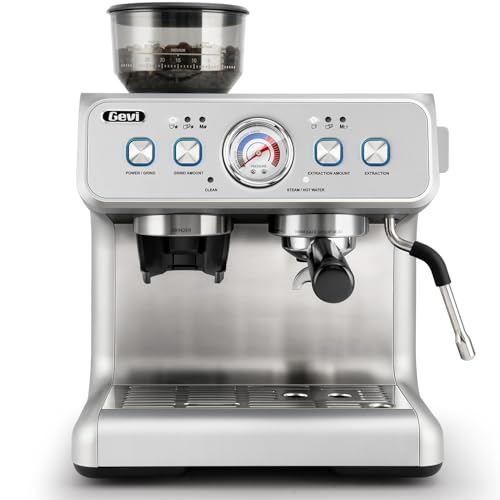
【𝐏𝐫𝐞𝐜𝐢𝐬𝐞 𝐏𝐫𝐞𝐬𝐬𝐮𝐫𝐞,𝐏𝐫𝐨𝐟𝐞𝐬𝐬𝐢𝐨𝐧𝐚𝐥 𝐑𝐞𝐬𝐮𝐥𝐭𝐬】The advanced pressure control system of the Gevi espresso machine precisely regulates water flow, pushing hot water through finely ground coffee at the ideal rate to unlock rich oils and robust flavors, delivering the authentic aroma and intense taste of espresso. With this versatile machine, you can easily craft barista-quality cappuccinos, lattes, or flat whites right at home or in your workspace.

#1 Worldwide Espresso Machine Maker* *Independent Research Institute, Sales Leader, Full Year 2025

MANUAL HAND-TEXTURED MICROFOAM: The powerful steam wand on this cappuccino maker and latte machine is designed to quickly turn milk into smooth, flavorful microfoam for creating latte art at home
Dialing In: How to Adjust Grind, Tamp, and Timing for Better Shots
Once you’ve settled on your machine’s boiler setup, you’re ready for the part that separates mediocre shots from exceptional ones—dialing in. You’re probably wondering where to start when everything feels adjustable at once.
Here’s the thing: grind calibration is your primary lever. Start with 18 g of medium-fine grounds, targeting 36 g output in 25–30 seconds. Finer grinds slow flow; coarser ones speed it up. Adjust grind incrementally between shots. After each grind-size change, discard 3-6 g of old grounds to flush the grinder and ensure consistent results.
Now, tamp consistency matters more than pressure itself. You’ll want even distribution and level contact across the puck. This prevents channeling and keeps extraction uniform.
Record each shot’s settings, dose, yield, and time. Taste matters most—flavor confirms extraction quality, not the timer alone. Change only one variable at a time, then repeat until balanced.

Compatible with Select Breville & Sage: Designed as a replacement burr set for the built-in grinding system in compatible Breville and Sage espresso machines, including compatible 860, 870, 878 and 880 series configurations, as well as Breville BES870, BES875, BES876, BES878, BES880 and BES980 models. Compare the original burr shape and mounting structure before ordering.

Complete Espresso Tool Set: Our 7-piece 54mm espresso accessories kit comes with a espresso tamper, WDT tool (needle stirrer), espresso tamping station, coffee distributor, dosing funnel, reusable puck screen and brush. The coffee tamper set covers every pre-brew step from grinding to tamping, easily brew consistent, café-grade espresso at home for your daily coffee routine
