
You’re probably wondering why that metal handle with a little basket is called a portafilter and why it matters for every espresso shot you pull. Here’s the thing: the portafilter is the bridge between your machine’s group head and the coffee grounds, delivering water at 9‑15 bars through a precisely sized basket—usually 58 mm in diameter—so you get consistent pressure, flavor, and crema. Obviously, mastering its handle, basket, and spouts lets you control extraction, avoid channeling, and brew espresso that tastes exactly how you want it; keep reading and you’ll uncover how to choose the right size and keep it clean for perfect shots.
What a Portafilter Is and Why It Matters
If you’re wondering why that metal “handle” on your espresso machine is so essential, you’ve asked the right question. The portafilter, or portaholder, locks into the group head and cradles a metal filter basket filled with finely ground coffee. Its portafilter materials—usually stainless steel, brass, or aluminum—determine durability and heat conductivity, while the handle gives you the leverage to lock and release the unit securely.
Here’s the thing: during extraction pressure, the portafilter creates a sealed chamber that forces water through the puck at 9‑15 bars. This pressure pushes solubles out uniformly, shaping flavor, aroma, and body. A tight seal prevents leaks, so each shot stays consistent.
All right, remember that the portafilter’s size (58 mm, 54 mm, or 49 mm) must match your machine’s group head for proper sealing. If it fits, you’ll enjoy repeatable shots and easier workflow.
Takeaway: the portafilter is the heart of espresso extraction; its material and fit control pressure and consistency. Next, explore how the handle, basket, and spouts work together. Consistent tamping pressure affects flow rate and ensures even extraction. Using a bottomless portafilter can also reveal channeling and help fine‑tune your technique. Proper pre‑infusion ensures even saturation before full pressure is applied, improving overall shot balance.
How the Handle, Basket, and Spouts Work Together
You’re probably wondering how the handle, basket, and spouts all fit together to give you a clean shot. The handle gives you an ergonomic grip and the leverage to lock the portafilter firmly into the group head. Its length and angle keep the assembly stable while you pull the lever, so the basket stays seated and the extraction flow stays consistent.
The basket is the dosing chamber that holds your coffee grounds. Choose a single, double, or larger basket based on dose—say 18 g for a double shot—and make sure it matches the portafilter’s internal clearance. The perforations regulate pressure and let water pass evenly, shaping the extraction flow before it reaches the spouts.
Spouts direct the brewed espresso into cups. A single‑spout concentrates the stream for a demitasse, while a double‑spout splits it for two cups. The spouts don’t change volume; they just guide the flow after extraction.
Takeaway: Pair an ergonomic grip handle with a correctly sized basket and the right spout configuration for smooth, predictable extraction.
Next, decide whether a bottomless or spouted portafilter best fits your brewing style. Proper water temperature is critical for extracting optimal flavor from the grounds. Using a grind that is too coarse can cause channeling and under‑extraction.
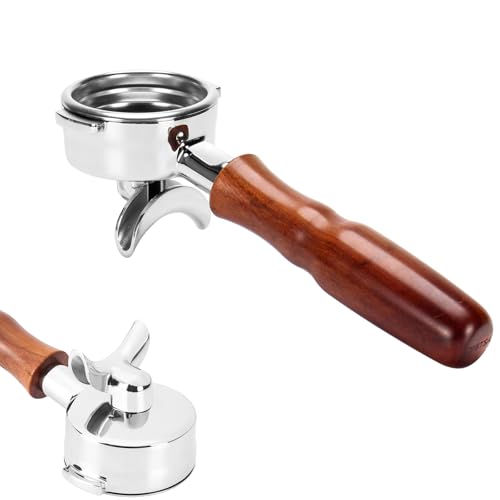
58 mm Diameter: It is compatible with all La Marzocco Machines

Ensure the delicate taste of coffee with an ultra-fine filter for a smooth and intense espresso or coffee experience.

COMPATIBILITY:Designed specifically for Breville BES870/878/880/876/840 Series espresso machines, ensuring leak-free fit and optimal pressure stability. Not applicable to 9 series.Check your machine's portafilter size (54mm required) before purchase
Bottomless or Spouted? Which Portafilter Fits Your Brew?
Why does the choice between a bottomless and a spouted portafilter matter for your espresso? You’re probably wondering which tool lets you improve your shot without making a mess.
What does a bottomless portafilter give you?
It offers visual extraction training, letting you see channeling, uneven flow, and spurting instantly. That real‑time visual troubleshooting helps you fine‑tune grind size, dose, distribution, and tamp. You’ll clean the basket quickly, but you’ll also need precise technique to avoid splatter. Channeling can be spotted immediately, allowing rapid adjustments. A proper water temperature ensures the espresso extracts evenly. Proper grind uniformity also prevents over‑extraction and enhances flavor consistency.
When is a spouted portafilter better?
It directs coffee into one or two cups, keeping the workspace tidy and forgiving imperfect puck prep. Beginners love the controlled pour and easier cleaning around the spouts, especially in busy cafés.
Takeaway
If you crave detailed feedback and skill‑building, go bottomless; if you value convenience and consistency, choose spouted.
Next step
Think about whether you want to train your extraction or streamline service—then test the style that matches your current goal.

stochastic box Bottomless Portafilter with Puck Screen

【PRECISION COMPATIBILITY FOR 54MM BREVILLE MACHINES】 - Specially engineered for Breville 8 series including Barista Express, Barista Pro, Barista Touch, Bambino Plus, Infuser, and Duo-Temp Pro (BES870XL BES878BSS BES880BSS). The 5.5mm ear thickness ensures a tight, secure fit without leakage or wobble during high-pressure extraction

Knodos 54mm bottomless portafilter compatible with only Breville, Sage espresso machines including Barista Express, Barista Pro, Barista Touch, Bambino, Bambino Plus, Infuser, Duo Temp Pro, BES870XL, BES878, and BES880. Engineered for a snug fit with Breville 54 mm portafilter group heads to ensure zero leakage or wobble
How to Pick the Right Size and Compatibility for Your Machine
Even though the basket size seems like a tiny detail, it decides whether your espresso will pour smoothly or end up a mess. You’re probably wondering how to avoid that mess. Here’s the thing: start with a size‑check. Measure the inner diameter of the portafilter’s basket with calipers, round to 51 mm, 54 mm, or 58 mm, and confirm the capacity matches your usual dose of 7‑22 g.
Now, think about basket compatibility beyond diameter. A 54 mm basket fits most Breville/Sage models, but the same nominal size can fail a family‑fit if the ear shape or platform‑match differs. Look up your machine’s group‑head family—La Marzocco, Gaggia Classic, Rancilio Silvia—and verify the platform specifics.
All right, verify the family‑fit before you buy. If the manufacturer lists your model, you’re good; if not, double‑check the platform‑match. Takeaway: measure, match the family, and confirm the platform. Next, you’ll want to learn how to keep that perfect fit clean for better espresso. Regularly descale the machine to prevent mineral buildup that can affect basket performance. Nespresso’s proprietary capsule system also showcases how precise engineering can enhance flavor consistency.
A consistent grind from a burr grinder ensures the espresso extracts evenly, maximizing the benefits of a well‑matched portafilter.

BETTER BREWS - A well-made filter basket is fundamental to a good cup. Deliver better brews with more control and achieve high extraction to fully develop your coffee grounds

Worry-free Quality - Made of 304 stainless steel and comfortable solid wood handles, hygienic without odors, with high hardness and resistance to wear, a smooth and bright surface that will not rust, durable, and low end double mouth for better insulation effect and the ability to extract two cups at the same time; The solid wood handle is made of natural solid wood polished.
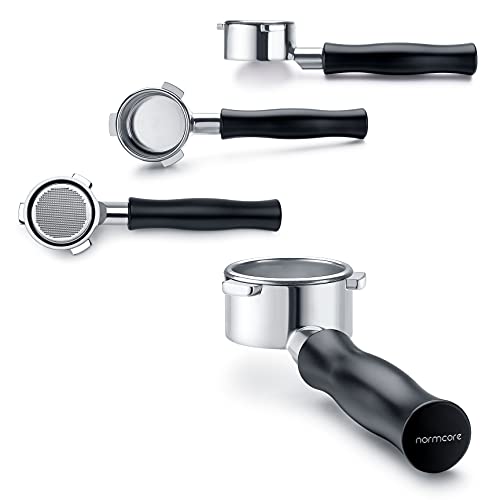
54mm Diameter - Designed to fit baskets of 54mm Breville Barista Pro and Breville Barista Espresso Machine models.
Keeping Your Portafilter Clean for Better Espresso
You’re probably wondering why a spotless portafilter matters after you’ve nailed the right basket size. Obviously, coffee oils and grounds cling to the metal, choking flow and muting flavor. You’ll want a quick daily routine: knock out the puck, rinse with hot water, dry with a microfiber cloth, and flush the group head before and after each shot.
All right, now think about weekly deep‑cleaning. Use a blind filter, add espresso cleaning powder, run ten short cycles, rinse, and scrub the basket with a small brush. Soak the portafilter in hot water with cleaning powder for 15 minutes, then dry completely.
Here’s the thing: steam‑wand hygiene is just as essential. Wipe the wand right after steaming, purge a few seconds, and soak weekly in a citric‑acid solution.
Takeaway: consistent daily descaling and thorough weekly backflushing keep your espresso bright. Ready to try a backflush today?
Regular residue buildup can affect extraction quality if not addressed. Adding a routine group‑head flush helps prevent mineral deposits.
A nitro cold brew’s creamy texture comes from nitrogen infusion during the dispensing process.
Descaling removes mineral deposits that can clog the machine’s internal pathways.