
You’re right to wonder if regular drip‑ground beans can work in an espresso machine; they can, but you’ll need to treat them like espresso beans. Grind them fine as sand, aim for 18‑20 g dose, and pull a 25‑30‑second shot—expect a thinner crema and sharper acidity than true espresso. The result won’t match a specialty roast, yet it’s drinkable and useful for experiments, so keep reading to fine‑tune your technique.
Regular Coffee Can Make Espresso, But With Limits
Can you really make espresso with regular coffee? You’re wondering if your pantry beans can pull a true espresso shot, and you’re right to ask. The answer is yes, but bean sensitivity and crema texture set limits. Regular beans lack the tight roast profile that creates the classic thick, honey‑like crema, so you’ll notice a thinner, more watery layer. Also, the beans’ acidity and oil content react differently under 198‑203 °F pressure, often yielding a harsher bite if you pull a long shot.
All right, here’s the thing: an Americano or bypass brew can bring the espresso closer to a drip‑style cup without over‑extracting. You’ll keep the bold intensity while diluting bitterness. The takeaway? You can enjoy espresso‑style coffee, but expect a lighter crema and a flavor shift. Next, decide whether you’ll dilute with hot water or try a bypass method for a smoother finish. Using a finer grind can help compensate for the lower dose often required with regular beans. Consistent tamping pressure is also crucial for achieving an even extraction. Proper particle uniformity is essential to prevent channeling and ensure balanced flavor. A well‑calibrated grind size can further enhance extraction consistency.

SPECIALTY COFFEE ASSOCIATION AWARD-WINNING GRINDERS - Baratza grinders are preferred by coffee professionals and tops the list of review sites like Wirecutter.

ONE GRINDER. ANY BREW. – Opus 2 is built for coffee lovers who brew more than one way, from espresso to pour-over, French press, and cold brew. Cappuccinos in the morning, pour-over in the afternoon, cold brew on the weekend.
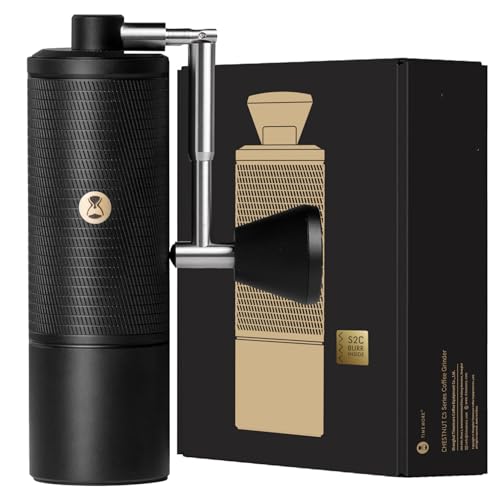
[ What is C5 Pro Coffee Grinder? ] Equipped with patented S2C-042-III stainless steel burrs with higher precision and efficiency. Hand coffee grinder provides more precise grinding adjustment, minor adjustment of 0.031mm per click allows you to easily achieve the perfect coarseness for your preferred fine to coarse. From French press to espresso coffee, TIMEMORE has you covered
Grind Size & Dose for Regular Coffee Espresso
How fine should the grind be for regular coffee in an espresso machine? You need a texture almost like fine table salt, not the coarse grit you’d use for French press. That fine grind boosts surface area, slows water flow, and gives you the extraction control needed for a balanced flavor profile.
Now, what about dose? Aim for 18–20 g in a double‑shot basket; that’s the sweet spot for a 1:2 brew ratio, yielding about 36 g of espresso in 25–30 seconds. Keep the dose steady while you tweak grind size—changing 1–2 g will shift shot speed noticeably.
All right, remember: a too‑fast shot means the grind is too coarse; a too‑slow shot means it’s too fine. Adjust grind first, then fine‑tune dose if needed.
Takeaway: fine grind plus 18–20 g dose gives you consistent extraction and a clear flavor profile. Next, test a shot and note the timing—then you’ll know whether to grind finer or coarser. Consistent grind size also helps prevent channeling and ensures even puck formation. Proper tamping pressure of 30–40 lb further stabilizes flow rate and extraction balance.
A well‑calibrated grinder can also improve particle distribution for smoother shots.
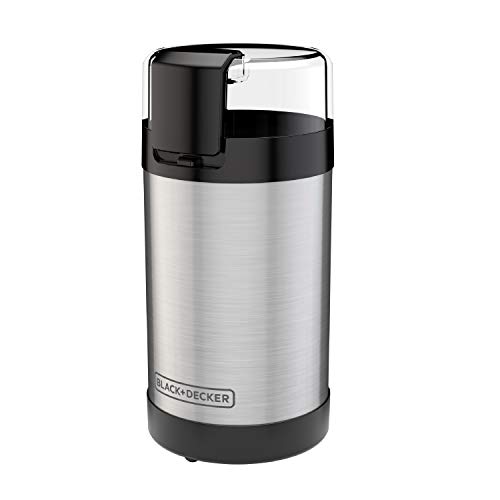
STAINLESS STEEL BLADES AND BOWL - The sharp blades and durable grinding bowl are built to last, delivering uniform grinds with every use

【PRECISION GRINDING CONTROL】 Stop guessing how long to grind. Our electric coffee grinder features a clear timing knob with seconds marks, allowing you to achieve the exact coarseness for espresso, drip, or French press every time. No more inconsistent grounds or burnt beans.

【Adjustable Grinding Precision】There are seconds marks above the timing knob, from coarse to fine. You can choose the precision of powder according to your needs.
Flavor Differences of Drip‑Ground Coffee Espresso
What’s puzzling you is why the same drip‑ground beans taste so different when you run them through an espresso machine. You’re seeing a concentration contrast that makes the shot feel bold and thick, while the drip brew feels lighter and smoother. The pressure forces more acids and bitter compounds into each ounce, so the flavor bursts instantly.
How does crema texture change the experience?
Now, the crema that forms on a proper espresso adds a velvety mouthfeel and a richer aroma. With drip‑ground coffee you’ll often get a thinner crema, which makes the texture feel less plush and the taste a bit harsher.
What should you expect in flavor balance?
All right, expect sharper acidity, amplified roast notes, and a denser body. The short brew time compresses everything, so any over‑extraction shows as bitterness faster than in drip coffee.
The coffee‑to‑water ratio for a balanced espresso is typically around 1 g coffee per 2 g water, which differs from the French press recommendation of 1 g per 15–16 g water.
Takeaway: The same beans deliver a more intense, crema‑rich shot with a tighter flavor profile. Next, consider how grind size and dose affect that balance. Using an extra‑fine grind can mimic espresso pressure and bring out richer body even in a French press. Proper particle size ensures optimal extraction across brewing methods.
Which Espresso Machines Work With Regular Coffee Beans?
Which espresso machines work with regular coffee beans? You’re right to wonder—most machines don’t demand “espresso‑only” beans. Super‑automatic, to‑cup models have the clearest bean compatibility; they grind whole beans on demand, so you can load any fresh roast. Semi‑automatic pumps paired with an espresso‑capable grinder also work, provided you make a grind adjustment to a fine, uniform size. Manual lever machines accept regular beans too, but consistency hinges on your grind and tamp. Capsule‑only systems won’t use loose beans unless you add a reusable pod.
What type fits you best?
If you want flexibility, choose a super‑automatic with a built‑in grinder. If you already own a grinder, a semi‑automatic pump machine gives you control.
Takeaway: Regular coffee beans are fine as long as you adjust the grind and match the machine’s pressure. Next, think about how you’ll grind and tamp for consistent shots. Adjustable grind is the key factor for achieving proper extraction. Regular maintenance, such as daily cleaning of the portafilter and group head, helps prevent residue buildup that can affect flavor. Nespresso’s compact design also makes it easy to fit a grinder and tamping station in a small kitchen space. A proper brew ratio ensures a balanced extraction and highlights the nuanced flavors of the beans.

ANTI-STATIC GRINDER FOR FRESH ESPRESSO EVERY TIME — This espresso machine with grinder uses an anti-static design to reduce clumping and scattering, keeping your countertop clean. The precision grinder with 45 grind settings delivers consistent grounds shot after shot, even with oily dark roasts. Say goodbye to stuck chutes and wasted beans — just fresh, perfectly ground coffee every time you brew.
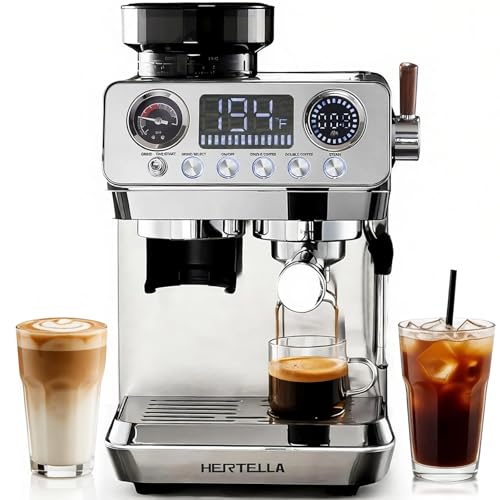
【Very Important】Automatic pressure relief function: Features an additional solenoid valve compared to other systems. This ensures the system automatically releases pressure immediately upon overpressure during and after extraction, preventing "handle explosion" safety issues, enhancing safety, protecting internal components, and extending the machine's lifespan.

【𝐁𝐚𝐫𝐢𝐬𝐭𝐚-𝐆𝐫𝐚𝐝𝐞 𝐄𝐬𝐩𝐫𝐞𝐬𝐬𝐨】Craft café-quality coffee at home with our premium espresso machine. Equipped with a built-in conical burr grinder, a 20-BAR professional Italian pump, it delivers rich, full-bodied extraction. Customize grind size, brew strength, and temperature for your perfect cup—just like a pro!
Step‑by‑Step Guide to Brewing Espresso‑Grade Shots
Ever wondered why your espresso shots sometimes taste like weak coffee? You’re probably missing a step that locks in bean taste and consistency. Let’s fix that.
What equipment do you need?
You’ll need fresh medium‑to‑dark roast beans, a clean dry portafilter, and a calibrated grinder. Preheat the cup and purge the grouphead so temperature stays steady. Weigh 18 g of coffee for a double shot and grind fine enough to sit like a sand‑paper pancake. Proper grind size is crucial for optimal extraction.
How do you dose and level?
Tap, swipe, or use a WDT tool to create an even coffee bed with no gaps. Remove loose grounds from the rim, then lock the portafilter in place. A level puck prevents channeling and keeps bean taste uniform.
What’s the proper tamp?
Press down 30 lb with a flat tamper, keeping it level. A firm, even puck lets water flow consistently, giving you that rich crema.
When do you pull the shot?
Start timing as soon as water hits the puck. Aim for a steady “mouse tail” stream lasting 25–30 seconds, yielding about 30–40 g of espresso. Stop when the color lightens to blonde.
How do you dial in?
If the shot runs fast or tastes sour, grind finer. If it drags or feels bitter, go coarser. Adjust dose, distribution, or tamp only after checking each step. Purge the grinder after any change.
Takeaway
Follow these steps, and you’ll consistently extract espresso‑grade shots with vibrant bean taste. Ready to experiment with your next dose? A well‑maintained machine ensures consistent temperature for optimal extraction. For the best results, consider pre‑infusion timing to improve flavor balance.