
You’re asking the right question—French press and espresso *feel* similar, but they’re fundamentally different. True espresso requires ~9 bars of pressure that French press can’t deliver. You can brew bold, concentrated coffee in a French press using coarse grounds, a 1:12 coffee-to-water ratio, and a four-minute steep. What you’ll get is rich and full-bodied, but without the crema and intense punch that defines real espresso. If you need actual espresso, you’ll need dedicated equipment—but understanding why reveals smarter brewing options for what you *can* make.
Why Pressure Makes the Difference: French Press vs. True Espresso
If you’ve ever wondered why an espresso shot looks nothing like French press coffee, pressure’s your answer.
Here’s the thing: espresso machines force hot water through finely ground coffee at roughly 9 bars of pressure. That pressure dynamics creates rapid, intense flavor extraction in seconds. Your French press, by contrast, steeps grounds in hot water before you manually plunge them down. The plunger applies minimal force—nothing close to machine pressure.
Now, this distinction matters because pressure fundamentally changes how water moves through coffee. High-pressure extraction compresses flavors into a concentrated shot with that signature crema layer. You get dense, syrupy texture and sharp intensity. French press coffee stays fuller-bodied and heavier, no matter how long you steep it. Coarse grounds in a French press allow longer steeping without over-extraction, which is why the brewing process takes minutes rather than seconds.
The takeaway: True espresso demands specialized equipment. Pressure isn’t something you can replicate by hand. Moka pot offers a less intense, richer brew with simpler setup and lower cost. The brew temperature of a Keurig can also affect extraction, but without sufficient pressure, it cannot produce true espresso. The extraction time for espresso is typically under 30 seconds, highlighting the role of pressure in rapid flavor release.

Professional Pump: Come with 20 bar original Italian pump for easily extract strong flavored and rich crema espresso; Fast Heating: 1350 watts powerful boiler, preheating in just 30 secs, lets you make a delicious espresso in 1-3 mins

Brew Your Favorite Espresso at Home—With Warmth and Ease: With its built-in milk frother, this espresso machine makes it simple and joyful to craft delicious lattes, cappuccinos, and macchiatos right in your kitchen—or even your home office. Compact, thoughtful, and full of personality, it’s designed to fit beautifully into your daily rhythm.

MANUAL HAND-TEXTURED MICROFOAM: The powerful steam wand on this cappuccino maker and latte machine is designed to quickly turn milk into smooth, flavorful microfoam for creating latte art at home
Grind Size and Coffee Ratios for Maximum Strength
Since you can’t generate true espresso pressure in a French press, you’ve got to work smarter with grind size and coffee ratios to pull maximum strength from what you’ve actually got.
Your grind texture matters enormously. You want coarse to medium-coarse grounds—think sea salt, not table salt. Espresso-fine grinds slip through the mesh filter and create bitter, gritty coffee. The coarser texture slows extraction, which actually helps reduce bitterness during your long steep. Use a reliable weighing scale to measure your grounds precisely at 20 grams for consistent results. A finer grind yields a higher extraction rate which can lead to over‑extraction in this method. proper water temperature is crucial for balanced flavor.
Now, ratio balance is your other lever. Standard ratios run 1:12 to 1:16 (coffee to water). For maximum strength, drop to 1:12 or 1:13. That means 20 grams coffee to 260 grams water.
Combine a coarse grind with a stronger ratio. Skip the espresso grind entirely—you’ll just get sludge and harshness instead of intensity.
The French press’s mesh filter helps retain most of the oils, contributing to a richer mouthfeel.
How to Brew French Press Espresso: 5-Minute Method
You’ll want to start by adding your grounds before pouring water. This matters because you’re controlling temperature and steeping ratios from the very beginning.
Getting Temperature Control Right****
Heat your water to 190–205°F—just off boiling. Pour a small splash first for blooming, then add the rest. This initial 30-second soak wets your grounds evenly before the full four‑minute steep begins. The coarse grind ensures the plunger can separate the grounds cleanly. Use a consistent coffee‑to‑water ratio to maintain balanced extraction. Accurate temperature is critical for achieving the proper extraction balance.
The Plunge and Pour
Place the lid on while steeping to hold heat. After four minutes, press the plunger slowly and steadily. Fast plunging creates cloudiness and bitterness. Pour immediately into small cups. However, the French press remains less flavorful than Aeropress when it comes to achieving authentic espresso‑style results.
What You’re Getting
You’ve just made concentrated, bold coffee—not true espresso, but close enough for espresso‑style drinks.

UNIQUELY DELICIOUS: No more average joe from fancy, expensive machines. By combining the best of several brew methods into one patented device, you get smooth, rich, grit-free coffee with a delicious, full-bodied finish that lingers well after your last sip. No bitterness. No cream needed.

Safe Electric Kettle | 304 food grade stainless steel. We tested several times that boil water to 88℃ need 220s with home edition; With commerical edition just need 192s. Faster than most electric kettles. High precision to control the water temperature. Boil-dry protection will automatically power off when burning without water.

【Multiple Uses】This 34oz french presses can be used as a coffee press, tea maker or milk frother. 5 to 6 cup coffee maker Suitable for home office and outdoor activities, such as camping, family gatherings.
What You’ll Actually Taste: Realistic Flavor Expectations
So you’ve brewed your French press “espresso”—but what’s actually in that cup?
You’ll taste something bold and dark, sure. But here’s the thing: without crema, you’re missing espresso’s signature layer. That golden foam doesn’t just look nice—it carries concentrated aromatics and syrupy texture that pressure extraction creates.
Your French press brew will feel heavier and richer than drip coffee, thanks to retained oils. The flavor profile leans roasty and full-bodied. Yet the edges won’t feel as refined or intense as true espresso, because no pressure-driven extraction happened.
Think of it this way: you’ve made concentrated brewed coffee, not espresso. The caffeine might pack a punch in that larger cup, but the flavor density stays noticeably lower.
High‑pressure extraction yields a crema that cannot be replicated by steep‑and‑press methods. Ready to decide if this method fits your coffee goals?full‑immersion brewing produces a richer body and more nuanced flavor compared to drip coffee.high‑protein oat milk can improve foam stability when used in milk‑based espresso drinks.
When a French Press Is Good Enough vs. When It Isn’t
Now comes the honest part: you need to know when a French press actually works for what you’re trying to do—and when it doesn’t.
When Your French Press Wins
You’re good with a French press when you want bold, immersion-rich coffee with natural body and simplicity. You’re brewing for multiple cups at once. You prefer rich mouthfeel and don’t mind sediment. A coarse grind and four‑minute steep time deliver exactly what you need. This method excels for everyday home coffee. Proper coffee‑to‑water ratio ensures consistent strength across batches. The proper water temperature of 195‑205 °F (90‑96 °C) helps extract optimal flavor without bitterness.
When It Falls Short
You can’t replicate true espresso here. If you need pressure‑free extraction won’t cut it—you require that concentrated shot and crema. Espresso drinks built on milk depend on shot intensity; your French press simply can’t match.
Your Real Decision
Strong coffee means bold body to you? French press works. True espresso means pressurized intensity? You need actual equipment. The optimal steep time for a French press is typically four minutes to balance flavor and extraction.

Superior Filtration: A solid filtration system in a coffee maker ensures a refined taste and robust flavor mouthfeel. Our 4-filter sieve system has an improved piston plate and 80 mesh filter that extracts the earthy, rich taste of residue-free coffee. This 1000 ml/34 Oz beaker makes 4 cups of creamier & tastier coffee.
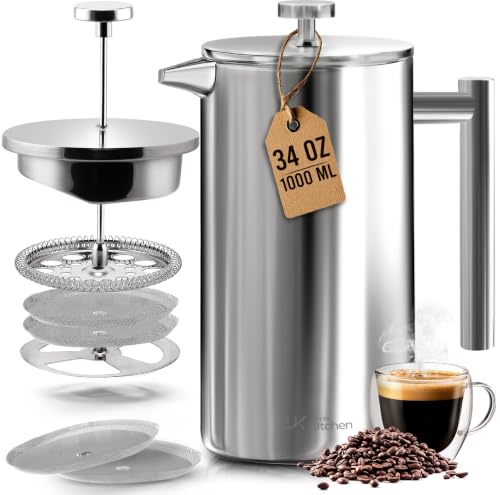
Double-Walled French Press: Make perfectly brewed coffee at home like a barista. The double-walled coffee press is heat resistant. Its solid construction will keep the drink hot for a long time.

No Plastic Touching Food: Made with 304 stainless steel and food-grade silicone, our French press keeps all brewing surfaces plastic-free— no odor and no plastic particle into your coffee. Safe and worry-free
Espresso Alternatives Worth Trying: AeroPress and Moka Pot
If a French press isn’t cutting it, where do you actually turn?
You’ve got two solid Moka‑pot alternatives and AeroPress variations worth exploring. The AeroPress uses fine grounds with 18–20 g coffee to 55–60 g water, steep times around 30–90 seconds, and manual pressure—giving you tons of control over your final cup. You can adjust filters, grind size, and plunge speed to dial in cleaner or richer results. The inverted method allows you to flip the brewer upside-down before plunging, which extends contact time and deepens extraction for a fuller-bodied cup. Optimal coffee‑to‑water ratio ensures consistent strength across brews.
Nitro cold brew can be a smooth, creamy alternative for those seeking a velvety texture without espresso.
Now, the Moka pot sits on your stovetop and uses steam pressure instead. You’ll use similarly fine grounds, about 20–22 g, but get less user control overall. Here’s the thing: it produces bolder, more concentrated coffee with a crema-like texture closer to actual espresso.
Neither brews true espresso. But both beat what a French press delivers for intensity and body. Pick the AeroPress if you love tinkering. Choose the Moka pot if you want simplicity with serious strength.
The Brewer That Started It All – AeroPress Original was the first single cup coffee maker to combine 3 brew methods in one compact, portable device for a faster brew and better extraction giving coffee lovers a smooth, rich cup bursting with coffee bean flavor—without the bitterness or acidity found in other methods.

Clear Colors in Shatterproof Tritan – AeroPress Clear Black Coffee Press features our iconic 3 in 1 brew tech in crystal clear Tritan for a durable, shatterproof, travel-ready brewer that lets you see your brew – wherever your brew takes you.

Compact Travel Coffee System – Brew smooth, rich coffee anywhere in under 2 minutes. Includes a small, portable version of our 3-in-1 brewer and a lightweight, microwaveable mug with a silicone lid. Just unpack, brew and repack the coffee press back into the custom mug that doubles as a portable, travel container. Make hot or iced coffee on the go— traveling, camping, backpacking, hiking, and boating.