
You’re probably wondering what actually happens inside an espresso machine, and you’re right to ask. It forces water heated to about 93 °C through a finely‑ground, 18 g coffee puck at roughly 9 bars of pressure, extracting a rich, crema‑topped shot in 25‑30 seconds. The pump maintains steady flow, while the boiler, group head, and steam wand work together to keep temperature and pressure consistent, giving you that bold, balanced flavor you crave. If you keep exploring, you’ll uncover how grind size, dose, and timing fine‑tune every cup.
What an Espresso Machine Does (and How It Works)
You’re probably wondering why an espresso machine feels so different from a regular coffee maker. You’re right to ask; the secret lies in pressure control safety and flow‑rate consistency. An electric pump pushes hot water—about 93‑100 °C—through a tightly packed coffee puck at roughly 9 bars (130‑135 PSI). That high pressure forces compounds out quickly, creating crema and a thick body.
All right, the pump’s job isn’t just to blast water; it maintains a steady flow‑rate so each second of extraction yields the same flavor intensity. If pressure spikes or drops, the shot turns sour or weak, and the crema disappears. The machine monitors pressure, adjusting on the fly to keep it safe and consistent.
Here’s the thing: the water travels from the reservoir, through the heated boiler, then the group head, and finally the coffee bed before dropping into your cup. Every stage must stay within tight tolerances; otherwise, you lose the espresso’s signature concentration. In short, the machine orchestrates pressure, temperature, and flow to turn grounds into a rich, balanced shot.
Takeaway: Understanding pressure control safety and flow‑rate consistency shows why espresso differs from drip coffee. Next, explore the key parts that make this process possible.
A high‑pressure pump forces water through the capsule at 19‑bar pressure to extract the coffee quickly. Regular descaling prevents mineral buildup that can impair pressure stability. Proper dose measurement ensures the optimal amount of coffee for consistent extraction.
Key Parts of a Home Espresso Machine
What’s puzzling you about an espresso machine’s anatomy? You’re probably staring at a tangle of parts and wondering which one really matters. Let’s break it down.
Boiler or heating system – This heats water for brew and steam. Home units may use a boiler, thermoblock, or heat‑exchange. Stable temperature matters, so you’ll see thermostat calibration settings to keep water around 93 °C for extraction and 130 °C for steam. Faster warm‑up means less waiting, but a larger boiler also holds more heat for consistent shots. The Pressure Gauge helps you monitor that pressure during extraction. Regular descaling prevents mineral buildup that can impair heating efficiency. Water hardness should be checked regularly to avoid scaling. The nine‑bar pressure is essential for creating the characteristic crema.
Pump and pressure – The pump pushes water through the coffee puck at about 9 bars. Vibration pumps are common and cheap; rotary pumps are quieter and last longer. You’ll notice pump noise reduction features like insulated mounts that keep the hum down while you brew.
Group head and portafilter** – Water meets the coffee in the group head, which houses a shower screen** for even flow. A tight gasket in the portafilter maintains pressure, and a clean basket prevents channeling. If the seal leaks, pressure drops and crema suffers.
Steam wand and accessories – The wand creates steam for frothing, while the hot‑water outlet serves americanos or tea. A drip tray catches spills, and a cup warmer uses residual heat. Buttons let you toggle brew, steam, and temperature.
Takeaway – Understanding each component—boiler, pump, group head, portafilter, and wand—helps you troubleshoot and fine‑tune your espresso. Next, you’ll want to compare machine types to match your kitchen space and coffee habits.
Choosing the Right Espresso Machine Type for Your Needs
Which espresso machine type fits your kitchen and coffee habits? You’re probably juggling budget comparison and counter space, wondering which category gives the best balance. Manual lever machines demand skill and a separate grinder, but they let you sculpt pressure curves like a painter with a brush. Semi‑automatic models, the most common home choice, let you start and stop extraction while a pump handles pressure—great for learning fundamentals without full manual hassle. Automatic and super‑automatic units handle shot volume, grinding, tamping, and even milk, saving you time and freeing up counter space with compact thermoblock designs.
What control you prioritize? If you love tinkering and have room for a grinder, manual or semi‑automatic fits. If convenience and a small footprint matter more, automatic or super‑automatic wins. Steam quality is generally superior on single‑boiler manual machines, offering richer foam for latte art. Shot consistency improves when the water temperature is maintained within the optimal range of 90‑96 °C. Capsule system ensures flavor retention and consistent extraction for pod‑based brewers. Pressure range typically reaches 9 bar or higher on true espresso machines, delivering the proper extraction for rich crema. Takeaway: Match your desired control level, budget, and kitchen real to the machine class that aligns with your coffee routine. Next, ask yourself: how much time do you want to spend on each cup?

【Make Favorite Espresso Coffee by Yourself】The espresso machine with milk frother allows you to prepare all your favorite espresso-based coffees. You can enjoy a barista-brewed latte, cappuccino or macchiato at home. This compact espresso coffee maker is perfect for home or office use

【20 Bar Pro-Pump】This 2-in-1 semi-automatic expresso coffee machines features a 20 bar high-pressure pump and a visible pressure gauge, delivers consistent stable pressure to fully penetrate the coffee puck, ensures produces balanced acidity and bitterness, rich creamy crema, and an ultra-smooth coffee. Let you make café-style espresso and latte effortlessly at home.
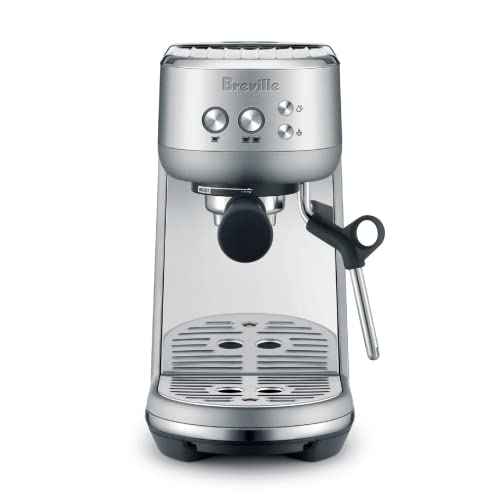
MICROFOAM MILK TEXTURING: Cappuccino maker and latte machine has an automatic steam wand allowing you to adjust milk temperature and texture, creating barista-quality microfoam for latte art at home
How to Brew Your First Espresso Shot: Step‑by‑Step Guide
First, heat the machine, group head, and cup. Run a quick blank shot to stabilize the temperature and clear any residue. Warmed equipment keeps extraction steady.
How do I prep my gear?
First, heat the machine, group head, and cup. Run a quick blank shot to stabilize the temperature and clear any residue. Warmed equipment keeps extraction steady.
What’s the right dose and grind?
Load 18 g of freshly ground coffee into a double‑shot basket. Aim for a fine, sand‑like texture. Level the grounds, then tamp about 30 lb straight down. Consistent pressure helps crema consistency. Fresh beans are essential for a vibrant flavor profile. Water temperature should be maintained around 90‑96 °C for optimal extraction. Proper tamping pressure ensures an even puck and prevents channeling.
How do I pull the shot?
Lock the portafilter, start extraction immediately, and watch for a golden, syrupy stream. Aim for 25‑30 seconds and a 36 g yield. If the flow looks thin, check your tamp and dose.
Takeaway: Warm gear, precise dose, fine grind, and firm tamp give you a balanced shot with good crema consistency. Next, ask yourself: how will you tweak grind and dose for your taste?
A well‑calibrated grinder ensures the grind consistency needed for repeatable results.
Tuning Grind, Dose & Extraction Time on Your Espresso Machine
If you’re stuck wondering why your espresso sometimes tastes sour or bitter, you’ve asked the right question.
How do I set grind consistency for the right extraction timing?
Start with a fine grind calibrated for a 1:2 brew ratio. If the shot runs under 20 seconds, make the grind finer; if it exceeds 35 seconds, go coarser. Adjust in tiny increments, taste, and repeat.
What dose should I use?
Aim for 18 g in a 58 mm basket for a double shot. Increase dose to boost body, but pair it with a finer grind to keep flow steady. Decrease dose if the espresso feels too strong or bitter.
When should I tweak extraction time?
Target 25‑30 seconds. Shorten time for sourness by grinding finer or raising yield; lengthen for bitterness by grinding coarser or lowering yield.
Takeaway: Small grind and dose tweaks control extraction timing and flavor balance. Next, test a shot, note the seconds, and fine‑tune until you hit that sweet spot.
A consistent burr grinder is essential for achieving uniform particle size and optimal extraction.
Including a particle size distribution analysis can further refine your grind consistency.
A proper tamping pressure of 30–40 lb helps maintain even resistance and balanced flavor.
Essential Maintenance Tasks to Keep Your Espresso Machine Performing
Ever wonder why your espresso sometimes tastes off despite perfect grind and dose? You’re probably missing the routine care that keeps the machine humming. First, backflush the group head after each service and purge it after every shot to sweep out oils and fine grounds. Wipe the steam wand and empty the drip tray daily, and scrub the group heads with a brush weekly.
Here’s the thing: water quality matters. Use filtered or softened water, replace the filter every 6‑12 months, and keep an eye on hardness—aim for 35‑85 ppm. Scale monitoring prevents pressure loss and slow heating; descale when buildup shows. Regular descaling removes limescale that can impair temperature stability.
Check gaskets, shower screens, and wand tips regularly; replace worn parts before leaks appear. Log each task so you never skip a step.
Takeaway: consistent cleaning, proper water filtration, and vigilant scale monitoring keep your espresso machine performing like new. Ready to dive deeper into grinder selection? Regular descaling is essential for maintaining optimal pressure and temperature stability.
Seasonal deep‑cleaning helps remove mineral buildup and ensures optimal performance throughout the year.
Select the Best Grinder and Accessories for Better Espresso
When your espresso tastes off despite perfect grind and dose, you’re probably wondering which grinder will finally give you that silky, consistent shot. Choose a burr grinder—steel burrs last longer, ceramic give finer particles. Look for stepless or fine‑step adjustment so you can dial in grind consistency without hunting for the right setting. Single‑dose models cut retention, keeping beans fresh and your dose accurate. Burr grinders provide uniform particle size which is crucial for balanced extraction.
All right, now think about the accessories that keep your workflow smooth. A calibrated tamper and distribution tool flatten the puck, preventing channeling. Pair them with a precision scale and a knock box for clean, repeatable extractions. Accessory kits that bundle these items save space and money.
Obviously, the right grinder plus a solid accessory kit will lift your espresso from okay to outstanding. Your next move? Test a few grind settings, note the taste change, and decide which burr size fits your daily volume.
Use a load‑cell scale for precise dosing when your grinder lacks a built‑in dosing mechanism.
flat burr design offers more consistent particle size across a wide range of grind settings.