
Yes, you can grind coffee beans in a NutriBullet by swapping in the flat milling blade or the Ultra Plus+ Coffee & Spice attachment, then pulsing 1‑second bursts while shaking the cup between bursts to keep particles even and prevent motor overheating. Use small batches, half‑to‑three‑quarters full, and inspect the grind after each pulse—coarse for French press, medium for drip, fine for espresso‑like extraction. Transfer grounds promptly to an airtight container, clean the blade thoroughly, and you’ll uncover detailed tips on controlling size, avoiding common pitfalls, and when a dedicated burr grinder becomes essential.
Can a NutriBullet Grind Coffee Beans?
If you’ve ever wondered whether a NutriBullet can double as a coffee grinder, the answer is a definitive yes—provided you use the milling (flat) blade and keep the batches small. You attach the blade securely, then pulse 1‑2 seconds at a time, shaking the cup between bursts to preserve grind consistency and prevent overheating that could alter flavor profile. Small batches protect bean safety and maintain optimal brewing temperature later. The motor’s durability tolerates short, high‑speed bursts, but sustained use raises noise level and may shorten lifespan, affecting cost efficiency. Using a flat blade is a sustainable impact choice, reducing waste compared to disposable grinders. User ergonomics benefit from the familiar container design, while proper bean storage in airtight vessels preserves freshness. The Nutribullet Pro 900’s ability to produce a coarse grind suitable for French press demonstrates its versatility beyond smoothies.
Which NutriBullet Models Grind Coffee Best?
Which NutriBullet model grinds coffee best? You’ll find the Pro 900 tops the list for overall power‑to‑price, delivering enough torque to pulse dense beans without stalling. The Ultra, however, edges the Pro in grind consistency; its newer motor shatters beans faster, reducing pulse count and consequently grind noise reduction. For coffee‑specific tasks, the Ultra Plus+ Coffee & Spice Grinder Attachment or the original flat milling blade (compatible only with the original NutriBullet) outperform generic cups, especially when you store beans in a sealed coffee bean storage container to preserve freshness. Real‑world tests show the Ultra and Pro produce coarse French‑press grinds in three pulses and finer drip‑style grinds with additional bursts, while espresso‑level uniformity remains out of reach for any blade‑based NutriBullet. Proper daily cleaning of the portafilter and group head helps maintain optimal grinding performance.

🍹【Food Grade Material】The Blade is made of food-grade stainless steel and the shell is made of food-grade PP material (Polypropylene). It’s safe and healthy, sharp...
Choosing the Right NutriBullet Blade or Milling Attachment
Wondering which attachment will give you the most consistent coffee grind? You should prioritize the flat milling blade, the attachment explicitly marketed for dry, hard ingredients like coffee beans. Its geometry shatters beans into uniform particles, while the standard extractor blade creates a coarse‑fine mix that harms extraction repeatability. Verify blade compatibility: the original NutriBullet accepts a separate milling blade, the Ultra model ships with a coffee‑spice grinder, and 900 W+ units reliably pair with these accessories. Consult the manual for exact fit; mismatched blades can wobble, increase wear, and breach Blade safety guidelines. Install the blade securely, lock the cup, then pulse at a power level your motor can sustain—typically 600 W or higher—to avoid stalling and to maintain consistent particle size. The Milling Blade is rated for up to 60 lb of grind load, ensuring durability during frequent use. Consistent particle size is crucial for reliable flavor extraction, as grind size uniformity directly influences the balance and strength of the brewed coffee. Proper milk temperature also affects foam quality, with optimal temperature around 60‑65 °C yielding the best froth.

Compatibility: The Replacement Extractor Blade is compatible with NutriBullet Original 600w and 900w Pro Series blender. Models are listed below. 600w units number: NBR-0601,...
Step‑by‑Step Pulse Method for Consistent Grounds
When you set up the NutriBullet for pulse grinding, start with a modest amount of beans—about half to three‑quarters full of the cup—secure the lid tightly, and keep the unit unplugged while loading. Begin with a 1‑second pulse to gauge coarse texture; pause, then inspect particle size. If chunks remain, repeat 2‑to‑5 short bursts, using consistent pulse timing to avoid heat buildup. After each burst, apply a shaking technique: invert the cup, give it a light shake, and let larger fragments settle away from the blades. This redistribution equalizes exposure, preventing wall‑sticking and promoting uniformity. Continue alternating pulse timing and shaking until the grounds match your desired coarseness, then stop immediately to preserve flavor. Use small batches to maintain optimal grind quality. For a finer grind suitable for espresso, you can also try a mortar and pestle to manually break down larger particles before the final pulsing. Proper particle size distribution ensures consistent extraction across brewing methods. Remember to unplug the device before any cleaning to avoid accidental activation.

Secura Electric Coffee Spice Grinder Stainless steel Removable Bowl for updated five spoke base for model SP-7412.Please check the listing picture to confirm it matches your current product

12 CUSTOM SETTINGS: The adjustable coffee grinder allows you to choose from coarse to fine for brewing styles like drip coffee, French press, and cold brew. For best results with espresso, use the two finest settings and freshly roasted beans
Controlling Grind Size With a Nutribullet
After mastering the pulse‑and‑shake routine, you’ll need to fine‑tune the grind to match your brew method. Start with a modest bean safety count; overfilling the cup creates blade crowding and uneven particle distribution. Use 0.5‑second bursts for coarse French‑press grounds, then pause to shake the container, allowing larger chunks to fall away. For drip or pour‑over, extend bursts to 1 second, checking the texture after each pause. Remember that the NutriBullet’s blades generate a mixed size spectrum, so visual inspection is essential—too many dust‑like fines signal over‑grinding, while large chunks indicate under‑grinding. Store beans in an airtight container separate from the grinder, and grind only the amount needed for each session to preserve freshness and maintain consistent particle size. Understanding grind size impact on extraction helps you achieve the best flavor for each brewing method. Choosing the correct grind for each method is crucial for optimal extraction efficiency. Grinding beans close to the brewing equipment helps preserve aroma by minimizing exposure to oxygen.
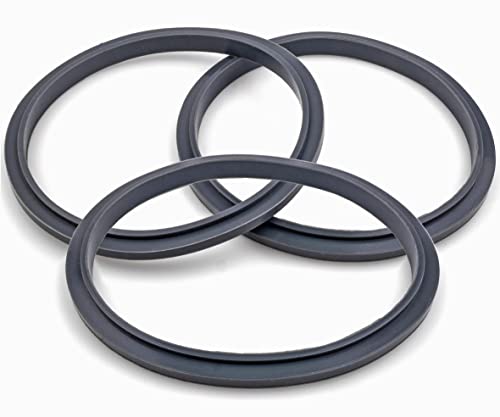
3 Pack Replacement Rings: Includes 3 dark gray dual-lip seal rings/gaskets to replace old, worn, stretched, loose, or damaged rings on compatible Nutribullet parts.
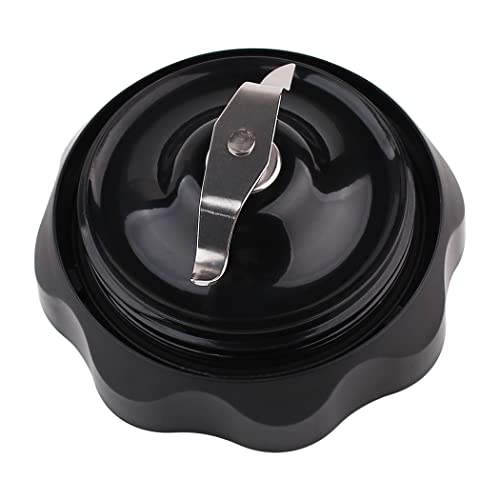
Compatible with NutriBullet Select 1200, High Speed Blender (NB07200-1210DG/NB07200-1210)/NutriBullet Pro 1000 Personal Blender:ZNB30100Z/NB50100C(BD-BX078B-23)/NutriBullet Select /NutriBullet Blender Combo:NBF50500/NBF50500IN/NBF50500AK/NBF50500AW

Fits for Cuisinart Burr Coffee Grinder Parts- Part Number DBM-8GC, this grind chamber with lid is compatible with Cuisinart coffee grinder models DBM-8P1. ensuring a perfect match for your coffee burr grinder.
How to Keep Your Coffee Cool and Flavorful While Grinding
If you want your coffee to stay cool and retain its flavor while using a NutriBullet, treat the grind as a temperature‑sensitive operation: use short, high‑power pulses, keep batches tiny, and stop the moment the desired particle size appears. Store beans in a cool, dry place and chill them briefly before grinding to lower their initial temperature without causing condensation. Use a room‑temperature cup and dry blade assembly; avoid overfilling to reduce friction time. After each pulse, tap the cup to redistribute beans and prevent localized heating. Transfer grounds immediately to an airtight container for aroma preservation, spreading them briefly if warm. Rest the motor between batches, and clean the blades to eliminate residual oils that could alter flavor. A consistent grind improves extraction by ensuring uniform particle size, which helps achieve balanced shot times and flavor profiles. Selecting a grinder with flat burrs can further enhance consistency for espresso.
Common Mistakes and Fixes for NutriBullet Coffee Grinding
One of the most frequent errors you’ll encounter with a NutriBullet is overfilling the cup—pushing beans past the half‑line short the blade vortex, creates uneven circulation and leaves large chunks untouched. Keep the load to ¼‑½ cup, then pulse 1‑3 seconds, shake, and check. Pulse grinding limits heat and lets you gauge texture, while shaking redistributes stubborn fragments and improves bean‑blade contact. Remember, blade grinders aren’t burr‑grinders; aim for coarse to medium‑coarse consistency, not espresso‑fine. Store beans in an airtight container to preserve oils and reduce static‑induced “noise” during grinding. Unplug before adjusting parts, keep the lid on until blades stop, and clean residue promptly to avoid flavor contamination and mechanical buildup. Using a blender can cause uneven particle sizes that lead to over‑extraction, heat buildup can degrade bean oils and affect flavor. Selecting the right milk type, such as barista‑style almond milk, can enhance foam stability when you later pair your coffee with frothy textures.
Best Brewing Methods for NutriBullet‑Ground Coffee
When you grind beans in a NutriBullet, the irregular particle size pushes you toward brewing methods that tolerate inconsistency—cold brew, French press, and, with care, medium‑grind drip or pour‑over. Cold brew thrives on long immersion; extra‑coarse to coarse grounds extract evenly over 12–24 hours, so the broad size distribution from blade grinding doesn’t matter. French press prefers medium‑coarse particles; short pulses yield a sand‑like texture that reduces sludge and avoids over‑extraction during a 4‑minute hot steep. Both methods capitalize on the forgiving nature of immersion, letting you skip the precision required by pressure‑based extractions. If you opt for drip or pour‑over, limit pulses to achieve a sand‑like grind, but expect modest flavor variability compared with burr‑ground coffee. The extraction method influences how much of the coffee’s oils and solids are released, affecting body and clarity. Using a nitro infusion system can further enhance texture by adding a creamy, cascading foam. For optimal flavor, aim for a 1:4 coffee‑to‑water ratio when preparing cold brew.
Cleaning Your NutriBullet After Coffee Grinding
Even before the coffee oils solidify, you should unplug the NutriBullet, detach the blade, and rinse both parts with warm, soapy water. Use a soft brush to scrub the blade’s tight gaps, preventing residue buildup that could compromise blade safety. Fill the cup with warm water, a drop of dish soap, and pulse for 20–30 seconds for a quick self‑clean, then discard the foam. Rinse thoroughly to avoid soap film that would trap aromas, preserving the coffee’s scent for the next grind. Dry the cup and blade completely; moisture invites rust and degrades blade safety. Wipe the power base with a damp cloth—never submerge it. Keep the base dry, and store all components separately to maintain aroma preservation and optimal performance. Paper towels can be used as a temporary coffee filter in emergencies, but they may contain chemicals that affect flavor.
When to Upgrade to a Dedicated Coffee Grinder
If your coffee consistently tastes off—bitter, sour, or oddly muddy—you’re likely hitting the limits of your NutriBullet’s blade‑style grinding. Uneven particle distribution creates erratic extraction, so each brew method—espresso, pour‑over, French press—suffers. When you notice excess fines causing bitterness or large chunks yielding sourness, the grinder investment becomes inevitable. A burr‑based grinder delivers uniform size, allowing you to dial in the exact grind for brew consistency across multiple styles. Frequent daily doses amplify the need for repeatable dosing and quick cleanup, which a dedicated unit supplies. Expert consensus ranks grind quality above machine upgrades; if flavor gains stem more from grind changes than bean swaps, upgrade now and eliminate the bottleneck. Grinder upgrade is the most cost‑effective improvement for hobbyist coffee makers. Proper grind uniformity ensures each particle extracts at the same rate, preventing channeling and under‑extraction. Consistent particle size also supports optimal extraction by balancing flow rate and contact time. Using a food processor for coffee beans can generate heat buildup that degrades delicate aromatics.
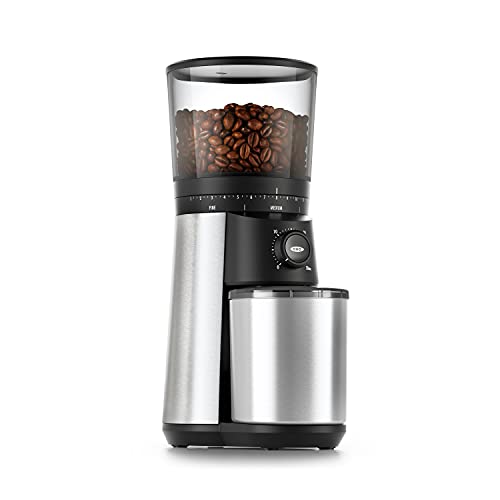
40mm stainless steel conical burrs: Precision grinding system produces uniform coffee grounds to ensure even extraction for rich, balanced flavor in every cup.

40 EXTERNAL ADJUSTABLE GRIND SETTINGS - Unlike traditional grinders with internal adjustments, our manual coffee grinder offers 40 precise external settings. The easy-to-use adjustment ring lets you select your perfect grind level, broadening your coffee flavor options without the mess of stray grounds. Perfect for espresso, pour-over, French press, and more.
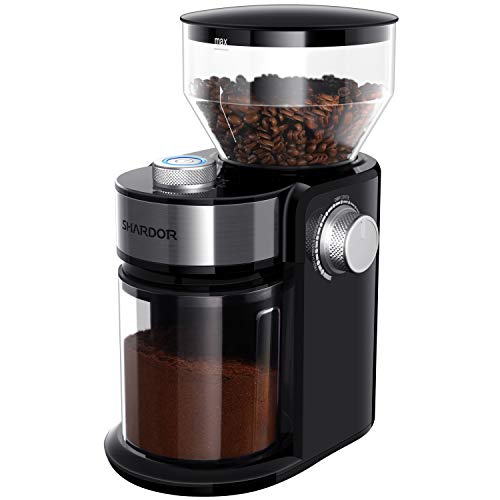
[ UNIFORM BURR GRINDING ] Premium metallic flat burr mill ensures consistent, uniform grounds without burning beans. Perfectly preserves rich coffee aroma for pour-over, drip, and cold brew.