
A burr grinder crushes beans between two rotating surfaces into uniform particles—unlike blade grinders that randomly chop, creating dust and chunks. You control grind size by adjusting the gap between burrs: wider spacing makes coarser grinds for French press, narrower spacing produces fine powder for espresso. This consistency means even extraction, cleaner flavors, and no bitter over-extracted fines mixed with under-extracted chunks. Understanding which burr type and grinder style matches your routine changes everything about your morning cup.
How a Burr Grinder Works: The Basics
Ever wonder why your coffee tastes inconsistent, even when you use the same beans?
The culprit’s usually your grinder. Burr grinders work differently than blade grinders—they crush beans instead of chopping them randomly. You pour beans into a hopper, gravity feeds them downward, and they enter the gap between two rotating burrs that progressively crush them into smaller pieces.
Here’s the thing: this crushing method creates far better grind consistency than blade grinders produce. One burr spins while the other stays still, so bean flow stays steady and predictable. That uniformity matters because consistent particle size means more even extraction during brewing. The type of burrs you use also affects heat generation, with cutting burrs producing significantly less heat than chewing-style burrs.
The burrs’ spacing determines your final grind size. Wider gaps give you coarser grounds; narrower gaps produce finer ones. Now you’re ready to explore how to match that grind to your brewing method. Understanding grind size impact helps you fine‑tune flavor extraction.
Conical vs. Flat Burrs: Which Crushes Better?
Now that you know how burrs crush beans, you’re probably wondering which type actually does it better—and honestly, that’s the wrong question to start with. Neither wins universally; your brewing goal determines the victor.
Here’s the thing: flat burrs typically produce more uniform particle distributions and clearer flavor separation. That burr material and design prioritize extraction consistency, which espresso enthusiasts love. Conical burrs, meanwhile, excel at fuller body and rounded sweetness—their flavor impact suits milk drinks and darker roasts beautifully.
So which crushes better?
Flat burrs dominate clarity and precision. Conical burrs dominate forgiveness and texture. The real question isn’t which crushes better—it’s which flavor impact aligns with what you’re brewing. Heat generation is lower in conical burrs, making them quieter and more durable for home use. Understanding grind size helps you match the burr type to your brewing method.
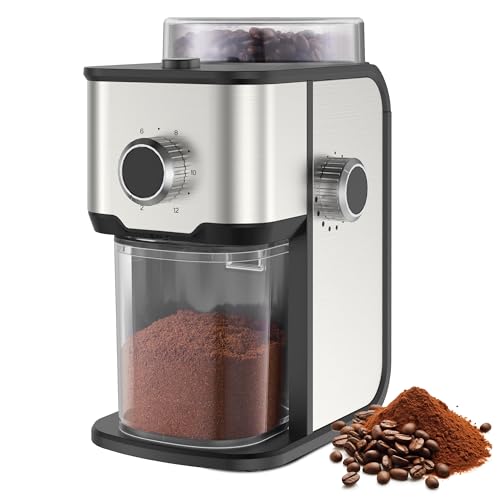
14 Precise Grinding Settings: AYCHIRO coffee grinder offers 14 kinds of grinding sizes. You can enjoy the different flavors and styles right from the comforts by yourself!

【Upgraded 64mm Titanium Flat Burrs – Superior Consistency & Flavor】Equipped with newly upgraded 64mm titanium-coated flat burrs, delivering more uniform particle size, enhanced clarity, and improved flavor extraction. More durable and wear-resistant than standard steel burrs for long-lasting precision grinding.
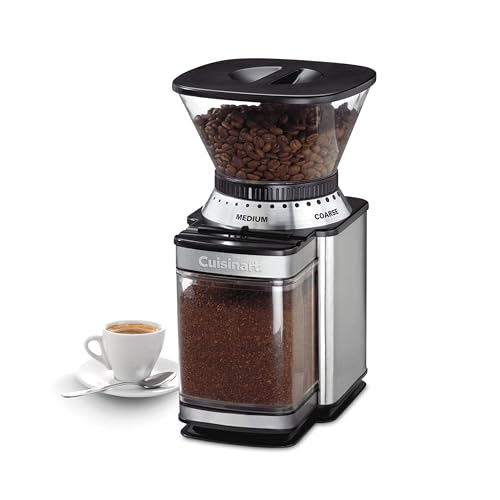
ENJOY OPTIMUM FLAVOR: The Cuisinart Coffee Grinder with 18-position slide-dial grind selector provides a uniform grind from ultra-fine to extra-coarse to ensure your fresh coffee beans are ground exactly the way you prefer.
Choosing Manual or Electric: What Fits Your Workflow
Once you’ve picked your burr type, you’re facing another fork in the road: do you want to crank by hand or press a button?
Here’s the thing: speed vs. portability matter differently depending on your routine. Electric grinders crush beans in 20–30 seconds. Manual grinders need 1–2 minutes. If you’re brewing one cup occasionally, manual works fine. Brewing multiple shots daily? Electric saves real time.
Now consider cost vs. durability. Entry-level manual grinders run $25–$60 and last longer because they’ve got fewer moving parts. Electric models start around $40–$100 with more components that can wear out.
Manual grinders are quieter and travel-friendly. Electric grinders demand countertop space and an outlet.
The real question: How often do you brew, and how much time matters to you?
Regular descaling prevents residue buildup and ensures consistent flavor. Using a proper coffee-to-water ratio helps achieve a balanced extraction. Nitro infusion creates a smooth, creamy texture when the coffee is served.
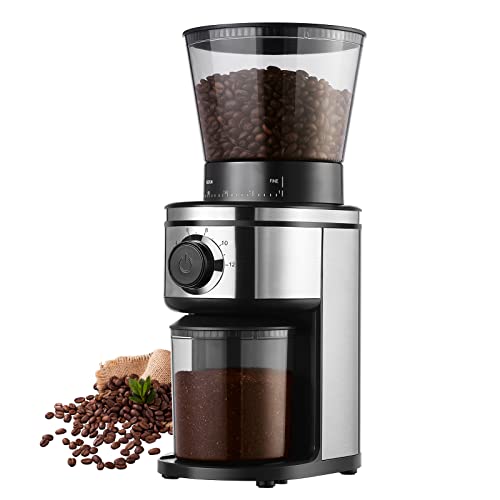
【Durable Conical Burr】With 40-millimeter stainless steel conical burrs, OLLYGRIN burr coffee grinder ensure optimal flavor extraction and create uniform grounds.
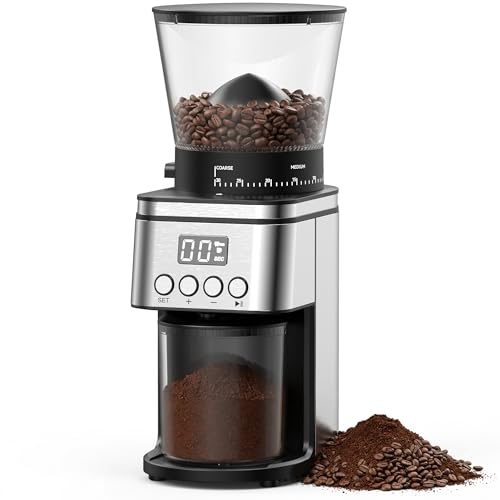
Professional Grinding Precision:Coffee grinder with 30 precise grind settings—from espresso-fine to French press-coarse—deliver consistent particle size for optimal extraction. Hardened stainless steel conical burrs ensure consistent and uniform grinding.

【Conical Ceramic Burr Precision】: Engineered with a precision conical ceramic burr, this electric coffee grinder delivers consistent, uniform grounds that release the full aroma and flavor of fresh beans, while the ceramic material stays cool during operation to preserve the integrity of each roast — a noticeable upgrade over blade-style grinders that produce uneven particles.
Stainless Steel or Ceramic: What’s Inside Your Grinder
You’ve probably noticed that grinders tout either ceramic or stainless steel burrs like they’re picking sides in a coffee war—and you’re wondering which one actually matters for your morning brew.
Steel Wins on Consistency and Durability
Stainless steel burrs start sharper and deliver more uniform particle size. They’re tougher too; they handle heavy use without cracking. Steel does dull eventually, but quality sets last years. You’ll find replacement parts everywhere.
Ceramic Holds Its Edge Longer
Ceramic burrs start duller but claim indefinite sharpness retention. Here’s the thing: they’re fragile. They chip easier under impact. Material durability favors steel for real-world abuse. However, contaminated beans pose a significant risk to ceramic grinders, as foreign particles like tiny stones or sticks can cause cracking that stainless steel easily withstands.
Flavor Impact? Minimal in Normal Use
Ceramic runs cooler due to lower heat conductivity. Steel conducts heat faster, but your five-minute home grind won’t overheat either. Flavor differences stay marginal. Both deliver excellent results.
Choose steel for reliability and affordability. Pick ceramic if edge retention matters most and you’ll treat it gently. For a quick grind you can also use a mortar and pestle in a pinch.
Grinding beans just before brewing helps preserve the coffee’s aromatic oils and reduces oxidation.
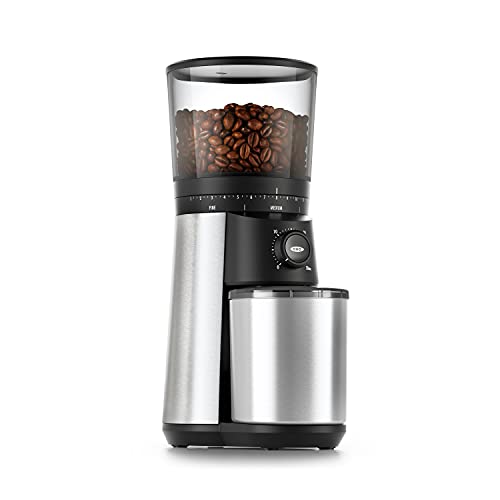
40mm stainless steel conical burrs: Precision grinding system produces uniform coffee grounds to ensure even extraction for rich, balanced flavor in every cup.
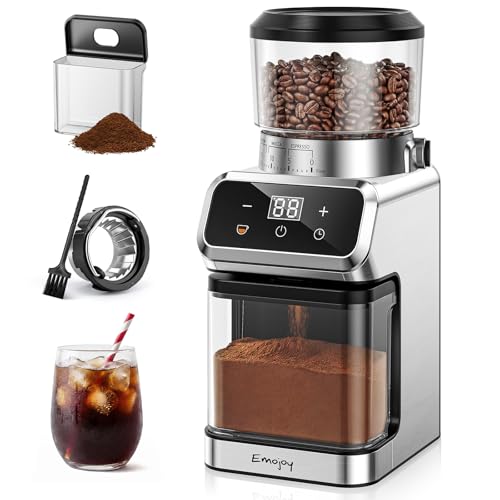
【30 Precise Grinding Settings】The coffee grinder has 30 adjustable settings from fine to coarse, catering to your personalized coffee flavors – from Espresso finesse to French press coarseness!

Tired of small batches? Meet the world's first manual grinder with a massive 60g capacity—Hold twice the beans of the standard grinders. 2X the beans, 0 interruptions! Now you can grind exactly what you need in one grind session, instead of two. Grind less, brew more. Perfect for french press, cold brew, pour-over, camping, travel, big families, or mornings that can't wait.
Why Burr Grinders Beat Blade Grinders
If you’ve been comparing grinders and wondering what actually separates a burr grinder from a blade grinder, the difference matters more than you’d think.
Where consistency actually changes your coffee
Burr grinders crush beans between two surfaces, giving you uniform particles. Blade grinders chop randomly, creating dust, chunks, and everything between. That inconsistency ruins extraction—you’re simultaneously under‑brewing some grounds and over‑brewing others in the same cup. Professional settings rarely use blade grinders due to their lack of reliable consistency.
The priceability perception problem
Sure, blade grinders cost less upfront. But here’s the thing: that price comparison ignores what you’re actually getting. You’re sacrificing grind control, flavor clarity, and repeatability. Burr grinders let you adjust settings for espresso, pour‑over, or French press. Blade grinders? You’re guessing based on spin time.
The real takeaway
You’re choosing between convenience and quality. For serious brewing, burr grinders deliver. The particle size you select directly influences extraction efficiency, ensuring your brew reaches the intended strength and flavor profile. Proper grind size also helps maintain a consistent particle distribution for balanced extraction. Using the right grind for each method is essential for achieving optimal brew consistency.

40mm stainless steel conical burrs: Precision grinding system produces uniform coffee grounds to ensure even extraction for rich, balanced flavor in every cup.

[Premium Conical Burr for Uniform Grind] Equipped with a high-precision stainless steel conical burr, this electric coffee grinder minimizes grinding heat and oxidation, locking in the rich flavor and fresh aroma of coffee beans for barista-quality pour-over, French press, and drip coffee.
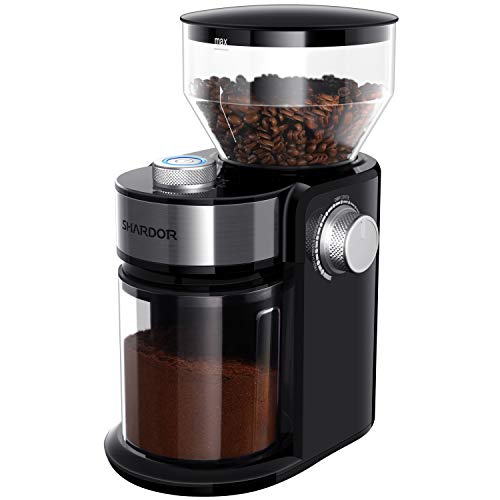
[ UNIFORM BURR GRINDING ] Premium metallic flat burr mill ensures consistent, uniform grounds without burning beans. Perfectly preserves rich coffee aroma for pour-over, drip, and cold brew.
Getting the Right Grind for Your Brew Method
Your brew method dictates everything. Espresso brews in 25–30 seconds, so it demands a fine grind. French press steeps four minutes, meaning you need coarse grounds. Different brew‑method timing creates totally different extraction speeds.
Here’s the thing: grind size charts exist for a reason. Turkish coffee uses powder-like extra-fine grounds. Moka pots run medium-fine. V60 pour-overs land medium. French press hits coarse territory around 690–1300 microns.
All right, here’s your move: match your grind to your brewer’s timing. Too fine slows flow and over-extracts. Too coarse underextracts and tastes sour. Start with your method’s recommended range, then adjust based on actual brew time. Consistent grind uniformity is key for preventing channeling and achieving balanced extraction. The higher pressure of espresso extraction also contributes to its distinctive crema and stronger flavor concentration. A well‑controlled coffee‑to‑water ratio enhances the overall balance of the brew.

THE DO-IT-ALL GRINDER:The electric coffee grinder is a powerful all-purpose coffee grinder featuring 5-blade of 48 mm conical burr that adapt to different coffee flavors and provide consistent results for all brewing methods, including espresso, pour-over, French press, and more. And the burr coffee grinder as a whole is made of high-quality aluminum, which greatly extends the service life of the coffee grinder.

Premium 40 Millimeter Stainless Steel Conical Burr: Designed to minimize grinding heat and protect the essential oils in the coffee bean, creating uniform grounds for optimal flavor extraction.

COMPACT & TRAVEL-READY: At 6.57 in and 1.24 lb, it stores easily in small spaces, office desks, backpacks, and carry-ons for coffee on the go
How Heat Affects Coffee Flavor During Grinding
Most people don’t realize their grinder’s friction generates enough heat to actually damage the coffee they’re trying to brew. When burrs spin, they create temperatures that can climb 70–90°F above room temperature—sometimes hitting 150°F during extended grinding.
Here’s the thing: that heat destroys what makes coffee taste good. Aromatic compounds evaporate before water even touches your grounds. You lose sweetness, complexity, and vivid aromas. Instead, you get harsh bitterness and a generic, flattened flavor.
Heat management matters most when you’re grinding finely or running your grinder continuously. Smaller batches under 30g help. Rest periods between grinds prevent heat from stacking up across multiple sessions.
Your flavor loss comes directly from speed and duration. Slower grinders around 400–600 RPM beat high-speed models that spin over 1000 RPM. Fine grind consistency is essential for balanced extraction and optimal flavor. Adjusting grind time based on brew method ensures consistent particle size and prevents overheating.
What Uniform Particle Size Does for Extraction
Because water moves through coffee grounds unevenly, smaller particles extract faster than larger ones—and that inconsistency costs you flavor.
Why Particle Uniformity Matters
When you grind coffee unevenly, fines over-extract while boulders under-extract simultaneously. You end up with bitter, muddled flavors instead of clean, balanced ones. Particle uniformity guarantees water contacts each ground consistently, giving you extraction consistency across your entire brew.
The Real Impact
A narrow particle-size spread reduces extraction defects dramatically. You’re not fighting against competing extraction rates anymore. Research shows that homogeneous grinds produce cleaner flavor profiles and fewer off-notes.
Here’s the thing: uniformity alone won’t guarantee excellence—you still need proper grind size for your brew method. But without it, you’re fighting an uphill battle against your own equipment. Using a food processor for coffee beans can generate heat buildup that alters flavor. The espresso machine’s nine‑bar pressure ensures rapid extraction once the uniformly ground coffee is packed into the portafilter.
Five Grinding Mistakes That Kill Flavor
You’re likely grinding wrong if your coffee tastes sour or bitter. Espresso needs fine grounds; French press needs coarse. Medium works for drip. Mismatch causes under-extraction or over-extraction instantly.
Pre-grinding Kills Aroma
Stale-ground-coffee loses volatile compounds fast. You lose complexity and clarity when you grind hours ahead. Grind right before brewing instead.
Skipping the Scale
You can’t dial in flavor without measuring. Use a digital scale for coffee and water. A 1:16 ratio beats guessing every time.
Ignoring Your Beans
Different roasts need different settings. You adjust grind size based on how your specific beans taste, not a fixed number.
A proper grind setting ensures that extraction is balanced and consistent across brewing methods, especially when you optimize particle distribution for each brew. Including a pre‑infusion pause during the espresso cycle can further enhance flavor extraction.
Replacing and Maintaining Your Burrs
Your burrs won’t last forever—they’re the hardest-working part of your grinder, and they gradually dull from grinding thousands of beans. You’ll notice inconsistent shot times, more clumping, and muddier flavors before they completely fail.
When Should You Replace Them?
Burr longevity depends on your grinder model, how often you grind, and what beans you use. Professionals often replace burrs at half the manufacturer’s stated lifespan for better quality. Watch for worn edges, excess fines, and lower extraction ceilings. Premium burr coatings like titanium aluminum carbon nitride can extend lifespan beyond 10,000 pounds of coffee while maintaining sharpness and minimizing heat transfer.
Your Cleaning Schedule Matters
Establish a regular cleaning schedule to extend burr life. Remove coffee residue from mounting surfaces and adjustment threads. Brush out the grinding chamber and burr carrier areas during replacement.
This prevents debris from interfering with alignment and consistency. Start replacing worn burrs before flavor noticeably suffers.