
You’re stuck between sour under‑extraction and bitter over‑extraction, so let’s lock down the grind that lands you a steady 25‑30‑second shot. Use a 250 W grinder with flat burrs (≥64 mm) for consistent particle size, weigh 18 g of beans on a 0.1‑g scale, then dial the grind one click finer if the shot runs under 25 seconds or one click coarser if it exceeds 30 seconds; remember to clean the chute after each dose to avoid stale‑ground mixing. Now you’ll hit the sweet spot, and the next step is fine‑tuning tamp pressure and water temperature.
Choose the Right Burr Grinder for Espresso Grind
You’re probably wondering why some grinders give you silky‑smooth shots while others leave you with uneven extraction.
Which burr material should you trust?
Steel burrs last longer, but ceramic stays cooler and reduces static. Choose steel for heavy daily use; ceramic feels smoother for occasional brews.
How does motor power affect performance?
A 250 W motor prevents overheating when you grind larger doses, keeping particle size consistent. Lower power can stall on fine settings, causing clumps.
Flat vs. conical—what’s the real difference?
Flat burrs (64 mm+) deliver uniform particles, ideal for precise espresso. Conical burrs (40 mm+) work fine at home, offering easier cleaning and lower cost.
What about grind retention and cleaning schedule?
Minimize retention by emptying the chute after each dose; stale grounds ruin flavor. Brush the burr chamber weekly and run a monthly air‑blast to keep burrs clear.
Takeaway: Pick a burr material and motor that match your volume, decide flat or conical based on budget and desired uniformity, and keep retention low with a strict cleaning schedule. Next, ask yourself: how will you adjust grind size for consistent shots?
Conical burrs generate less heat.
Why consistency matters: Uniform particle size ensures even extraction, which is crucial for achieving the nuanced flavors described in the brew ratio guide.
A well‑designed grinder also maintains a low particle size variance to support consistent flavor across brewing methods.

64mm Flat Burr: Achieves uniform grinding with minimal heat generation, enhancing the flavor profile for a superior taste experience

【Upgraded 64mm Titanium Flat Burrs – Superior Consistency & Flavor】Equipped with newly upgraded 64mm titanium-coated flat burrs, delivering more uniform particle size, enhanced clarity, and improved flavor extraction. More durable and wear-resistant than standard steel burrs for long-lasting precision grinding.

[64mm Stainless Steel Flat Burrs] As a Professional of coffee grinders, this machine uses 64mm stainless steel flat burrs to ensure uniform grind size for rich, balanced flavor
Get Your Grinder Ready for Consistent Shots
If you’re stuck wondering why your espresso shots vary from day to day, the answer often lies in how you set up the grinder before you even start pulling. Lock the burrs firmly; use the burr lock if your machine has one, or manually stabilize the burrs while the grinder runs. This prevents misalignment and friction that ruin consistency.
Now, start from a known baseline—most manufacturers suggest a medium grind as a test point. Adjust in tiny increments, watching the extraction time. A 25‑30‑second shot signals you’re on the right track; faster means too coarse, slower means too fine.
Here’s the thing: visual checks matter. A light pinch test should clump gently; excessive clumping means you’ve gone too fine. Keep the grinder clean, purge a few grams after each tweak, and re‑check after temperature or humidity shifts.
Takeaway: Secure the burr lock, calibrate with small grind changes, and verify with extraction time and tactile tests. Ready for the next step? Measure your beans to fine‑tune the shot. Consistent particle size distribution is crucial for avoiding channeling and achieving balanced extraction. Use a burr grinder for the most uniform grind across the entire batch. Understanding particle size helps you match the grind to the brewing method for optimal flavor.
Weigh Your Beans the Right Way
You’re probably wondering why the same grind can still give wildly different shots, and the answer starts before the burrs even turn. First, put your portafilter or dosing cup on the scale, press tare, and zero it out—this is your bean tare. Then add whole beans until the display reads your target, usually 18 g for a double basket, but adjust between 16–20 g depending on your basket size and roast. Using a 0.1‑gram‑resolution scale gives dose consistency shot‑to‑shot, eliminating guesswork and volume‑based errors.
Now, single‑dose each shot: weigh only the amount you’ll grind, grind it, and discard the rest. This isolates the variable and keeps your recipes repeatable.
All right, remember: accurate bean tare plus a precise gram count creates the foundation for reliable espresso. Next, you’ll want to dial‑in grind size. Regularly clean the group head to prevent residue buildup that can affect extraction. Choosing the right brew strength can further fine‑tune your espresso’s flavor profile. Understanding extraction balance helps you adjust grind size for optimal flavor.
Dial‑In Grind Size: Fine to Coarse
How do you know when the grind is just right? You stare at the portafilter, watch the syrup‑like stream, and feel the resistance. A fine grind gives a dense grind texture, slowing water just enough for extraction balance, while a coarser setting eases pressure profiling and speeds flow.
Now, here’s the thing: start near the manufacturer’s fine recommendation, pull a short test shot, then adjust one click at a time. If the shot runs too fast, tighten the grind; if it drips or chokes, loosen it slightly. You’ll notice flavor consistency shift—bitter and harsh when too fine, sour and watery when too coarse.
All right, keep tweaking until the stream steadies, the taste feels rich and sweet, and the pressure feels smooth. Takeaway: tiny, incremental changes let you dial in grind texture for perfect extraction balance. Next, ask yourself: how long does my shot run before it’s ideal? Ideal extraction time is 20‑30 seconds from first drip. Understanding the dose‑grind relationship helps you fine‑tune both variables for consistent results. A proper tamping pressure of 30‑35 psi ensures an even puck and prevents channeling. Using a burr grinder guarantees uniform particle size, which is essential for repeatable espresso quality.
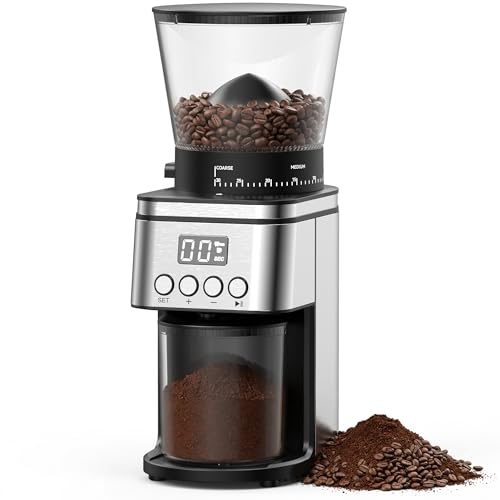
Professional Grinding Precision:Coffee grinder with 30 precise grind settings—from espresso-fine to French press-coarse—deliver consistent particle size for optimal extraction. Hardened stainless steel conical burrs ensure consistent and uniform grinding.
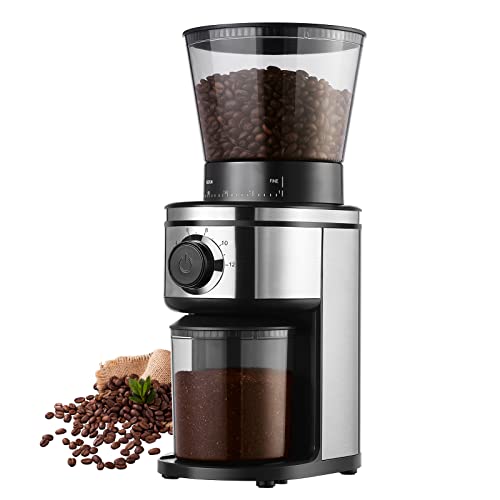
【Durable Conical Burr】With 40-millimeter stainless steel conical burrs, OLLYGRIN burr coffee grinder ensure optimal flavor extraction and create uniform grounds.

Premium 40 Millimeter Stainless Steel Conical Burr: Designed to minimize grinding heat and protect the essential oils in the coffee bean, creating uniform grounds for optimal flavor extraction.
Adjust Espresso Extraction Time to 25‑30 seconds
You’re probably wondering why the 25‑30 second window matters so much for espresso. The pressure ratio you maintain during those seconds determines whether you extract balanced sugars, acids, and oils, or end up with a thin or bitter shot. When you hit the 25‑30‑second mark, the pump’s pressure stays steady, giving the coffee bed enough time for optimization pressure to dissolve the right compounds.
All right, start timing when the pump engages, not when the first drip appears, so you compare apples‑to‑apples. If the shot runs under 25 seconds, grind finer; if it drags past 30 seconds, coarsen a notch. Small, incremental grind tweaks keep the pressure curve smooth and the extraction repeatable.
Takeaway: Consistently timing from pump start and adjusting grind in tiny steps lets you dial in the perfect 25‑30‑second extraction. Next, ask yourself: how does the taste of your shot reveal under‑ or over‑extraction? puck density plays a crucial role in how evenly water flows through the coffee bed. Properly pre‑infusing the puck can further stabilize the extraction and improve crema quality. Understanding the impact of brew ratio helps fine‑tune flavor balance.
Taste Your Shot: Spot Sour or Bitter
How do I spot sourness?
Sour detection starts at the front of your tongue—sharp, lemon‑like acidity hits instantly. The shot feels thin, bright, and under‑developed, like a quick splash of citrus without body. Light roasts often show this when water rushes through too fast or temperature stays low.
How do I spot bitterness?
Bitter detection lingers at the back of the tongue, a dry, ashy finish that clings long after the sip. **Over‑extracted** shots taste hollow, astringent, and sometimes burnt, especially with dark roasts pushed past 30 seconds.
What’s the takeaway?
If the bite is immediate and acidic, adjust grind size or temperature for a longer contact. If the aftertaste is dry and lingering, shorten the shot or lower pressure. Now, try a side‑by‑side taste test with a known‑good espresso to confirm which flaw you’re fixing. A proper brew ratio helps maintain balance and consistency. A standard 1‑ounce espresso shot typically contains 63–75 mg of caffeine, which is less than the 95–165 mg found in an 8‑ounce cup of brewed coffee. Using an unsuitable grind can lead to channeling and uneven extraction.
Clean Up & Keep a Grind Log
You’ve just figured out whether your shot is sour or bitter, and now you’re probably wondering why the same beans can taste different from day to day.
Why does cleaning matter?
Now, every session leaves fine grounds and oils in the burrs and chute. Those residues oxidize, soak up moisture, and sabotage flavor tracking. A quick brush‑out, dry‑cloth wipe, and hopper emptying keep extraction consistency steady.
How do you log it?
Here’s the thing: keep a maintenance log next to your grind log. Note burr maintenance dates, cleaning notes, and any odd noises. Record grind setting, dose, yield, brew time, bean name, roast date, and storage conditions for each shot.
What’s the payoff?
Obviously, a consistent log lets you spot when a cleaning changes body or clarity, so you can dial in faster. Your next step? Start a simple spreadsheet and log today’s cleaning and shot data.
A thorough cleaning also helps prevent burr wear and extends the grinder’s lifespan.
Using a paper towel as a temporary coffee filter can introduce chemical residues that affect flavor.
Troubleshoot Common Espresso Grind Issues
How do you pinpoint why today’s espresso tastes off? If it runs fast and sours, you’re under‑extracting; if it drags and turns bitter, you’re over‑extracting. First, check bloom pressure: a weak bloom often means the puck isn’t dense enough, so adjust grind size or dose. Next, look at grind retention—old grounds stuck in the chute can mix with fresh dose, skewing extraction.
Is your grind too fine or too coarse?
Finer grind raises resistance, slows flow, and pushes extraction toward the 25‑30 s window. Coarser grind does the opposite. Tweak a notch and watch the shot time move into the sweet spot.
Are you seeing channeling?
Uneven distribution, clumps, or a tilted tamp creates low‑resistance paths. Use a distribution tool or WDT, then level tamp. A dry basket and proper puck clearance prevent side channeling.
What about your grinder’s health?
Burr wear and inconsistent calibration cause uneven particle size. Clean the chute to eliminate grind retention, then recalibrate. Freshly ground beans each shot give the most reliable dose.
Takeaway: Adjust grind, dose, and tamp while watching bloom pressure and eliminating grind retention. Next, time your shot time and temperature to lock in consistency. Insufficient pressure can also cause a weak bloom, indicating the need to verify that the machine is reaching the required 6‑9 bar range.

This grinder burr set compatible with Breville BES980/990/995/880/881/878(6-point burr). Due to batch variations, a small number of BES870/875/876 units come with a 6-point burr. Our burrs only work with adjustable baskets, which are usually marked with a red dot.Please check your machine before placing an order.

【New upgrade】The modified grooves in the ring are optimized for grinding the new cone, and the layout is optimized for optimal compatibility in all subsequent grinding machines.
Perfect Mist Control: Designed for even and precise spraying, enhancing coffee bean preparation.