
You’ll find double‑walled stainless‑steel presses keep coffee about 12 °F hotter longer, giving a fuller, rounder cup, while glass models lose heat fast, producing a brighter, more acidic brew. Steel also survives drops and travel vibrations, whereas glass risks shattering despite protective frames. Filtration is comparable if the steel mesh is fine, but glass relies on an inserted screen that can let more sediment through. If you want durability, heat stability, and a rugged feel, steel wins; glass offers visual clarity but sacrifices temperature control. Keep reading to see how cost, portability, and maintenance factor into the decision.
Decision Framework: Matching Your Priorities to the Right French Press
When you prioritize heat longevity and staggered sipping, a double‑walled stainless steel press wins; if you need quick cooling for immediate consumption, glass serves better. You map your priorities onto a decision matrix: heat retention, visual control, flavor nuance, filtration, cost, and maintenance. For a brew timeline that extends beyond the first cup, steel’s insulation preserves temperature, enhancing aroma development and extraction stability. If you value real‑time observation of bloom and plunge depth, glass offers transparent feedback, letting you tweak steep time for subtle aroma shifts. Consider mouthfeel—steel’s finer filters reduce sediment, while glass’s simpler mesh may leave grit. Finally, weigh upfront price against long‑term durability; steel costs more but safeguards temperature, whereas glass is cheaper but loses heat faster. Regularly clean the press after each use to maintain flavor purity and prolong its lifespan, especially when using a mild dish‑soap solution for stubborn residues. Adding a nitrogen infusion step can further enhance the texture and mouthfeel of your cold brew, creating a café‑style experience at home. The full‑immersion method of French press brewing extracts more oils, contributing to a richer body compared to drip coffee.
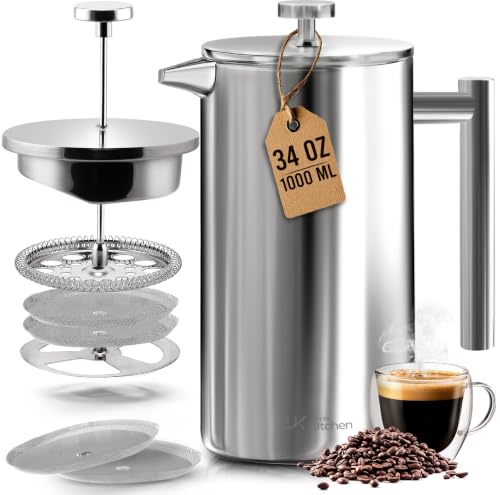
Double-Walled French Press: Make perfectly brewed coffee at home like a barista. The double-walled coffee press is heat resistant. Its solid construction will keep the drink hot for a long time.
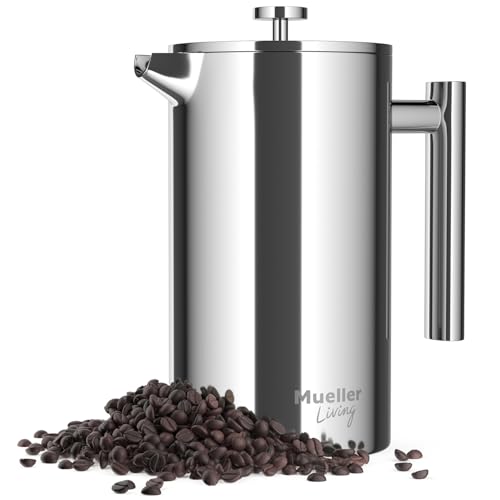
Take it Anywhere – Our rust-free french press-stainless steel-is durable for use while camping, at the office, or making coffee at home. The double-walled carafe on this MuellerLiving French Press keeps your coffee hot and full of flavor.
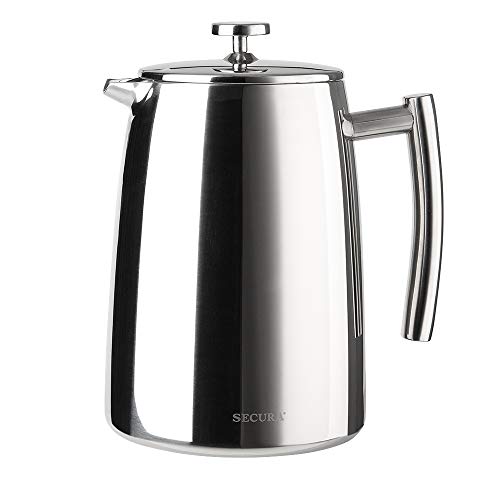
1. 5 Liter stainless steel French Press coffee maker. Both the exterior and the interior are made from top quality 304 stainless steel. This coffee maker is made to outlast other coffee makers
Durability & Breakage Risk: Steel’s Edge Over Glass
If heat retention and staggered sipping guide you to steel, durability follows naturally: stainless‑steel presses survive drops, knocks, and daily kitchen hustle far better than glass. Their design durability stems from solid metal construction that offers superior impact resistance, so a slipped hand or a tumble on the countertop rarely ends in catastrophe. Glass beakers, even borosilicate, still carry noticeable breakage risk; a single bump can crack or shatter the carafe, forcing costly replacement. When you travel, steel’s travel resilience shines—its sturdy body tolerates bag jostling, car rides, and campsite bumps without compromise. In contrast, glass models falter under the same conditions, making steel the pragmatic choice for active, on‑the‑go brewing. The insulated double‑wall design of many steel presses also keeps coffee hotter longer, enhancing flavor stability. Following the precise paper‑filter preparation steps ensures a clean brew and can further protect your equipment from residue buildup. Regular descaling prevents mineral deposits from affecting performance and longevity. The rapid, versatile extraction method of the Aeropress demonstrates how temperature and grind size can be tuned for a smoother, less acidic cup.

RIGHT SIZE FOR DAILY COFFEE:** Brews one large 16–20 oz mug or 2–3 small cups, making it a practical choice for one coffee lover or two light servings at home or in the office.
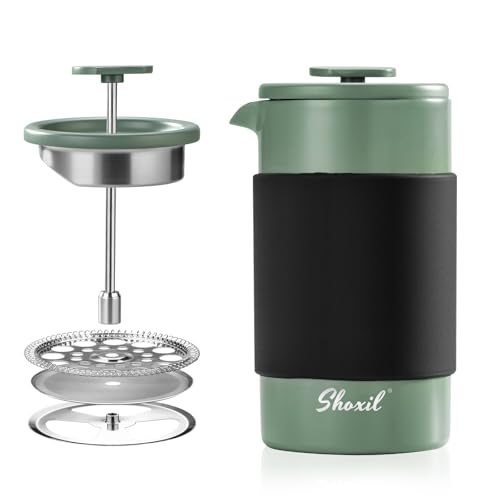
Premium Stainless Steel Construction: Made with double-layered stainless steel and a vacuum-insulated design, this French press keeps coffee hot longer while ensuring durability and rust resistance.

Travel Coffee maker: brew Coffee or tea on the go and drink from same container when ready; enjoy your daily fix wherever you are
Heat Retention & Brew Temperature: Why Double‑Walled Steel Keeps Coffee Hot
Because double‑walled stainless steel traps an insulating air gap, it stores far more thermal mass than a single‑wall glass carafe, so the water you pour stays near the ideal 90–96 °C range throughout the steep. The steel’s high thermal mass buffers temperature loss, keeping the brew within the extraction window without frequent reheating. A quick 60‑second preheat maximizes preheat efficiency, reducing the initial heat sink effect of a cold vessel. In contrast, glass’s single wall sheds heat rapidly, often dropping below target temperature before the four‑minute steep ends. The insulated steel design behaves like a thermos, maintaining a stable brew temperature from pour to press, which translates to consistent extraction and longer serving heat. The double‑wall construction also makes the press more impact‑resistant, ideal for outdoor use. Using a coarse grind ensures the water can flow evenly, preventing over‑extraction.
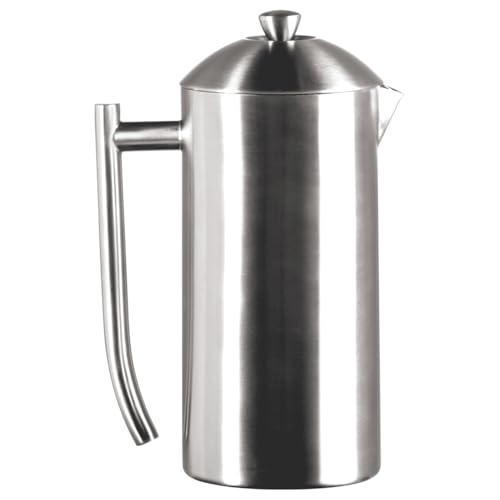
Elegant Brewing Design: The Frieling Double-Walled Stainless Steel French Press Coffee Maker elevates coffee brewing with its refined design and dual screen filter. This all stainless steel coffee maker delivers a consistently smooth, sediment-free brew
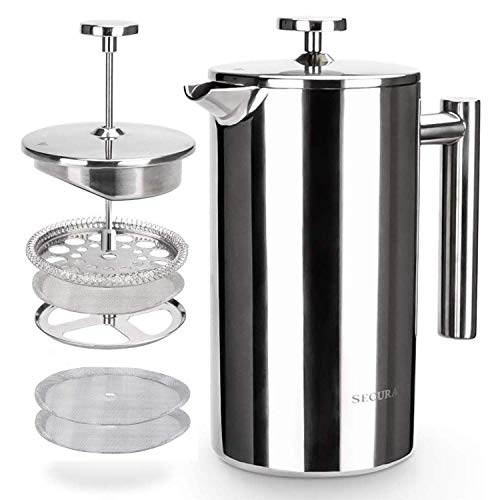
Secura stainless steel French Press coffee maker is made from top quality 18/8, 304 stainless steel, both the interior and exterior. It is made to outlast other coffee makers

PREMIUM CONSTRUCTION: Double-wall stainless steel french press with durable brushed finish and ergonomic handle for superior heat retention and durability. No need to worry about any breakage or damage
Flavor Impact: How Heat Retention Shapes French Press Taste
Even a modest temperature dip can reshape the coffee’s flavor curve, since higher brew heat accelerates extraction of soluble compounds while a stable, insulated environment lets the slurry stay in the ideal 90‑96 °C window longer. When you use an insulated stainless‑steel press, heat retention keeps the brew hot enough to pull more sugars and oils, yielding a fuller body and a rounder, richer flavor. The prolonged temperature stability also smooths acidity, allowing sweetness to emerge before bitter compounds dominate. In contrast, a glass press cools faster; the quicker drop slows extraction, leaving the cup lighter, brighter, and sometimes sourer, with less body. Consequently, the thermal design—more than the material alone—directly shapes the balance of flavor, temperature stability, and overall mouthfeel. The frother’s air injection mechanism can further enhance the crema‑like texture when combined with a hot, well‑extracted brew. Regular descaling can prevent pump clogging and extend the machine’s lifespan.
Filtration Quality in French Presses: Steel Mesh vs. Glass Screens
When you compare steel‑mesh filters to the screening systems used in glass‑bodied presses, the decisive factor is how tightly the mesh captures particles. Steel mesh offers a precise weave; a finer gauge traps more sediment, while a coarse gauge lets silt through, creating a textured mouthfeel. Multi‑layer steel assemblies add a secondary fine screen and a perforated metal plate, tightening the seal and reducing bypass. In contrast, glass presses rely on an inserted screen; the quality of that screen dictates clarity, not the glass itself. A poorly refined glass perforation lets more fine particles escape, whereas a high‑grade mesh‑contrast system yields a cleaner cup. Ultimately, tighter mesh and reliable sealing drive superior filtration. The CHICIRIS 5‑piece stainless‑steel mesh screen replaces standard filters in seconds and rinses easily. The choice between micro‑foam and airy froth can also affect how the milk integrates with the coffee’s flavor profile.

【Wide Compatibility】Our replacement filter screen is designed to fit most 8-Cup (34 Oz/1000ml) French presses. For ideal compatibility, measure your existing filter—it should be 4 inches (100mm) in diameter.

Long-Lasting Durability: Made of premium 304 stainless steel fine mesh, rust-resistant and corrosion-resistant for long-term reuse.

Our French press screens are made of high quality grade 304 stainless steel, not rust easily and durable, designed to filter out coffee grounds or loose tea conveniently, providing you a better using experience of coffee or tea
Cost vs. Longevity: When Steel’s Higher Price Is Justified
What really justifies a steel press’s steep upfront cost is the long‑term savings you gain from its durability and heat retention. Steel’s higher price translates into lower replacement frequency; you avoid the environmental impact of discarded glass and the hidden cost of frequent purchases. Double‑wall insulation preserves brewing temperature, boosting flavor consistency and reducing pre‑heat energy. User ergonomics improve as the sturdy body resists drops, while sleek metal finishes align with current aesthetic trends in kitchens. Over a five‑year horizon, the total cost of ownership for a steel press often undercuts a glass model that may need two or three replacements. Consequently, price value hinges on durability, heat efficiency, and long‑term environmental and design considerations. The silicone lip provides an airtight seal that reduces over‑extraction after plunging. Using the recommended 1 gram per 15 grams coffee‑to‑water ratio ensures optimal extraction and flavor balance. A well‑maintained steel press can also extend brew life by preventing mineral buildup that degrades flavor.
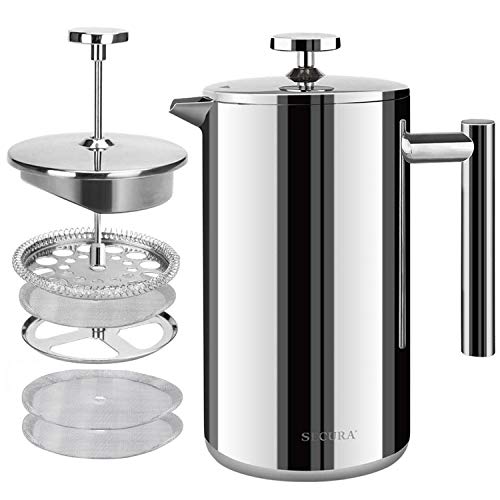
DOUBLE-WALL STAINLESS STEEL-- Secura stainless steel French press coffee maker is made from 18/8 stainless steel, both the interior and exterior. It is made to outlast other coffee makers
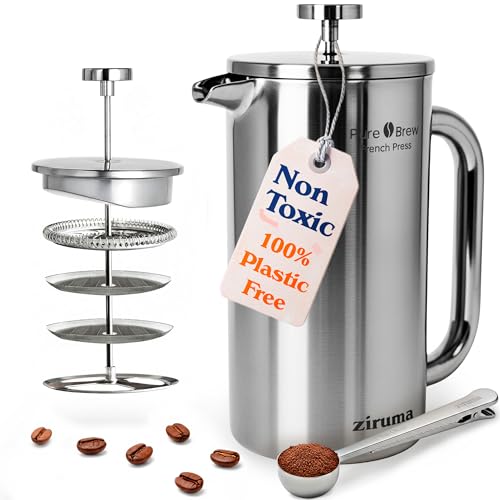
✅ 𝟑𝟏𝟔 𝗦𝘂𝗿𝗴𝗶𝗰𝗮𝗹-𝗚𝗿𝗮𝗱𝗲 𝗦𝘁𝗲𝗲𝗹 𝗳𝗼𝗿 𝗮 𝗛𝗲𝗮𝗹𝘁𝗵𝗶𝗲𝗿 𝗕𝗿𝗲𝘄 - Crafted with premium, 316 surgical-grade stainless steel and 100% plastic-free—so you get a clean, toxin-free cup every time. Designed for health-conscious coffee lovers who never compromise on quality.
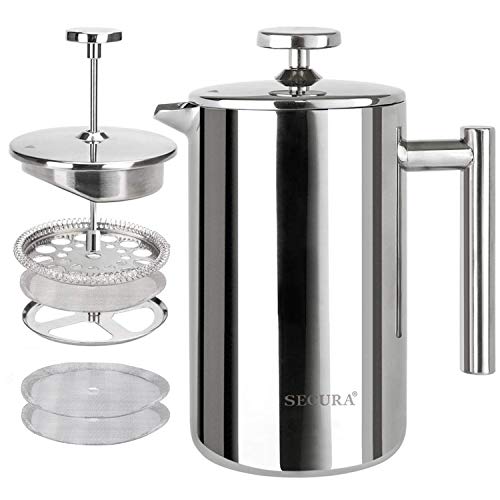
DOUBLE-WALL 18/10 STAINLESS STEEL: Secura stainless steel French Press coffee maker is made from top quality 18/10 stainless steel, both the interior and exterior. It is made to outlast other coffee makers.
Portability & Travel Use: Which Material Survives the Road?
If you’re packing a French press for a road trip or a camping hike, stainless steel wins on durability, weight‑management, and heat retention. Glass units shatter under vibration, bumps, and drops, even with protective frames, making them poor travel friendly materials. Stainless steel’s sturdy body lets you toss it into a bag without extra padding, reducing packed volume and simplifying road ready packaging. Double‑walled steel holds coffee at 172°F versus glass’s 160°F, so your brew stays hotter longer during commutes or hikes. Rough terrain and frequent handling favor steel’s resistance to impact; glass is better suited to stable home use. For mobile brewing, steel’s survivability outweighs any marginal weight advantage, ensuring reliable, on‑the‑go coffee. The capacity difference of steel allows for an extra serving when traveling with companions. A proper coarse grind ensures the coffee extracts evenly during the steeping process. The pressure extraction of a Moka Pot can deliver a richer, more concentrated flavor that some travelers prefer for a quick boost. Regular cleaning with a soft brush and mild dish soap keeps the steel free of oil buildup, preserving flavor over time.
Visual Appeal & Ergonomics: Glass Transparency vs. Steel Ruggedness
Wondering whether the glass’s crystal‑clear view or steel’s sturdy feel better fits your kitchen? You’ll notice glass’s brew aesthetics instantly: the bloom, swirl, and color shift are visible, letting you judge strength and adjust grind in real time. The minimalist, premium look adds a refined touch to a display‑oriented countertop. Steel, by contrast, hides the process but offers a rugged, industrial vibe that suits a utilitarian kitchen. Its solid body gives grip comfort, reducing anxiety about slips, knocks, or drops. Glass feels lighter and more delicate, while steel feels secure and durable under frequent use. Your choice hinges on whether you value visual ritual and elegance or sturdy handling and low‑drama practicality. In emergencies, a paper towel can temporarily replace a coffee filter, though it may affect flavor and safety. Using a barista‑style almond milk can improve foam stability when pairing coffee with French‑pressed brews. The French press’s steeping process relies on coarse grounds to prevent over‑extraction.
Maintenance & Cleaning: Upkeep Tips for Steel and Glass French Presses
Even after a perfect brew, neglecting cleanup can quickly turn a French press into a breeding ground for odors and residue, so you should empty the spent grounds right after brewing, rinse every component with warm water, and give each part a quick swipe with a non‑abrasive sponge or bottle brush. For eco friendly cleaning, use mild, unscented dish soap and a soft cloth; avoid abrasive scrubbers that damage steel or scratch glass. Disassemble the press (tool free assembly is common) and soak parts in warm, soapy water, then apply a 1:1 vinegar‑water mix or baking‑soda solution for deep stains. Dry each piece separately on a clean towel, then reassemble promptly to prevent moisture trapping. Periodic polishing with a microfiber cloth restores steel shine, while glass carafes benefit from a bottle brush to reach the bottom without chips. Regular weekly deep cleans keep mineral buildup at bay. Dry press before reassembly prevents lingering moisture. Proper temperature control during cleaning helps maintain the metal’s thermal conductivity and prevents warping. Use a mild detergent to safely remove stubborn coffee residues without harming the pot’s finish.