
You’re right to wonder why the Zacconi Baby feels finunky; start by heating the boiler 45‑60 minutes, set the pressurestat about 1.2 bar, and watch the steam wand plume steady—if it’s weak, wait. Grind 14‑18 g to a fine‑sand texture, tamp evenly, then lift the lever, hold 8‑12 seconds for pre‑infusion, and push down smoothly; aim for a 25‑35 second extraction, adjusting grind a notch finer for each extra three seconds. If the stream sputters or drips too fast, tweak grind or tamp, and you’ll get a balanced shot—keep practicing single‑shot pulls and you’ll master the lever in no time.
Set Up Boiler & Group‑Head Temperature for the Zacconi Baby
How do I set the boiler pressure to hit the right brew temperature? You’re confused about how pressure translates to temperature, and that’s a solid question. First, do pressure calibration: turn the pressurestat clockwise a 1/8 turn, let the machine warm up for 45‑60 minutes, then pull a shot. If the water bubbles like steam, you’re too hot; if it’s flat, you’re too cool. Typical espresso targets are 195‑205 °F (90‑96 °C); a pressure around 1.2‑1.3 bar usually lands you near 92‑94 °C.
Now, temperature profiling: watch the group‑head after a long warm‑up, then flush until bubbling stops. A short hot flush cools the group; a blank shot reheats it. Repeat with the same coffee and flow rate, tasting for sour versus bitter notes.
All right, the takeaway: small pressure tweaks, full warm‑up, and systematic flushing give you reliable temperature profiling. Next, ask yourself: what grind size and tamp will match this calibrated temperature? Teflon washer should stay in place when installing the thermometer. Regular descaling prevents mineral buildup that can affect temperature stability. Proper water hardness management helps maintain consistent brewing performance.
A well‑balanced shot also depends on consistent dose weight to ensure repeatable extraction.

A MUST HAVE PRESSURE GAUGE: Special design for coffee machine with E-61 grouphead, help you monitor the extraction of the coffee easily.

✔ Precision Calibration – Delivers accurate pressure readings to optimize espresso extraction.

Achieve precise espresso extraction with our 16Bar espresso machine pressure gauge, designed to accurately measure and display pressure for coffee every time.
Pick Grind Size & Tamping for a Lever Espresso Machine
If you’re wondering why your lever machine’s shots are either racing or stalling, you’ve hit the right spot.
What grind texture should I aim for?
Start with a fine‑sand texture, not powdery flour. Load 14‑18 g into the basket, level it, and pull a double shot. If it runs 25‑35 seconds, you’re in the espresso zone. Faster means the grind is too coarse; slower or a stall means it’s too fine. Adjust in small increments, watching the flow time. Grind size is the most critical variable after bean selection. Proper water temperature ensures optimal extraction and crema formation.
A consistent tamping pressure of 30‑35 psi helps maintain uniform extraction.
How do I tamp correctly?
Use a firm, level tamp—think of pressing a pancake with even pressure. The exact force isn’t critical; repeatability is. Keep tamp pressure consistency across shots to avoid channeling and to make grind tweaks readable.
Takeaway
Fine sand, even dose, and repeatable tamp give you a stable puck. Next, check how long the lever stays lifted for pre‑infusion.
A properly tamped puck creates the right puck density for balanced flow resistance.

40mm stainless steel conical burrs: Precision grinding system produces uniform coffee grounds to ensure even extraction for rich, balanced flavor in every cup.

Premium 40 Millimeter Stainless Steel Conical Burr: Designed to minimize grinding heat and protect the essential oils in the coffee bean, creating uniform grounds for optimal flavor extraction.
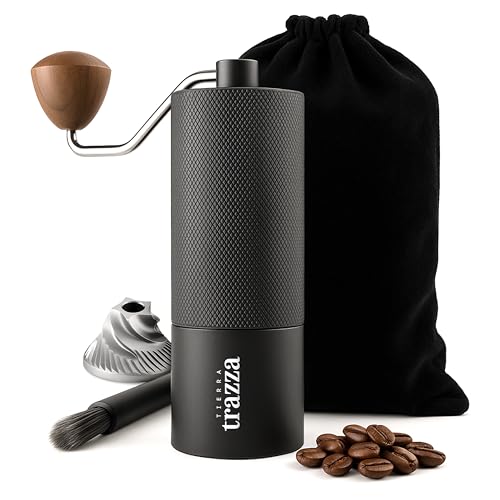
Unlock Maximum Flavor: Our professional hand coffee grinder’s stainless steel burrs create a perfectly consistent grind, unlocking the full, rich flavor of your beans for a superior cup
Pre‑Infuse: Lift the Lever, Hold for Saturation
Why does the lever need a pause before the full pull? You’re wondering why a brief hold matters, and the answer lies in espresso‑infusion timing. Lift the lever slowly, let hot water fill the group chamber, then pause about 8–12 seconds. This pressure‑release technique lets the coffee puck settle, wetting evenly and preventing channeling. You’ll see a steady drip, not a torrent, and the puck should look uniformly saturated. The pause gives low‑pressure water a chance to coax flavors out before you apply brewing pressure. A proper pre‑infusion timing helps achieve balanced extraction and richer crema. Using an inappropriate grind can cause channeling and uneven extraction. All right, the key takeaway: a controlled lift and a 10‑second hold set up a balanced extraction. Next, you’ll learn how to push the lever evenly for a stable shot.
Push Lever Evenly for a Stable Extraction
You’re probably wondering why a smooth, even lever push matters more than just “press it down.” Here’s the thing: a steady, vertical stroke keeps pressure uniform across the coffee puck, preventing channeling and preserving flavor. Use both hands to create lever symmetry and keep the push straight down. Align your wrists and forearms so the motion stays vertical, not side‑loaded. Press with a light to moderate force, building pressure gradually instead of jerking the lever. Hold that force steady once the flow starts; any wobble breaks pressure consistency and ruins crema.
How do I keep the push stable?
Apply even force, stay centered, and maintain a smooth, controlled stroke from start to finish.
Takeaway: Consistent, symmetrical pressure yields a stable extraction and a better espresso. Next, watch the flow and adjust grind or timing if needed. pre‑infusion is set to roughly 10 seconds. The machine’s nine‑bar pressure ensures rapid extraction and a rich crema. The high‑pressure pump delivers the force needed for that quick, consistent brew.
proper tamp extraction is essential for achieving even extraction.
Watch Flow, Adjust Grind or Timing Quickly
How do I spot the right flow and tweak the grind on the fly?
You watch the first drops and count to 30 seconds.
If the stream rushes, you know the grind is too coarse; if it drips, it’s too fine.
That’s basic flow monitoring, and it tells you when to adjust.
Now, you adjust grind before you think about timing.
A single notch finer usually adds three seconds, while a coarser notch shaves a few seconds off.
Keep dose, tamp, and basket constant, and purge a gram of retained coffee after each change.
All right, you repeat the shot, compare the time, and fine‑tune until the flow steadies.
When the stream stays uniform and the extraction lands between 26–32 seconds, you’ve nailed pressure control.
Takeaway: small grind tweaks + quick purge = consistent shots.
Next, check the boiler pressure with the steam indicator before pulling another espresso.
Retention must be cleared before testing a new grind setting.
A consistent grind size also helps prevent channeling and ensures even puck formation.
Proper particle distribution improves extraction uniformity and reduces bitterness.
The paper filter in a Chemex helps achieve an even extraction by removing fine grounds.

【Thinner 14 Needles】 Needles evenly distributed design. 7 food-grade stainless steel needles, 0.35mm diameter, the perfect size for breaking up coffee clumps, plus 7 replacement needles. Thoughtful needles storage tube. Say goodbye to the bent needles

【A Perfect Espresso Shot Companion】 Nessus espresso distributor includes 10 food-grade stainless steel needles with a 0.35mm diameter, which is the perfect size to break up coffee clumps. For added convenience, we provide an extra set of 10 needles in a storage tube. A good choice to add this espresso machine accessories to your coffee bar!

Create Picturesque Espresso Shots:One of the newest trends among espresso lovers has been the widespread adoption of coffee distribution tool. The coffee distribution technique fundamentally involves stirring the espresso puck with extra-fine needles to increase extraction and decrease clumping. When you use espresso WDT well, you cannot only see a decrease in channeling, but all else being equal, your shots should flow a little slower.
Check Boiler Pressure With Steam Indicator Before Pulling Espresso
If you’re wondering why the steam wand flickers before you pull the lever, it’s because that puff of steam is the simplest gauge of boiler pressure. The steam‑wand acts as a quick readiness‑check; when you fire it, a steady plume tells you the boiler has hit the pressure‑threshold of about 1.0–1.3 bar.
Now, watch the steam gauge as you pull the wand. If the output is strong and consistent, you’ve confirmed the boiler is pressurized and the lever will have enough force to push water through the coffee bed.
Obviously, a weak or no steam signal means you’re below the safe pressure range—wait a moment, let the machine finish heating, then try again.
Takeaway: the steam‑wand and gauge together give you a reliable, low‑tech indicator that the boiler is ready for extraction. Ready to pull the lever? Pressure adjustment was performed after replacing the fuse and cracked cable housing. Resetting a machine can also help resolve lingering pressure inconsistencies. Understanding the grind size impact helps you fine‑tune the brew for either method.

Make Your Favorite Espresso Coffee At Home: The CASABREWS coffee machine with milk frother allows you to prepare all your favorite espresso-based coffees. You can enjoy a barista-brewed latte, cappuccino or macchiato at home. Stainless steel appearance, stylish and durable, ideal for any size kitchen. This compact espresso coffee maker is perfect for home or office use

Make Your Favorite Espresso Coffee At Home: The CASABREWS coffee machine with milk frother allows you to prepare all your favorite espresso-based coffees. You can enjoy a barista-brewed latte, cappuccino or macchiato at home. Stainless steel appearance, stylish and durable, ideal for any size kitchen. This compact espresso coffee maker is perfect for home or office use

Make Your Favorite Espresso Coffee At Home: The CASABREWS coffee machine with milk frother allows you to prepare all your favorite espresso-based coffees. You can enjoy a barista-brewed latte, cappuccino or macchiato at home. Stainless steel appearance, stylish and durable, ideal for any size kitchen. This compact espresso coffee maker is perfect for home or office use
Troubleshoot Common Issues: Choking, Backflow, Weak Shots
When the lever stalls or the shot drips barely, you’ve hit a choke, a backflow, or a weak extraction—each has its own tell‑tale signs.
What tells me it’s a choke?
Stalled lever, barely a drip, and a shot that drags on for 30 seconds or more signal choke diagnostics. The puck is too dense; grind too fine. Coarsen the grind a notch, tap the basket, and you’ll see pressure rebuild.
Why does backflow happen?
Backflow prevention starts with a snug basket and intact gasket. If resistance spikes, water can push back into the group, leaking around the portafilter. Check seal wear, clean the group, and ensure the basket seats flush.
How to fix a weak shot?
A weak shot tastes sour and watery because the grind is too coarse or the puck is uneven. Tighten grind, distribute coffee evenly, and tamp firmly.
Takeaway: Identify the symptom, adjust grind or seal, and test one change at a time. Next, fine‑tune shot volume with grind, tamping, and lever timing.
Using a fine espresso grind will improve extraction and reduce the risk of choking.
A consistent grind size is essential for uniform extraction and helps prevent channeling.
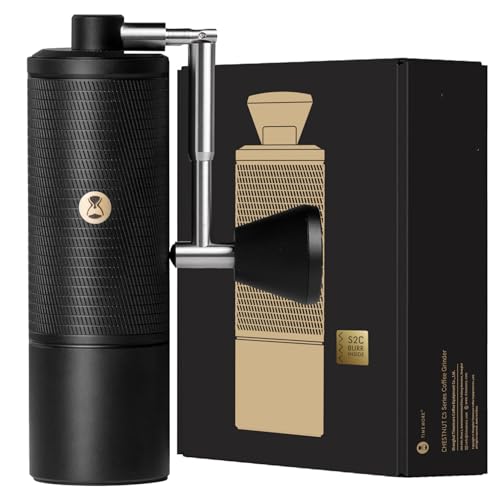
[ What is C5 ESP Pro? Special Design For Espresso ]Equipped with patented S2C-042-III stainless steel burrs with higher precision and efficiency. C5 ESP Pro hand coffee grinder provides more precise grinding adjustment, minor adjustment of 0.015mm per click allows you to easily achieve the perfect coarseness for your preferred fine to coarse. From French press to espresso coffee, TIMEMORE has you covered

【PRECISION GRINDING CONTROL】 Stop guessing how long to grind. Our electric coffee grinder features a clear timing knob with seconds marks, allowing you to achieve the exact coarseness for espresso, drip, or French press every time. No more inconsistent grounds or burnt beans.

【Adjustable Grinding Precision】There are seconds marks above the timing knob, from coarse to fine. You can choose the precision of powder according to your needs.
Fine‑Tune Shot Volume With Grind, Tamping & Lever Timing
You’re probably wondering why the same coffee can give you a 20‑second drizzle one day and a 35‑second flood the next. The answer lies in grind size, tamp consistency, and lever timing. Finer grind adds resistance, slowing flow and shortening brew‑time; coarser grind does the opposite. Keep your dose ratio steady—say 18 g in, 36 g out—while you tweak the grind a click at a time.
Now, level your puck and apply the same tamp pressure each shot. A uniform puck prevents channeling, letting the lever’s pull dictate volume rather than uneven resistance.
All right, adjust lever timing: a quick, short pull yields a tighter shot, while a slower, deeper pull or a double‑pull adds volume. If brew‑time drifts, fine‑tune grind before changing dose or temperature.
Takeaway: small grind changes, consistent tamping, and deliberate lever pulls together control shot volume. Next, practice one‑shot pulls to lock in repeatable lever technique. You should also monitor brew ratio to ensure the liquid weight remains roughly twice the ground coffee weight for balanced extraction.
Choosing the right grind also affects extraction uniform, which determines how evenly flavors are pulled from the coffee grounds.
conical burrs generate less heat while maintaining adequate grind quality.
Practice One‑Shot Pulls to Master Repeatable Lever Technique
Why does a single pull feel so different from a double? You’re probably wondering why the machine reacts oddly when you change the lever motion. The answer lies in lever ergonomics and the instant pressure feedback you get from a one‑shot routine.
All right, start by raising the lever slowly until water reaches the chamber, then hold for three seconds to let pre‑infusion wet the puck evenly. Keep the downstroke smooth, avoid slamming, and watch the flow. If the stream stays steady, you’ve nailed the pressure feedback loop.
Here’s the thing: use the same dose, basket, and tamp each time. Consistency isolates grind, dose, and temperature, so you can judge technique by flow, not force.
Takeaway: Master the single pull, and the double will follow naturally. Next, ask yourself how you’ll keep the setup identical for every shot. The machine’s four‑screw boiler design makes disassembly labor‑intensive but still feasible for enthusiasts.
Maintain Your Zacconi Baby: Clean, Calibrate & Care
If you’re wondering why your Zacconi Baby feels sluggish after a few days, it’s because coffee oils and mineral deposits quietly clog the group head, basket, and steam‑wand.
How often should I flush the group head?
Now, lift and lower the lever with no portafilter after every shot; hot water washes away residue and keeps filter pressure stable. Do a blank shot weekly to dislodge stubborn oils.
What about steam‑wand hygiene?
Here’s the thing: purge before and after steaming, then wipe the tip with a microfiber cloth. Soak the wand in a milk‑frother cleaner monthly to avoid milk film that weakens steam flow.
How do I control scale?
Obviously, water‑hardness matters. Use filtered or soft water, check hardness quarterly, and descale gently every 2–3 months. Rinse thoroughly after each descaling cycle.
*Takeaway: routine flushing, wand care, and water‑quality checks keep pressure and temperature consistent.*
Ready to set a weekly cleaning schedule?