
You’re probably torn between the OXO Rapid’s steel‑screen, multi‑cup power and the AeroPress’s light‑bodied, paper‑filtered finesse, and that’s a fair dilemma. The Rapid gives you a richer, denser cup that can serve two to three mugs in about two minutes, while the AeroPress delivers a cleaner, brighter brew in under a minute and lets you experiment with inverted or cold‑water espresso styles. If you value portability, quick cleanup, and flavor tweaking, the AeroPress wins; if you need consistent concentrate for a small office or family, the OXO Rapid edges ahead—keep reading to see which fits your daily routine best.
Flavor & Texture: How Each Brewing Method Impacts Your Cup
How does each method change the feel of your coffee? You’re probably wondering why the same beans taste so different. Here’s the thing: AeroPress uses a paper microfilter, so it pulls out most oils and fine sediment, giving you a cleaner, lighter‑bodied cup. That creates a smooth mouthfeel balance and lets bright notes shine. OXO Rapid, with its stainless‑steel screen, lets more oils through, so the brew feels heavier, denser, and more textured—think Americano‑like body. It’s especially compatible with medium‑dark roasts that thrive on caramel and chocolate tones, while light roasts can taste sour and under‑extracted. The larger grind size required for OXO Rapid contributes to its fuller body. All right, the takeaway: AeroPress offers clarity and a refined mouthfeel across roasts; OXO delivers boldness and a richer texture but favors darker beans. Next, compare how quickly each method extracts those flavors. You can also achieve a frothy milk texture without a frother using a shaking jar technique for a smoother overall coffee experience. Using a fine‑mesh sieve after grinding can help achieve an even finer powder for more precise flavor control. Proper temperature control during frothing ensures micro‑foam consistency and prevents watery or overly thick foam.
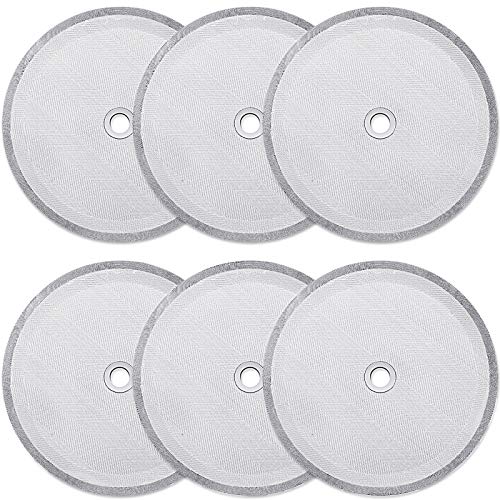
What you get: you will receive 6 pieces of french press filters in total, sufficient quantity to meet your daily filter replacements, you can share with your good friends, practical in your daily life
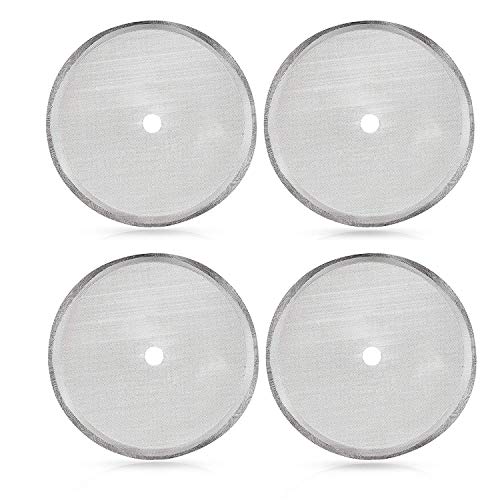
Replacement Stainless Steel Replacement Screens Mesh Filter for Secura French Press Coffee Maker SFP-17DS and SFP-12DS

Universal 4 Inch Replacement Screens: 4 Pack featuring 100 Mesh ultra fine filter mesh and sturdy metal center ring. The stainless steel filter fits most 8 cup 34oz french coffee makers and blocks fine grounds for sediment-free coffee
Speed Comparison: AeroPress vs OXO Rapid – Hot Brew vs. Cold Concentrate
You’re probably wondering why the same beans can be ready in a flash with one brewer and take a few extra minutes with the other.
How fast is hot brew?
AeroPress finishes hot brew in under one minute because you plunge right after a brief immersion. The OXO Rapid calls for a two‑minute brew time, using a pressurized chamber that extends contact before you press. Obviously, the AeroPress hot‑brew time is the quicker of the two. Immersion extraction gives the AeroPress a slight edge in speed. The optimal coffee‑to‑water ratio ensures consistent strength across rapid brews.
What about cold concentrate speed?
Both devices aim for a five‑minute cold concentrate. AeroPress needs fine grounds and active stirring, making the process feel hands‑on. OXO lets the grounds sit, then you press, giving a more hands‑off, controlled flow. The coarse grind used for cold brew helps prevent over‑extraction during the short steep. Maintaining a consistent grind size is crucial for balanced flavor extraction.
Takeaway
If you prioritize sheer speed for hot coffee, AeroPress wins. For cold concentrate, the difference shrinks, though OXO offers a smoother workflow. Next, consider how much coffee you’ll make each time.

High Quality Paper Micro-Filtration – Biodegradable, compostable paper coffee filters made from white, chlorine-free, food-safe paper for a flavor profile free of papery, chemical taste. Ultra thin, tightly woven with micro-sized holes that filter and catch coffee grounds stopping them from passing into your cup. Zero grit.


High Quality Paper Micro-Filtration – Biodegradable, compostable round replacement coffee filters made from natural, unbleached, food-safe paper for a flavor profile free of papery, chemical taste. Ultra thin, tightly woven with micro-sized holes that filter and catch coffee grounds, stopping them from passing into your cup. Zero grit.
Serving Size Limits: AeroPress vs OXO Rapid Output
How many cups can each brewer actually give you? You’re probably wondering if the AeroPress can keep up with a busy morning or if the OXO Rapid saves you trips to the kettle. The AeroPress tops out at about one standard 8‑oz cup per brew; you can stretch it to two or three cups by concentrating the coffee and diluting afterward, but that hurts batch consistency. The OXO Rapid, by contrast, offers a brew capacity that comfortably serves two to three mugs in one go, keeping strength uniform across the batch.
So if you need a single strong cup, the AeroPress shines with precise control. If you’re feeding a family or a small office, the OXO Rapid’s higher output reduces repeated brewing and maintains consistent flavor.
Takeaway: Choose AeroPress for solo, precise pours; pick OXO Rapid when you need multiple cups with consistent taste. What’s your typical serving scenario? A steep‑and‑press method like the French press yields a fuller body, while espresso’s high‑pressure extraction concentrates flavor. Rapid‑assisted immersion offers a cleaner cup with lower acidity. Adding a brew‑size comparison chart can help visualize the differences.
Versatility: Brew Styles You Can Do With Aeropress or OXO Rapid
If you’re wondering whether the AeroPress or the OXO Rapid lets you experiment with different brew styles, you’ve landed in the right spot.
What brew method variations can you actually try?
The AeroPress handles everything from standard immersion to inverted, concentrated, and diluted brews. You can do single‑pour or two‑pour recipes, stretch steep times to four minutes or even eight, and switch to cold‑brew or iced versions. Water temperature ranges from just off‑boil to 175 °F, letting you dial brightness or sweetness. In contrast, the OXO Rapid sticks to a single push‑through workflow, offering limited recipe flexibility.
Why does that matter for you?
More method variations mean you can fine‑tune flavor, body, and strength without buying new gear. The AeroPress community constantly shares new ratios, grind sizes, and agitation tricks, so you’ll never run out of ideas. The AeroPress also supports cold‑water espresso using room‑temperature water for a hot‑water‑free shot. Extraction control is a key benefit of the AeroPress’s flexible approach. Its cylindrical chamber creates consistent pressure for even extraction. The low‑acid profile of Aeropress coffee can be especially appealing to those with sensitive stomachs.
Takeaway
If you crave recipe flexibility and want to explore many brew styles, the AeroPress wins hands‑down. Ready to test a cold‑brew press? Try a 4‑minute steep, then dilute with ice water for a revitalizing summer cup.

Hand Crafted Precision Brewing – Our iconic 3-in-1 brewer reimagined. Double-wall borosilicate glass chamber enhances heat retention and showcases your brew, while precisely engineered stainless steel and aluminum components add strength and style for a brew experience as smooth and refined as the taste of our signature brew. Designed to bring café-quality brewing and modern design to your kitchen coffee station, AeroPress Premium combines a sleek, minimalist design with a compact footprint.

BUILD YOUR OWN COLD BREW SYSTEM – Turn a compatible 5-gallon bucket into a practical large-batch cold brew coffee maker. Bucket is not included.

Great taste: 100% arabica coffee blended with imported French chicory and a touch of spice, making it naturally sweeter and more flavorful than plain coffee. All natural, sugar-free, vegan, low calorie, non-GMO, and gluten-free
Portability & Weight: Which Is the Better Travel Companion?
Which one fits in your bag without weighing you down? You’re probably wondering which brewer respects your travel ergonomics. AeroPress Aero at 9.7 oz (275 g) while the OXO Rapid Brewer tips the scales at 1 lb 1 oz (480 g). That extra 200 g translates into a bulkier footprint, lowering pack density and making the OXO feel like a mini‑appliance rather than a pocket tool.
All right, think of a hiking pack: every ounce counts, and a lighter, compact device reduces shoulder strain on long treks or cramped flights. AeroPressure’s simpler construction also means fewer fragile parts to jostle, so you can toss it into a carry‑on without a second thought.
Obviously, the weight‑to‑output ratio favors AeroPress—its 8 oz brew exceeds the OXO’s 6.75 oz while staying lighter. The takeaway: for maximum portability and better pack density, AeroPress wins the travel companion battle. Next, consider how easy each unit is to clean on the go. The nitro infusion technique can also be adapted to cold brew, offering a creamy texture that complements lightweight coffee gear. The paper filter in a Chemex removes most oils, resulting in a cleaner cup compared to the French Press’s metal mesh.
A proper brew temperature is essential for extracting balanced flavor, especially when brewing on the move.

WHY THE OXO RAPID BREWER? — Brew exquisite concentrated coffee anywhere in 5 minutes or less with this lightweight, portable coffee maker. Not only is this the end of unsatisfactory coffee on-the-go, it’s the end of long lines and overpriced barista brew.

QUICK INSTANT BREW TIME: With the personal single-serve coffee maker, you can brew fresh coffee at home in under 60 seconds. And immediately take it on the go to reduce precious time in the early mornings.

Brew K Cup Pods or Grounds:Use k cup pods or ground coffee with 2 reusable filters plus 1 k pod adapter. This french press coffee maker gives you the flexibility of a k cup coffee maker with the convenience of single serve brewing in one compact design.
Cleaning Made Easy: Time, Parts, and Longevity
You’re probably wondering if the extra parts on the OXO Rapid actually slow you down after a brew. You’ll find that disassembly is a twist‑apart, dump, and rinse routine that takes about 30 seconds for five pieces. Quick cleaning feels fast because you never chase paper filters, but you must handle the pump carefully—don’t submerge it, just wipe it down if it gets dirty.
How does pump durability hold up? The pump’s non‑submersible design means you avoid water damage, yet repeated wiping can wear seals over months. Steel filter care adds a step: a gentle scrub removes stubborn oils, and a weekly soak in warm soapy water keeps it fresh. The low‑pressure system ensures consistent extraction without the need for precise timing. Regular descaling prevents mineral buildup that could compromise performance. Proper mesh‑filter cleaning extends the lifespan of the press and preserves coffee flavor.
Best Environments for Each Brewer – Home, Office, or On‑the‑Go
All right, you’re probably wondering which setting lets each brewer shine without turning coffee time into a hassle. At home, you crave home consistency; the OXO Rapid Brewer sits on a stable counter, its low‑pressure pump delivers the same cup every morning, and you barely touch the knobs. The Aeropress, by contrast, invites you to tweak steep time, agitation, and filter type, turning your kitchen into a mini lab.
Which brewer fits an office?
Office efficiency matters most. The OXO’s quick pump cycle produces a standardized cup in seconds, perfect for a break‑room with limited time. The Aeropress’s tiny footprint and simple parts let you stash it in a drawer, then brew a fresh cup without hogging countertop space.
What about on‑the‑go?
Travel calls for lightness. The Aeropress packs into a backpack, survives hotel sinks, and cleans in a snap—ideal for commuters or campers. The OXO’s larger pump system needs a stable surface and more packing room, so it stays home or in a dedicated RV kit.
Takeaway: Choose OXO for home rituals and office efficiency; pick Aeropress for flexibility at work and portability on the move. Next, compare cost versus value to see which fits your budget. Regular descaling maintains optimal performance and extends machine lifespan. The proprietary capsule system ensures each brew stays fresh. Regular descaling helps prevent mineral buildup.
Cost vs. Value: Price, Longevity, and Overall Worth
How much does price really tell you? You’re wondering why the OXO Rapid Brewer sits at $44‑$45 while the AeroPress lists around $49. The price vs. durability debate starts with upfront vs. long‑term costs. OXO’s cheaper sticker saves you $5‑$10 now, but its multi‑part design—carafe, pump, tamper—means more pieces can fail or need replacement. AeroPress, though pricier, boasts a single‑piece body with no hidden parts, so you likely avoid repairs later.
Now, consider maintenance. OXO’s stainless steel filter eliminates paper filter purchases, yet the pump isn’t dishwasher safe and can trap grounds. AeroPress relies on disposable paper filters, adding recurring expense but offering easy clean‑up.
Overall, OXO offers lower upfront cost and reusable metal, while AeroPress leans toward durability and simplicity.
Takeaway: If you prioritize initial savings and don’t mind occasional part upkeep, OXO wins; if you value long‑term reliability and minimal hassle, AeroPress edges ahead.
Next, decide which trade‑off aligns with your coffee routine.

Brews consistent, flavorful pour-over coffee with minimal effort
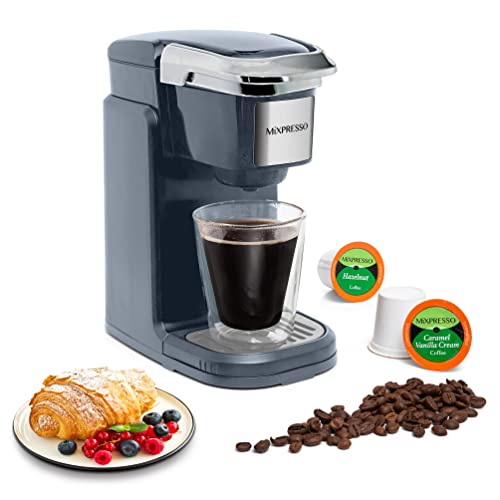
Instant Single Cup Coffee Machine: Our single serve coffee maker is what you need to start your day productively! Compatible with k-cups and easily programmable, our coffee machine can instantly brew your favorite ground coffee with our quick-brewing technology! Size: 9Inch H x 4.7Inch W x 8.2Inch L

UNIVERSAL DESIGN AND WASTE REDUCING: No need for paper or plastic cups, we’ve included a 14-Oz. insulated travel mug with stainless steel interior that fits perfectly under coffee dispensers and easily fits most cup holders. Fresh coffee ready for you at a moments notice. Just Press, Brew and Go!
Final Verdict: AeroPress vs OXO Rapid – Which One Wins for Your Priorities?
If you’re still wondering which brew fits your daily routine, let’s break it down.
Which device matches your speed and eco durability needs?
You’ll find both AeroPress and OXO Rapid hit the 2‑minute hot brew mark, but AeroPress feels quicker because it uses gravity, fewer parts, and a simple flip‑top. OXO’s pressurized pump adds a techy twist, yet its Tritan plastic body offers solid eco durability and sleek design aesthetics.
What about flavor control and design aesthetics?
AeroPress lets you dial bitterness and mouthfeel, making it versatile for bean nuance. OXO delivers a sweet, full‑bodied concentrate, but you sacrifice some subtlety. Its compact 10.5‑inch footprint looks modern on any counter.
Which one wins for your priorities?
If you value portability, easy cleanup, and experimental brewing, AeroPress takes the lead. If you prefer a sturdy, stylish concentrate maker with solid eco durability, OXO fits.
Pick the tool that aligns with your daily coffee goals, then test it with your favorite beans.