
You’re wondering which method actually wins—and honestly, neither does universally. AeroPress brews bold, forgiving cups in 1–2 minutes with minimal gear, perfect for rushed mornings or travel. Pour-over demands precision but rewards you with bright, nuanced flavors through intentional ritual. The real winner depends on your lifestyle: choose speed and simplicity, or choose slowness and control. Your priorities determine everything.
Which Method Fits Your Lifestyle?
If you’re rushing out the door, AeroPress wins. You’ll brew a complete cup in 1–2.5 minutes, compared to pour-over’s 3–5 minutes. That speed matters when you’re balancing work, kids, or a commute.
Pour-over suits slower mornings where you actually want to pause. You’ll control your pouring deliberately, enjoying ritual over rush.
Travel Convenience
AeroPress dominates here. Its compact plastic construction fits easily in any bag. You won’t worry about fragile glass breaking or hunting for accessories. The AeroPress’s collapsible design makes it ideal for backpackers and frequent travelers who need to minimize luggage space. Its pressure‑assisted extraction also reduces the need for a separate grinder on the go. The AeroPress’s immersion brewing creates a smooth, low‑acidity cup that’s perfect for on‑the‑move enjoyment. Using a medium‑fine grind helps ensure consistent extraction even when brewing quickly.
Pour-over requires a dripper, filters, kettle, and often a scale. That’s heavy for travelers.
The Real Question
Do you prioritize convenience and speed, or do you crave intentional ritual? Your honest answer reveals which method you’ll actually use.

Travel Coffee maker: brew Coffee or tea on the go and drink from same container when ready; enjoy your daily fix wherever you are
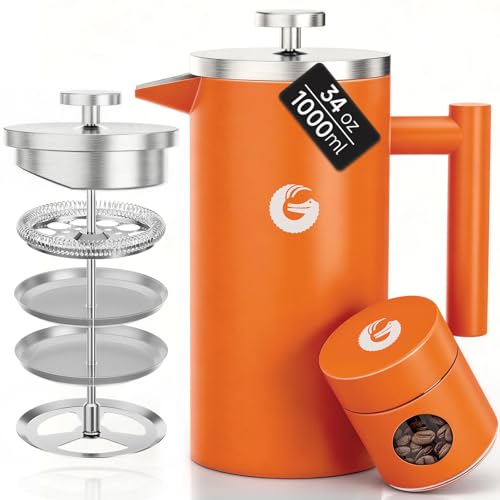
BREW LIKE A BARISTA AT HOME – Built-in measurement markings help you easily achieve the ideal coffee-to-water ratio for consistently rich, flavorful coffee. Makes up to 34 oz, perfect for daily brewing
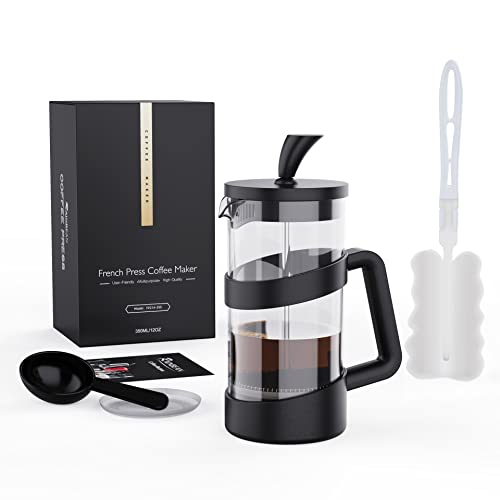
FRENCH PRESS SMALL: RAINBEAN small french press brews a pure and strong flavor cup of coffee in just 3 minutes, simply add course ground coffee, hot water and press,ensures you would be brewing like a barista on day one!When breakfast is over, just rinse out the grounds and toss your disassembled French Press into the dishwasher for easy clean up.
How Each Brewing Method Works
Since you’re choosing between AeroPress and pour‑over, understanding how each one actually works will make your decision way easier.
What Makes AeroPress Different?
The AeroPress uses pressure dynamics to speed things up. You’ll steep your grounds in hot water, then push down on the plunger—that pressure forces coffee through a paper filter in roughly 20 to 30 seconds. Your total brew time? Usually 1 to 2 minutes. It’s fast and compact. Its design also allows for single‑serve convenience, making it ideal for quick, personal cups. The steeping process can be adjusted with a coarse grind to control extraction speed.
How Pour-Over Works
Pour-over relies entirely on gravity. You pour hot water over grounds held in a filter, and it drips through naturally. No pressure involved. You control extraction timing through your pour rate and water amount, which takes more attention.
The Real Difference
One’s active and quick. One’s passive and methodical. Your lifestyle determines which fits better. The AeroPress’s grind size and water temperature can be fine‑tuned for consistent flavor.

Hand Crafted Precision Brewing – Our iconic 3-in-1 brewer reimagined. Double-wall borosilicate glass chamber enhances heat retention and showcases your brew, while precisely engineered stainless steel and aluminum components add strength and style for a brew experience as smooth and refined as the taste of our signature brew. Designed to bring café-quality brewing and modern design to your kitchen coffee station, AeroPress Premium combines a sleek, minimalist design with a compact footprint.


Clear Colors in Shatterproof Tritan – AeroPress Clear Black Coffee Press features our iconic 3 in 1 brew tech in crystal clear Tritan for a durable, shatterproof, travel-ready brewer that lets you see your brew – wherever your brew takes you.
Flavor Profile: Bold vs. Bright
The AeroPress and pour‑over produce noticeably different flavor profiles, and it all comes down to pressure, filtration, and how water contacts your grounds.
With AeroPress, you get boldness and body. Pressure extraction plus air‑assisted immersion pulls more oils and fine compounds through, creating that rounder, richer mouthfeel you’re after. Lower brew temperatures around 175–185°F soften acidity too.
Pour‑over swings the opposite direction—toward brightness and clarity. Paper filtration strips oils, leaving you a cleaner cup that really lets origin character shine. You’ll taste distinct high notes: fruit, florals, citrus.
Here’s the tension: light roasts often show more vivid brightness in pour‑over but taste softer and less sharp in AeroPress. Darker roasts feel heavier and smoother through AeroPress, while pour‑over highlights their subtler nuances.
Your choice depends on what you want from your cup—roundness or vibrancy. The Moka Pot’s stovetop pressure can also produce a strong, espresso‑like brew, but it requires careful heat control to avoid bitterness. The boiler temperature must stay stable to ensure consistent extraction. For a richer, velvety micro‑foam experience, consider a steam‑driven frother that uses high‑pressure steam to texture milk.
Speed, Control, and Skill: What You Need to Know
Speed matters when you’re choosing between methods, and it’s not just about the final cup—it’s about your entire morning routine. AeroPress finishes in 1–2 minutes, while pour-over typically runs 3–5 minutes—that’s a real difference on busy mornings.
Why speed efficiency matters differently
AeroPress combines immersion and pressure, accelerating extraction fast. Pour-over relies on gravity, so you’re waiting through bloom, controlled pours, and drip-time. Obviously, if you’re rushing, AeroPress wins.
Skill tolerance changes everything
Here’s the thing: AeroPress forgives mistakes. You can vary grind size, brew time, and technique without tanking your coffee. Pour-over demands precision—off-target pouring or channeling ruins consistency. For repeatable daily brewing without fussing, AeroPress handles error better.
Which routine matches your life: speed-first or technique-focused? Regular descaling prevents mineral buildup and keeps flavor consistent. Using a coarse uniform grind helps ensure optimal extraction. Adding a nitrogen infusion step can give your coffee a velvety texture similar to nitro cold brew.

The Brewer That Started It All – AeroPress Original was the first single cup coffee maker to combine 3 brew methods in one compact, portable device for a faster brew and better extraction giving coffee lovers a smooth, rich cup bursting with coffee bean flavor—without the bitterness or acidity found in other methods.
UNIQUELY DELICIOUS: No more average joe from fancy, expensive machines. By combining the best of several brew methods into one patented device, you get smooth, rich, grit-free coffee with a delicious, full-bodied finish that lingers well after your last sip. No bitterness. No cream needed.

Compact Travel Coffee System – Brew smooth, rich coffee anywhere in under 2 minutes. Includes a small, portable version of our 3-in-1 brewer and a lightweight, microwaveable mug with a silicone lid. Just unpack, brew and repack the coffee press back into the custom mug that doubles as a portable, travel container. Make hot or iced coffee on the go— traveling, camping, backpacking, hiking, and boating.
Portability and Cleanup
If you’re juggling a commute, a camping trip, or just a tiny kitchen, portability and cleanup become make-or-break factors that shift the entire brewing equation.
Which brewer actually travels better?
The Aeropress wins this round hands down. Its compact, lightweight plastic construction fits easily into a backpack without the fragility concerns of glass drippers. You’re carrying one unified device instead of juggling a dripper, filters, kettle, and mug separately. Pour-over setups demand multiple components—and ceramic drippers crack. Obviously, portable pour-over versions exist, but they still lack Aeropress’s travel convenience.
What about cleaning efficiency?
Here’s where Aeropress really shines. You eject the entire coffee puck with one push, rinse the plunger and chamber, done. Pour-over cleanup varies wildly depending on your filter type and dripper material, often leaving residue on walls requiring more attention. For travel-focused brewing, Aeropress delivers superior cleaning efficiency and faster turnaround. A well‑steeped cold brew can be pre‑wet to reduce bitterness and improve clarity. Using a shaken milk technique can also create a quick foam for on‑the‑go lattes. Regularly cleaning the Aeropress after each use prevents mineral buildup and preserves flavor.

WHY THE OXO RAPID BREWER? — Brew exquisite concentrated coffee anywhere in 5 minutes or less with this lightweight, portable coffee maker. Not only is this the end of unsatisfactory coffee on-the-go, it’s the end of long lines and overpriced barista brew.

BOTTOM LID FOR EASY CLEANUP: Quickly remove used grounds or tea leaves with the new twist-off bottom lid. INCREASED CAPACITY: Holds 5g more coffee or tea for a stronger, richer brew. BREW ANYWHERE: Compact, portable stainless steel design ideal for travel, camping, or home use. NO PODS, NO WASTE: Eco-friendly brewing without disposable pods or paper filters. BUILT TO LAST: Durable, dishwasher-safe, food-grade stainless steel.

Brew K Cup Pods or Grounds:Use k cup pods or ground coffee with 2 reusable filters plus 1 k pod adapter. This french press coffee maker gives you the flexibility of a k cup coffee maker with the convenience of single serve brewing in one compact design.
Best Use Cases for Each Brewer
So which brewer actually fits your life?
When You Want Speed and Espresso-Style Intensity
You’re looking at the AeroPress if mornings mean grabbing coffee in under two minutes. It produces concentrated shots—around four ounces—that rival espresso in body without needing a $500 machine. Dilute with hot water for an Americano-like drink, or use it straight in milk. The pressure-based extraction emphasizes intensity while keeping bitterness low when you dial in your technique. At just 230 grams, the lightweight AeroPress makes it ideal for travel or commuting. For a balanced brew, consider the coffee‑to‑water ratio of about 1 to 2 tablespoons per 8 oz of water, adjusting proportionally for larger presses.
When Ritual Aesthetics Matter Most
Pour-over wins if you value the ceremony. You’re brewing deliberately, controlling pour rate and bloom time. This method shines with light roasts, highlighting floral or fruity notes that get buried under AeroPress intensity. It’s your meditation, your daily refinement.
The Real Takeaway
Choose AeroPress for brew economics and convenience. Choose pour-over for mindful, specialty-forward coffee experiences.

Complete Travel Coffee System – Brew smooth, rich coffee anywhere in under 2 minutes. Includes our compact and lightweight 3-in-1 coffee maker made of shatterproof Tritan and a 16 oz double-wall, vacuum-insulated 18/8 stainless steel tumbler with magnetic lid and built-in filter holder. Just unpack, brew and repack the portable coffee press back into the custom tumbler that doubles as a portable, travel container. Make hot or iced coffee on the go— traveling, camping, hiking, and road trips.

Durable, Stainless Steel Coffee Maker: Crafted with enduring stainless steel for durability; sturdy design to last for years to come

Complete Travel Coffee System – Brew smooth, rich coffee anywhere in under 2 minutes. Includes our compact and lightweight 3-in-1 coffee maker made of shatterproof Tritan and a 16 oz double-wall, vacuum-insulated 18/8 stainless steel tumbler with magnetic lid and built-in filter holder. Just unpack, brew and repack the portable coffee press back into the custom tumbler that doubles as a portable, travel container. Make hot or iced coffee on the go— traveling, camping, hiking, and road trips.
Side-by-Side Comparison: Make Your Final Call
Here’s the thing: AeroPress delivers concentrated, bold cups with rounded flavors and lower acidity. Pour‑over highlights nuanced complexity and brightness instead. If you crave depth and richness, AeroPress wins. Want clarity and layered aromatics? Pour‑over’s your method.
How much time and precision do you have?
AeroPress brews in 1–3 minutes with more forgiving technique. Pour‑over takes 3–6 minutes and demands careful attention to your brew ratio, grind, and pouring pattern. You’ll get repeatable results faster with AeroPress. But pour‑over rewards deliberate practice.
What’s your actual serving situation?
AeroPress makes single servings around 200–250 milliliters. Pour‑over scales naturally to multiple cups. Pick based on whether you’re brewing solo or hosting.
The real answer? Start with what fits your lifestyle first. For optimal extraction, consider using a burr grinder to achieve consistent particle size. Also, ensure you use the proper paper filter to avoid unwanted sediment and maintain a clean cup.