
You’re paying for nine bars of pressure held within tolerances measured in fractions of a millimeter—tiny manufacturing errors tank entire shots. Espresso machines use precision-engineered components: copper boilers, brass valves, rotary pumps, and calibrated group heads that most budget appliances skip entirely. Add decades of R&D spread across small production runs, premium materials that last decades, and established brand networks that guarantee parts availability for years. Heritage brands command trust you can’t fake cheaply.
Why Espresso Machines Cost So Much: The Precision Engineering Factor
When you’re shopping for an espresso machine, you’ve probably noticed the prices make you wince—even entry-level models run $300+, while serious machines cost thousands. Here’s what you’re actually paying for: precision engineering that rivals automotive manufacturing.
Espresso demands roughly 9 bars of extraction pressure. You need mach tolerance in group heads, valves, and pumps—tiny gaps throw off pressure, flow, and flavor. Small manufacturing errors cascade into inconsistent shots.
Thermal stability matters equally. Water temperature directly impacts extraction, so engineers build elaborate boiler systems and heat exchangers. The 9Barista Mk.2, for instance, uses a two-stage heat exchanger to hit optimal brewing temperatures around 93°C.
These systems don’t stay precise by accident. They’re engineered to remain stable under constant heat and use. That precision costs money—it’s why espresso machines aren’t cheap. The portafilter design also contributes to consistency by ensuring even water distribution across the coffee puck. Regular descaling prevents mineral buildup that can impair pressure and temperature control. Different pump types affect how quickly and consistently pressure is delivered.

COMPATIBILITY: Precision designed for 58mm Breville/Sage espresso machines including Oracle, Oracle Touch, Oracle Dual Boiler and Dual Boiler.

Precision Stainless Steel Shower Holder. Food Safe ANSI 304. FITS ONLY Dual Boiler, Oracle Dual Boiler models. PLEASE, check if this kit fits your machine BEFORE buying.

Food-Grade 304 Stainless Steel – Crafted with ANSI-certified 304 stainless steel, ensuring food safety and corrosion resistance. Precision-machined for perfect fit, delivering durable performance for long-term use without deformation
Premium Materials and Durability: The Price of Longevity
If you’ve ever wondered why a quality espresso machine costs three times more than a budget model, the answer often comes down to what’s built *inside*—not flashy features, but materials engineered to last.
You’re paying for material longevity when you choose stainless steel or copper over plastic. A machine lasting 15 years costs less annually than a cheaper model you replace every three years. That’s cost efficiency in action. Even premium machines require essential rubber gaskets that demand periodic replacement, a minor maintenance factor compared to the structural degradation of cheaper models.
Stainless steel resists corrosion and limescale buildup, requiring minimal maintenance. Copper boilers conduct heat precisely, supporting professional‑grade performance. Brass balances durability with stable temperatures. These materials cost more upfront, but they reduce your lifetime ownership expenses dramatically.
Now, quality construction matters too. Better valves, seals, and maintenance access mean fewer breakdowns and lower service costs over time. You’re not just buying an espresso machine—you’re investing in reliability that actually pays for itself. The temperature stability of Breville’s precise control system often outperforms DeLonghi’s simpler designs. Regular descaling according to the manufacturer’s schedule helps maintain that performance and extend component life. Nespresso’s compact pod system also demonstrates how efficient design can reduce waste while delivering consistent flavor.

[20 BAR PRESSURE SYSTEM] Equipped with 20 bar professional pump, SPACEKEY espresso machine can extract the oils in the coffee powder more deeply, bringing a more aromatic and rich smell. Smart pre-soak system can make the coffee powder evenly moist and the flavor extraction better. And the PID intelligently controls water temperature to make your espresso more delicious.

MANUAL HAND-TEXTURED MICROFOAM: The powerful steam wand on this cappuccino maker and latte machine is designed to quickly turn milk into smooth, flavorful microfoam for creating latte art at home

Make Your Favorite Espresso Coffee At Home: The CASABREWS coffee machine with milk frother allows you to prepare all your favorite espresso-based coffees. You can enjoy a barista-brewed latte, cappuccino or macchiato at home. Stainless steel appearance, stylish and durable, ideal for any size kitchen. This compact espresso coffee maker is perfect for home or office use
Why So Many Tiny Parts? The Hidden Cost of Complexity
You’ve probably opened up an espresso machine’s innards—or at least seen someone do it—and wondered why so many tiny components crowd the space.
Every part you see exists because espresso demands precision. Your brewing path alone requires the reservoir, boiler, pump, group head, and portafilter all working in concert. Add steam function, water distribution channels, and cleaning components, and suddenly you’re managing dozens of interacting systems.
Here’s the thing: tiny tolerances mean tiny parts. Shower screens, gaskets, O-rings, and check valves control water flow and pressure with exactness. Each maintenance cycles through heat stress and scale buildup, making them wear items you’ll replace repeatedly.
The real cost isn’t just manufacturing these components—it’s the complexity they introduce. One failing gasket can disable your entire machine, forcing you to diagnose which of many small failures occurred. The boiler temperature must stay within a narrow range to ensure proper extraction. Proper grind consistency is essential for achieving a balanced espresso shot. Understanding water pressure helps you fine‑tune the extraction for optimal flavor.
Limited Production Runs Drive Up Per-Unit Costs
Because espresso machines aren’t churned out on assembly lines like toasters, manufacturers can’t spread their setup costs across thousands of units. Every tooling investment, calibration procedure, and quality check gets divided among maybe hundreds of machines instead. That’s a dramatically higher cost per unit.
Now, here’s the thing: those batch limitations also crush your supplier discounts. When you order pump components in small quantities, you don’t negotiate like a major appliance maker does. You pay full price. Custom parts become even pricier when demand stays niche. For example, a rotary pump for a luxury machine costs significantly more per unit than the vibratory pump alternatives used in budget models, since manufacturers of premium pumps spread costs across far fewer orders.
All right, add manual assembly into this equation. Each machine requires substantial hand‑tuning. Labor hours don’t compress at low volume—technicians still spend the same time per unit whether you’re building fifty or five thousand.
That scarcity actually enables premium pricing. Exclusivity becomes part of the brand positioning, justifying higher markups across the board. The different pressure levels used in OriginalLine versus VertuoLine machines also affect component complexity and cost. Higher bar pressure is essential for extracting true espresso flavor. Using a consistent grind size helps maintain uniform extraction and reduces channeling.
Espresso R&D and Innovation: What You’re Really Paying For
So you’ve noticed that espresso machines cost way more than they should for “just a coffee maker”—and you’re wondering what justifies those price tags.
Here’s the thing: you’re paying for years of R&D overhead baked into every unit. Manufacturers spend serious money developing precise temperature control, pressure profiling, and sensor systems. They test repeatedly—different water conditions, usage patterns, long‑term durability—before launch.
Now, that innovation pricing exists because small production runs spread development costs across fewer machines. A premium espresso machine might represent $50,000+ in engineering investment divided among just hundreds of units sold.
You’re fundamentally funding the engineering team’s work each time you buy one. Advanced automation, digital controls, and reliability testing don’t come cheap.
Want to know if that investment actually pays off in performance? That’s your next research question.
The high‑pressure pump in a Nespresso capsule machine can reach 19 bar, a pressure level essential for extracting a rich crema. Using a fine grind in a moka pot can also mimic espresso‑style extraction, delivering a richer, crema‑filled brew.

YOUR MINI CAFÉ, AT HOME: Get barista-style espresso and coffee drinks made exactly the way you love them — in a machine small enough to fit any kitchen.

ACHIEVE PRECISION BREWING: This advanced digital thermometer perfect for espresso enthusiasts using E61 group head. It delivers instant temperature readings, allowing you to achieve the perfect brewing conditions for exceptional espresso flavor.

AUTOMATIC MICROFOAM MILK TEXTURING: Auto steam wand allows you to adjust milk temperature and texture, delivering barista-quality microfoam; Create latte art at home with this versatile cappuccino maker and latte machine
Espresso Machine Brands: How Heritage and Reputation Command Premium Prices
While you’ve now seen how R&D costs inflate the sticker price, there’s another pricing layer that has nothing to do with engineering—brand heritage and reputation.
When you buy an Elektra or Gaggia, you’re not just buying a machine. You’re buying decades of proven reliability, consistent espresso performance, and the confidence that parts will exist in twenty years. That’s reputation value in action. Heritage editions like ECM’s copper-accented designs demonstrate how visual craftsmanship cues—from embossed details to satin finishes—signal durability and justify premium positioning in the market.
Heritage pricing works because you perceive lower risk. Italian brands especially leverage “made in Italy” as a trust signal tied to espresso culture itself. You’ll pay more for a polished brass lever and stainless steel panels partly because those visible craftsmanship cues convince your brain the machine’s built to last.
Established brands also command premium distribution and service ecosystems. Specialty retailers stock them. Cafés use them. Your money follows proven longevity. This dynamic is similar to the convenience trade‑off seen between pod systems and traditional espresso machines. Using an AeroPress can illustrate how brew ratio influences flavor consistency across different equipment. The environmental impact of single‑serve capsules further highlights the trade‑offs between convenience and sustainability.
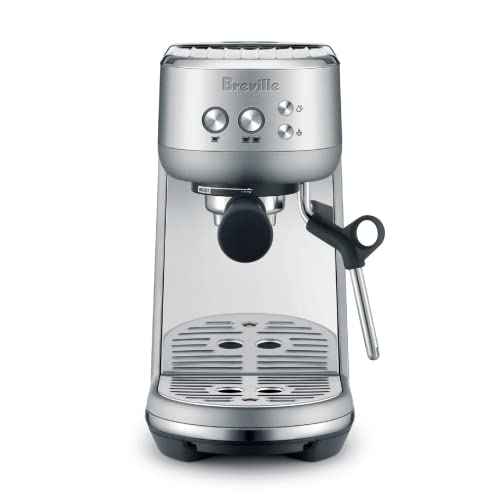
MICROFOAM MILK TEXTURING: Cappuccino maker and latte machine has an automatic steam wand allowing you to adjust milk temperature and texture, creating barista-quality microfoam for latte art at home

Fast Heating System for Less Waiting:800W heating system paired with a die-cast aluminum boiler reaches optimal brewing temperature in minutes, so you can enjoy fresh coffee quickly during busy mornings
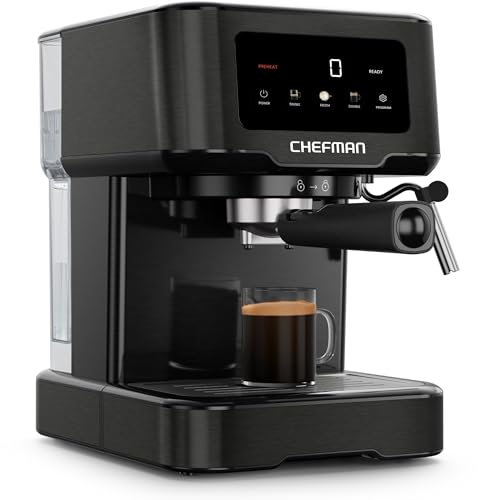
ENJOY CAFÉ-QUALITY ESPRESSO: Experience the bold, rich flavor of homemade espresso and skip long café lines with the CraftBrew Digital Espresso Maker! A strong 15-BAR pump and a built-in milk frother make it easy to brew cappuccinos and lattes right in your own kitchen.