
You’re probably wondering whether the mess‑free spouted filter or the visual‑feedback bottomless portafilter gives you better espresso, and the answer depends on your skill, patience, and how much you value seeing the extraction. Bottomless lets you spot channeling instantly, so you can tweak grind, dose (18‑20 g) and tamp (30‑35 psi) for cleaner flavor and thicker crema, but it splashes and needs a quick rinse after each shot. Spouted hides the mess, splits a double shot cleanly, and is forgiving for beginners, yet it can mute subtle notes and hide extraction problems. If you love troubleshooting and don’t mind a little extra cleaning, go bottomless; if you prefer speed and low‑maintenance, stick with the regular portafilter. Either way, you’ll get a solid foundation before you experiment with temperature stability or nitrogen infusion.
Bottomless vs. Regular Portafilters: Which One Fits Your Espresso Routine?
You’re probably wondering which portafilter will actually fit your daily espresso rhythm. You’re torn between budget aesthetics and durability, and you need a tool that won’t slow you down during a rush.
Which design saves you time?
Spouted models keep coffee oils from splashing everywhere, so you clean less mess. Bottomless ones have fewer parts, making basket removal a snap and cutting cleanup to seconds.
How does clearance affect your setup?
Bottomless filters give extra headroom, so tall mugs or a scale sit comfortably under the group head. Spouted filters can block that space, forcing you to use smaller vessels.
What about serving flexibility?
If you often pour two cups at once, spouts split the shot cleanly. Bottomless filters require a separate pour, which can be clumsy for multi‑cup orders.
Takeaway: Choose spouted for everyday convenience, especially if you value quick cleanup and easy splitting; pick bottomless if you prioritize vertical clearance and a minimalist design.
Next, consider how each style impacts your shot consistency and skill development. Understanding channeling detection can help you fine‑tune grind size, dose, and tamp pressure for better extraction. Consistent tamp pressure also plays a critical role in preventing uneven flow and ensuring a balanced flavor profile.
A well‑maintained machine ensures stable water temperature for every shot.
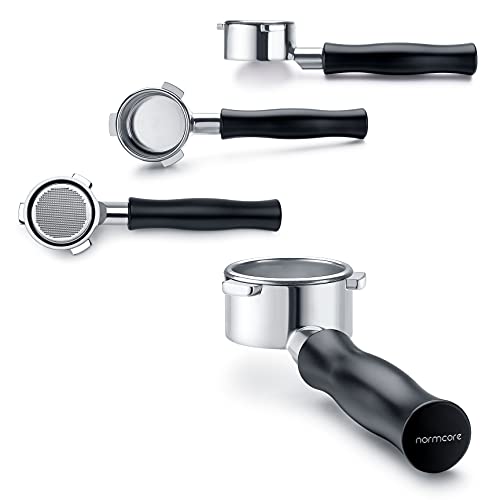
54mm Diameter - Designed to fit baskets of 54mm Breville Barista Pro and Breville Barista Espresso Machine models.

51mm Bottomless Portafilter 2 Ears: Espresso portafilter only fits Delonghi Stilosa ECP3420/EC155/BCO430/EC260 Coffee Machines. This 51mm portafilter makes a thoughtful gift for home baristas – perfect for birthdays, holidays, or any special occasion. Share the joy of craft espresso with friends and family
Extraction Visibility: What a Bottomless Portafilter Shows You
If you’re wondering why a bottomless portafilter feels like a “window” into your espresso, you’ve hit the right topic. You’ll see the basket’s underside, the whole puck‑to‑cup path, and every exit point in real time. That visual access makes channeling detection instant; a single jet or spray tells you where water bypasses the puck.
Now, notice how a level tamp produces a smooth, even stream, while an angled tamp leans the flow to one side. Uneven dosing or poor distribution shows up as multiple irregular streams, giving you a clear cue to adjust your preparation.
Here’s the thing: grind consistency shows up as spray patterns. Coarse or clumped grounds create localized spurting and chaotic flow, whereas a uniform grind yields a steady, consistent stream.
Takeaway: Use the bottomless view to spot channeling, tamping errors, and grind issues before they ruin a shot. Next, ask yourself how those visual cues translate into crema and flavor. The extra clearance also lets you fit larger baskets for doses > 18 g without spouts. Proper water temperature critical for extraction and can dramatically improve crema formation.
Crema & Flavor: Bottomless vs. Regular Portafilters
Why does the crema look different with a bottomless portafilter? You’re probably noticing a thicker, more uniform crema texture that stays longer in the cup. Here’s the thing: the espresso exits through a single opening, so there’s less turbulence and fewer metal surfaces to break the foam. That preserves the fine bubbles, giving you a “true” crema appearance.
Now, flavor clarity improves too. With reduced agitation, aromatic compounds travel straight into your mouth, so you taste each note distinctly. A regular spouted portafilter splits the flow, blending flavors a bit more, which can mute subtle nuances.
Obviously, the grind, dose, and freshness still dominate taste, but a bottomless setup helps you see and taste extraction flaws early. Takeaway: you’ll get a richer crema texture and sharper flavor clarity, especially when you pull a good shot. Next, check how cleaning routines affect consistency. The bottomless design also eliminates hard‑to‑clean crevices, simplifying maintenance. The boiler temperature must stay stable to maintain optimal extraction. Using a consistent dose of 18–20 g ensures proper water‑to‑coffee ratio for balanced flavor. Proper tamping pressure is essential for uniform extraction.

stochastic box Bottomless Portafilter with Puck Screen

【PRECISION COMPATIBILITY FOR 54MM BREVILLE MACHINES】 - Specially engineered for Breville 8 series including Barista Express, Barista Pro, Barista Touch, Bambino Plus, Infuser, and Duo-Temp Pro (BES870XL BES878BSS BES880BSS). The 5.5mm ear thickness ensures a tight, secure fit without leakage or wobble during high-pressure extraction

Knodos 54mm bottomless portafilter compatible with only Breville, Sage espresso machines including Barista Express, Barista Pro, Barista Touch, Bambino, Bambino Plus, Infuser, Duo Temp Pro, BES870XL, BES878, and BES880. Engineered for a snug fit with Breville 54 mm portafilter group heads to ensure zero leakage or wobble
Cleaning a Bottomless Portafilter vs. Regular: Time‑Saving Tips
A common headache is figuring out how to keep a bottomless portafilter spotless without spending half the day scrubbing. You can turn that into a maintenance saving routine by rinsing immediately after each shot, knocking out the puck, then running hot water through the basket. Wipe the metal head dry with a microfiber cloth and let it rest on a drip tray, not the heated group head. Inspect holes under bright light to catch buildup early. Regular cleaning prevents coffee residue buildup that can affect taste. Now, compare that to a regular portafilter. After each pull, remove the basket, rinse both parts, and wipe the exterior dry to protect material durability. A quick detergent wash once a week and a backflush routine keep oils from hardening. Takeaway: Stick to the rinse‑and‑dry habit, schedule a weekly soak, and you’ll save time while preserving your gear. Next, ask yourself how often you’ll do the deep clean and set a calendar reminder. Proper tamping pressure ensures consistent extraction and reduces the need for intensive cleaning. Regular descaling with a citric‑acid solution helps prevent mineral buildup that can clog the portafilter holes. Cold brew offers a smooth, low‑acid flavor profile that can be enjoyed alongside espresso drinks.
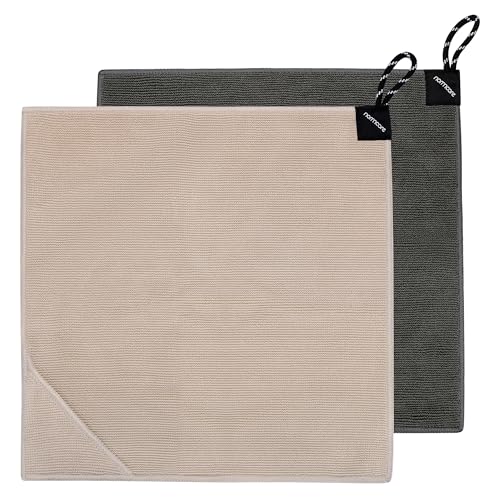
PREMIUM MICROFIBER MATERIAL: Efficiently absorbs milk residues, water, and coffee grounds while protecting your espresso machine’s stainless steel surfaces

Premium Materials: Extremely high-quality, soft, microfiber material absorbs and removes dust, oil, smudges, fingerprints, and dirt. Leaves no scratches, streaks, marks, or lint. Makes the perfect stocking stuffers for adults, men, women, him, her, teens, and more.

Glasses cleaner - Sourced from the highest quality microfiber that absorbs and removes dust, oil, smudges, fingerprints, dirt, and more. Leaves no scratches, streaks, marks, or lint behind. The perfect eyeglass cleaner stocking stuffers for adults, men, women, him, her, teens, and more.
Learning Curve & Mess: Bottomless Portafilter Skill Implications
Cleaning your portafilter right after each shot saves you time, but you’re probably wondering why the bottomless version feels messier and harder to master. The open bottom shows every flaw instantly, so channeling or uneven tamp pressure creates multiple streams that spray the counter. You’ll notice that a single, centered flow signals good grind consistency, while side‑spraying means your distribution is off.
All right, expect more cleanup at first, but each spray teaches you how to dial in grind size and tamp pressure for a smooth shot. Takeaway: the mess accelerates learning; embrace it, then move to the next step of mastering your extraction. The environmental impact of disposable capsules can be mitigated by using reusable filters, aligning with sustainable coffee habits. Understanding brew temperature helps you maintain optimal extraction consistency.
A milk frother can also be used to test foam texture after pulling a shot, offering a quick visual cue for consistency.

Easily Monitor the Espresso Extraction Process: When using a bottomless portafilter, the mirror allows you to easily monitor and observe the flow rate and extraction status of the coffee, helping you precisely control the quality of every shot of espresso.

Easy Operation: The 51mm dosing funnel is designed for 51mm filters. very easy to use, just place it on top of the filter and remove it when you are finished. the ideal espresso accessory to help you make delicious espresso like a barista

Precision Fit for Selected 51mm DeLonghi 2-Ear Machines: Compatible with DeLonghi Stilosa EC155, EC260, BCO430, ECP3120, ECP3220, ECP3420, ECP3630, and other selected 51mm 2-ear models. Designed for a secure, stable fit. NOT compatible with DeLonghi Dedica EC680/EC685/EC885, La Specialista, CASABREWS, Mr. Coffee, Gevi, or 3-ear machines. Please confirm your machine model before purchase
Choosing the Right Portafilter for Your Skill Level & Use‑Case
If you’re wondering which portafilter fits your skill level and everyday use, you’ve hit the right spot.
Which style helps a beginner learn fast?
A spouted portafilter hides messes, so you can pull a shot without watching every drip. It’s forgiving, easier to clean, and lets you split a double into two cups—perfect for early practice.
When you move to intermediate, what changes?
Bottomless models reveal channeling and tamp errors instantly, so you can dial in grind size with a single pull. You’ll see splashes, but the feedback loop speeds up troubleshooting. Using a consistent 30‑35 psi pressure during tamping helps maintain an even extraction surface.
What do advanced users keep?
Most pros own both: bottomless for single‑cup, visual tweaking, spouted for rapid double‑shot service.
Takeaway: Match the portafilter to your current skill level and how much maintenance you want. Start simple, then add a bottomless when you’re ready to fine‑tune.
Next step: Try a spouted filter today, then test a bottomless when you feel confident diagnosing your puck. A well‑controlled nitrogen infusion can also enhance the crema texture, similar to how a nitro cold brew creates a silky mouthfeel. Adding a consistent water temperature helps achieve the ideal extraction for both styles.

Our portafilters feature a securely attached handle with zero wobble, ensuring a comfortable and stable grip while brewing. Our portafilter handle does not unscrew from the head.

☕Compatible with CASABREWS CM5418/3700 Essential/3700 Pro, HiBREW H10B/H11/H8A/H5, Mr. Coffee Cafe Barista, Donlim KF-6001, Delonghi EM450, Gevi and more. NOT compatible with other Delonghi machines; please check your machine type before ordering. For full list see product description.

CONVERT YOUR PORTAFILTER: Easily transform your bottomless portafilter into a spouted style with Crema Coffee 58mm Bottomless Spouts. Choose between single or double spout options for flexible brewing.