
You’re probably wondering why the timing feels so finicky, and you’re right to focus on it. The sweet spot for a French press is four minutes—long enough to extract body and aroma without pulling out harsh bitterness; if you like a fuller mouthfeel, push it to five minutes, or shave 30 seconds off for a brighter cup. Adjust the grind and ratio if you change the time, and you’ll keep the balance spot. Next, you’ll see how temperature and grind size fine‑tune the result.
How Long Should You Steep a French Press?
If you’re wondering how long to let your French press sit before you press, you’ve hit the right spot. Most guides set 4 minutes as the sweet spot: it balances body and clarity for most bean origins and brew ratios. If you crave a fuller mouthfeel, stretch to 5 minutes; if bitterness bites, trim to 3 minutes.
Now, remember that steep time isn’t the only lever. Your bean origin—whether Ethiopian bright or Colombian deep—interacts with the brew ratio, so a lighter origin may need a slightly longer pull to reveal its nuances.
A proper grind and coarse uniform texture ensures optimal extraction during the steep. Using a scale for consistency helps maintain the ideal 1:15 coffee‑to‑water ratio.
All right, after you plunge, pour immediately or transfer to a carafe. That stops extra extraction and locks in the flavor you just crafted.
Takeaway: start at 4 minutes, tweak by bean origin and brew ratio, and decant right away for the best cup. Regular cleaning keeps the press performing at its best.
How Grind Size and Coffee‑to‑Water Ratio Affect Steep Time
You’re probably wondering why the same 4‑minute French press can taste so different when you change grind size or coffee‑to‑water ratio.
How does grind ratio shape steep time?
Coarse grounds act like sea‑salt crystals; they release flavor slowly, so a 4‑minute plunge usually yields a smooth cup. If you move to a finer grind, the surface area explodes, accelerating extraction. The same 4 minutes can push you into bitterness, so you’ll need to cut the steep by a minute or two.
What role does coffee‑to‑water ratio play?
A stronger grind, say 1:13 instead of the typical 1:15, packs more coffee into each sip, boosting body without demanding extra time. Conversely, a weaker 1:17 ratio may need a longer steep to avoid a thin taste.
Takeaway
Match grind ratio and coffee‑to‑water ratio to your steep length to keep extraction balance on point. Next, ask yourself: what water temperature will best complement your chosen grind and ratio?
A longer steep, up to 24 hours, can produce a smoother concentrate when using a coarse grind for cold brew.
Choosing the right grinder is essential for achieving consistent particle size across brewing methods.
Understanding particle size distribution helps you predict how quickly flavors will extract.
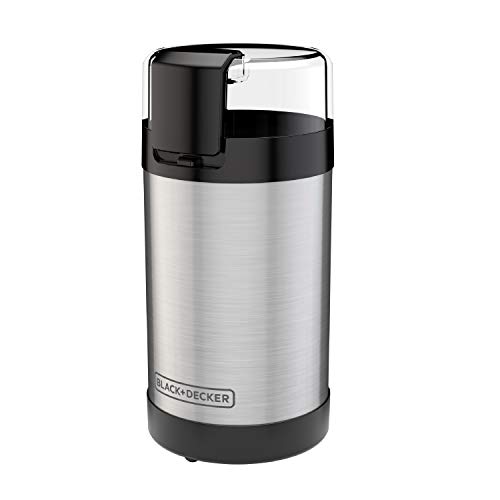
STAINLESS STEEL BLADES AND BOWL - The sharp blades and durable grinding bowl are built to last, delivering uniform grinds with every use

EASILY SELECT GRIND SIZE AND CUPS OF BREWED COFFEE: Whether you need a fine grind size for espresso or a coarse grind for French press, we've got you covered. Just turn the grinder's adjustable selection ring. Grinds enough to brew 4-14 cups.
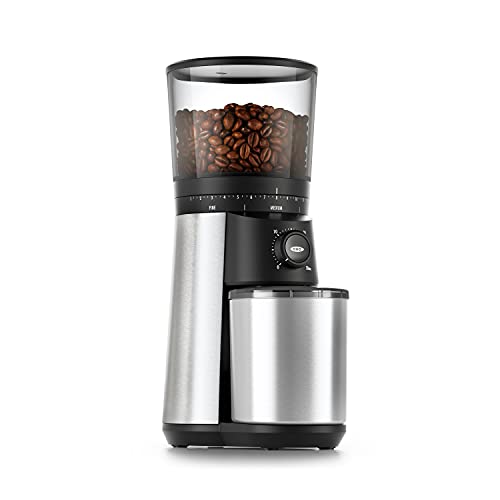
40mm stainless steel conical burrs: Precision grinding system produces uniform coffee grounds to ensure even extraction for rich, balanced flavor in every cup.
What Water Temperature Pairs Best With Your Steep Length?
What water temperature should I use for a 4‑minute French press? You’re right to wonder—temperature roast matters. For a 4‑minute steep, aim for 195‑205 °F. Light roast beans benefit from the hotter side, around 203‑205 °F, while medium roast sits comfortably at 194‑200 °F. Dark roast prefers a cooler 185‑195 °F to keep bitterness in check.
Now, if you extend to a 5‑minute steep, lower the brew temperature a bit. Medium and dark roasts do well at 180‑195 °F, which tempers over‑extraction. Light roast can stay near 195‑200 °F if you love a brighter cup.
Here’s the thing: preheat your press, then watch for heat loss. A slight temperature adjustment during steeping preserves extraction balance and bitterness control.
Takeaway: match roast to temperature and steep length, then adjust for vessel heat loss. Ready to fine‑tune your next brew? Using a coarse grind ensures optimal extraction without clogging the filter. The paper filter in a Chemex helps achieve a clean, bright cup by removing fine sediments. Understanding the extraction principle can further improve your results.

Built-In Thermometer - This insulated French press coffee maker features an integrated temperature gauge that ensures your water stays between 195-205°F, preventing burnt or under extracted coffee for consistently rich flavor every time

Built-In Thermometer: Ensures your water stays at the ideal 195–205°F for each brew. No more bitter or burnt coffee with precise temperature control in this french press coffee maker.

Fine‑Tune the Brew in 30‑Second Increments
When you’re unsure whether a 4‑minute French press is too strong or too weak, the answer lies in tiny time tweaks.
How do 30‑second changes affect Brew timing?
Now, add 30 seconds to boost coffee strength and deepen extraction. Subtract 30 seconds to sharpen clarity and keep the aroma balance light. You’ll notice a smoother body at 4:30, while 3:30 preserves bright acidity.
What should I watch for in Aroma balance?
Here’s the thing: each half‑minute shift tweaks the flavor profile. A 3:00 brew may taste crisp, but a 5:00 steep can overwhelm with bitterness. Keep a tasting log; note how the scent evolves with each adjustment.
How can I maintain Extraction control?
All right, change only one variable at a time—steep time. Record the exact minute and second, then compare the cup’s strength. This method isolates the effect, letting you dial in the perfect balance.
Takeaway: 30‑second increments give you precise Extraction control without overcomplicating Brew timing. Next, decide whether you need to stop before bitterness sets in. Coffee‑to‑water ratio is essential for consistent results across batch sizes. Using a medium grind will help achieve optimal extraction during those short adjustments. The extraction method of a French press differs fundamentally from espresso, influencing how time adjustments translate to flavor.

48 Grind Settings and Large Capacity : The Aromaster electric coffee grinder offers 48 different settings, from fine espresso to coarse French press. The timer allows you to adjust the amount of coffee powder, and the large chamber can grind up to 3.9 ounces, perfect for families and offices

40 EXTERNAL ADJUSTABLE GRIND SETTINGS - Unlike traditional grinders with internal adjustments, our manual coffee grinder offers 40 precise external settings. The easy-to-use adjustment ring lets you select your perfect grind level, broadening your coffee flavor options without the mess of stray grounds. Perfect for espresso, pour-over, French press, and more.

Tired of small batches? Meet the world's first manual grinder with a massive 60g capacity—Hold twice the beans of the standard grinders. 2X the beans, 0 interruptions! Now you can grind exactly what you need in one grind session, instead of two. Grind less, brew more. Perfect for french press, cold brew, pour-over, camping, travel, big families, or mornings that can't wait.
When to Stop: Avoiding Bitterness After the Plunge
You’re probably wondering why a perfect 4‑minute brew can still turn bitter after you plunge. Here’s the thing: once the timer hits your target, you must press and decant right away. The longer the coffee stays with the grounds, the more compounds you extract, and those are the culprits of bitterness.
When should you stop? At the exact minute mark you set—usually four to five minutes—then lower the plunger slowly, avoiding a splash that stirs sediment. Immediately pour the whole batch into a mug or carafe; the press isn’t a storage container. Decanting right after the plunge cuts off further extraction, keeping the flavor bright.
Takeaway: Timunger timing and prompt decanting give you the control you need to avoid a harsh finish. Ready to fine‑tune your next brew? Using a coarse grind helps reduce over‑extraction. Proper water temperature ensures optimal extraction without burning the beans. The mesh filter in the plunger separates the grounds, allowing a clear cup.
Quick Troubleshooting: Common Over‑ and Under‑Extraction Signs
If you’re seeing a sour sip or a watery mouthfeel, you’re probably under‑extracting; if bitterness and a dry finish dominate, you’re over‑extraction.
Why does my cup taste off?
Under‑extraction shows a sharp, acidic bite and a thin body; over‑extraction leaves a bitter, hollow aftertaste and muted sweetness. Both distort the aroma profile and signal the grind texture is off.
How can I fix under‑extraction?
Grind finer, raise water temperature to 195‑205 °F, and extend steep time toward four minutes. Stir gently to wet all grounds evenly, and keep a 1:14‑1:17 coffee‑to‑water ratio.
What about over‑extraction?
Coarsen the grind, shorten the brew, and lower temperature a few degrees. Reduce agitation and stay within the standard ratio to avoid excess concentration.
Takeaway: Adjust grind texture and brew time first; watch the aroma profile shift toward balance. Ready to test a new grind? Try a slightly finer setting and taste the difference.
A French press can also be used for cold brew by steeping coarsely ground beans in cold filtered water for 12‑24 hours, yielding a smooth, low‑acid coffee.
Choosing a burr grinder ensures grind uniformity and helps maintain consistent extraction. Using an espresso‑grade grind can improve extraction even in a French press because of its particle consistency.

Slim, powerful grinder with precise settings from fine to coarse, with 15 settings and 29 micro-adjustments
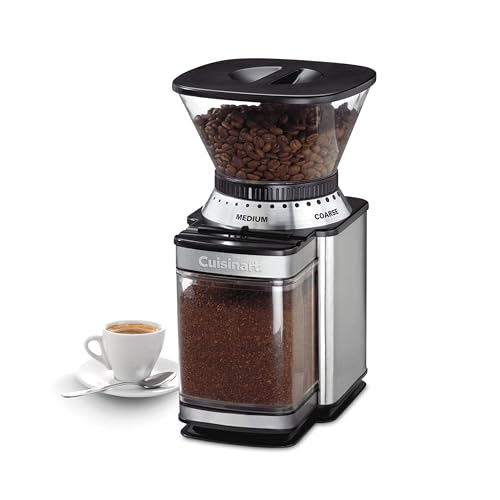
ENJOY OPTIMUM FLAVOR: The Cuisinart Coffee Grinder with 18-position slide-dial grind selector provides a uniform grind from ultra-fine to extra-coarse to ensure your fresh coffee beans are ground exactly the way you prefer.
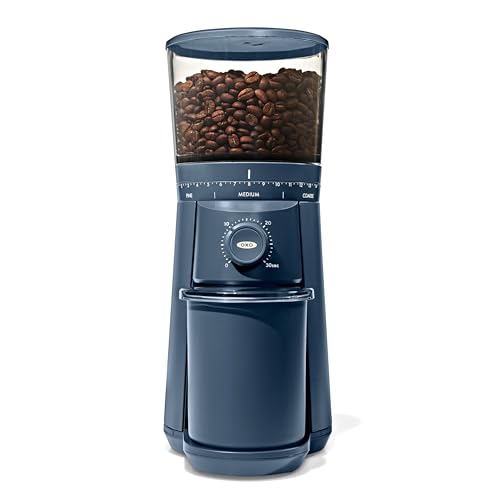
40mm stainless steel conical burrs: Precision grinding system produces uniform coffee grounds to ensure even extraction for rich, balanced flavor in every cup.