
You’re probably stuck on the order of steps, so let’s clear that up. First, fill the tank with cold water, lock it, soak the new filter five minutes, rinse, and lock it in; then run a blank shot to flush. Next, pre‑heat the machine (10‑15 min for the Express, 3‑5 min for the Pro) while keeping the portafilter locked in the group head. Finally, grind 18‑19 g of coffee, set the grinder around setting 12, distribute, tamp 30 lb, and pull a 25‑30 second shot; you’ll see a steady honey‑like flow and a thick caramel crema. If you follow these basics, the next steps—like steaming milk and routine maintenance—will click into place.
Fill the Tank & Install the Filter for Your Breville Espresso
How do I properly fill the tank and install the filter? You’re probably wondering why the tank and filter matter. Here’s the thing: a clean tank and a fresh filter protect your espresso’s flavor and keep the machine happy.
Why does filter quality matter?
Good filter quality removes chlorine and minerals that can dull crema. Soak a new filter five minutes, rinse five seconds, then lock it snugly in the tank. Set the date dial to the current month; replace it every 90 days or after 48 L.
How to fill without a spill?
Remove the tank, rinse if dusty, then fill with cold tap water up to the MAX line. Reinstall the tank, push it until it clicks, and confirm it’s locked.
What’s next?
Run a blank shot to flush the system, then you’re ready to pre‑heat the machine. Automatic supply ensures you never run out of replacement filters. Regular descaling prevents mineral buildup that can impede water flow and affect taste. Monthly descaling helps maintain optimal performance and extend the machine’s lifespan. Regular descaling removes mineral deposits that can clog the pump.

【COMPATIBLE MODELS】Water Filter for Breville Espresso Machine Barista Touch BES880, Barista Touch Impress BES881, Breville Barista Pro BES878, Breville Oracle Touch BES990BSS, Breville Oracle BES980, Breville Dual Boiler BES920, Part Number # BES008WHT0NUC1

【COMPATIBLE MODELS】Compatible with Breville BES880BSS Barista Touch, Breville BES990BSS Oracle Touch, Breville BES980 Oracle, Breville BES878 Barista Pro, Breville Dual Boiler BES920., Part Number # BES008WHT0NUC1. Please confirm your coffee espresso machine model before purchasing

Breville water filters for Espresso Machines: Oracle Touch BES990 (Batch 1746 & earlier); Oracle BES980 (Batch 1813 & earlier); Barista Pro BES878; Barista Express BES870; Infuser BES840; Duo-Temp Pro BES810; Dual Boiler BES920 (Batch 1800 & earlier)
Pre‑heat the Breville Espresso Machine & Warm the Portafilter
If you’re wondering why the machine and portafilter need a warm‑up, it’s because temperature stability is the backbone of good espresso. Thermal stability keeps extraction consistent, and a hot portafilter prevents the shot from cooling as it passes through the puck.
How long should you wait?
On a Barista Express, aim for 10–15 minutes; the control‑panel lights will glow when the group head reaches target temperature. The Pro model needs only 3–5 minutes because its thermoblock heats faster. Keep the portafilter locked in during this period so the metal body, basket, and spouts all absorb heat evenly.
Quick‑heat tricks
Run one or two blank shots or activate hot‑water flow to speed up internal heating. Leaving the portafilter in place retains heat, reducing thermal shock. When the group head feels hot to the touch and the portafilter is warm, you’ve achieved proper Portafilter heating.
Takeaway
A fully warmed machine and portafilter give you reliable espresso temperature, richer crema, and repeatable flavor. Next, you’ll need to measure and grind the right dose for your Breville.
A properly heated portafilter helps maintain the optimal extraction temperature.
boiler pressure is a key factor in achieving consistent shot quality.consistent grind ensures even water flow and balanced flavor.
Measure & Grind the Right Dose for Breville Espresso
What dose should you start with?
You’re probably wondering how many grams of coffee to put in the basket. For a standard double basket, begin with 18 g of bean dose; 19 g works too if you like a stronger start. If your basket holds 20 g, 18‑19 g still feels safe. Adjust up or down based on roast level: lighter roasts can handle 21‑22 g in larger baskets, while darker beans stay happy around 18 g. Use a 12‑grind setting for medium roasts to achieve optimal extraction. Now, weigh the grounds. A kitchen scale gives you the precision a scoop can’t, so you’ll hit the same yield each time. Keep the dose fixed while you tweak grind, yield, and time; otherwise you’ll never know what’s really improving.
All right, your takeaway: pick a starting bean dose that matches basket size and roast level, then lock it in with a scale. Next, you’ll fine‑tune grind size for consistent extraction.
Consistently using a burr grinder helps maintain grind uniformity and improves shot quality.
A finer grind increases surface area, leading to faster extraction rate and richer flavor.
A stable water temperature of around 93 °C optimal brewing temperature ensures proper solubility of coffee compounds.

Digital kitchen scale with food-safe, BPA-free plastic components
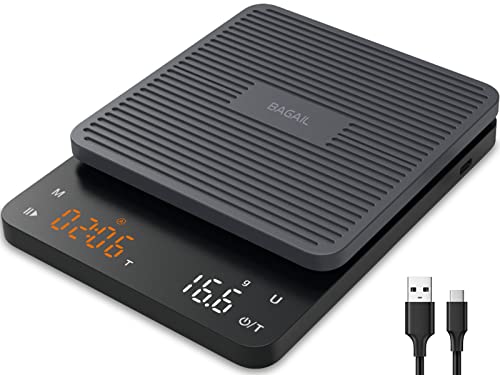
Important: Please remove the 4 plugs from under the weighing platform before use

☕ 0.1g High Precision Digital Coffee Scale Achieve consistent coffee measurements with a high-precision sensor that measures in 0.1g increments. This digital coffee scale is designed for espresso dosing, coffee beans, pour over brewing, and recipe measurements at home or cafes.
Adjust Grind Size for Consistent Breville Espresso Extraction
You’re probably wondering why your espresso sometimes runs too fast or too slow, and that’s the exact question you should be asking.
How do grind changes affect beaned vs flavor?
Start at setting 15, then move one notch at a time. A finer grind adds resistance, slowing water flow, which curbs under‑extraction and improves sweetness. A coarser setting speeds flow, preventing bitterness. Light roasts need finer settings because they’re less soluble; darker roasts can be a bit coarser.
What’s the link between dose vs yield and consistency vs variability?
Changing grind size tweaks output weight, so keep your dose steady with a scale. Consistent dose and yield let you compare extraction times—aim for 25‑30 seconds for balanced taste vs texture.
When should I adjust the inner burr?
If the finest outer dial still yields fast shots, tighten the inner burr to reach finer particles. Do this carefully, then re‑measure dose.
*Takeaway:* Small, measured grind tweaks give you control over extraction, flavor, and texture. Next, you’ll learn how to distribute, tamp, and level the puck for a perfect shot.
If the outer grind setting still doesn’t achieve the desired flow, consider adjusting the inner burr.
A consistent particle distribution is crucial for preventing channeling and ensuring even extraction.
A proper tamping pressure of 30–40 lb helps maintain uniform puck density and stable flow.
A well‑executed tamp creates a uniform surface that reduces the risk of uneven extraction.

40 EXTERNAL ADJUSTABLE GRIND SETTINGS - Unlike traditional grinders with internal adjustments, our manual coffee grinder offers 40 precise external settings. The easy-to-use adjustment ring lets you select your perfect grind level, broadening your coffee flavor options without the mess of stray grounds. Perfect for espresso, pour-over, French press, and more.
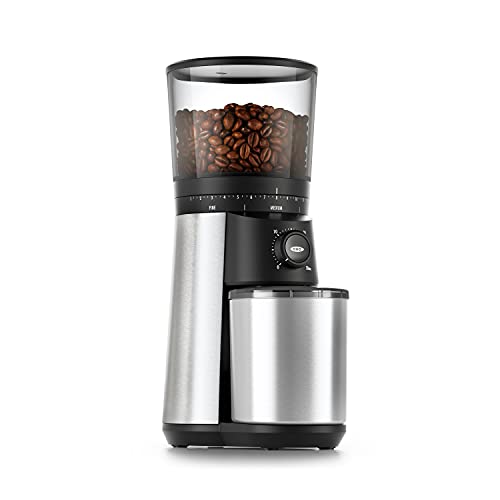
40mm stainless steel conical burrs: Precision grinding system produces uniform coffee grounds to ensure even extraction for rich, balanced flavor in every cup.
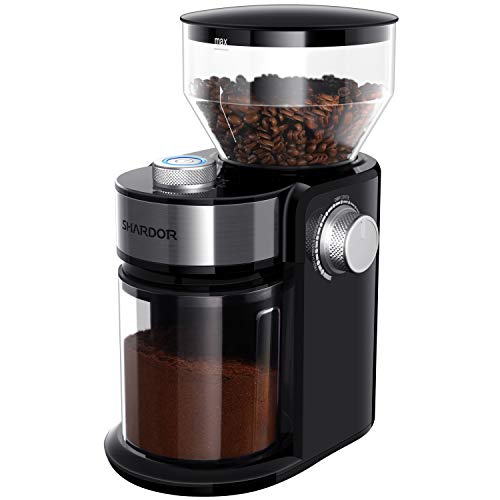
[ UNIFORM BURR GRINDING ] Premium metallic flat burr mill ensures consistent, uniform grounds without burning beans. Perfectly preserves rich coffee aroma for pour-over, drip, and cold brew.
Distribute, Tamp, and Level the Coffee Puck for Breville Espresso
When the coffee bed looks like a bumpy hill, you’re probably wondering why the espresso streams unevenly. You’ve set the right 54 mm basket and dose, but now you need puck consistency before the shot.
How do you distribute evenly?
Now, tap the portafilter sides and give the grounds a gentle shake. If you have a WDT needle, stir to break hidden clumps. Lightly run a distributor about 1 mm below the surface; rotate just enough to flatten, not compress. The brew pressure must stay near nine bars for optimal extraction. Proper grind uniform ensures the water flows evenly through the coffee.
What’s the proper tamp?
All right, press with about 30 lb tamp pressure, keeping the tamper perpendicular. A steady, even push creates a uniform puck; avoid a tilted motion. Finish with a tiny twist to smooth the top.
How can you check headspace?
Obviously, lock the portafilter and glance at the Razor gauge. The puck should sit just below the shower screen, leaving a thin gap.
Takeaway: Even distribution, consistent tamp pressure, and correct headspace give you a solid puck ready for extraction. Next, you’ll want to pull a double‑shot and watch timing and flow.
Adjust the tamping depth until the shower screen imprint disappears.
Regular descaling prevents mineral buildup that can affect pressure consistency, so schedule a cleaning every three to six months.

53mm Adjustable Distributor & Tamper-53mm base designed to be comaptible with Breville 54mm portafilter baskets, including the Barista Express, Pro, Touch, Touch Impress, Bambino Plus, Infuser and Duo-Temp Pro.

Fits 54mm/53.3mm Breville Portafilters: Designed to fit Breville Bambino, Bambino Plus, Barista Express, Barista Express Impress, Barista Pro, Barista Touch, Barista Touch Impress, Duo Temp Pro, Infuser and other 54mm/53.3mm espresso machines

Complete Espresso Tool Set: Our 7-piece 54mm espresso accessories kit comes with a espresso tamper, WDT tool (needle stirrer), espresso tamping station, coffee distributor, dosing funnel, reusable puck screen and brush. The coffee tamper set covers every pre-brew step from grinding to tamping, easily brew consistent, café-grade espresso at home for your daily coffee routine
Pull a Double‑Shot on Your Breville Espresso – Target Timing, Weight, Flow
How do I nail the timing, weight, and flow for a Breville double‑shot? You’re probably wondering why the shot sometimes tastes thin or why the crema looks dull. The trick is to hit a 30‑second crema timing window while pulling 36–40 g from an 18–19 g dose.
What should the flow look like?
Aim for a steady, honey‑like stream. If it rushes out in under 30 seconds, the grind is too coarse; if it drips, you’re over‑extracted.
How do you judge crema quality?
A thick, caramel‑brown crema signals the right balance of pressure and extraction.
How to control the yield?
Tare a scale, start the 2‑cup button, and stop when you hit 38 g, or press the button again at the target weight.
Takeaway: Keep the shot at ~30 seconds, 36–40 g, and a smooth flow for perfect crema. Next, fine‑tune your grind and dose for consistency. Pressure must rise smoothly without spikes during extraction. The machine’s high‑pressure pump delivers the necessary force to push water through the coffee puck. Regularly descaling the machine prevents mineral buildup that can affect water flow and overall performance. Environmental impact should be considered when evaluating the long‑term sustainability of using proprietary capsules.
Troubleshoot & Fine‑Tune Grind & Dose After Each Breville Shot
What’s tripping you up after each pull? You notice a weaker flow or a sudden change in strength, and you’re not sure whether the grind burrs or dose calibration is at fault.
Why does the dose shift?
If the same grind setting now yields less coffee, burr contamination or a bean‑feed restriction is likely. Empty the hopper, vacuum the chute, and clean the burrs before weighing a fresh dose. An 18 g double‑basket start is typical, but always verify the actual weight. Dose consistency is essential for repeatable results. Proper water temperature also influences extraction efficiency and can mask dose variations.
How to adjust the grind?
Turn the internal burr adjustment a notch finer to slow flow and raise resistance; go coarser if the machine chokes. Small, incremental changes prevent overshooting.
When to re‑calibrate dose?
If pressure is too high, lower the dose before coarsening. If it’s too low, increase dose or grind finer. Weigh each shot; don’t rely on the timer alone.
Takeaway: Clean the pathway, test a weighed dose, then fine‑tune grind burrs and dose calibration in tiny steps. Next, explore how to steam milk properly with your Breville wand. Breville’s emphasis on precise temperature control] temperature extraction consistency. temperature stability across shots.
Steam Milk Properly With Your Breville Espresso Wand – Aeration, Vortex, Care
If your milk keeps ending up flat or bubbly, you’ve probably missed a step in the wand workflow. First, purge the wand until steam runs clear, then wait for the flashing light to stop. Position the tip just below the surface, off‑center by 1–2 cm, and let a gentle tearing sound signal the foamation technique. Keep this for 5–10 seconds, then lower the pitcher to submerge the wand and create a steady vortex. Raise the pitcher, stop adding air, and let the whirlpool blend the foam into silky microfoam. Aim for 140–145 °F; the pitcher will feel too hot to hold when you’re done. Immediately wipe the wand and purge again. Use a single drop of dish soap in a water pitcher to practice texturing without waste. Takeaway: Master the foamation technique, maintain a clean vortex, and finish with wand maintenance for perfect milk. Ready to perfect your latte art?

The Breville Temp Control Milk Jug includes an integrated thermometer indicator strip to help you texture milk to the optimum temperature range; Upgrade your cappuccinos, lattes and cortados

Perfect Combination Of Milk Frothing Pitcher And Latte Art Pen: The milk frother jug can be used in different ways: froth or steam milk for lattes; measure liquids; serve milk or cream. Featured with a latte art pen which can shape kinds of beautiful coffee pattern. Perfect for making frothing or steaming milk for espresso, cappuccino or hot chocolate. Be your own barista in home and office.

High-Quality Material: Made of 18/8 stainless steel, this milk frothing pitcher is rust-free, easy to clean, and dishwasher safe. The well-polished surface and clear internal measuring scales help you accurately measure the amount of liquid.
Clean, Maintain & Store Your Breville Espresso Machine
When you wonder why your Breville feels sluggish after a few weeks, it’s usually because routine cleaning slipped your mind. You’ve probably noticed slower extraction and odd flavors. Here’s the thing: a quick daily wipe‑down and drip cup cleaning keep the machine humming.
How often should I clean the drip cup and filter?
Empty the drip tray after each use, rinse with warm soapy water, dry, and replace it. Store the water filter in a dry spot (filter storage) and swap it every two months or when taste changes (filter replacement).
What’s the right descaling schedule?
If you brew 2‑5 cups daily, descale every 3‑4 months; harder water may need it twice a year. Use the machine’s Clean/Descale indicator, run the cycle, then flush with plain water.
How do I keep the whole machine ready?
Backflush with a cleaning tablet weekly, wipe the housing, grinder spout, and group head, then dry all parts before reassembly. Store accessories in a clean, dry drawer.
Takeaway: Consistent daily care plus a quarterly descaling schedule keep your Breville performing like new. Ready for the next brew? (Ensure tablet fully dissolves before finishing the cleaning cycle.)