
You’re torn between convenience and control—totally fair. Nespresso hits your cup in 30 seconds with zero mess; traditional espresso machines demand 5+ minutes and skill but release richer flavor and save you $700 yearly if you brew daily. Your choice boils down to this: do you value speed and consistency, or are you willing to learn technique for deeper taste? The details ahead explain exactly where each machine shines.
Pressure and Brewing: Why the Difference Matters
When you comparing Nespresso to a traditional espresso machine, the pressure numbers seem like the obvious deciding factor—but they’re actually hiding a more complicated story.
Nespresso machines advertise up to 19 bars of pressure, while traditional espresso targets 9 bars. You’d think higher pressure means better espresso, right? Not quite. The actual pressure variance during extraction matters more than the peak number alone.
Here’s the thing: traditional espresso machines experience pressure variance throughout the 25 to 30-second shot, fluctuating between 5 and 9 bars depending on resistance. Nespresso capsules automate everything, prioritizing brew consistency over pressure control. You’re trading pressure nuance for repeatability. This shorter extraction time on Nespresso systems also means less contact between water and grounds compared to traditional methods.
Lower brew temperatures on Nespresso systems (around 170°F versus 200°F) further change extraction behavior. More pressure doesn’t compensate for cooler water or faster contact time. The real difference? You control one; the machine controls the other. The high‑pressure pump in a Nespresso machine delivers water at 19 bar through a sealed capsule, ensuring rapid extraction. Regular descaling prevents mineral buildup that can affect pressure stability. The use of stainless‑steel components in premium espresso machines contributes to their durability and consistent temperature control.
Why Espresso Tastes Fuller and Crema Stays Thicker
Because traditional espresso machines control pressure and temperature more precisely than Nespresso systems, they extract more flavor compounds and oils into your cup—and that’s why the result tastes noticeably fuller.
How Oil Concentration Makes the Difference
You’re getting way more dissolved solids in espresso. The fine grind plus intense 9-bar pressure forces more solubles into suspension quickly. That oil concentration creates a heavier mouthfeel that reads as richness on your tongue. Consistent grind size ensures uniform extraction across the puck, preventing channels that would otherwise diminish body and flavor intensity.
espresso machines typically maintain a stable temperature during extraction which helps preserve delicate aromatics. Nespresso pods use similar pressure, but their brew parameters differ enough that you’ll notice less body. Traditional machines also retain more coffee oils, thickening the liquid phase through emulsification.
Why Crema Stays Thicker Longer
Freshly roasted beans trap more carbon dioxide. High-pressure extraction disperses those gases and oils into stable foam. That crema layer lingers, reinforcing a richer sensory experience throughout your sip—something capsule systems rarely match.
The optimal dose of 18–20 g is crucial for balancing extraction and crema density. Proper pre‑infusion timing can further enhance crema stability by allowing the coffee bed to saturate evenly before full pressure is applied.
Speed and Convenience: Which Fits Your Morning Routine?
All that richness and crema we just talked about? It comes with trade‑offs in morning time and hassle‑free brewing.

[20 BAR PRESSURE SYSTEM] Equipped with 20 bar professional pump, SPACEKEY espresso machine can extract the oils in the coffee powder more deeply, bringing a more aromatic and rich smell. Smart pre-soak system can make the coffee powder evenly moist and the flavor extraction better. And the PID intelligently controls water temperature to make your espresso more delicious.

Easy to Make Hot and Iced Coffee: Single switch knob with indicator light for simple operation.Turn the control knob to the "OFF" position to relieve pressure before opening the water tank cap or removing the portafilter. Innovative pause function allows you to deal with unexpected event. More suitable for beginners.

Café-Quality Espresso with PID Temperature Control:Enjoy rich, balanced coffee at home with this advanced espresso machine. Featuring PID temperature control and low-pressure pre-infusion technology, this espresso coffee machine maintains precise brewing temperature for consistent extraction, helping deliver rich crema, smooth flavor, and café-style results in every cup. Whether you are a beginner or a coffee enthusiast, enjoy professional-quality espresso with confidence
Can You Actually Brew in Under Two Minutes?
Nespresso wins here decisively. You press one button and wait roughly 30 seconds for your espresso. That’s it. No grinding, no tamping, no guesswork. Traditional espresso machines demand multiple steps: grinding beans, dosing grounds, tamping with precise pressure, locking the portafilter, then pulling the shot. You’re easily looking at five minutes minimum.
What About Cleanup?
Here’s the thing: Nespresso cleanup takes maybe 30 seconds. You eject the capsule and empty the bin. Espresso machines require knocking out the puck, rinsing the portafilter, and purging the group head. Add milk drinks? You’re wiping steam wands too.
Your takeaway: If you’re rushing, Nespresso fits seamlessly. If you have time to linger, espresso machines reward the ritual.
Regular descaling prevents mineral buildup and keeps the machine’s pressure optimal. Proprietary capsule cost can add up quickly for daily users.
Long-Term Cost: Pod Expenses vs. Ground Coffee Economics
The convenience of Nespresso comes with a hidden price tag that compounds year after year. You’re looking at roughly $0.85 per pod, which sounds reasonable until you do the per‑pound analysis—that translates to about $52–$76 per pound of coffee.
Now, compare that to whole beans. A $15 per pound bean cost gives you about 60 shots per pound. That’s roughly $0.25 per serving. You’re paying three to four times more with pods for the same caffeine.
Here’s the thing: one pod daily costs you $310 annually. Beans? Around $91 per year. Over five years, you’re looking at roughly $3,680 in potential savings by switching to an espresso machine and beans.
What changes everything: daily use. The more you brew, the faster beans win economically. Regular descaling helps maintain optimal performance and prolongs the life of your machine. Using a cold brew concentrate can further reduce waste and provide a smoother flavor when diluted.
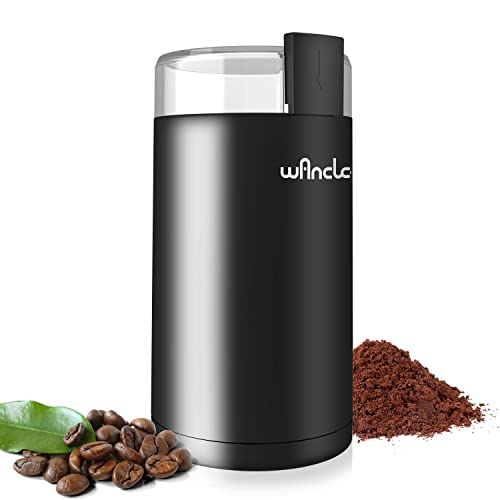
✅【A Secret To Grind Bean Effortlessly】Grinder comes with a pure copper motor and stainless steel blade. Easily observe the grinding situation by a transparent lid, extract the perfect flavor from beans. let you enjoy great coffee in a few seconds.

[Professional and Stable Pressure System] GeniCup espresso machine with grinder is equipped with a 20-bar pressure pump and OPV (Over Pressure Valve) technology for precise extraction, delivering rich oils and aromatic flavors. Powered by a 1400W motor, coffee maker with grinder ensures fast heating for brewing and a powerful manual steam wand for silky milk frothing—bringing the professional barista experience to your home.

【𝐁𝐚𝐫𝐢𝐬𝐭𝐚-𝐆𝐫𝐚𝐝𝐞 𝐄𝐬𝐩𝐫𝐞𝐬𝐬𝐨】Craft café-quality coffee at home with our premium espresso machine. Equipped with a built-in conical burr grinder, a 20-BAR professional Italian pump, it delivers rich, full-bodied extraction. Customize grind size, brew strength, and temperature for your perfect cup—just like a pro!
Maintenance and Durability: What You’ll Actually Deal With
So you’ve done the math on beans versus pods—and yeah, the five-year savings are real. But here’s what nobody tells you: maintenance cost and upkeep effort hit differently depending on which machine you choose.
With Nespresso, you’re looking at simple cleaning frequency—remove used capsules, run a cleaning capsule monthly, descaling every 3–6 months. Water quality impact matters though; hard water accelerates component wear on your thermoblock and heating elements. You’ll get maybe 5–10 years if you stay consistent.
Espresso machines demand more labor. Backflushing, portafilter maintenance, group head care—it’s real work. But here’s the payoff: repair complexity actually works in your favor. Most models offer genuine repairability and service availability.
The real question: Can you handle weekly hands‑on upkeep, or do you want fire‑and‑forget convenience? Descaling your machine regularly prevents mineral buildup and extends its lifespan, especially when you follow the proper descaling procedure outlined in the guide. Follow the step‑by‑step guide to safely open and clean your machine for optimal performance. Regular descaling also helps maintain optimal pressure optimal pressure for consistent extraction.
Customization and Control: How Much Do You Want to Tinker?
With an espresso machine, you tweak grind size, dose, tamp pressure, and brew temperature. You adjust shot time. You chase flavor precision by testing and refining each step. Nespresso? You press a button. The capsule’s pre‑measured coffee and sealed design lock in most decisions before you start.
What This Means for You
Beginners love Nespresso’s consistency. You get repeatable shots without technique training. But enthusiasts quickly hit a ceiling—you can’t experiment meaningfully. Nespresso machines do allow you to program espresso volume by pressing and holding the button until your desired cup fill is reached, which is then saved for future use. However, this level of customization pales in comparison to the granular control available on traditional espresso machines.
Espresso machines reward practice. You’ll spend weeks dialing in, but you’ll understand *why* your shots taste sour or bitter, then fix them. The pump in a Nespresso machine creates the pressure needed for extraction, but it lacks the adjustable pressure settings found in many high‑end espresso models. Properly grind particle distribution ensures even extraction and prevents channeling. Using a high‑quality burr grinder can dramatically improve grind uniformity and overall shot quality.
Nespresso for Busy Mornings and Low-Effort Brewing
You’ve probably noticed that espresso machines demand real skill—grinding, tamping, timing—while Nespresso just wants you to insert a pod and press a button. That difference matters when you’re rushing out the door.
A quick brew takes roughly 30 seconds from start to finish. The machine recognizes your capsule, adjusts water volume automatically, and dispenses your drink. No warmup, no guesswork, no cleanup beyond tossing the used pod.
Choosing the right milk can further enhance your Nespresso experience, especially when using the built‑in frother for lattes and cappuccinos.
Obviously, speed and consistency come with tradeoffs—higher per-cup costs and environmental waste from single‑use pods. But if your mornings are genuinely packed, that convenience genuinely matters.
Regularly descaling the machine prevents clogs and maintains optimal pressure.

Extra Small Machine: At just 3.3" wide, barely wider than a typical 3" phone; This espresso maker takes up next to no counter space; The internal structure is expertly engineered for maximum space efficiency, with a solid 5-lb build that feels premium

Upgraded Café-Grade Espresso Machine: Features a 1400W high power and a 20 Bar Italian pump to deliver a perfect, full-bodied extraction topped with a rich, velvety-smooth crema. Recreate the authentic café experience effortlessly at home

INDULGENT FLAVORS: This assortment of Nespresso Vertuo coffee pods contains a variety of Nespresso capsules: 10 Sweet Vanilla, 10 Golden Caramel, 10 Roasted Hazelnut
Espresso Machines for Flavor Enthusiasts and Coffee Craft
While Nespresso hands you consistency in a pod, espresso machines hand you control—and that control is what separates a decent shot from one that actually tastes like the coffee you bought.
You’re working with pressure profiling, pre-infusion, and temperature adjustment. These tools let you dial in flavor profiling for different roasts and origins, exposing sweetness or acidity precisely as intended. A quality burr grinder becomes equally critical—grind precision directly impacts extraction uniformity and shot quality.
Manual or semi-automatic machines demand skill but reward experimentation. You’ll adjust dose, grind size, and timing to eliminate bitterness or sourness. Dual-boiler setups with PID temperature control stabilize repeated shots.
This isn’t convenience. It’s craft. Ready to explore which machine type matches your skill level? Proper water temperature is essential for extracting the full range of flavors from freshly ground beans. The high‑pressure pump ensures the water is forced through the coffee at the optimal nine bars.

MANUAL HAND-TEXTURED MICROFOAM: The powerful steam wand on this cappuccino maker and latte machine is designed to quickly turn milk into smooth, flavorful microfoam for creating latte art at home

ANTI-STATIC GRINDER FOR FRESH ESPRESSO EVERY TIME — This espresso machine with grinder uses an anti-static design to reduce clumping and scattering, keeping your countertop clean. The precision grinder with 45 grind settings delivers consistent grounds shot after shot, even with oily dark roasts. Say goodbye to stuck chutes and wasted beans — just fresh, perfectly ground coffee every time you brew.

Professional Pump: Come with 20 bar original Italian pump for easily extract strong flavored and rich crema espresso; Fast Heating: 1350 watts powerful boiler, preheating in just 30 secs, lets you make a delicious espresso in 1-3 mins
Choose Based on Your Budget and Habits
The machine you choose ultimately hinges on two questions: how much you’re willing to spend right now, and how often you actually drink espresso.
If you’re budget friendly and grab coffee occasionally, Nespresso makes sense. You’ll drop $100–$150 upfront, brew in seconds, and skip the learning curve entirely. Perfect for convenience.
Now, if you’re a daily drink person making multiple cups, an espresso machine pays for itself. Yes, you’ll spend $400+ initially. But you’ll save roughly $736 yearly on coffee costs compared to pods.
Here’s the thing: your habits determine the real cost. Frequent drinkers find capsules expensive over time. Occasional sippers find the upfront savings worth it.
What’s your typical coffee routine—one cup daily, or several throughout the day?
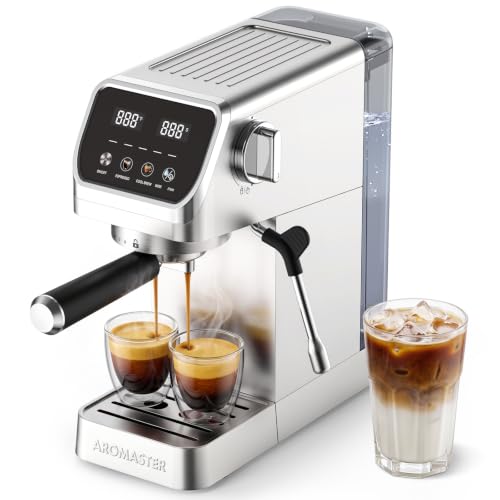
[Café-Quality Espresso Made Simple]:Enjoy rich espresso from espresso machine with a velvety crema at home. Easily craft lattes, cappuccinos, and more just the way you like. Perfect for daily use at home or in the office, bringing café-style coffee into your everyday routine.

【Make Favorite Espresso Coffee by Yourself】The espresso machine with milk frother allows you to prepare all your favorite espresso-based coffees. You can enjoy a barista-brewed latte, cappuccino or macchiato at home. This compact espresso coffee maker is perfect for home or office use
