
You’re asking the right question—most home espresso struggles come from nailing just four things. Grind your beans fresh, dose 18–20g into your portafilter, tamp with steady 20–30lb pressure, and brew with 200°F water for 25–30 seconds. That’s it. You’ll need a burr grinder, a scale, and any espresso machine. The magic isn’t expensive equipment; it’s consistency and tracking what you change. Stick with those fundamentals and you’ll reveal why cafés charge five bucks a shot.
Your First Espresso Shot: A Step-by-Step Guide
You’re probably wondering where to even start—your machine’s sitting there, you’ve got fresh beans, but pulling that first shot feels intimidating.
Here’s the thing: you’ll grind your beans seconds before extraction to maximize freshness. Fill your portafilter basket right after your machine’s preheated and your cup’s warm—this consistency matters for brew timing and flavor profile stability.
Lock in the portafilter immediately to minimize heat loss on the coffee bed. Watch those first drops turn from dark and thick into a rich, caramel-colored stream. You’re looking at roughly 25–30 seconds total. That syrupy flow tells you bean extraction’s happening right.
Now, does your shot finish too quickly? Go finer next time. Too slow? Grind coarser.
Your first shot teaches you what to adjust—that’s your real win here. Maintaining proper water temperature ensures optimal extraction and crema formation. Consistent tamping pressure helps prevent channeling and promotes even extraction. Understanding the brew ratio is key to balancing strength and flavor.
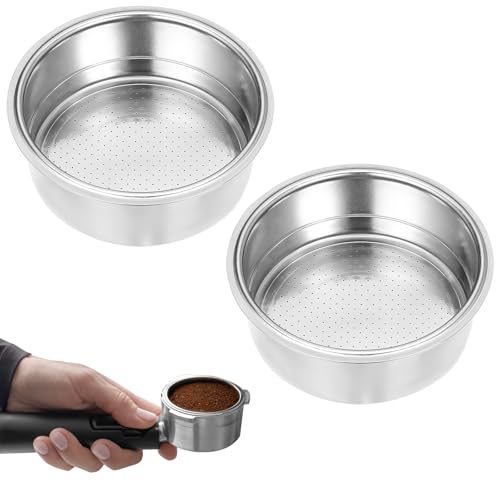
【Ultra-Fine espresso filter Screen】Engineered with a precision espresso filter screen to extract rich balanced flavors. These 51mm stainless steel coffee filter ensures...
Grind, Dose, and Tamp: Dialing In Your Shot
Now that you’ve pulled your first shot, you’re probably realizing that consistency—not just technique—is what separates a mediocre espresso from a great one.
Why Grind Consistency Matters Most
Grind size controls everything: flow speed, extraction balance, and flavor. Adjust your grinder first when dialing in. Too coarse produces sour, thin shots. Too fine risks bitterness and choking. Small grinder tweaks outperform large tamp changes every time. A uniform particle distribution prevents channeling and ensures even water flow. Using a calibrated scale to measure your dose helps maintain that uniformity.
Getting Your Dose Accuracy Right
Weigh your coffee—don’t guess. Most doubles land between 18–20 grams, though 16–18 works for many home setups. Your basket size determines the limit. Consistent weighing removes guesswork and builds repeatable results.
Tamping: Keep It Steady
Apply firm, level pressure around 20–30 pounds. Consistency matters more than exact force. Tamp straight. Skip double tamping. Avoid turning while tamping, as this can tear the compressed puck and cause uneven extraction. Let your grind and dose do the heavy lifting. Maintaining a 30‑40 lb tamp ensures optimal puck density for balanced extraction.
Record everything. You’ll spot patterns fast.
Water Temperature and Freshness: Why They Matter
You’ve nailed your grind, dose, and tamp—so why does your shot still taste inconsistent? Two overlooked culprits sabotage your brewing consistency: water temperature and bean age.
Getting Temperature Right
Brew water between 195°F and 205°F (90°C to 96°C). Start at 200°F as your baseline. Hotter water extracts faster, pulling sweetness and body but risking bitterness. Cooler water under-extracts, leaving sour, thin shots. You control extraction speed through temperature more than anything else. Preheat your machine and portafilter. Let boiled water rest 30 seconds before brewing if you lack a variable kettle. Regularly descale the machine to maintain consistent temperature performance. A single 1‑ounce espresso shot typically contains 63–75 mg of caffeine, which is lower than the 95–165 mg found in an 8‑ounce cup of brewed coffee. The capsule chamber in a Nespresso machine ensures a sealed brewing environment that helps maintain optimal temperature.
Why Freshness Destroys Your Shot
Stale beans lose aromatics within weeks. Fresh, filtered water eliminates off‑flavors that mineralization introduces. Grind immediately before brewing. Old espresso tastes flat and dull—temperature and technique can’t fix it. Start here next.
Espresso Equipment Essentials
Getting consistent espresso starts with gear that actually matters. You’re probably wondering which tools make a real difference versus which ones just look cool on your counter.
Why Your Grinder Makes or Breaks Everything
Your burr selection matters far more than your machine’s complexity. Blade grinders produce inconsistent particle sizes that wreck extraction, so skip them entirely. You need a burr grinder with fine, repeatable adjustment—ideally stepless control for dialing in shots properly. Steel-burr grinders are essential for espresso because existing non-espresso grinders may lack the appropriate burrs and grind range needed for proper extraction.
Grinder retention—how much coffee stays inside after grinding—affects workflow and mess. Low retention feels smoother day-to-day, but it’s convenience, not necessity.
The Other Non-Negotiables
You’ll want a tamper matching your portafilter size (53mm, 54mm, or 58mm). A digital scale measuring to 0.1g tracks dose and yield. Finally, grab a knock box for quick puck disposal.
These three tools transform your technique from guessing into repeatable, troubleshootable shots.
Choosing a burr grinder with consistent grind size ensures optimal flavor extraction and a smoother espresso experience. Proper grind uniformity also helps prevent channeling and under‑extraction.

Tired of small batches? Meet the world's first manual grinder with a massive 60g capacity—Hold twice the beans of the standard grinders. 2X the beans, 0 interruptions! Now you can grind exactly what you need in one grind session, instead of two. Grind less, brew more. Perfect for french press, cold brew, pour-over, camping, travel, big families, or mornings that can't wait.

ENJOY THE PERFECT CUP OF FRESH COFFEE ― The Manual Coffee Grinder by JavaPresse Coffee Company has a built-in adjustable ceramic burr with over 18 manual grind settings to ensure you have 100% precision & control over the coarseness of your grind. This hand coffee grinder is great for all brewing methods to enjoy the perfect cup of fresh coffee and espresso in the morning, and it's designed for use with single-serve or drip coffee makers.

Premium 40 Millimeter Stainless Steel Conical Burr: Designed to minimize grinding heat and protect the essential oils in the coffee bean, creating uniform grounds for optimal flavor extraction.
Machine-Based vs. Manual Brewing Methods
Once you’ve locked down your grinder and scale, the machine itself becomes your next big choice—and honestly, this is where most people get confused about what they’re actually buying.
Manual vs. Pump-Driven Pressure
Manual machines put you in complete control. You’ll pull a lever to generate pressure—roughly 9 bars worth—and feel exactly what’s happening. This manual control means steep learning curves, but you’ll develop real technique.
Semi-automatic and automatic machines use internal pumps instead. You don’t generate pressure yourself; the machine handles it consistently. Automatics add volumetric controls that stop shots at preset volumes, removing variables.
Which Actually Matters
Here’s the thing: manual machines demand hands-on skill. Automatics prioritize convenience and repeatability. Choose based on whether you want to learn espresso-making or just drink excellent shots quickly. Proper water temperature is crucial for extracting balanced flavors. The Nespresso system achieves a rich crema thanks to its 19‑bar pressure‑regulating valve that forces hot water through the capsule. Understanding the boiler function helps you maintain temperature stability for consistent extraction.
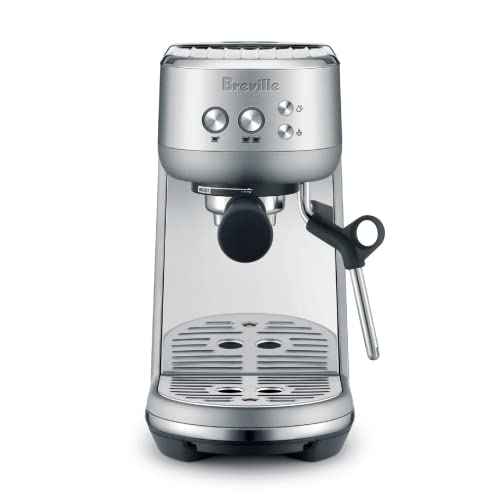
MICROFOAM MILK TEXTURING: Cappuccino maker and latte machine has an automatic steam wand allowing you to adjust milk temperature and texture, creating barista-quality microfoam for latte art at home

【Make Favorite Espresso Coffee by Yourself】The espresso machine with milk frother allows you to prepare all your favorite espresso-based coffees. You can enjoy a barista-brewed latte, cappuccino or macchiato at home. This compact espresso coffee maker is perfect for home or office use

Make Your Favorite Espresso Coffee At Home: The CASABREWS coffee machine with milk frother allows you to prepare all your favorite espresso-based coffees. You can enjoy a barista-brewed latte, cappuccino or macchiato at home. Stainless steel appearance, stylish and durable, ideal for any size kitchen. This compact espresso coffee maker is perfect for home or office use
Troubleshooting Common Espresso Problems
When your espresso shots taste sour or bitter, or when water sprays everywhere instead of flowing through the puck, something’s actually gone wrong during brewing—and the good news is that most problems trace back to just a handful of controllable factors.
Is your shot flowing too fast or too slow?
Grind size controls everything here. Too coarse? Water rushes through and under-extracts. Too fine? Pressure builds and over-extraction happens. Target a 25 to 30 second shot time. Adjust your tamp pressure and grind consistency until you hit that window.
Are you seeing channeling or uneven flow?
You’re likely dealing with a weak puck. Break up clumps before tamping, distribute grounds evenly, then tamp level and firm. Skip tapping the portafilter afterward—it damages your seal and invites water to channel right through weak spots. If you notice your crema is thin or absent, old coffee beans have likely lost CO₂, preventing proper emulsification during extraction. Using a consistent grind helps maintain even extraction and reduces channeling. Regular descaling can also prevent pump wear that leads to inconsistent pressure. Using the wrong grind size can cause extraction imbalance and ruin the shot.

【Thinner 14 Needles】 Needles evenly distributed design. 7 food-grade stainless steel needles, 0.35mm diameter, the perfect size for breaking up coffee clumps, plus 7 replacement needles. Thoughtful needles storage tube. Say goodbye to the bent needles

【A Perfect Espresso Shot Companion】 Nessus espresso distributor includes 10 food-grade stainless steel needles with a 0.35mm diameter, which is the perfect size to break up coffee clumps. For added convenience, we provide an extra set of 10 needles in a storage tube. A good choice to add this espresso machine accessories to your coffee bar!

Even Espresso Extraction - This coffee stirrer uses 5 fine 0.4mm needles which help to distribute the coffee evenly in the filter when the barista is making the coffee to promote a more even extraction and better espresso. Eliminates clumping and improves consistency.
Strong Coffee Without an Espresso Machine
You’ve nailed the troubleshooting basics—but what if you don’t own an espresso machine yet? You can absolutely create strong, concentrated coffee using brew alternatives like Moka pots, AeroPress, or French press.
Here’s the thing: these methods won’t produce true espresso, but they’ll get you remarkably close. A Moka pot uses steam pressure with about 20 grams of fine-ground coffee. An AeroPress takes roughly 18 to 22 grams and produces smooth, intense results. A French press needs a finer grind than usual with a concentrated ratio. The AeroPress produces the closest flavor to real espresso among these three methods. The AeroPress’s immersion and pressure extraction combines both techniques for a richer cup.
What makes these stronger?
Use dark roast as your primary flavor enhancer. Grind finer, reduce water volume, and steep briefly. All three approaches deliver bold, heavy-bodied cups without machine-level pressure. Proper tamping technique, as described in the espresso guide, can further improve extraction consistency. Ready to choose which method fits your kitchen? Fine grind consistency is crucial for optimal extraction.

Hand Crafted Precision Brewing – Our iconic 3-in-1 brewer reimagined. Double-wall borosilicate glass chamber enhances heat retention and showcases your brew, while precisely engineered stainless steel and aluminum components add strength and style for a brew experience as smooth and refined as the taste of our signature brew. Designed to bring café-quality brewing and modern design to your kitchen coffee station, AeroPress Premium combines a sleek, minimalist design with a compact footprint.

Clear Colors in Shatterproof Tritan – AeroPress Clear Black Coffee Press features our iconic 3 in 1 brew tech in crystal clear Tritan for a durable, shatterproof, travel-ready brewer that lets you see your brew – wherever your brew takes you.

UNIQUELY DELICIOUS: No more average joe from fancy, expensive machines. By combining the best of several brew methods into one patented device, you get smooth, rich, grit-free coffee with a delicious, full-bodied finish that lingers well after your last sip. No bitterness. No cream needed.
Keep Your Equipment Clean and Ready
If your espresso tastes bitter, flat, or off despite using quality beans, dirty equipment is probably the culprit—not your technique. You’re dealing with oil buildup and residue that mask flavor.
Your Daily Routine Matters Most
Start each session by flushing your group head with clean water after every shot. Purge and wipe your steam wand immediately after steaming milk. These two habits prevent oils and milk residue from ruining your next drink.
Weekly Deep Clean and Beyond
Perform a detergent backflush at least weekly using espresso-specific cleaner. Soak your portafilter and baskets for 20–30 minutes to dissolve stubborn oils. Don’t skip grinder maintenance—stale residue affects flavor quality directly.
The Long View
Establish a descaling schedule based on your water conditions. Replace worn gaskets before they leak. Consistent filter cleaning and maintenance keeps your machine performing like new.