
You’re confused because these two methods pull coffee completely opposite ways. French press steeps grounds like tea for 4–5 minutes, delivering rich, full-bodied flavor with 80–135 mg caffeine per 8 oz cup. Espresso forces hot water through fine grounds in 25–30 seconds, creating an intense 2 oz shot with just 47–68 mg but a bold punch and velvety texture. Your choice hinges on whether you want depth or concentration, patience or speed.
How French Press and Espresso Brew Differently
You’re probably wondering why two methods that both use hot water and ground coffee produce such different results. Here’s the thing: their pressure profiles and extraction times couldn’t be more opposite.
With a French press, you’re steeping grounds in hot water for 4–5 minutes. No pressure involved—just time and saturation doing the work. Water stays in constant contact with those grounds the entire time.
Espresso flips this completely. High pressure forces hot water through finely ground coffee in just 25–30 seconds. That aggressive pressure profile extracts flavor rapidly and intensely.
Now, this speed difference matters hugely. The longer extraction time in French press pulls out more oils and sediment, creating that rich texture. Espresso’s quick, pressurized extraction produces concentrated intensity and crema instead.
Think of it this way: one brews like steeping tea; the other works like forcing water through resistance. The extraction ratio of espresso is typically around 1:2, whereas French press often yields a ratio closer to 1:15. Using a scale for consistency can greatly improve the brew quality of both methods. A proper grind size is essential for optimal extraction in each method.
Grind Size: Why It Matters More in Espresso
Now here’s where grind size becomes your biggest control lever—and honestly, it matters way more for espresso than French press. You’re working with pressure impact that demands precision. With espresso, even tiny particle grind variations create channeling, leaving you with weak, uneven shots in seconds.
French press? It’s forgiving. Your coarse grounds steep for four minutes, so minor inconsistencies won’t wreck extraction speed. Espresso’s 20-30 second window means particle uniformity directly controls flow rate and flavor balance.
Here’s the thing: fine espresso grinds magnify small particle size differences. You’ll taste both under-extracted sourness and over-extracted bitterness in one shot. French press tolerates that better because immersion brewing smooths out those variations.
Match your grind to your method. That’s your biggest win. Consistent burr grinder use ensures uniform particle size across the dose. Adjusting grind size can also fine‑tune shot timing for optimal extraction.
Flavor and Mouthfeel: What You’ll Taste
What’s actually different between these two cups when they hit your tongue? You’re noticing two completely different flavor intensity experiences. Espresso delivers a bold, concentrated punch in just two ounces—sharp and immediate on your palate. French press tastes rich and full-bodied, but spreads that flavor across a larger cup, so it feels smoother and more integrated.
Now, the body texture differs dramatically. Espresso has that signature velvety, syrupy feel thanks to crema and concentrated extraction. French press creates a heavier, rounder mouthfeel because metal filters let more coffee oils through. You’ll feel the difference instantly—espresso feels compact and intense, while French press wraps around your mouth like a warm blanket.
Full‑immersion brewing yields a richer, heavier body due to higher oil retention, which contributes to the distinct mouthfeel of French press coffee.
Your takeaway: If you want bold intensity, choose espresso. For smooth richness, go French press. The coarse grind used in a French press allows more surface area for extraction, enhancing the depth of flavor. The brew time for a French press typically ranges from four to six minutes, allowing the grounds to fully steep.
Brewing Speed: Which Method Is Faster?
Your French press requires a steep duration of 4 to 5 minutes minimum. Lighter roasts demand 6 to 7 minutes. You’re waiting passively while immersion does the work. Espresso, by contrast, pulls a shot in 25 to 30 seconds using pressure dynamics that force extraction rapidly.
The Real Speed Winner
Once an espresso machine is ready, you’ll hold a finished cup in under a minute. French press demands heating water, preheating equipment, steeping, then pressing. You’re looking at 9 to 10 minutes total for the complete settle-and-decanter approach.
Your Takeaway
Espresso wins for pure brewing speed. Choose it when you need caffeine fast. For optimal flavor, use a coarse uniform grind and a 1:15 coffee‑to‑water ratio. Cold brew can also be prepared quickly by using a 1:4 coffee‑to‑water ratio and steeping for 12–24 hours. Regular descaling protects performance and ensures consistent extraction.
Caffeine Content: Concentration vs. Volume
Espresso pulls a shot in 30 seconds, but here’s where it gets interesting: speed doesn’t determine caffeine punch. You’re probably wondering which method actually delivers more caffeine—and the answer depends on what you’re measuring.
Concentration vs. Total Caffeine
Espresso wins on concentration, packing 60–68 mg per ounce. French press? Only 10–15 mg per ounce. Now, here’s the thing: an 8 oz French press serving contains 80–135 mg total caffeine, while a single espresso shot lands around 47–68 mg.
Why the Difference Matters
Extraction efficiency shifts when you increase volume. French press’s longer steep time and direct ground contact pull more caffeine from your beans. Caffeine timing also favors espresso if you want a fast, concentrated jolt.
Choose French press for maximum total caffeine. Pick espresso for density and speed. Adding a cup of espresso can stimulate the gastrocolic reflex and promote a quick bowel movement. Keurig pressure limitations can affect how espresso‑like a brew feels. Understanding bean roast impact helps you predict the exact caffeine you’ll get.
Getting Started: Gear and Budget Reality
You’ve probably noticed that brewing methods come with wildly different price tags—and you’re right to wonder if that matters before you commit.

No Plastic Touching Food: Made with 304 stainless steel and food-grade silicone, our French press keeps all brewing surfaces plastic-free— no odor and no plastic particle into your coffee. Safe and worry-free
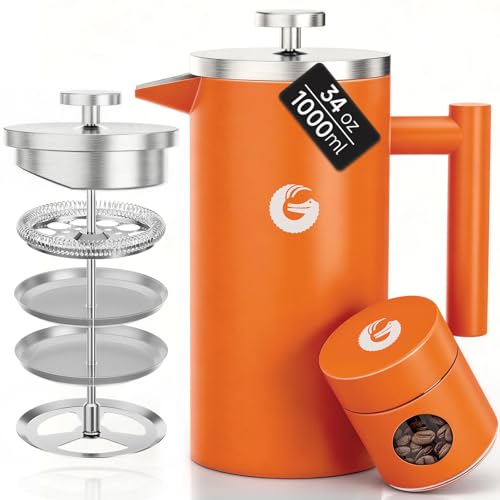
BREW LIKE A BARISTA AT HOME – Built-in measurement markings help you easily achieve the ideal coffee-to-water ratio for consistently rich, flavorful coffee. Makes up to 34 oz, perfect for daily brewing

Superior Filtration: A solid filtration system in a coffee maker ensures a refined taste and robust flavor mouthfeel. Our 4-filter sieve system has an improved piston plate and 80 mesh filter that extracts the earthy, rich taste of residue-free coffee. This 1000 ml/34 Oz beaker makes 4 cups of creamier & tastier coffee.
Budget vs. Espresso: The Starter Gear Reality
French press starter gear runs you $50 to $100 total. You need a press, coarse grinder, and kettle—that’s it. Espresso machines? They’ll demand $700 to $800 minimum for a decent setup.
Now, here’s the thing: French press equipment is nearly indestructible with minimal upkeep. Espresso machines require maintenance kits, descaling supplies, and roughly $150 to $300 annually.
Obviously, your budget matters. If you’re hesitant about dropping serious cash, French press lets you experiment cheaply. You’re not risking thousands before knowing if you’ll actually use it daily. Pressure pumps are essential for consistent espresso extraction.
Regularly descaling your espresso machine prevents mineral buildup that can affect flavor and performance. Using a burr grinder ensures uniform particle size for optimal extraction.

French Tip Press On Toenails for a Flawless Look – Achieve salon-quality toenails in minutes with our X-Pro Tips Acrylic Soft Gel System. These press-on toenails feature a classic French tip design for an effortlessly elegant look.

Brush-On Gel Nail Kit: Has all you need for a super strong, long lasting, at-home gel manicure; French, DIY color, DIY design artificial nail tips with a unique gel formula you brush on for a smooth and shiny finish without buffing

Complete French Nail Stamper Kit: Saviland french tip nail stamps comes with 1*nail stamper, 1*white gel nail polish, 1*plastic scraper and 10pcs cleaning pad. Our silicone nail stamper head are removable, which is convenient for customers to remove for cleaning. This kit contains all the essentials for a French Manicure
When French Press Wins
Now that you know the gear won’t break the bank, let’s talk about what actually matters: what’s in your cup.
French press wins when you crave full-bodied coffee with real texture. The immersion brewing keeps grounds in contact with water, letting oils and fine compounds stay put—no paper filter strips them away. You’ll taste origin character more clearly, especially in beans with chocolate or earthy notes.
You also gain serious batch flexibility. One pot scales from two cups to eight without fussing with tamping or shot timing. Adjust your coffee-to-water ratio, grind size, and steeping time however you want. Longer steeps intensify flavor; coarser grinds prevent bitterness.
Here’s the kicker: eco-friendly brewing matters here too. No disposable filters or capsules means less waste hitting your trash can. You control extraction simply, without electricity or complex mechanics.
For a balanced cup, aim for a 1 gram per 15 grams water ratio and a 4‑minute steep. The French press’s mesh filter allows fine particles to settle, enhancing mouthfeel. Consistent temperature control, such as heating water to ≈ 93 °C, ensures optimal extraction.
When Espresso Wins
If you’re rushing through mornings or want a serious caffeine punch fast, espresso does what French press simply can’t. You’ll pull a shot in 25–30 seconds—total prep time hits around 2 minutes when you factor in grinding and cleanup. French press demands 4–10 minutes just steeping.
Here’s the thing: pressure extraction creates concentration. You’re forcing hot water through finely ground coffee at 9 bars of pressure, yielding a bold, intense shot that immersion methods can’t match. That’s why espresso tastes noticeably stronger in smaller volumes.
Now, you’ll notice espresso crema too—that signature foam layer adds creamy mouthfeel and visual appeal. Plus, one machine releases lattes, cappuccinos, and americanos without switching equipment. When you want maximum intensity fast, espresso wins every time.
How to Choose: Your Decision Framework
Choosing between French press and espresso isn’t really about which one’s “better”—it’s about which one matches how you actually drink coffee.
Start by asking yourself what flavor you’re chasing. Do you want bold, earthy depth with rich oils? French press delivers that through metal filtration. Prefer concentrated intensity and layered sweetness? Espresso’s your answer.
Now consider your daily reality. You’ve got four minutes to steep versus thirty seconds under pressure. French press suits slower mornings and multiple cups. Espresso fits quick service and milk drinks.
Here’s the thing: budget and equipment matter too. French press costs little and teaches easily. Espresso demands a machine, fine grinder, and patience dialing in your brew ratio for flavor consistency.
Match your preferred taste to your actual routine, and you’ve found your answer.
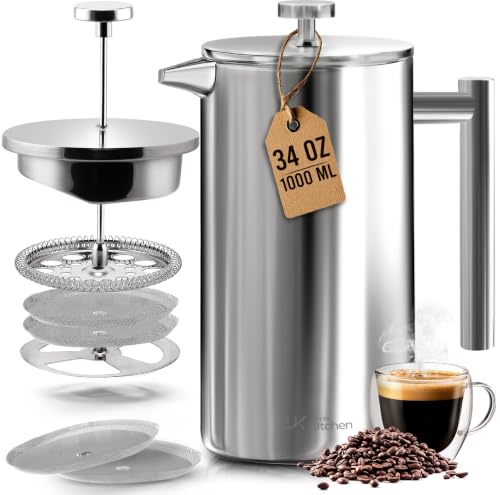
Double-Walled French Press: Make perfectly brewed coffee at home like a barista. The double-walled coffee press is heat resistant. Its solid construction will keep the drink hot for a long time.

No Plastic Touching Food: Made with 304 stainless steel and food-grade silicone, our French press keeps all brewing surfaces plastic-free— no odor and no plastic particle into your coffee. Safe and worry-free

Flavor, Hate boring, cold coffee? We do too! Our huge capacity coffee press is vacuum-layered and double-filtered to bring you a flavor more full than your email inbox. Oh yeah, you even get a mini canister for storing your next caffeine hit
Troubleshooting: Common Problems and Fixes
You’ve nailed your brewing method choice, but something’s tasting off—bitter, weak, gritty, or just plain flat.
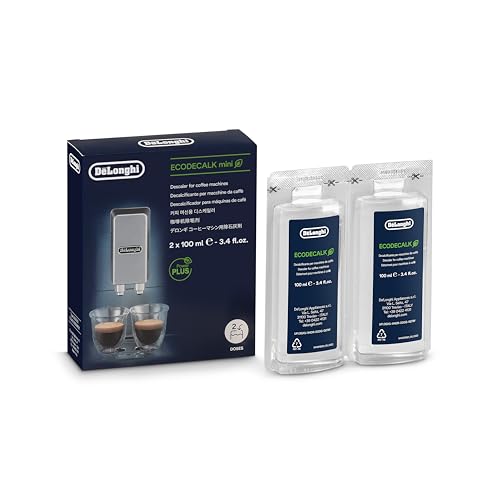
Eco-friendly universal descaling solution that's gentle on your coffee maker

ENJOY THE DELICIOUS TASTE AND AROMA OF BREWED COFFEE - Removes chlorine, odors, calcium, and other water impurities prior to brewing so you can fully enjoy the delicious taste and aroma of brewed coffee. Replace every 30 days, or more often if you have hard water for best results.

[FROM DE'LONGHI. The No.1 world-leader in espresso machines. , Significantly reduces the likelihood of premature breakdown from hard water scale build-up, increases the energy efficiency, and improves the coffee flavor , Made with 100% lactic acid , Suitable for all espresso/coffee machines. , Will keep your machine running smoothly so you can always enjoy your favorite beverages, Also available in a smaller pack - 2 x 100ml
Why’s Your French Press Tasting Bitter?
Over-extraction’s your culprit. You’re either steeping too long, using water that’s too hot, or grinding too fine. Dial back to 4 minutes, keep water around 200°F, and use a coarse grind. Don’t skip the 30-second bloom—it releases trapped CO₂ and improves flavor development.
Getting Sediment and Grittiness?
Your grind’s probably too fine for the metal mesh filter. Press the plunger slowly over 30 seconds instead of rushing it. Pour immediately after plunging to stop continued extraction. This simple shift transforms your cup’s clarity dramatically.
Weak Coffee Solutions
Under-extraction happens when you steep too briefly, use cool water, or skimp on coffee dose. Stick to a 1:15 coffee-to-water ratio and maintain proper brew pressure and crema consistency through technique consistency.

EASILY SELECT GRIND SIZE AND CUPS OF BREWED COFFEE: Whether you need a fine grind size for espresso or a coarse grind for French press, we've got you covered. Just turn the grinder's adjustable selection ring. Grinds enough to brew 4-14 cups.

40 EXTERNAL ADJUSTABLE GRIND SETTINGS - Unlike traditional grinders with internal adjustments, our manual coffee grinder offers 40 precise external settings. The easy-to-use adjustment ring lets you select your perfect grind level, broadening your coffee flavor options without the mess of stray grounds. Perfect for espresso, pour-over, French press, and more.

【Adjustable Grinding Precision】There are seconds marks above the timing knob, from coarse to fine. You can choose the precision of powder according to your needs.