
You’re probably wondering why your French press sometimes feels thin or bitter, and you’re on the right track. Use a 1 : 15 coffee‑to‑water ratio (about 60 g coffee to 900 g water), grind beans coarse like sea salt, heat filtered water to 195 °F, bloom for 30 seconds, stir, then steep exactly five minutes before pressing slowly and decanting immediately. This combo balances strength, body, and flavor—next, try tweaking the grind or steep time for your perfect cup.
Choose the Right Coffee‑to‑Water Ratio for French Press Coffee
How do I pick the right coffee‑to‑water ratio for my French press? You’re probably wondering why the numbers matter. Here’s the thing: start with the classic 1:15 or 1:17 ratio, measured by weight, and you’ll hit a balanced brew every time.
What does the ratio control?
It sets strength and concentration. A 1:15 mix (e.g., 60 g coffee to 900 g water) yields a richer cup; 1:17 (40 g to 680 g water) feels lighter. Use a scale—grams eliminate spoon‑size guesswork and keep your brewing repeatable.
How do you fine‑tune?
Adjust by 10‑20 % based on taste. Want a bolder sip? Add a bit more coffee, maybe 2 Tbsp per 4 oz water. Prefer milder? Drop a little.
Takeaway
Pick a baseline, weigh it, then tweak. Next, think about grind size for ideal extraction.
Choosing the right scoop helps ensure the coffee‑to‑water ratio matches your press size for consistent flavor. Burr grinder is essential for achieving the coarse, uniform grind that prevents over‑extraction. Adding a cold brew step can further enhance flavor clarity.

【Ultra Small, Yet Professional】The Espresso Scale is small enough to fit in your palm. It measures 4.13*4.13*0.78 inches and weighs just 0.75 pounds. The coffee scale can work on most espresso machines and small pour-over coffee stands. It's easy to store and carry around, making it perfect for coffee lovers who like outdoor coffee.

【3 Smart Modes, 0.1g Pro Precision】Unlock precise control with 0.1g accuracy and 3 smart modes: Auto Timer for Pour-Over, Auto Timer for Espresso, and Standard Weighing. Whether brewing espresso or pour-over, this coffee scale adapts to your style for consistent, accurate results. The larger, easy-to-read display and quick response time help you focus on pouring technique and flow rates without distractions
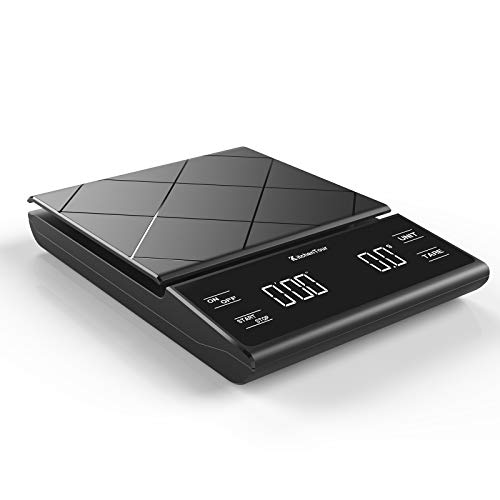
#Make Coffee Better every time# - KitchenTour EK6012 defines the latest in precision weighing technology with a weight capacity from 0.3g - 3000g to help you measure and get an exceptional cup of coffee with refined accuracy. The electronic coffee scale has a built-in timer to cook and time your coffee to ensure the consistency of each cup of coffee.
Grind Fresh Beans to a Coarse Consistency for French Press
You’re probably wondering why the grind size matters after n the coffee‑to‑water ratio. The answer is simple: a coarse grind lets water flow around each particle evenly, preventing over‑extraction and keeping sediment out of your cup. Bean freshness matters too—grinding just before brewing locks in aromatics that stale pre‑ground coffee can’t match.
Here’s the thing: aim for particles the size of sea salt or small pebbles, roughly 600–1000 microns. An adjustable burr grinder gives you consistent consistency, so you avoid fine bits that clog the mesh filter and turn your brew muddy.
All right, start with a coarse setting and tweak in tiny steps if the coffee tastes too bitter or weak. The takeaway: coarse, consistent grounds from fresh beans deliver a clean, full‑bodied French press. Next, consider the water temperature for ideal extraction. Using the Baratza Encore setting 28 yields a particle size of about 1200 µm, which is ideal for a French press. Proper brew timing ensures optimal flavor extraction. Additionally, maintaining a water temperature of 92‑96 °C helps balance acidity and body. For most brewers, a 1:15 ratio provides a balanced, rich cup.
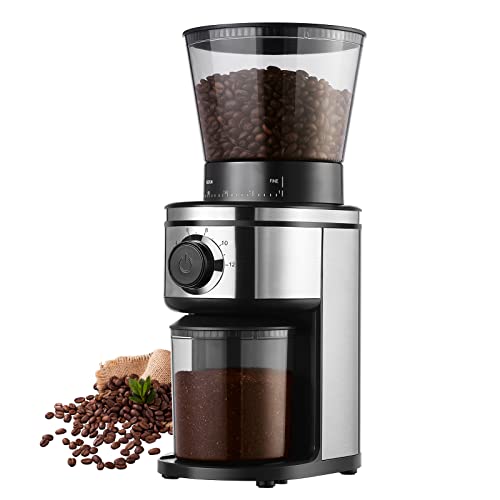
【Durable Conical Burr】With 40-millimeter stainless steel conical burrs, OLLYGRIN burr coffee grinder ensure optimal flavor extraction and create uniform grounds.

40mm stainless steel conical burrs: Precision grinding system produces uniform coffee grounds to ensure even extraction for rich, balanced flavor in every cup.
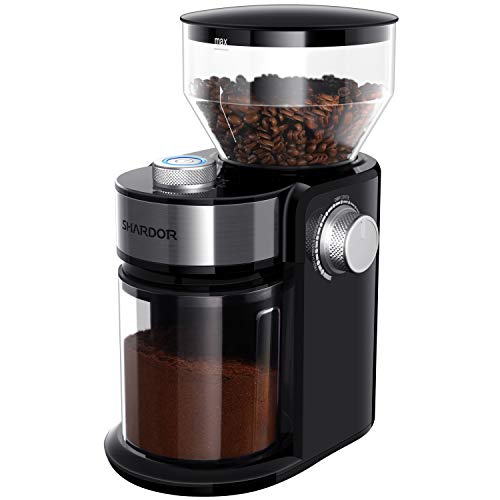
[ UNIFORM BURR GRINDING ] Premium metallic flat burr mill ensures consistent, uniform grounds without burning beans. Perfectly preserves rich coffee aroma for pour-over, drip, and cold brew.
Heat and Filter Water to the Optimal Temperature for French Press Coffee
What temperature should I actually use? You’re probably wondering why the range varies, but aim for 190‑200 °F (≈ 88‑93 °C). Dark roasts taste best near 185‑195 °F, while light roasts can handle up to 205 °F. Boil water, let it sit 30‑60 seconds, and you’ll land around 195 °F—perfect for most beans.
Now, use filtered water. Clean, mineral‑balanced water extracts flavor evenly; tap water with a strong taste or softened water will mute your brew.
All right, preheat the press. Rinse the glass carafe with hot water for 10‑15 seconds, then discard. This step locks in heat, keeping your brew temperature stable for the full four‑minute steep.
Takeaway: Heat filtered water to about 195 °F, preheat the press, and you’ll get a consistent, rich extraction. Next, think about how to stir and time the steep.
Using a consistent grind size ensures even extraction and prevents over‑extraction. A proper coffee‑to‑water ratio also helps achieve balanced flavor. Adding a brief bloom phase after the first pour can enhance aroma and flavor development.
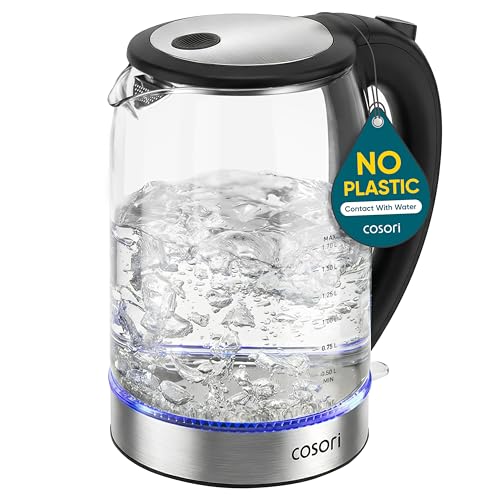
No Plastic Contact with Your Water——With no plastic inside, water never touches plastic, ensuring a pure taste and safer drinking experience
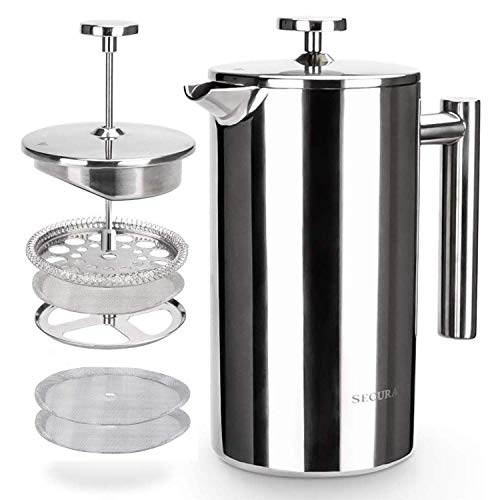
Secura stainless steel French Press coffee maker is made from top quality 18/8, 304 stainless steel, both the interior and exterior. It is made to outlast other coffee makers

Electric gooseneck kettle, ideal for use with pour over coffee makers 0.8 liter / 27oz capacity
Stir, Skim the Crust, and Time the Steep for French Press
You’ve probably wondered why the timing of stirring, skimming, and the steep length feels like a guessing game. You’re right to question it. Getting stir timing right spreads grounds, avoids dry pockets, and gives a smoother extraction.
When should you break the crust?
Usually after the bloom, around 30 seconds, or just before the 5‑minute mark if you prefer a longer steep. A gentle swirl breaks the crust and lets fines re‑mix, which improves consistency.
How do you skim the foam?
Take a spoon and lift the thin layer of foam and floating grounds right after you break the crust. This “crust skimming” step cuts sediment that would otherwise fall back into the cup.
What’s the ideal steep time?
Aim for five minutes total; it’s the sweet spot for extraction without over‑extraction.
optimal steep time typically 4 minutes at 195‑205 °F, balancing body and acidity while minimizing bitterness.
coarse grind enhances the clarity of flavor by reducing over‑extraction.
Takeaway: Stir early, skim the crust, and let the brew sit five minutes before pressing. Ready to press? regular cleaning after each use helps maintain flavor and extend the press’s lifespan.

Dual-Functionality Design: The Frieling Coffee Spoon & Stirrer combines the utility of stainless steel measuring spoons with the effectiveness of a french press spoon. Its elegant construction makes it an essential tool in every coffee-making ritual

HONEY MIXING SPOON - These wooden spoons for cooking are very easy to clean. Hand wash with warm soapy water and air dry. Please avoid the spoon being kept in dishwasher, microwave oven, dryer or exposure under sunlight.

Many coffee enthusiasts prefer bamboo stirrers because it does not absorb or take away heat from your brewing coffee unlike metal spoons or stirrers do. They do not scratch your brewing glassware as well.
Press the Plunger Slowly and Know How Long to Keep Coffee in the Press
When you wonder why a gentle plunge matters, think of it like lowering a car’s hood slowly so the engine settles instead of jolting it. You’ve probably asked if a slow, steady push really changes the cup. The answer: it keeps grounds from stirring, avoids fines re‑entering the brew, and gives you a cleaner separation.
Now, aim to press right at the end of your brew window—usually four minutes. A vertical, controlled motion lets the mesh stay aligned, preventing channeling and sediment leakage. If you feel resistance, ease up; force only compresses the coffee bed and pushes grit through.
All right, after you’ve completed the gentle plunge, do an immediate pour. Leaving the coffee in the press lets extraction continue, adding bitterness. Decant into a separate carafe and enjoy the intended flavor balance.
Takeaway: Slow, vertical plunge at the brew’s end, then pour immediately for a bright, clean cup. Ready to serve? Water temperature is set to 90 °C for optimal extraction. The extraction method of a French press yields a fuller-bodied cup compared to espresso.
The coarse grind ensures the water can flow freely, reducing over‑extraction and promoting a smoother taste.
high‑pressure extraction gives espresso its characteristic crema and intense flavor.

1️⃣ EXPERIENCE THE FULL POTENTIAL OF COFFEE - Press the plunger to maximize the release of rich flavor. You’ll be in control of the brewing process with our PATENTED plunger system, powered by stainless steel springs. It directly brews in your mug to eliminate any mess.

Superior Filtration: A solid filtration system in a coffee maker ensures a refined taste and robust flavor mouthfeel. Our 4-filter sieve system has an improved piston plate and 80 mesh filter that extracts the earthy, rich taste of residue-free coffee. This 1000 ml/34 Oz beaker makes 4 cups of creamier & tastier coffee.
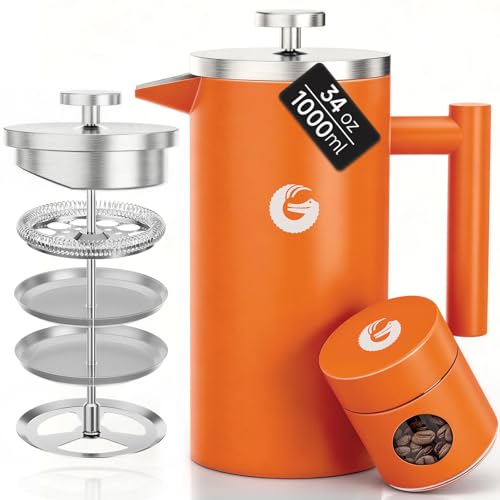
BREW LIKE A BARISTA AT HOME – Built-in measurement markings help you easily achieve the ideal coffee-to-water ratio for consistently rich, flavorful coffee. Makes up to 34 oz, perfect for daily brewing
Serve French Press Coffee Immediately to Avoid Over‑Extraction
If you’re wondering why the moment you finish plunging matters, the answer is simple: the coffee stays in hot water and keeps extracting. Now, the key is to pour it out right away—this overimmediate serving stops the grounds from continuing to steep, preserving the flavor you aimed for.
What happens if you wait? The hot liquid keeps pulling bitter compounds from the fine sediment, and agitation while you finally pour can resuspend those particles, making the cup taste harsh and dull.
The solution is simple: decant into a separate mug or carafe the instant the plunger hits the bottom. This rapid transfer locks in the intended strength, aroma, and body, giving you a consistent, smooth cup every time.
Takeaway: serve immediately to protect flavor preservation and avoid over‑extraction. Ready to try it with your next brew? Using a coarse grind helps prevent over‑extraction in cold brew methods. The full‑immersion approach of a French press extracts more oils, contributing to a richer body compared to drip coffee. A well‑controlled brew ratio ensures balanced extraction and a smoother finish.