
Grind your beans to a uniform, coarse sea‑salt texture and measure 20 g of coffee for every 300 ml of water (1:15 ratio). Heat water to 195‑205 °F, pre‑heat the press, then pour a small amount to bloom the grounds for 30 seconds while stirring gently for even wetting. Add the remaining water slowly, keep the lid on, and steep for 4 minutes (adjust 3‑5 min for strength). Press the plunger evenly, serve immediately, and clean promptly—more details await if you keep going.
Choose Your Coarse Grind and Measure the Right Coffee Dose for a Stanley French Press
When you set up a Stanley French Press, start by selecting a coarse grind that looks like tiny breadcrumbs or sea‑salt crystals—roughly 600–1,300 µm—to guarantee a steady, balanced extraction. Aim for a consistent grind texture; uniform particles prevent channeling and keep extraction even. Next, measure the coffee dose using a reliable dose ratio. A 1:15 ratio (e.g., 30 g coffee to 500 g water) offers a balanced cup, while 1:12 yields strength and 1:18 produces a lighter brew. Adjust the dose incrementally—5 g up or down—to fine‑tune flavor without altering the grind. Remember, a finer grind speeds extraction, risking bitterness, whereas a coarser grind may leave the brew weak. Keep the ratio and texture aligned for optimal results. Standard extraction time is 4 minutes, which helps you fine‑tune the grind if the brew is over‑ or under‑extracted. Use a scale for consistency to ensure precise measurements every time. For best flavor, use filtered water heated to 195–205 °F before pouring. Incorporating a nitrogen infusion step can further enhance the coffee’s texture and mouthfeel.

☕【Detachable Coffee Scale】The Removable Coffee Scale syncs automatically with your grinder to track weight in real time, eliminating guesswork. Achieve perfect brew ratios (1:18) every time, perfect for pour-over, espresso and daily kitchen use. Rechargeable scale with long standby for hassle-free use

【PRECISION GRINDING CONTROL】 Stop guessing how long to grind. Our electric coffee grinder features a clear timing knob with seconds marks, allowing you to achieve the exact coarseness for espresso, drip, or French press every time. No more inconsistent grounds or burnt beans.
Heat Water (195‑205 °F) and Warm Your Stanley French Press
If you heat the water to 195‑205 °F (90.5‑96 °C) and preheat the Stanley French Press, you’ll lock in the temperature needed for a balanced extraction. Choose a temperature selection that matches your roast—lighter beans near 205 °F, darker toward 195 °F. Boil, then let the water sit 15‑20 seconds or cool a minute; electric kettles can hit the target directly. Immediately pour the hot water into the press, swirl for 30 seconds to a minute, then discard. This preheating step stabilizes brew temperature, preventing rapid heat loss to the metal walls. After discarding, add the measured coffee grounds and the freshly heated water without delay, keeping the plunger rested on top to preserve heat throughout steeping. Consistent water temperature is crucial for optimal extraction and flavor balance. Using a coarse grind helps prevent over‑extraction during the steep. Properly cleaning the French press after each use removes residual oils that can affect flavor consistency.
Bloom the Grounds (30 s), Stir, and Ensure Even Saturation
Since the water first touches the dry grounds, a 30‑second bloom releases trapped CO₂ and primes the coffee for even extraction; after this brief pause, give the slurry a gentle stir with a spoon or chopstick to wet any floating or dry pockets, ensuring every particle is fully saturated before you continue the brew. This Bloom timing gives the gas a chance to escape, preventing uneven extraction later. Apply a light Stirring technique: insert the utensil, move in a slow circular motion, and lift floating grounds back into the pool. Avoid vigorous agitation; the goal is uniform wetting, not turbulence. When the surface looks glossy and no dry islands remain, you’ve achieved full saturation and are ready for the next steep phase. For a balanced cup, aim for about 1 gram per 15 grams of coffee to water. Proper water temperature enhances flavor extraction and prevents bitterness. Using a consistent grind size helps maintain even extraction throughout the brew.
Pour Water Slowly and Maintain the Correct Brew Ratio for a Stanley French Press
Ever wondered how a steady pour and the right coffee‑to‑water ratio turn a Stanley French Press into a flavor powerhouse? Start by weighing 20 g of coffee for 300 ml of water, or use the 1:15 brew ratio for larger batches—16 Tbsp for a 48 oz press. Heat water to 90‑96 °C (194‑205 °F) and pre‑heat the press. When you add water, execute a slow pour, letting the stream cascade gently over the grounds. This controlled flow saturates evenly, minimizes bed disturbance, and prevents overflow at the fill line. Keep the headspace clear for the lid and plunger. By maintaining the precise brew ratio and a consistent slow pour, you lock in balanced extraction and avoid weak or overly strong coffee. Use a coarse grind to prevent fine particles from passing through the filter. A proper blooming stage helps release trapped gases and improves overall flavor. A well‑timed four‑minute steep ensures optimal extraction without bitterness. The high‑pressure extraction of espresso contrasts sharply with the gentle steep‑and‑press method of a French press, highlighting why the latter yields a fuller body and richer texture.

EASILY SELECT GRIND SIZE AND CUPS OF BREWED COFFEE: Whether you need a fine grind size for espresso or a coarse grind for French press, we've got you covered. Just turn the grinder's adjustable selection ring. Grinds enough to brew 4-14 cups.

40mm stainless steel conical burrs: Precision grinding system produces uniform coffee grounds to ensure even extraction for rich, balanced flavor in every cup.

40 EXTERNAL ADJUSTABLE GRIND SETTINGS - Unlike traditional grinders with internal adjustments, our manual coffee grinder offers 40 precise external settings. The easy-to-use adjustment ring lets you select your perfect grind level, broadening your coffee flavor options without the mess of stray grounds. Perfect for espresso, pour-over, French press, and more.
Set a 4‑Minute Steep (Adjust 3‑5 min for Desired Strength)
A steady pour sets the stage, now lock in the extraction by timing a 4‑minute steep. Start your timer the moment water contacts the grounds and let the brew sit for exactly four minutes—this is the baseline steep timing recommended by Stanley, OXO, and most French‑press guides. If the cup feels too light, shorten the steep to three minutes; if you crave more body, extend it to five minutes, using strength adjustment to dial in your preferred intensity. A 30‑second bloom before the timer begins guarantees full saturation and uniform extraction. Keep water temperature between 195–205 °F, and avoid over‑extraction by serving immediately when the timer ends. This precise steep timing delivers consistent flavor while allowing easy strength adjustment. The mesh plunger separates the grounds from the liquid, ensuring a clean pour.

Superior Filtration: A solid filtration system in a coffee maker ensures a refined taste and robust flavor mouthfeel. Our 4-filter sieve system has an improved piston plate and 80 mesh filter that extracts the earthy, rich taste of residue-free coffee. This 1000 ml/34 Oz beaker makes 4 cups of creamier & tastier coffee.


Note: 1)Too coarse a grind, too little coffee, or insufficiently tamping the grounds before brewing can all lead to inadequate pressure for a proper brew. 2)It is important to note that the amount of espresso extracted will vary depending on the grind size and amount and reprogramming may be needed when the size and amount are adjusted
Press Gently to Minimize Sediment and Preserve Flavor in a Stanley French Press
When you press the plunger slowly and evenly, you keep fine grounds from slipping past the mesh and turning your cup gritty. A gentle, steady pressure maintains sediment control by keeping fines at the bottom of the chamber and avoids agitation that clouds the brew. Before you plunge, verify the filter sits flush against the wall and that your grind is coarse—sea‑salt texture is ideal. Lightly stir and let the coffee bed settle for a few seconds; this calms the grounds and supports flavor preservation. Avoid overfilling past the flare collar, because excess height lets particles bypass the seal. Consistently applying these steps yields a clean, bright cup with minimal grit and maximal aromatic integrity. The press’s double‑wall vacuum‑sealed body retains heat for up to 4 hhours during brewing. This visibility into the extraction process mirrors the clarity offered by a bottomless portafilter in espresso preparation. Adjusting the steep time by one‑minute increments can help you fine‑tune the balance between body and acidity, a practice known as steep time optimization.

Replacement:This product includes 4 french press filter meshes. If your current filter is damaged or leaking, these can serve as direct replacements to restore optimal function.

Our French press screens are made of high quality grade 304 stainless steel, not rust easily and durable, designed to filter out coffee grounds or loose tea conveniently, providing you a better using experience of coffee or tea

Replacement:This product includes 4 French press filter meshes, one spiral spring, and one triangular disk. If your current filter assembly is damaged or leaking, this complete set serves as a direct replacement to restore optimal filtration performance.
Serve Immediately and Avoid Over‑Extraction With Your Stanley French Press
If you let the coffee sit in the press after the plunger hits the bottom, the residual heat keeps extracting, turning a bright brew into a bitter one. Decant immediately to lock in tim‑accurate flavor‑preservation and guarantee bitterness‑prevention. As soon as the plunger seals, tilt the Stanley French Press and pour the liquid into a mug or secondary carafe; the stainless‑steel body retains heat, so any delay lets soluble compounds over‑extract. A swift transfer stops the immersion process, preserving the intended body and balance. Use a dedicated carafe if you need to serve multiple cups; it isolates the grounds, preventing further steeping. By mastering this rapid pour, you keep the brew clean, bright, and consistently enjoyable. For optimal extraction, aim for a coffee‑to‑water ratio of 1 to 2 tablespoons per 8 oz of water. The extraction method of a French press differs markedly from that of espresso, resulting in a fuller-bodied cup.
Clean Your Stanley French Press for Consistently Great Cups
After you’ve poured the brew, rinse the press right away to stop oil buildup and keep every cup bright. Hot water removes most residue; add a drop of mild dish soap if you notice film. Swish the soapy water through the plunger‑assembled press to flush the interior walls and filter filter. After each use, disassemble the mesh filter, spring, and plunger for a quick routine deep‑clean: brush both sides of the filter, wipe the plunger with a soft sponge, then air‑dry or towel‑dry completely. For weekly or monthly heavy buildup, apply a baking‑soda paste, rinse with vinegar, or use a Puro Caff tablet. Avoid abrasive pads and incomplete rinses—both can impair flavor consistency. Reassemble only when every part is spotless and dry. Daily cleaning prevents residue buildup and extends the press’s lifespan. Using unbleached paper towels as a makeshift filter can introduce chemicals, so stick to proper filters for best flavor. The mesh filter should sit snugly on the plunger to ensure even extraction.

Specially Designed for Chemex: You will receive 1 coffee maker brush, engineered to perfectly clean pour-over coffeemakers by reaching all contours of the signature glass carafe for thorough stain removal. Please note that our product isn't sponsored or endorsed by the brand it fits, including Chemex.

Compatible: 12.13" length x 0.375" wide , 5 pcs long clear straws brush, Compatible with stanley straw replacement 40 oz 30oz. Perfect for stanley cup accessories.
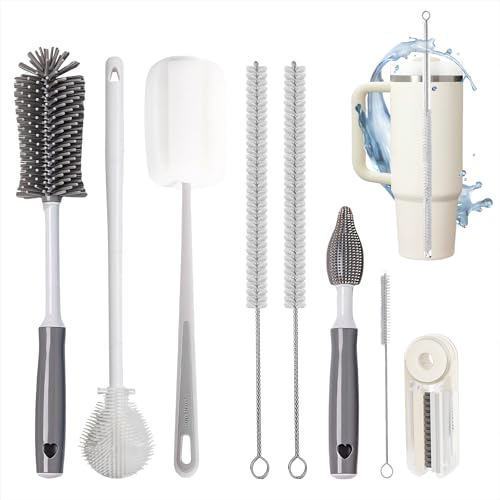
Packaging: This cup brush cleaner for Stanley includes 8 pieces, one 11.8-inch and one 7.5-inch silicone brush, two 11.7-inch and one 6.7-inch straw cleaner brushes are made of stainless steel and nylon, one 3.9-inch 4 IN 1 bottle cleaner brush( made of pp) , and one 11.5-inch extended detachable brush( made of silicone and pp).