
You want a grind fine enough to let water pull out the sweet and bright notes quickly, but not so fine that it drags out bitterness and a dry finish. For espresso aim for a flour‑like texture (180‑380 µm) and adjust in tiny notches until a 20‑30 second shot hits the right balance. Pour‑over works best with a medium‑fine, table‑salt feel (400‑700 µm), while French press needs a coarse, pepper‑like grind (690‑1300 µm). If you keep tweaking the grind, dose, and water temperature, you’ll master extraction across methods.
Is Your Coffee Grind Too Fine? The Core Answer?
If your espresso drips like a slow‑drip faucet or your pour‑over takes forever, the grind is probably too fine. Over‑fine particles jam the filter, slow flow, and push you into over‑extraction, yielding bitter, harsh, or muddy cups. You’ll notice gritty sludge in a French press or a stubborn plunge in an Aeropress. The fix is simple: dial the grinder a notch coarser and keep grind consistency across batches. Check your burrs for wear; uneven burrs create spotty fineness, breaking equipment maintenance and flavor. Small adjustments—shorter brew time, slightly cooler water—can rescue a shot, but the core answer is: if flow stalls and taste turns bitter, your grind is too fine. Proper dose and tamp pressure can further balance extraction when grind size is adjusted. Understanding particle size helps you match grind texture to the brewing method for optimal flavor.
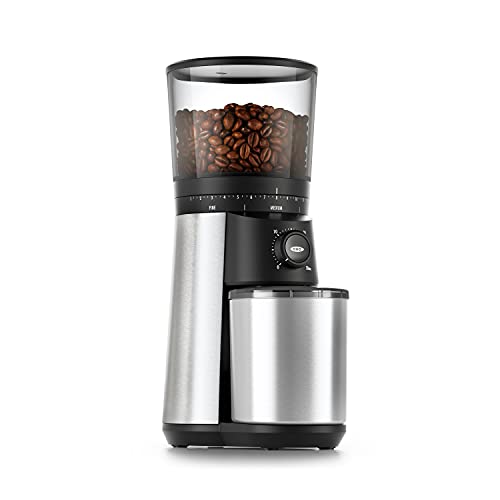
40mm stainless steel conical burrs: Precision grinding system produces uniform coffee grounds to ensure even extraction for rich, balanced flavor in every cup.

40mm stainless steel conical burrs: Precision grinding system produces uniform coffee grounds to ensure even extraction for rich, balanced flavor in every cup.

12 CUSTOM SETTINGS: The adjustable coffee grinder allows you to choose from coarse to fine for brewing styles like drip coffee, French press, and cold brew. For best results with espresso, use the two finest settings and freshly roasted beans
How Grind Size Controls Extraction Speed & Flavor
When the flow stalls or turns bitter, you know the grind is too fine; now let’s see how the size of those particles actually drives extraction speed and flavor. A finer particle mix offers more surface area, so water pulls soluble compounds faster, boosting extraction timing. You’ll taste intensity, body, and sweetness when the brew stops at the right moment, but push it too long and bitterness spikes. Coarser particle sets slow the contact, giving water less surface to work on; extraction timing lengthens, yielding a clearer, lighter cup that can feel thin if under‑extracted. Adjust in small increments: finer to speed up, coarser to slow down, and match the grind to your brew’s contact time for balanced flavor. Consistent particle distribution is key for even extraction, and using a burr grinder helps achieve that uniformity. Understanding extraction yield helps you fine‑tune grind size for optimal flavor balance. Proper dose consistency ensures each shot starts with the same amount of coffee, reducing variability in extraction.
Choosing the Right Grind for Each Brewing Method
What grind should you pick for each brew? For pour‑over, aim for a medium‑fine texture like table salt; it hits the 3‑4 minute window and works with 195‑205 °F water. French press wants a coarse, uniform grind—think cracked pepper—so you avoid over‑extraction and sediment. A siphon sits between, using a medium grind roughly the size of sea salt for stable, heat‑driven extraction. The stovetop espresso maker needs a fine grind, similar to sugar, to build pressure without choking the flow. Keep your burr grinder sharp; grind‑tool maintenance preserves consistency across methods. Finally, remember water‑hardness impact can alter extraction speed, so adjust grind size if your water is unusually hard. A typical French press ratio uses 1 gram per 15 – 16 grams of water for balanced flavor. The mesh plunger in a French press creates a uniform extraction barrier that separates grounds from the brewed coffee.
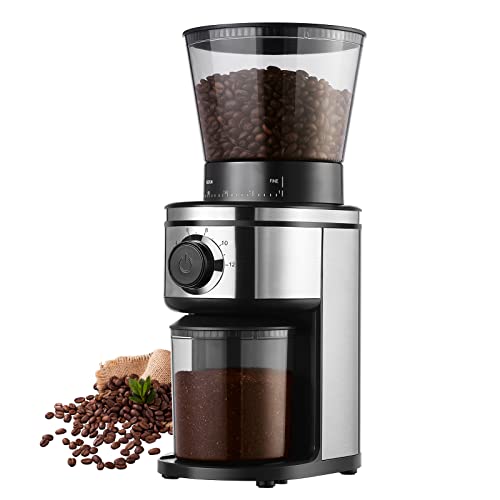
【Durable Conical Burr】With 40-millimeter stainless steel conical burrs, OLLYGRIN burr coffee grinder ensure optimal flavor extraction and create uniform grounds.

Burr Coffee Grinder :This portable burr coffee grinder allows you to grind coffee beans wherever you are, making it perfect for those who enjoy freshly ground coffee on the go. Its intuitive design ensures easy use, so you can achieve a consistent, perfect grind with minimal effort. The grinder's compact and lightweight build means it won't take up much space, fitting easily into your bag. Whether at home, in the office, hiking, or traveling.
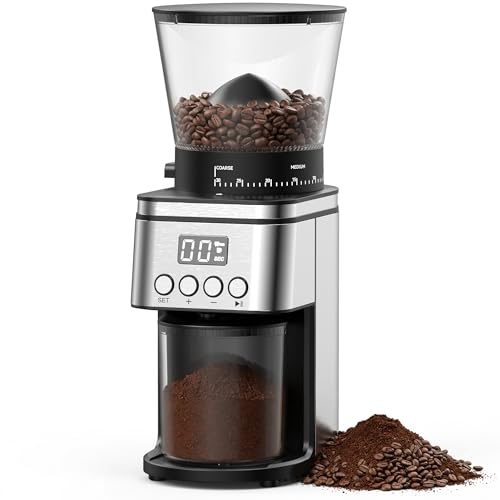
Professional Grinding Precision:Coffee grinder with 30 precise grind settings—from espresso-fine to French press-coarse—deliver consistent particle size for optimal extraction. Hardened stainless steel conical burrs ensure consistent and uniform grinding.
Dial‑In the Perfect Fine Grind for Espresso
Start by dialing in a fine, table‑salt‑like texture and then tweak from there; a proper espresso grind creates the resistance needed for a 20‑30‑second extraction, balances surface area for flavor, and stays uniform enough to avoid channeling. Begin with a 12 g dose, aim for 20–25 g out in ~30 s, and note the setting. If the shot runs fast or tastes thin, grind a touch finer; if it drags or tastes bitter, go a notch coarser. Check pinch consistency—light clumps mean you’re in range. Fresh espresso bean freshness matters; stale beans demand a finer grind to compensate. Inspect grinder burr wear regularly; worn burrs produce uneven particles and ruin uniformity. Adjust one variable at a time, record the successful setting, and repeat for each bean‑machine combo. Consistently applying 30‑35 psi pressure during tamping helps maintain even extraction. Maintaining the water temperature between 90–96 °C ensures optimal solubility and flavor extraction. Understanding the grind size consistency impact on extraction can prevent under‑ or over‑extraction.

PROFESSIONAL CONICAL BURR COFFEE GRINDER- WIth new upgraded 3.0 conical burr grinding technoloy, the coffee grinder ensures that every grain of ground coffee powder is the same shape and size. The fines percentage below 15% for optimal flavor extraction and coffee taste. Compared to ceramic conical burr on the market, our coffee bean grinders are equipped with stainless steel conical burr for long-lasting durability.
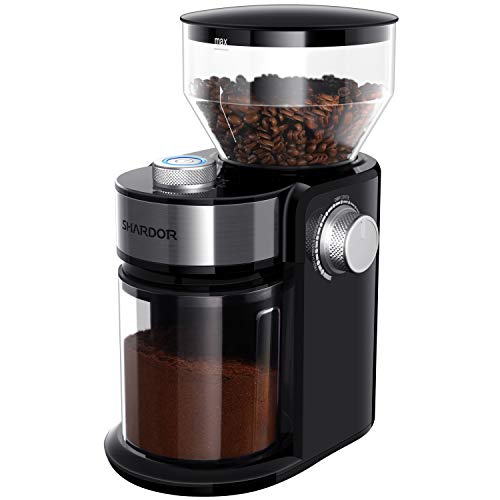
[ UNIFORM BURR GRINDING ] Premium metallic flat burr mill ensures consistent, uniform grounds without burning beans. Perfectly preserves rich coffee aroma for pour-over, drip, and cold brew.

Slim, powerful grinder with precise settings from fine to coarse, with 15 settings and 29 micro-adjustments
Adjusting Grind for Pour‑Over and Drip Coffee
If you want a reliable pour‑over or drip brew, begin with a medium‑to‑medium‑fine grind—think table salt or caster sugar—and then fine‑tune based on brew time and taste. For a V60, aim 400‑700 µm; for automatic drip, stay near 500‑800 µm. Observe the flow: a fast, sour cup signals a finer grind; a slow, bitter cup calls for coarser particles. Adjust one variable at a time, keeping water at 195‑205 °F and the coffee‑to‑water ratio around 1:16. Consistent particle size improves extraction, while a good grind‑bean pairing guarantees the bean’s origin shines. Use pressure‑adjusted dosing to maintain balance when you change grind, and watch brew time settle between 3‑4 minutes for pour‑over and 5‑6 minutes for drip. A proper coarse uniform grind is essential for optimal extraction in a French press. Adding a cold brew concentrate can enhance flavor depth when used as a supplement in drip recipes.

40 EXTERNAL ADJUSTABLE GRIND SETTINGS - Unlike traditional grinders with internal adjustments, our manual coffee grinder offers 40 precise external settings. The easy-to-use adjustment ring lets you select your perfect grind level, broadening your coffee flavor options without the mess of stray grounds. Perfect for espresso, pour-over, French press, and more.
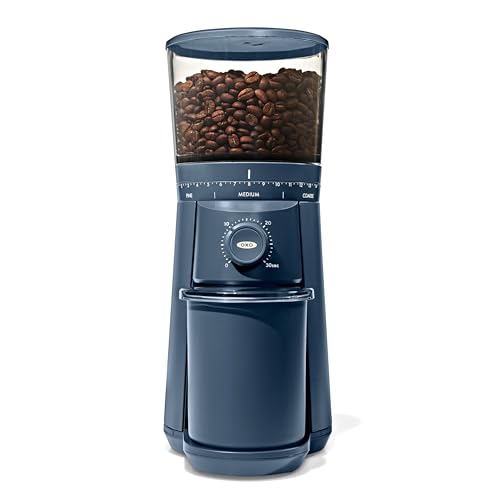
40mm stainless steel conical burrs: Precision grinding system produces uniform coffee grounds to ensure even extraction for rich, balanced flavor in every cup.

[Consistent Flavor Extraction]: Choose the coarseness you need from the 28 settings on the Lonkion burr coffee grinder. The flat metal burr grinding head ensures an even and consistent grind. Whether you need a fine grind for espresso or a coarser grind for French press coffee, you can adjust the grind size for any coffee type.
When to Use Coarse vs. Extra‑Coarse Grinds (French Press & Cold Brew)
When you brew with a French press or cold brew, choosing between a coarse and an extra‑coarse grind hinges on steep time and desired clarity. For a French press, a coarse grind (2‑4 mm) matches a 4‑6‑minute immersion, delivering solid filter filtration while keeping fines low. If your press struggles with sludge or you extend steeping past six minutes, shift to extra‑coarse; the larger particles slow extraction further and produce a cleaner cup. In cold brew, extra‑coarse (chunky, sea‑salt texture) is standard because 12‑24‑hour steeping at low temperature needs reduced surface area to avoid bitterness and excess sediment. Use coarse only for shorter cold‑brew runs; otherwise, the extra‑coarse comparison between French‑press vs‑cold‑brew guarantees smooth, less bitter results. The Moka Pot delivers a richer, more concentrated flavor, highlighting the impact of pressure‑driven extraction on grind size selection. Proper water temperature ensures optimal extraction and flavor balance. Proper steep ratio should be adjusted to maintain consistent strength across brewing methods.
Spotting Over‑Extraction vs. Under‑Extraction by Taste
Ever wondered how to tell whether your coffee is under‑extracted or over‑extracted just by tasting it? Your palate reads the taste profile and maps it onto the extraction timeline. If you sip a sharp, sour note, thin body, and missing sweetness, the cup is likely under‑extracted—water rushed through a coarse grind, shortening contact time. A lingering, bitter, dry finish with woody or burnt hints signals over‑extraction—fine particles pulled too many compounds, extending the extraction. Check the finish: a short, empty end points to under‑extraction; a rough, lingering dryness points to over‑extraction. Adjust grind size, temperature, or brew time one at a time to shift the taste profile back into balance. Consistent pressure during tamping helps avoid uneven extraction and channeling for a smoother shot. Maintaining a 30–40 lb tamp pressure also promotes uniform water flow through the puck. A single espresso shot typically contains 63–75 mg of caffeine, which can help you gauge overall stimulant intake when comparing to larger brewed coffee servings.
Small Incremental Grind Tweaks That Actually Work
Even a single notch on your grinder can shift a cup from flat to vibrant, so start from the manufacturer’s baseline, note the exact setting, then tweak the dial by the smallest increment while keeping dose, water, and brew time constant. Begin with the recommended grind for your brew method, then adjust one tiny step at a time. Record the original bean size setting, keep dose accuracy, and observe brew consistency. If the cup tastes sour, turn the dial finer; if it’s bitter, go coarser. Small changes alter grind uniformity, which instantly tweaks extraction speed. Purge old grounds, clean the burrs, and repeat the same brew to confirm the effect. This disciplined, incremental approach lets you dial in the perfect grind for any bean and method. 85 % of people fail to make a good cup due to incorrect grind size. Using a burr grinder ensures uniform particles, which is essential for consistent extraction. The flat burr design typically yields a more consistent particle size distribution, benefiting precise espresso extraction.
Troubleshooting Real‑World Grind Problems
Fine‑tuning the grind is great, but real‑world setups often throw curveballs that ruin even the most careful adjustments. When you notice uneven particles on a white‑paper test, check burr wear—worn burrs generate fines and boulders, boosting motor load and skewing extraction. Tighten loose burr mounts and real misalignment; a snug fit keeps the grind uniform and eases the motor’s strain. If the grind feels too coarse, a few clicks finer will restore body and sweetness; too fine will choke flow, raise motor load, and add bitterness. Clear jams promptly—unplug, dislge debris, then run a short test grind to confirm smooth rotation. Clean regularly, grind in short bursts, and discard stale chute grounds to curb heat, static, and flavor loss.
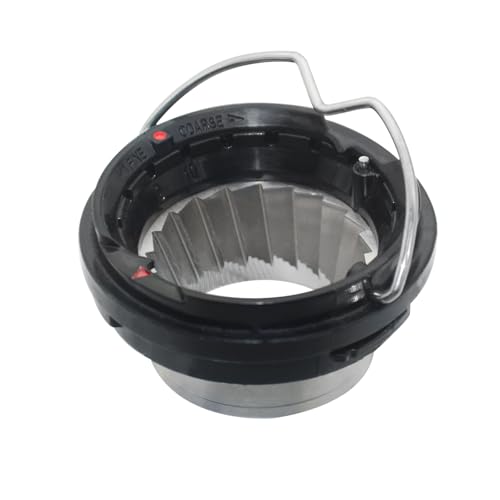
[Replacement Part] Package contains 1 replacement part numbered BES870XL/06.8, designed to fit select espresso and grinder models. Check the item first after receiving.

Fits for Cuisinart Burr Coffee Grinder Parts- Part Number DBM-8GC, this grind chamber with lid is compatible with Cuisinart coffee grinder models DBM-8P1. ensuring a perfect match for your coffee burr grinder.

【Compatible With】Upgrade repair kit for Saeco, Jura, Nivona, Miele, AEG CaFamosa, Bosch Benvenuto, and Siemens Xpresso
Quick Reference: Grind Size, Method & Expected Brew Time
Looking for a quick cheat sheet? Match grind to method and brew time in one glance. Espresso: flour‑like, 180‑380 µm, 20 g coffee to 40 g liquid, 25‑30 s extraction; fine particles build resistance for proper Espresso Tamping and crema. Moka Pot: very fine, 360‑660 µm, salt‑like texture, short pressure brew, avoid clogging. Pour‑Over/V60: medium‑fine, 400‑700 µm, sand‑like, 2‑4 min flow, adjust for drip consistency. French Press: coarse, 690‑1300 µm, cracked‑pepper feel, 4 min steep, immersion prevents over‑extraction. Cold Brew: very coarse, 800‑1400 µm, 12‑24 h steep, extraction slows. Turkish Coffee: ultra‑fine, 40‑220 µm, powdery, instant brew. Use this table to align grind, brew Origin, and timing for perfect results.